Sustainability
What If All Volcanoes on Earth Erupted At Once
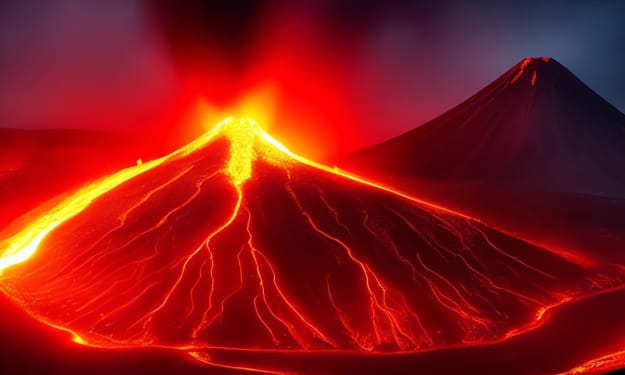
Do you know who recently woke up and caused quite a stir? After a peaceful slumber of 40 years, Mauna Loa, Hawaii's mighty volcano, rumbled back to life. As the largest active volcano on Earth, it unleashed awe-inspiring lava flows that captivated onlookers. The U.S Geological Survey even issued a warning level, indicating the seriousness of the situation.
By Nickardo Dawson3 years ago in Earth
Make Money Using CPAGrip: Unlocking Profit Potential
If you're looking for an opportunity to make money online, CPAGrip could be the key to unlocking your profit potential. CPAGrip is a leading performance-based affiliate network that allows you to monetize your website or social media channels by promoting a wide range of offers and earning commissions for every action taken by your audience. In this article, we will explore the steps to get started with CPAGrip and maximize your earnings.
By Azhan Chaudhry3 years ago in Earth
The Days are Getting Longer
What a day looks like a Billion years ago? If you ever think the days are becoming shorter and shorter, then congratulations you are right. Days are not long enough to done every work on time. Sometimes it is very frustrating but many times it proves a blessing. We work from dawn to dusk and just waited for the night to take some rest. We should be grateful for this change. It was told that the day was a full five hours and fifteen minutes shorter before billions of years ago. Before the life on Earth, there were a lot of complexities that was spread around the Globe.
By Fatima Jamil3 years ago in Earth
Significance of Diminishing Food Waste
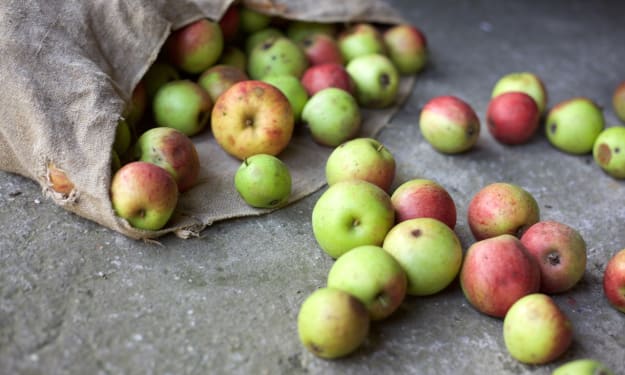
In the advanced world today, people are lucky to have the ability to control the planet. People are the most astute creatures, and they have laid out huge amount of sources for their benefit. In any case, their creations and food squander activities have resulted about various environmental issues, financial crisis, and an opportunity to help families who are food insecure. In any case, greater part of them are fortunate to have food choices for survival and ought to positively be thankful. There are many people in some regions of the world who can't afford to eat or drink. Yearly, many develop countries like the United States, Canada, and so on produce all around good food resources, yet one-third of it is either wasted or lost. Royte E. (2014)
By Sha Ayeiman3 years ago in Earth
Indian Scientists Discover Alien Planet 13 Times Bigger than Jupiter
Indian Scientists Discover Alien Planet 13 Times Bigger than Jupiter In an exciting scientific breakthrough, Indian scientists have made a significant discovery in the realm of astronomy. They have identified an alien planet that is a staggering 13 times larger than Jupiter, the largest planet in our solar system. This groundbreaking finding not only expands our understanding of exoplanets but also highlights the remarkable contributions of Indian scientists in the field of space exploration. In this article, we delve into the details of this discovery and its implications for our understanding of the universe.
By News Bucks3 years ago in Earth
Why Is Blue So Rare In Nature?
There are no blue tigers. No blue bats, blue squirrels, or blue dogs Even blue whales aren't that blue. Animals come in almost all colors, but blue seems to be the rarest. But the best part is that when we find a blue animal, it looks great. Nature can't handle blue. To understand why this is so, we go through evolution, chemistry, and beautiful physics. But first, we need to understand why animals have any color at all, and to do that, we need to go look at some butterflies. Because butterflies are amazing, and if you don't think so, you're wrong. This is Bob Robbins. He is the curator of butterflies at the National Museum of Natural History in Washington. Butterflies are amazing. Make no mistake. They are a group of moths that have evolved to be active during the day, and being active during the day gives you an advantage: you can use light to communicate.
By Durga Prasad3 years ago in Earth
The Eco-Friendly Revolution: Embracing Reusable Shopping Bags
In an era where environmental consciousness is on the rise, it is imperative that we make sustainable choices in our everyday lives. One simple yet impactful change we can make is switching to eco-friendly reusable shopping bags. These bags offer a viable alternative to single-use plastic bags that contribute to the mounting global waste crisis.
By Real Eco-Friendly3 years ago in Earth
Embracing Sustainable Living
In a world facing environmental challenges, adopting sustainable living practices has become more crucial than ever. Sustainable living involves making conscious choices that minimize our ecological footprint and promote a greener, more balanced lifestyle. By incorporating eco-friendly habits and utilizing sustainable products, we can contribute to a healthier planet for future generations. In this article, we will explore the concept of sustainable living and highlight some essential products that can help us embark on this transformative journey.
By Jamie Chen3 years ago in Earth
Why the Atlantic and Pacific Oceans Don't Mix
When you look at seas and oceans on a map, you might think they just flow into each other. It seems that there is only one big ocean, and people have just given different names to parts of it. Well, you'll be surprised how bright the lines are between them! The border between the Pacific and Atlantic oceans is like a border between two worlds. The two oceans seem to meet in an invisible wall that prevents them from flowing into each other and mixing their waters. Why the hell is this happening? We know for sure that there is no invisible wall inside, and water is water. What could prevent its mixing? The point is that water can also be different. The Atlantic Ocean and the Pacific Ocean have different densities, chemical compositions, salinities, and other characteristics. Their color shows that they are far from the same. Boundaries between two bodies of water with different physical and biological characteristics are known as ocean lines. Haloclines—the boundaries of waters of different salinities—are the most spectacular, and this is what we see at the meeting of the Atlantic and Pacific oceans. The famous explorer Jacques Cousteau discovered it while diving deep in the Strait of Gibraltar. The different layers of salt water seemed to be divided by a transparent membrane, and each layer had its own flora and fauna. Haloclines occur when the water in one ocean or sea is at least five times saltier than the other. You can create a halocline at home by pouring a glass of sea or colored salt water and adding fresh water. The only difference is that your haloclines are horizontal and oceanic haloclines are vertical. If you remember a few basic things about physics, you can argue that a denser fluid should eventually fall lower and a less dense fluid should eventually fall higher. If this were true, the boundary between the two oceans would not appear as a vertical but a horizontal line, and the difference in salinity between them would become less noticeable the closer they got to each other. So why isn't it happening here? First, the difference in water density between the two oceans is not so great that one sinks and the other rises. And yet it is enough not to let them mix. However, another reason is slowness. One inertial force, known as the Coriolis force, acts on objects as they move around a system of axes that, in turn, are also moving. Simply put, the Earth is moving, and the Coriolis force affects any object moving on it that is deflected. As a result, objects on the Earth's surface do not move straight ahead but tend to go clockwise in the northern hemisphere and anticlockwise in the southern hemisphere. But the Earth moves slowly; it takes a whole day for the planet to make a circle around its axis. That is why the Coriolis effect occurs only at long intervals, in connection with cyclones or ocean currents. And therefore, the direction of currents in the Atlantic and Pacific oceans is different. It also prevents them from mixing. Another important difference between the two oceans is the strength of the molecular bond, or surface tension. Thanks to this force, the molecules of the substance stick to each other. Both oceans have completely different surface tensions, which prevents them from mixing as well. Perhaps they could gradually begin to mix over time, but since their currents are opposite, they simply do not have time to do so. In both oceans, we think it's just water, but its separate molecules only momentarily meet and then drift away with the ocean currents. But don't think that only the Atlantic and Pacific Oceans don't get along well! There are many places on the planet where the waters of two seas or rivers do not mix. There are also thermoclines—boundaries between waters of different temperatures, such as the warm waters of the Gulf Stream and the much colder North Atlantic. Chemoclines are the most amazing. These are the boundaries between waters with different microclimates and chemical compositions. The Sargassum Sea is the largest and best-known chemocline. It's a coastal sea within the Atlantic, but you can't miss it. Let's take a look at the most amazing features of the planet.
By Durga Prasad3 years ago in Earth