Sustainability
Much Ado About The Climate
Start wrHubris, originating from the Greek language, signifies a perilous level of overconfidence. Based on my investigation, the concept of hubris aptly characterizes our present approach to the challenge of climate change. Consider the following convictions held by many: Firstly, the Earth is undergoing catastrophic warming due to specific human actions. Secondly, advanced computers empower us to forecast the climate's state in 20, 40, or even 100 years. Lastly, it is believed that by solely discontinuing one practice—burning fossil fuels—we can indefinitely stave off climatic alterations. However, each of these assumptions, collectively forming the foundation of our hubristic stance regarding shifting climate, proves to be either erroneous or so far off-base as to render them impractical. Indeed, it holds true that the planet is warming and human activities contribute to this warming influence. But beyond that, paraphrasing a line from the iconic movie "The Princess Bride," it's fair to say, "The science does not convey what you believe it does." For instance, governmental reports unambiguously state that heatwaves in the US are not more frequent now than they were in 1900. Hurricane activity remains unchanged compared to a century ago. Global flood incidents have not escalated in over seventy years. The shrinking rate of Greenland's ice sheet today mirrors that of 80 years ago. Why then are these reassuring facts not as widely recognized? The media overwhelmingly dictates public climate information, and from a media standpoint, fear sells. "Things aren't that dire" doesn't have the same impact. Regrettably, few individuals, including climate news journalists, delve into the actual scientific research. I've done so. And what the hard data from US government and UN Climate reports conveys is that the situation is less dire than assumed. Moreover, the public seems oblivious to the tenuous foundation underlying predictions of catastrophic climate change: computer models. Projecting the future climate proves to be an immensely intricate task. While human actions do exert an influence, the climate's complexity cannot be overstated. Anyone claiming climate models to be purely a matter of physics either misunderstands them or intentionally obfuscates. I can attest to this—I authored one of the initial textbooks on computer modeling. Though modelers base their assumptions on fundamental physical laws and climate observations, substantial judgment comes into play. Given that different modelers adopt different assumptions, outcomes diverge significantly across models. Let's consider a basic yet pivotal assumption modelers must make—the impact of clouds on climate. Natural fluctuations in cloud height and coverage wield an influence comparable to human effects on sunlight and heat distribution. But how could we conceivably predict global cloud coverage, say, in a decade, let alone half a century? The truth is, we can't. Nonetheless, crafting climate models mandates assumptions. This foundation appears frail when used to underpin a transformation of the global economy. Interestingly, refining models proves to be increasingly intricate. As our understanding of the climate system deepens, so does our awareness of its intricacies. Instead of acknowledging this complexity, the media, politicians, and a substantial faction of the climate science community attribute every severe storm, flood, and major fire to "climate change." While past weather events aren't contested, the narrative suggests that "climate change" exacerbates everything. Even if this were accurate, shouldn't the relevant question be: how much worse? Moreover, the term "worse" lacks scientific precision. And how could we ameliorate the situation? For alarmists, the solution is simple: eliminate fossil fuels. Yet, this proposition is not just impractical—given that over 80% of global energy derives from fossil fuels—it is also scientifically implausible. Carbon dioxide (CO2) doesn't dissipate from the atmosphere swiftly like smog; it lingers for an extended period. Roughly 60% of emitted CO2 today will persist in the atmosphere two decades from now, with 30-55% remaining after a century, and 15-30% present after a millennium. Essentially, excess carbon dioxide requires centuries to dissipate from the atmosphere. Partial reductions in CO2 emissions would merely decelerate the rise of human-induced impacts, not thwart or reverse them. CO2 is not a dial we can conveniently adjust to rectify the issue. We lack that capability. Believing otherwise is, in essence, hubris. Hubris leads to misguided choices. A touch of humility and a dose of knowledge would yield superior decisions.
By Olusola Bodunrin3 years ago in Earth
Health and Wellness
In a bustling city where life moved at breakneck speed, Emma found herself caught in the whirlwind of constant demands and deadlines. Her days were consumed by work, leaving little time for self-care and personal well-being. Struggling with fatigue, stress, and an increasing sense of imbalance, she knew something needed to change.One fateful evening, as she walked past a serene park on her way home, Emma noticed a flyer for a holistic wellness retreat. Intrigued by the promise of rejuvenation, she decided to embark on a transformative journey towards health and well-being.The retreat, nestled amidst lush greenery, offered a respite from the urban chaos. Under the guidance of experienced wellness practitioners, Emma began to explore the pillars of health: physical, mental, emotional, and spiritual. Each day brought new insights and practices that gradually shifted her perspective.Mornings began with invigorating yoga sessions that awakened her body's vitality. Guided meditation sessions helped Emma navigate the labyrinth of her thoughts, allowing her to find moments of calm amidst the storm. Engaging workshops on nutrition and mindful eating reshaped her relationship with food, fostering a deeper connection to nourishment.But it wasn't just about individual wellness; the retreat emphasized community and connection. Emma formed bonds with fellow participants, sharing stories and supporting each other's growth. In the evenings, around a crackling bonfire, they engaged in open discussions about life's challenges, forging a network of empathetic souls.As days turned into weeks, Emma's transformation became evident. Her complexion glowed with health, her step was lighter, and her smile more genuine. However, the most profound change was within. She had learned the art of balance - the delicate dance between pushing herself to achieve and knowing when to pause and recharge.The retreat's climax came during a silent mindfulness hike to a breathtaking summit. Standing atop, surrounded by nature's grandeur, Emma felt a profound sense of unity with the universe. Her journey had come full circle, reminding her that true wellness transcends the physical and encompasses the harmony of mind, body, and spirit.Returning to the city, Emma faced the same demands as before, but her approach had shifted. Armed with mindfulness tools, healthier habits, and a renewed sense of purpose, she navigated challenges with grace. She became an advocate for wellness in her workplace, promoting breaks, mental health support, and team bonding.The story of Emma's journey towards health and wellness spread through her actions, inspiring others to reconsider their priorities. With each step taken on her path, the ripple effect of positive change expanded, transforming lives one decision at a time."Harmony Renewed" is a tale of awakening, reminding us that amidst life's chaos, the pursuit of health and wellness is a lifelong journey, and the key to a fulfilled existence lies in finding balance and harmony within ourselves and the world around us.
By Waliullah Ibrahim3 years ago in Earth
the challenges of changing weather patterns, droughts, and unpredictable crop yields,
Amid the rolling hills of Greendale, where golden fields stretched as far as the eye could see, the Cooper family had cultivated the earth for generations. Their farm was a haven of life, where the whispering winds told tales of resilience and love for the land. However, as time marched on, the familiar patterns of the seasons began to unravel, ushering in an era of uncertainty that would test the Coopers' very connection to the soil beneath their feet.
By owolabi abdulakeem idowu3 years ago in Earth
Solutions to the Climate Change Problem: Paving the Way to a Sustainable Future
As greenhouse gas emissions continue to drive global temperatures higher, the need for effective solutions has never been more pressing. In this article, we delve into a range of strategies and approaches that hold the promise of mitigating and ultimately addressing the climate change problem.
By kathy rich3 years ago in Earth
The Far-Reaching Effects of Global Warming: Unveiling a Planet in Peril
Global warming, driven primarily by human activities such as burning fossil fuels and deforestation, is ushering in a new era of unprecedented environmental change. The consequences of rising temperatures are vast and profound, impacting ecosystems, weather patterns, sea levels, and even human societies. In this article, we delve into the multifaceted effects of global warming and the urgent need for concerted action to mitigate its far-reaching impacts.
By kathy rich3 years ago in Earth
Managing the Impacts of Climate Change: A Call to Action for a Resilient Future
Rising global temperatures, changing weather patterns, and ecological disruptions are already affecting communities, economies, and ecosystems worldwide. To mitigate and manage these impacts, a comprehensive and coordinated approach is essential. In this article, we explore strategies and solutions to effectively manage the consequences of climate change and build a more resilient and sustainable future.
By kathy rich3 years ago in Earth
Air Pollution and Climate Change: A Deadly Duo Threatening Our Planet
Air pollution and climate change are two interlinked global challenges that pose significant threats to our environment, health, and the well-being of both current and future generations. These issues are intricately connected, with air pollutants contributing to climate change and climate change exacerbating air pollution. Understanding the complex relationship between these two phenomena is crucial for devising effective strategies to mitigate their impacts.
By kathy rich3 years ago in Earth
Health Threats and Climate Change: A Looming Crisis
As global temperatures rise and weather patterns become increasingly unpredictable, the impact on human well-being cannot be ignored. The intricate interplay between health threats and climate change is a complex issue that demands immediate attention and comprehensive solutions.
By kathy rich3 years ago in Earth
Harmony of Nature and Peace of Mind
In our bustling modern lives, where stress and anxiety have become all too common, finding solace in the simple beauty of nature has never been more important. The profound connection between nature and peace of mind has been recognized for centuries, transcending cultures and generations. This synergy provides a serene refuge, offering respite from the complexities of daily life and a pathway to inner tranquility.
By Abdulmajeed Abdul3 years ago in Earth
MASTERING THE PRINCIPLES OF FINANCE
Are you ready to take control of your financial destiny? If so, you have the right content to your financial success. In today's fast-paced world, understanding the principles of finance is more important than ever. Whether you are a graduate, a seasoned professional, or someone looking to improve your financial literacy, mastering the key concepts of finance can empower you to make smart, informed decisions that will set you on the path to financial success. In this comprehensive guide, will demystify the world of finance and provide you with the knowledge and tools you need to navigate the complex landscape of money management. From budgeting and saving to investing and retirement planning is covered. Get ready to take charge of your financial future and embark on a journey towards financial freedom.
By Quodus Michael Akadarinongo3 years ago in Earth
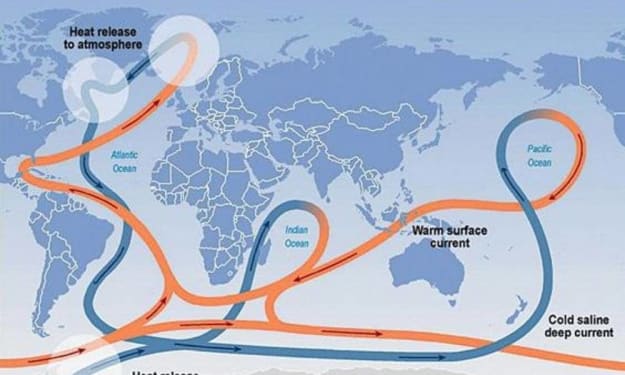
Will the Gulf Stream really collapse by 2025?
Introduction The Gulf Stream, a dynamic and powerful ocean current that plays a crucial role in shaping global climate and weather patterns, has recently come under scrutiny due to concerns about its potential collapse. This intriguing topic has captured the attention of scientists, policymakers, and the public alike. As we navigate the ever-changing landscape of climate change, it is imperative to delve into the scientific evidence, underlying mechanisms, and potential ramifications before arriving at any definitive conclusions regarding the likelihood of a Gulf Stream collapse by the year 2025.
By Renato Filipe3 years ago in Earth