Sustainability
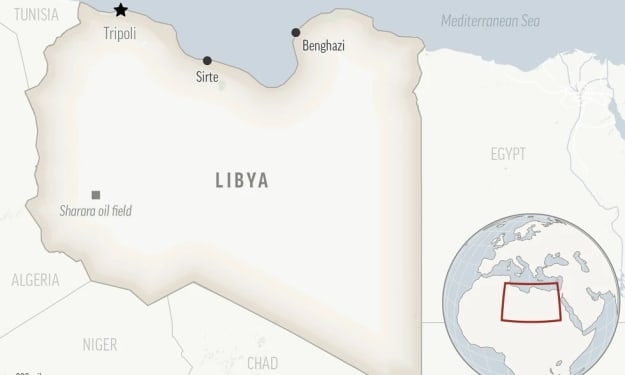
How Libya Built Brand-New Rivers Across the Sahara
Libya, situated in North Africa, has been embroiled in a prolonged period of civil strife and violence for much of the past decade, resulting in the loss of tens of thousands of lives. Even after the most recent civil war ended with a ceasefire agreement two years ago, numerous governments, including the U.S., UK, EU, Canada, and Australia, continue to issue a level four travel advisory, strongly cautioning their citizens against traveling to Libya due to the ongoing dangers and turmoil.
By Nida Rafiq3 years ago in Earth
The Plastic Paradox
The sun was setting over the city skyline, casting a warm orange glow across the bustling streets below. I stood on my apartment balcony, a cup of steaming coffee in hand, taking in the familiar sights and sounds of urban life. The convenience of this world has always been a comfort to me—everything at my fingertips, just a click away. But little did I know, behind the façade of this modern paradise, a troubling reality was lurking.
By Akbar Ergashev3 years ago in Earth
OUT OF MANKIND (part 2)
As the years went by, the unity that Elara had helped to inspire continued to strengthen across the interstellar colonies. The lessons learned from the stories she had collected became integral to the education systems, cultural exchanges, and diplomatic negotiations between worlds. People began to see themselves not only as citizens of their individual colonies, but as part of a greater interstellar community.
By emmanuel charles3 years ago in Earth
Out of Mankind
In the distant future, a time when the Earth had long been abandoned, humanity's legacy remained embedded in the cosmos. After centuries of technological advancements, mankind had achieved the ultimate dream of space colonization. New worlds were discovered, and colonies thrived on distant planets and moons. The accomplishments of human civilization were awe-inspiring, but the journey was not without challenges.
By emmanuel charles3 years ago in Earth
Could Chat GPT Talk to Whales?
This is the resonance emanating from the largest-toothed apex predator existing on our planet, a melodic broadcast emerging from the unfathomable depths of the sea – a call that diverges from harmonious melodies characterizing other whales' vocalizations, manifesting more akin to digital data transmissions. This auditory phenomenon has reverberated through the annals of nautical history, echoing through the centuries, ensnaring sailors' imaginations with its eerie wails, erroneously believed to be the lamentations of drowned mariners' spirits. Astonishingly, it wasn't until 1957 that the scientific community realized these sounds originated from cetaceans, and it took until the 1970s to comprehend the complex nature of these undulating clicks and bellowing utterances as a form of communication.
By Nida Rafiq3 years ago in Earth
Robert Black III Addresses Why Solar Energy is the Future of Energy Production
As the global community grapples with the urgent need to shift away from fossil fuels and curb the looming threat of climate change, solar energy emerges as a shining beacon of hope. With its immense potential, solar energy can revolutionize how we generate power, offering a clean, sustainable, and abundant energy source for the future. Solar energy is poised to become the cornerstone of our energy production landscape, displacing the dependency on fossil fuels in the decades to come.
By Robert N Black III3 years ago in Earth
Climate Emotions: Stories & Weather
In the small coastal town of Cresthaven, the sunsets had always been breathtaking, painting the sky in hues of orange, pink, and gold. The townspeople would gather along the shore every evening to watch the sun dip below the horizon, a ritual that had been passed down for generations. But as time went on, the sunsets started to lose their vibrancy, the colors muted by a thick blanket of smog that hung over the town. Lucia, a young artist with a heart full of dreams, had grown up cherishing those sunsets. Her paintings captured the beauty of each fleeting moment, and she longed to share this wonder with her future children. One evening, as the fading sun struggled to pierce through the haze, Lucia met Samuel, a scientist who had been studying the effects of climate change on the region. As their paths converged, Lucia and Samuel found themselves drawn to each other. Samuel's research revealed the grim reality – the smog was a result of industrial pollution and the changing climate. The townspeople began to experience the consequences firsthand, as the air grew harder to breathe and the sea grew warmer and more unpredictable. Lucia's heart ached as she realized that the sunsets she had always cherished were fading away, a casualty of the environmental degradation that threatened their way of life. She and Samuel joined forces to rally the townspeople, urging them to take action. Together, they organized beach clean-ups, planted trees, and advocated for renewable energy sources. But change was slow, and the smog persisted. One fateful day, Lucia and Samuel stood on the shore, watching as the sun struggled to break through the thick haze. Tears welled up in Lucia's eyes as she thought about the future she had hoped for – children who would run along the beach, their faces lit up by the golden light of the sun. "They deserve to see a sunrise," Lucia whispered, her voice choked with emotion. Samuel squeezed her hand, his gaze steady and determined. "We can't give up, Lucia. We have to keep fighting for their future." As the months passed, their efforts began to make a difference. The town slowly embraced renewable energy sources, and industries started to clean up their act. The air began to clear, and hope rekindled in the hearts of the people. One crisp morning, Lucia and Samuel stood side by side on the shore. The sky was a canvas of blues and purples, untouched by the smog that had once marred its beauty. And then, as if in response to their unwavering determination, a golden glow began to emerge on the horizon. The sun, vibrant and unobscured, rose in all its glory. Tears streamed down Lucia's face as she watched the sunrise. It was a sight she had feared her children might never witness – a sight that she had fought so hard to preserve. Samuel wrapped his arms around her, his joy and relief mirroring her own. "They'll see it," Samuel whispered. "Our children will know the beauty of a sunrise." Lucia nodded, her heart full to bursting. The journey had been long and challenging, but their love for each other and their town had carried them through. As they stood together, hand in hand, they knew that their fight was far from over. But in that moment, they also knew that they were part of something greater – a community of people who had come together to protect the world they loved. And as the sun bathed the world in its warm embrace, Lucia felt a renewed sense of purpose. She would continue to paint, capturing the beauty of the world around her. But now, her art held an even deeper meaning – a reminder of the power of love, determination, and the ability to create change, even in the face of the greatest challenges.
By Joshua Akindutire3 years ago in Earth
The Last Polar Bear. Content Warning.
In the northern reaches of the world, where the ice met the sea and the cold wind whispered stories of ancient times, lived a young girl named Freya. Her days were filled with the echoes of crashing waves, the songs of seabirds, and the gentle touch of snowflakes on her cheeks. But amidst the beauty, an unspoken sadness hung heavy in the air—the changing world.
By ganesh98663 years ago in Earth
Taking Better Care of Nature
In a world brimming with intricate environmental nuances, the call to embrace a sustainable trajectory for safeguarding our planet's richness emerges as an ever more urgent imperative. Our cherished Earth, a haven adorned with diverse ecosystems, awe-inspiring landscapes, and invaluable resources, beseeches us to dedicate unswerving commitment to preserving its vitality for the generations that lie ahead. As stewards of this magnificent realm, we must chart a deliberate course, cultivating a harmonious rapport with nature, and guiding our actions with unwavering purpose and discernment. Within the pages of this comprehensive guide, we embark on a profound odyssey into the depths of sustainable living, unraveling an array of strategies, insights, and methodologies that empower us to assume the mantle of guardianship for our planet's holistic well-being.
By Karlos Santiago3 years ago in Earth
Why china is losing this microchip war?
In 2012, Zongchang Yu took a bold step by leaving his engineering role at ASML, a company known as the sole creator of an extraordinary machine. This machine held the power to produce the most advanced microchips, also known as semiconductor chips, in the world. Following his departure from ASML, Yu embarked on an ambitious journey, establishing two new companies—one based in the United States and the other in China. However, the story takes an intriguing turn as legal battles unfolded between the United States, ASML, and Yu. Allegations surfaced, claiming that Yu had managed to recruit former ASML engineers to join his U.S. venture. These engineers were said to have brought along stolen proprietary information about ASML's revolutionary machine, and shockingly, these actions were allegedly backed by the Chinese government itself. This incident stands as a mere fragment of a much larger narrative—an endeavor by China to overhaul the global semiconductor industry, a sector of immense significance and international reach. What makes this tale even more captivating is that China's efforts, although initially aimed at transforming the semiconductor industry, have gradually led to a formidable clash with its long-standing rival, the United States. This is no ordinary rivalry; it delves into matters of security, not just market share or trade tariffs. So, how did China and the United States find themselves engaged in a veritable Cold War, the battleground being the realm of computer chips? To understand the gravity of this conflict, we must first rewind to the origins of semiconductor technology. In the 1950s, visionary engineers in the United States pioneered the very first semiconductor chip—a small slice of silicon adorned with a mere four transistors. Yet, with each passing year, the capability of these chips grew exponentially, thanks to an astonishing phenomenon known as Moore's Law. In 1965, Gordon Moore, the co-founder of Intel, predicted that computing power would double approximately every year, a prediction that held remarkably true over the decades. In those early days, chip manufacturers were primarily dedicated to serving a singular client: the U.S. government. These chips found utility in guiding NASA spacecraft and missile systems during significant historical events. Recognizing the strategic importance of computing prowess, the U.S. government fostered a close alliance with these chip companies, foreseeing that their partnership would ensure access to cutting-edge technology. Initially, the entire chip supply chain, from design to assembly, was localized within the United States. However, as the years advanced, chip companies realized the potential for greater profits by designing chips for civilian applications. As a result, many manufacturers relocated their production to countries like Japan, Taiwan, South Korea, and Hong Kong, where labor was more cost-effective. This move was not only encouraged but also aimed to strengthen economic ties between the U.S. and its allied nations. Nonetheless, the growing importance of these chips triggered a paradox. While countries like Japan and South Korea mastered chip manufacturing, China found itself lagging behind due to historical circumstances. Mao Zedong's policies had driven away China's finest scientific minds during the 1960s and 70s, leaving the nation with a technological deficit. However, the tides began to shift in the 1990s, as China endeavored to bridge the gap. With the Cold War drawing to a close, the U.S. adopted a more cooperative stance toward China, lifting export controls and paving the way for chip companies to set up assembly operations within the nation. By the 2000s, China had emerged as a dominant force in chip assembly, feeding its burgeoning tech ecosystem. Yet, this progress came with a dilemma: China was heavily reliant on imported chips, creating a vulnerability in its technological foundation. In response, the Chinese government initiated a substantial investment in domestic chip design and manufacturing firms, aiming to establish an autonomous chip supply chain. China's aspiration was to not only design and manufacture chips within its borders but also to assemble them, thereby gaining self-reliance. Despite China's remarkable strides, producing the most advanced chips remained an elusive goal. A major hurdle was the dependency on key players within the global supply chain. For instance, only a handful of American companies held the software essential for designing advanced chips, while ASML stood as the sole producer of a crucial chip-making machine. Additionally, the intricate process of transforming designs into real chips required equipment available exclusively in the U.S. The final step, manufacturing the cutting-edge processor chips, rested solely in the hands of companies from Taiwan and South Korea. Amidst this backdrop, a dramatic turn of events unfolded in 2019. Zongchang Yu, now CEO of his own company, was accused of IP theft, a tale that resonated with similar stories in the chip industry. These incidents underscored China's pursuit to gain a competitive edge by mimicking established technologies, a strategy that backfired and sparked international concern. As the chip rivalry intensified, the U.S. implemented a series of strategic moves to maintain its lead. Export controls were imposed, preventing American companies from selling advanced chips to China. Furthermore, the U.S. invested significant funds in its domestic chip manufacturing sector, solidifying its technological prowess. A groundbreaking deal was struck with Taiwan's TSMC to establish chip manufacturing plants on American soil, reinforcing the U.S. commitment to innovation. Interestingly, China's quest for semiconductor supremacy intertwined with another geopolitical flashpoint: Taiwan. The island nation emerged as a linchpin in the chip supply chain, manufacturing a staggering 63% of all chips and a staggering 92% of advanced chips. However, the U.S. export controls forced Taiwan's chip manufacturers to make a challenging choice: continue trading with China or abide by U.S. restrictions. These decisions hold profound implications, echoing the broader choices nations and corporations may face in an evolving global landscape. The tale of China's semiconductor surge and the ensuing rivalry with the United States encapsulates a complex narrative of innovation, geopolitics, and security. As nations grapple for dominance in this pivotal industry, the lines between economics and national defense blur, culminating in a new type of Cold War—one fought with silicon wafers and microchips instead of traditional arms. The story remains dynamic, a reflection of the ever-changing landscape of international technology and power struggles.
By Shubham Bajaj3 years ago in Earth