Sustainability
5 Good Luck Plants
In my teenage, I slipped off my penthouse stairs badly. Phew! there was no injury at all. Now I discern that when God throws the dice, they are loaded. We all have seen many severe accidents in which people live safely and scratch less. Why is it so? Is it their luck or prayers? As we have different perceptions of fortune and faith, we will have diverse answers for that. But the most popular assumption is a good luck charm that brings protection and wealth to people.
By Rabab Toor2 years ago in Earth
Why Reducing Plastic Waste is Crucial for Our Planet. AI-Generated.
Why Reducing Plastic Waste is Crucial for Our Planet Plastic waste has become one of the most pressing environmental issues of our time. With millions of tons of plastic being produced each year and only a fraction of it being recycled, the impact on our planet is profound. Reducing plastic waste is not just a choice; it's a necessity for the health of our ecosystems, wildlife, and even our own well-being. Here are the key reasons why we must take urgent action to reduce plastic waste and what steps we can take to make a difference.
By Joseph Elishi2 years ago in Earth
The Benefits of Solar Panels for Your Home. AI-Generated.
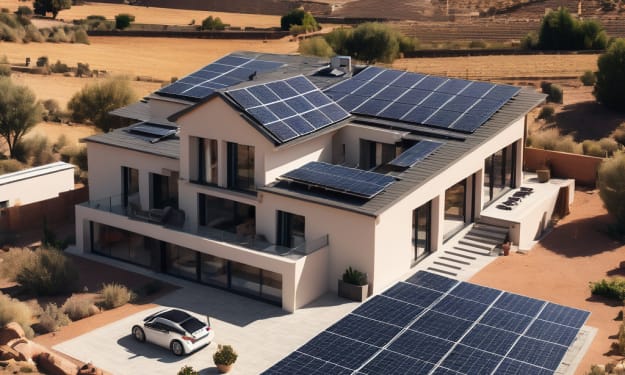
The Benefits of Solar Panels for Your Home With rising energy costs and growing environmental concerns, more homeowners are turning to solar panels as a sustainable and economical energy solution. Solar energy harnesses the power of the sun to generate electricity, offering numerous benefits for both the environment and your wallet. Here’s a closer look at why investing in solar panels can be a smart choice for your home.
By Joseph Elishi2 years ago in Earth
Nature-a lot to offer
1. Introduction to the wonders of nature Nature is a vast and intricate system that provides countless benefits to both the environment and human society. From clean air and water to biodiversity and natural resources, the benefits of nature are essential for our well-being and survival. As our world continues to face environmental challenges such as climate change and biodiversity loss, it is more important than ever to recognize and appreciate the value that nature provides. This blog will explore the many ways in which nature offers us a wealth of resources and services, and why it is crucial that we protect and preserve our natural world for future generations.
By Ajayi Olalekan2 years ago in Earth
The Taj Mahal
The Taj Mahal, a symbol of love and perfection, was constructed by Mughal emperor Shah Jahan in memory of his wife Mumtaz Mahal. It is among the top ten most visited monuments globally. The incredible layout and construction techniques used in building the Taj Mahal have revealed many secrets.
By Isaac Ekow Anyidoho2 years ago in Earth
The Oil Rig
In 1988, a tragic explosion occurred on the Piper Alpha oil platform in the North Sea, resulting in 165 fatalities. The platform, which was constructed and operated from 1972 to 1976, produced 250,000 to 300,000 barrels of oil per day. A gas conservation module was installed in the North Sea to meet UK gas conservation requirements, with modules B and C capturing gas for transport to St Fergus in Scotland. During Phase 2 production, Tartan and Claymore pumped gas to Piper Alpha, then to the mcp1 gas compressing platform for further transport. Unfortunately, the failure to follow safety procedures led to the explosion on the Piper Alpha platform. Engineers neglected to properly check safety valve instructions before starting pump A, resulting in gas leaks and subsequent explosions. The shift manager's oversight of safety precautions allowed pump A to start, leading to catastrophic consequences.
By Isaac Ekow Anyidoho2 years ago in Earth
Bears, Belugas, Mosquitos, Oh My!. Content Warning.
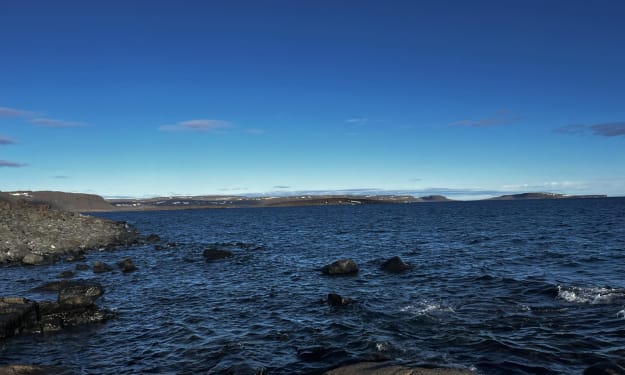
I've been contemplating on how to start writing this for over a week now. How do I even begin to capture the incredibly humbling experiences that happened back-to-back over those 4 days? I suppose I have to start somewhere...
By Oneg In The Arctic2 years ago in Earth
Eruption Under the Pacific Ocean Will Make the Water Fizz
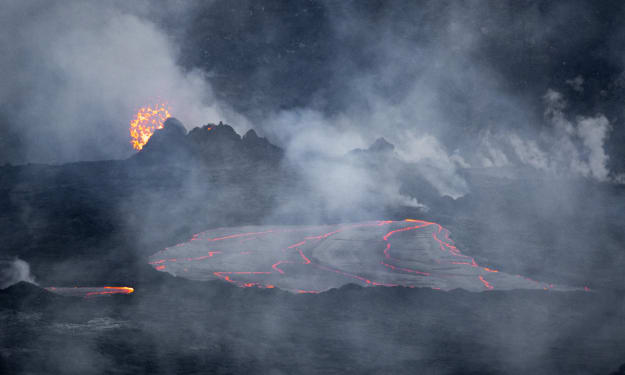
Emission Under the Pacific Sea Will Make the Water Bubble The Remote ocean Show Unfurls In the secretive profundities of the Pacific Sea, an unprecedented occasion is fermenting, promising a display not at all like some other. A volcanic ejection is set to happen underneath the sea's surface, and it's supposed to make the water bubble like a monster, regular soft drink wellspring. This peculiarity isn't just an enamoring show of nature's crude power yet additionally a basic area of study for researchers looking to grasp the elements of submerged volcanism and its more extensive ramifications.
By robail shahzadi2 years ago in Earth
30+ Fantastic 'What If' Scenarios You Never Thought About
30+ Fabulous 'Consider the possibility that' Situations You Won't ever ponder In the domain of creative mind, 'consider the possibility that' situations fuel imagination, interest, and examination. They permit us to investigate elective real factors and contemplate the potential outcomes of various results. Here, we dive into more than 30 interesting 'imagine a scenario in which' situations that stretch the limits of our ordinary reasoning.
By robail shahzadi2 years ago in Earth
What is the origin of oil (and no, it does not come from dinosaurs) . AI-Generated.
Known as “black gold”, it is a mixture of hydrocarbons, compounds that contain in their molecular structure mainly carbon and hydrogen. It is a motor of today’s society, a motive for wars, and one of the main drivers of climate change.Every day more than 80 million barrels of oil are produced in the world, whose name comes from the Latin and means “stone oil”. This viscous liquid known as “black gold” is a mixture of hydrocarbons, compounds that contain in their molecular structure mainly carbon and hydrogen. Oil is the product of a process of processing over millions of years. But where does it come from?Most scientists are in favour of a theory and assure that the origin of oil “is well understood”. But that didn't stop some false beliefs from circulating... The myth of dinosaurs It is estimated that about 70% of the current crude deposits were formed in the Mesozoic or Mezozoic Era, which extended between 252 and 66 million years ago. The Mesozoic, which is divided into the Triasic, Jurassic and Cretaceous periods, is also known as the reptile era and in it dinosaurs had their apogee. This could explain why misinformation has circulated. “For some strange reason, the idea that oil comes from dinosaurs has remained in many people. But oil comes from trillions of tiny algae and plankton,” said Reider Müller, a geology professor at the University of Oslo. No one knows for sure how this myth was born, but it also circulated in Latin America.BBC Mundo asked two Mexican experts if they were aware of that belief. “Yes, it’s a misconception, but very common,” said Darío Solano and Iza Canales, professors at the Faculty of Engineering at the National Autonomous University of Mexico, UNAM, in the Division of Earth Sciences. “At least within our community, we can identify that many of the rocks that generate hydrocarbons are found in layers of the Jurassic, which is a geological time period that is usually associated with dinosaurs, and that is the relationship that has helped reinforce the idea that this is their origin,” Solano explained. “It is important that these myths are dismissed, firstly to help society as a whole eliminate ignorance of a substance of common and widespread use, in short, only by general culture. Secondly, by advancing in understanding the origin of this resource, it will be possible to advance in the development of new technologies or uses,” added Canales. How oil is formed The protagonists in the history of the origin of oil are not the big reptiles but tiny beings.The most accepted theory about the origin of oil is the organic term, according to which the resource originated from the decomposition of the remains of animals and microscopic algae accumulated on the bottom of seas and lagoons. This theory indicates that fine sediments and organic residue, mainly terrestrial or marine vegetables, are deposited in a basin. After certain processes the kerogen is formed, which is a mixture of these organic materials, and after a long time the pressure and temperature are increased, eventually forming hydrocarbon chains, the scientists of UNAM explained. The accumulation of other geological layers on the deposits of organic matter generates pressure and temperature conditions that facilitate the action of anaerobic bacteria to slowly transform organic material into hydrocarbons with small amounts of other elements. “In a simplified way, we can think of cooking our mixture of materials in an express pot (i.e. with certain pressure and temperature conditions) for a long time, until the original material is broken down into carbon and hydrogen chains. Something similar is happening in the basement. Then the material needs to migrate from the rocks where it was cooked to the rock that will store it,” explained Mexican experts.This theory is one of the most accepted, since all the oil deposits are found in sedimentary land and, in addition, there have been found fossil remains of animals and plants. Where does the energy in oil come from Oil can also come from the processing of organic material from ancient forests. Within organic theory it is understood that any type of organic material can be present. In fact, the kind of hydrocarbon that is obtained from kerogens rich in terrestrial plant matter is associated with gas deposits, Mexican scientists added. And here's another myth to clarify. Is the energy in oil the solar energy captured in photosynthesis by the phytoplankton (plant organisms) and transferred to the zooplancton (animal organisms)? “No, this is a misconception,” said Canales, adding: “The energy we obtain today from oil is obtained by the oxidation (combustion) of hydrogen and carbon (hydrocarbons) chains.” “It’s true that energy and matter are interchangeable, but to say so sounds like phytoplankton and zooplancton are solar batteries. It can rather be thought of as an analogue to how humans can eat many things and the body transforms food by breaking it down in our digestive system through another process of oxidation (digestion) and our body takes advantage of those simpler components at the cellular level,” Solano added. IMAGES Alternative theories Some scientists held in the past that oil has an inorganic origin and is formed in the depths of the Earth without the need for remains of living organisms. Several of these theories were proposed as early as the 19th century, for example by Dmitry Mendeleev, the Russian chemist who published the first periodic table of elements. Inorganic theories argue that inside the Earth's mantle, coal may exist as hydrocarbon molecules, mainly methane, and a large amount of hydro-carbons found in oil may be generated by processes that do not regulate organic fossils. Inorganic theories argue that inside the Earth's mantle, coal may exist as hydrocarbon molecules, mainly methane, and a large amount of hydro-carbons found in oil may be generated by processes that do not regulate organic fossils. The Asteroid That Ended the Dinosaurs Also Generated a Monstrous Earthquake These hydrocarbons can migrate out of the mantle to the terrestrial crust to escape to the surface or remain in waterproof layers, forming oil deposits. One version of these theories is that of the Austrian astrophysicist Thomas Gold (1920-2004), who was a professor of astronomy at Cornell University. Gold published a study in 1992 in PNAS, the journal of the American Academy of Sciences, which he later expanded into a book with the same title, Deep Hot Biosphere. For him, hydrocarbons on Earth are not the by-product of biological waste (“fossil fuels”), but were a common constituent of the materials from which the Earth was formed about 4.5 billion years ago. Gold acknowledged that the same hypothesis had already been supported in the 1950s by Soviet scientists. The theory of the inorganic origin of oil is not accepted by most scientists “We dare to speak on behalf of our fellow academics and scientists to say that the theories of inorganic origin have not been successfully tested and that in this way it has not been possible to generate hydrocarbon in a laboratory,” said UNAM experts. One last doubt? Given that the organic theory of the origin of oil is the most accepted, some readers might ask themselves this question. If dinosaurs lived at the same time as the formation of oil in the Mesozoic, it could have happened that their remains, organic matter of some dinosaur, fell to the bottom of the sea or lagoons and underwent a process of compression and transformation turning into oil.“In fact, we could say that any organic matter could be present in oil generation,” said UNAM experts. “ it is important to mention that oil generation is a very delicate process, and it requires very large volumes of matter, which were possible to reach only by the large volume of plankton in the sea, so volumes from other sources are not so significant,” they concluded.
By Isabela Stender 2 years ago in Earth
Why Cars Are Evil
Owning a car can make for a nice luxury. It’s private and more freeing than the alternatives, and to live in some cities, it’s all but a necessity that you have one to get around in. This article is not meant to criticize individuals for owning cars. It’s often the best decision for them. However, if one could design a city to be car-centric versus having well-developed public transportation, there’s no question that the latter is a much better aim than the former. By every conceivable metric, cars extract an unnecessary cost when compared to the alternative.
By Martin Vidal2 years ago in Earth