Sustainability
THE CHILDREN OF THE RISING SEAS
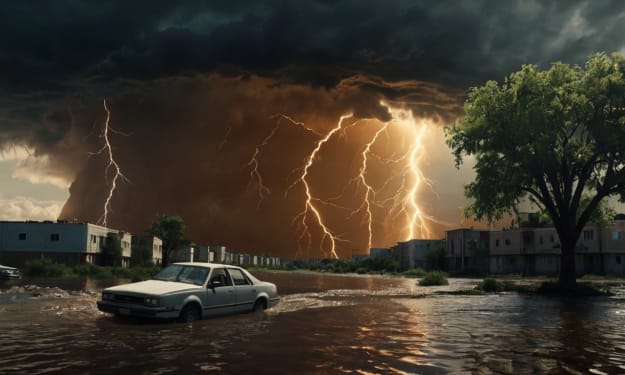
Now, more than ever, the tide was coming in. On the edge of what had been Asha's front yard, her bare feet sank into the wet sand. Like the playground, the walk to the village market, and her garden, it had been seized by the water. Now there was nothing but a narrow strip of land, just big enough to accommodate their dilapidated houses.
By Charles Otu2 years ago in Earth
Why Vegan Diet???
The Vegan Journey: A Tapestry of Compassion, Sustainability, and Self-Discovery Veganism. The word itself can evoke a range of emotions – curiosity, intrigue, perhaps even a touch of skepticism. For some, it conjures up images of vibrant salads, creamy nut milks, and a lifestyle deeply rooted in compassion and sustainability. But beyond the alluring aesthetics lies a complex tapestry of motivations that drive individuals towards this plant-based path.
By Ken Elledge2 years ago in Earth
Why Zebras Remain the Wild Striped Stars: The Un-domesticated Chronicles. AI-Generated.
Picture this: a peaceful savanna, the sun setting in a blaze of glory, and a herd of zebras trotting gracefully across the landscape. Sounds idyllic, right? But let’s imagine a different scenario where zebras are grazing in your backyard, casually mingling with your pet dog. While this might seem like a cool concept straight out of a whimsical dream, there are solid reasons why zebras remain the wild, un-domesticated equine wonders they are. Let's dive into the zany world of zebras and explore why these stripey creatures aren’t following in the hoofprints of horses or cows into the realm of domestication. The Temperament Tango: Zebras' Wild Streak First off, let’s talk about temperament. Zebras are the ultimate rebels of the animal kingdom. Unlike horses, which have been selectively bred for docility and workability over thousands of years, zebras have a feisty streak that's as bold as their stripes. They are known to be skittish, unpredictable, and, let’s be honest, a bit moody. Imagine trying to saddle up a zebra for a nice ride in the park. Cue the circus music, because what follows would be a comedy of errors – bucking, biting, and bolting. Zebras are not keen on playing nice; they’ve developed their wild behaviors as survival mechanisms to evade predators in the harsh African savannas. So, while your dreams of a zebra-drawn carriage may be romantic, the reality would be far from a fairy tale. Zebra Zippity: Speed and Agility Zebras are built for speed and agility, not for carrying human loads or pulling plows. They’ve evolved to outrun the likes of lions and hyenas, zipping through their habitat with remarkable finesse. When you're built for the chase, slowing down to accommodate a saddle or cart isn’t exactly appealing. A zebra’s flight instinct kicks in at the slightest hint of danger (which could be anything from a rustling bush to a sudden noise), and they can zigzag their way out of trouble like seasoned escape artists. Training such a free-spirited creature to stay put and obey commands would be like convincing a rock star to stick to a strict 9-to-5 schedule – highly unlikely and probably resulting in a dramatic exit. Social Structure Shenanigans: Herd Dynamics Horses have a relatively straightforward social hierarchy that humans have learned to navigate and manipulate over centuries. Zebras, on the other hand, have complex social structures within their herds. They form tight-knit family groups led by a dominant stallion and a harem of mares, each with their own pecking order. Disrupting this delicate balance for the sake of domestication is like trying to untangle a bowl of spaghetti – messy and not worth the effort. Zebra herds are all about unity and mutual defense, with intricate social bonds that make them incredibly loyal to each other but wary of outsiders, including humans. While a horse might see you as the benevolent provider of hay and occasional treats, a zebra might view you as an intruder or, worse, a potential predator. The Stripes Enigma: Camouflage and Confusion Those striking stripes aren’t just for show – they serve a practical purpose. Zebras use their unique black-and-white patterns as a form of camouflage, blending into the tall grasses and confusing predators. This optical illusion, known as disruptive coloration, makes it hard for predators to single out individual zebras in a herd. Now, domesticate a zebra, and you strip away its natural advantage. Imagine your zebra trying to blend into a suburban backyard – it’s not happening. The poor thing would stick out like a sore thumb, making it a prime target for any potential threats. Nature equipped zebras with stripes for survival in the wild, not for accessorizing your garden. Diet Dilemmas: Picky Eaters Zebras have evolved to graze on tough, fibrous grasses found in their natural habitats. Their digestive systems are finely tuned to handle this roughage, which is different from the more diverse diets domesticated livestock are used to. Trying to replicate a zebra’s diet in captivity would be an ongoing challenge. Moreover, their foraging habits are tied to vast migrations in search of fresh grazing grounds. Keeping a zebra in a confined space would not only be nutritionally challenging but also psychologically distressing. Zebras are roamers at heart, and restricting their movement would be akin to putting a bird in a cage – it just wouldn’t work out well. Health and Husbandry Headaches Domesticated animals benefit from centuries of breeding that have minimized their susceptibility to various diseases. Zebras, however, are still very much wild animals with wild immune systems. They can carry diseases that are transmissible to domesticated horses, creating health risks that complicate their domestication. In addition, the expertise required to care for a zebra is beyond that of your average livestock farmer. Veterinary care, dietary management, and handling techniques for zebras are specialized fields that few are equipped to handle. Your local vet might have a heart attack upon seeing a zebra in the waiting room – it’s a far cry from treating a lap dog. The Wild Card: Instinct Over Intellect Ultimately, zebras are governed by their wild instincts. While domesticated animals have adapted to rely on humans for food, shelter, and protection, zebras remain fiercely independent. They don’t seek human approval or companionship the way domesticated animals do. Their survival instinct overrides any potential for training or domestication. Conclusion: Wild at Heart So, why aren’t zebras domesticated? Because they’re wild at heart. Their fiery temperament, incredible agility, complex social structures, and natural adaptations make them uniquely suited to life in the wild. Trying to tame such a creature would not only be a monumental task but also a disservice to the zebra’s natural way of life. Next time you find yourself daydreaming about having a pet zebra, just remember – some stars are meant to shine brightly in their natural habitat, undomesticated and untamed. Zebras are the quintessential symbols of wild beauty, and maybe it’s best that we let them gallop freely across the savannas, just as nature intended. So, let’s tip our hats to these striped wonders and appreciate them from afar, where they belong – wild, free, and fabulously untamed.
By Vishnu venugopal 2 years ago in Earth
The Healing Power of Kundalini Energy:
When I first heard about Kundalini energy, I was skeptical. The idea of a dormant energy at the base of my spine seemed too mystical. Yet, I was eager to explore it for healing. My journey with Kundalini energy changed my life in ways I never imagined.
By Wilson Igbasi2 years ago in Earth
Santa Tracker
Every year during the holiday season, millions of children and families worldwide get excited about the arrival of Santa Claus. One of the most fun and interactive ways to join in the Christmas spirit is by using a Santa Tracker. This magical tool allows people to follow Santa’s journey as he delivers presents around the globe.
By Farhan Sayed2 years ago in Earth
Upcycling Trends for a Garden Utopia
Upcycling, the engaging and creative alternative to recycling, is big news. With over 739,200 videos on TikTok under #upcycling, it’s embraced in schools, recognized by DIY enthusiasts and loved by the thrifty. Upcycling provides the best of sustainable practice with the satisfaction of making something yourself.
By John Hannen2 years ago in Earth
Battling an Earth-wide temperature boost: Procedures for a Maintainable Future. Content Warning. AI-Generated.
Battling an Earth-wide temperature boost: Procedures for a Maintainable Future An unnatural weather change, as an outcome of the new year, has become difficult to disregard. Rising temperatures and climate-related disasters are existential threats to the world, and a radical action is necessary to sustain the collapse of precious ecosystems. Combating global warming requires the collective effort of adopting sustainable practices and innovative strategies. Despite the fact that this large number of difficulties might cause it to appear to be uphill, there is still space for a sound future. In this article, we investigate a scope of procedures toward fighting an Earth-wide temperature boost and making ready toward a greener, better planet. From sustainable power sources to reforestation projects, go along with us in realizing which are the arrangements that can assist us with building a superior world. All things considered, the approaching all the more unfavorably over our planet danger of a worldwide temperature alteration makes it much more basic to battle this ecological emergency effectively. Climbing temperatures, liquefying ice covers, and outrageous climate occasions are a portion of the terrifying outcomes of an unnatural weather change. Yet, in this earnestness, there is trust. World researchers, activists, and trailblazers are working earnestly to lay out ways of diminishing ozone-harming substance discharges and give a supportable future to their relatives. In this article, you will find numerous strategies and projects that are at the very front of the fight to battle an Earth-wide temperature boost. A sustainable wellspring of energy up to a reforestation drive, we welcome you to go along with us for a revelation venture where we will find the arrangements that will assist with making a greener and better world in our grasp. Together, we can accomplish more.
By Shariq Mehmood Khan2 years ago in Earth
Alarming pollution levels in Lahore: a crisis that reaches millions . Content Warning. AI-Generated.
Alarming pollution levels in Lahore: a crisis that reaches millions Introduction: The Lahore air quality crisis Lahore, Pakistan—a city famous for the upbeat rhythm of its cultural heartbeat and historic monuments—has emerged with a dubious distinction, which places it amongst the most polluted cities in the world. Normally, Lahore's Air Quality Index often crosses thresholds into dangerous zones, especially for the exposed populations. This is a crisis of pollution levels impacts life, health, and their environment for the 11 million people who live here. Solutions to this emergency are as intricate as they are multifaceted—industrial emissions, vehicle exhaust, seasonal burning of crops. Understanding Lahore's pollution levels plays a prime role in finding sustainable solutions to address the public health emergency.
By Shariq Mehmood Khan2 years ago in Earth
Santa Cruz Wharf
In a dramatic turn of events on December 23, 2024, the iconic Santa Cruz Wharf, a cherished landmark of California's central coast, suffered a partial collapse due to a powerful storm that unleashed massive waves and fierce winds upon the region. This unforeseen incident has not only disrupted the local community but also raised concerns about the resilience of coastal infrastructure in the face of increasingly severe weather patterns. The Collapse: A Sudden Descent into Chaos Around 12:45 p.m., as the storm's intensity peaked, a 150-foot section at the end of the Santa Cruz Wharf gave way, plunging into the turbulent Pacific Ocean. Three individuals, including a city project manager and two contractors who were on-site for ongoing renovations, were caught off guard and fell into the frigid waters. Swift action by lifeguards led to the rescue of two individuals, while the third managed to swim to safety. Miraculously, all three escaped without serious injuries. A Landmark's Legacy: From Historical Pier to Modern Attraction Established in 1914, the Santa Cruz Wharf has long stood as a testament to the city's rich maritime heritage. Stretching approximately 2,745 feet into the ocean, it holds the distinction of being the longest pier on the West Coast of the United States. Over the years, the wharf has evolved from a hub for the north Monterey Bay fishing industry into a vibrant recreational destination, attracting an estimated 1.5 million visitors annually who come to fish, dine, shop, and enjoy the scenic views. The Storm's Wrath: Nature's Unyielding Power The storm that led to the wharf's partial collapse was marked by hurricane-force winds and colossal waves, some reaching heights of up to 30 feet. The National Weather Service had issued warnings about the perilous conditions, advising the public to steer clear of coastal areas due to the life-threatening surf and rip currents. Despite these advisories, the sheer force of nature proved overwhelming, leading to significant structural damage along the coastline. Community Impact: A City in Shock The collapse of a portion of the Santa Cruz Wharf has sent ripples through the local community. Mayor Fred Keeley expressed deep concern over the incident, noting that the affected section was already undergoing a $4 million renovation following damage from previous storms. The loss of this segment, which included the Dolphin restaurant and a public restroom, represents not only a blow to the city's infrastructure but also to its cultural and economic vitality. Rescue Efforts: Heroes Amidst the Havoc In the immediate aftermath of the collapse, emergency responders, including lifeguards and the Coast Guard, sprang into action. Their prompt and coordinated efforts were instrumental in ensuring that the individuals who fell into the ocean were brought to safety. These acts of bravery highlight the dedication and preparedness of the local emergency services, even in the face of unpredictable and hazardous conditions. Looking Forward: Rebuilding and Resilience As the storm subsides, attention turns to the future of the Santa Cruz Wharf. City officials are assessing the full extent of the damage to determine the necessary steps for reconstruction. Given the wharf's historical significance and its role as a major tourist attraction, there is a strong commitment to restoring it to its former glory. However, this incident also underscores the pressing need to re-evaluate and reinforce coastal infrastructure to withstand the increasing frequency and severity of storms, a challenge that many coastal communities are grappling with in the era of climate change. A Call to Action: Strengthening Coastal Defenses The partial collapse of the Santa Cruz Wharf serves as a stark reminder of the vulnerabilities faced by coastal infrastructures worldwide. As climate change continues to drive more extreme weather events, it is imperative for municipalities to invest in resilient design and proactive maintenance of their coastal assets. This incident could serve as a catalyst for broader discussions and actions aimed at safeguarding the heritage and functionality of such structures for future generations. Conclusion: A Testament to Community Spirit While the collapse of a portion of the Santa Cruz Wharf is undoubtedly a significant loss, the resilience and unity displayed by the Santa Cruz community offer a beacon of hope. The collective efforts in rescue operations and the shared determination to rebuild reflect the indomitable spirit of this coastal city. As plans for restoration take shape, the Santa Cruz Wharf will continue to symbolize not just the city's rich history, but also its unwavering commitment to overcoming adversity. For a visual account of the incident, you can watch the following news coverage:
By Gideon Polycarp2 years ago in Earth
How Strata Pressure Cleaning Gold Coast Reduces Long-Term Maintenance Costs
Introduction Maintaining a strata property can be expensive, especially when wear and tear lead to significant repairs. Strata pressure cleaning is an essential service for property managers in Gold Coast looking to enhance the lifespan of communal areas while reducing long-term maintenance costs. Here's a breakdown of how this service can save money in the long run.
By Commercial Clean Gold Coast2 years ago in Earth
RPSF: Manufacturing Process and Versatile Applications
Recycled polyester is helpful for the industry where it can be used to reduce of plastic used and in turn, decrease the plastic waste. This blog will focus on the processes involved in producing RPSF and its for a modern-day society making it key for the society of tomorrow.
By Rakshitam Ecofibre2 years ago in Earth