Sustainability
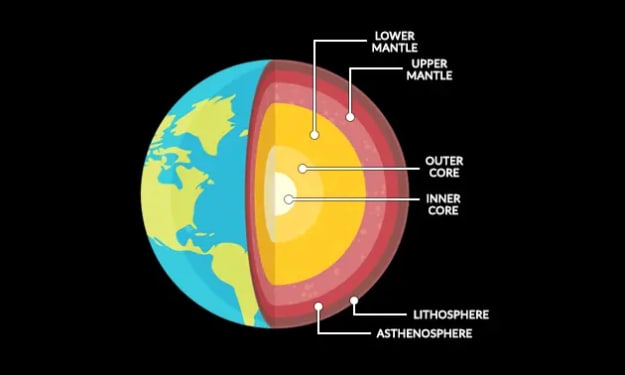
Layers of the Earth (crust, mantle, core)
These layers, starting from the outermost to the innermost, include the crust, mantle, and core. Each of these layers has unique properties, composition, and behavior that contribute to the Earth’s overall functioning. Understanding these layers is crucial to grasping how our planet behaves, from the generation of volcanic eruptions to the creation of Earth's magnetic field.
By Badhan Sen2 years ago in Earth
Earth’s Physical Structure & Geolog
The Earth is made up of Various layers, each having distinct characteristics that contribute to its overall physical structure. These layers and the geological processes that occur within and between them play a significant role in everything from plate tectonics to the creation of mountains, earthquakes, and volcanic activity.
By Badhan Sen2 years ago in Earth
Rainwater Harvesting in Mumbai: Solutions to Water Crisis
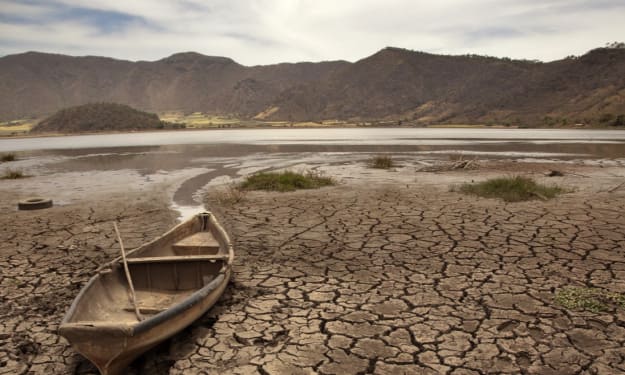
Why Rainwater Harvesting Matters for Mumbai Problem: Mumbai faces a dire water crisis despite receiving heavy rains. The city has been under a 10% water cut since June 2024, with water reservoirs depleting rapidly while rainwater flows unused into the sea. At the same time, urban flooding during monsoons creates havoc, disrupting lives and damaging infrastructure. These interconnected challenges leave Mumbaikars struggling with unreliable water supplies and worsening urban conditions.
By Vikas Chaudhary2 years ago in Earth
The Science of Happiness: How Your Brain is Wired for Joy
Happiness is more than just a fleeting emotion—it’s a complex interplay of biology, psychology, and environment. Over the past few decades, scientists have made significant strides in understanding what makes us happy and how we can cultivate lasting joy. Let’s explore the fascinating science behind happiness and how you can use it to improve your well-being.
By Pure Crown2 years ago in Earth
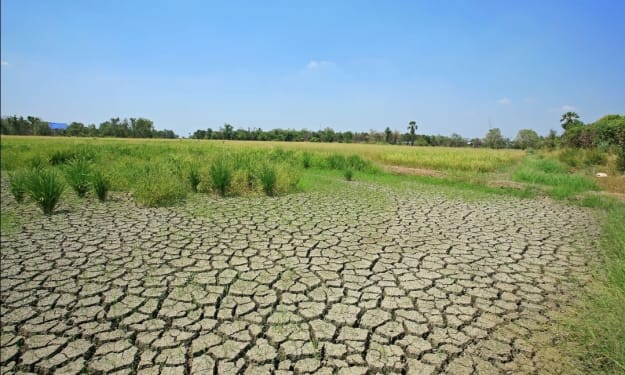
A Farmer’s Last Harvest An elderly farmer struggles to keep his land alive as droughts and unpredictable weather patterns ruin his crops.
Eli Miller’s hands trembled as he gripped the worn leather reins, the horse beneath him slowly trudging through the dry, cracked earth of his family’s land. The once-thriving farm was now a shadow of what it had been. What had once been a patchwork of lush fields, tall cornstalks, and golden wheat, was now a dust bowl. His crops had shriveled in the oppressive heat, the soil too parched to nourish them anymore.
By Kharl Yamut2 years ago in Earth
10 BIRDS-ATTRACTING HANGING PLANTS
FUCHSIA Known for their brightly coloured flowers, fuchsias attract hummingbirds with their nectar- rich blooms. A beautiful flowering plant! Fuchsia is a genus of flowering plants that are popular for their: 1. *Drooping, bell-shaped flowers*: Fuchsia flowers are known for their delicate, pendant-like shape and vibrant colors, ranging from pink to purple to white. 2. *Attracting hummingbirds and butterflies*: Fuchsia plants are a favorite of hummingbirds, butterflies, and other pollinators, making them a great addition to wildlife gardens. 3. *Hanging basket-friendly*: Fuchsia plants are well-suited for hanging baskets, where their trailing stems and flowers can cascade downwards. Some popular varieties of Fuchsia include: 1. Fuchsia magellanica (Chilean Fuchsia) 2. Fuchsia riccartonii (Riccartonii Fuchsia) 3. Fuchsia 'Gartenmeister Bonstedt' (a popular hybrid variety) TRUMPET VINE
By mukesh jaiswar2 years ago in Earth
The Silent Spring
**The Silent Spring** The sun peeked over the horizon, casting a golden hue across the once-thriving bird sanctuary. The trees stood tall but lifeless, their branches bereft of the vibrant foliage that once adorned them. The air was still, a silence so profound that it felt oppressive. In the heart of this desolate landscape stood Sarah, a dedicated environmentalist with a resolute determination to restore the sanctuary to its former glory.
By Фахри Мехти2 years ago in Earth
A Decade of Decline: Navigating Global Challenges and the Path Forward
A Decade of Decline The past decade has been one marked by various socio-economic, political, and environmental challenges, painting a picture of decline in several aspects of global society. While some may argue that there have been significant advancements in technology and innovation, the broader picture shows that the world has been grappling with issues that seem to have worsened over time. This article aims to explore the reasons behind this decline, the factors that have contributed to it, and the consequences that have been felt across nations, industries, and communities. The most glaring aspect of the past decade's decline has been the increasing economic inequality that has spread globally. The rich have continued to get richer, while the poor remain trapped in cycles of poverty with limited opportunities for upward mobility. Technological advancements and the globalization of markets have brought about economic growth in certain sectors, but this growth has been highly uneven. For example, tech giants, financial institutions, and multinational corporations have seen exponential profits, while workers in traditional industries and the gig economy have been left behind. The rise of automation and artificial intelligence has further exacerbated these issues, as jobs that once sustained millions have been replaced by machines and algorithms. The result has been an increasing number of people struggling to find stable employment, leading to the erosion of the middle class in many parts of the world. The divide between the wealthy elite and the working poor has never been so pronounced, and the social fabric that once held communities together is fraying at the edges. Politically, the past decade has seen a rise in populism and nationalism, both of which have contributed to a decline in global cooperation and collaboration. Leaders who espouse anti-immigrant rhetoric and promise to put their country’s interests first have gained traction in many nations, leading to a more fragmented and divided world. This shift has resulted in the weakening of international institutions such as the United Nations, the European Union, and the World Trade Organization, which were once seen as pillars of global governance. In the United States, for example, the election of Donald Trump in 2016 marked a turning point in global politics. Trump's “America First” agenda was seen by many as a rejection of globalism and multilateralism. Similarly, the United Kingdom's decision to leave the European Union, known as Brexit, was a manifestation of growing discontent with globalization and the loss of national sovereignty. These political movements have led to increased political polarization and a breakdown of diplomatic relations between countries. The decline in trust in political institutions has also been evident in many democracies, where voter turnout has decreased and political engagement has waned. This erosion of confidence in leadership has led to widespread frustration and disillusionment, with many people feeling that their voices are no longer being heard. The result has been an increase in civil unrest and protests, as citizens demand change and accountability from their governments. Environmental decline has been another major issue over the past decade, with climate change becoming an increasingly urgent crisis. Despite the growing body of evidence that human activity is contributing to the warming of the planet, global efforts to mitigate the effects of climate change have been insufficient. In fact, some countries have actively rolled back environmental protections in favor of economic growth, even though this has led to long-term damage to ecosystems and communities. Extreme weather events, such as hurricanes, wildfires, and droughts, have become more frequent and more severe, with devastating consequences for local populations. The Arctic ice sheets are melting at an alarming rate, while sea levels continue to rise, threatening coastal cities and entire island nations. Biodiversity is being lost at an unprecedented rate, with species extinction rates higher than ever before. These environmental changes are not only affecting the natural world but are also contributing to the displacement of millions of people, particularly in vulnerable regions such as sub-Saharan Africa, Southeast Asia, and Central America. Another facet of environmental decline has been the widespread pollution of air, water, and land. Plastic waste has become a major problem, with oceans now containing millions of tons of plastic debris. This pollution is not only harming marine life but is also making its way into the food chain, as microplastics are found in seafood consumed by humans. The overuse of pesticides and fertilizers has led to soil degradation and the contamination of water supplies, further compromising food security. Technological progress, while beneficial in many ways, has also contributed to the decline of privacy and personal freedoms. The rapid growth of social media platforms, surveillance technologies, and data collection has created a digital landscape where individuals are constantly monitored and their personal information is commodified. Governments and corporations alike have used technology to track the movements, behaviors, and preferences of individuals, often without their knowledge or consent. The rise of “big data” has led to concerns about the erosion of privacy and the potential for misuse of personal information. In some countries, authoritarian governments have used technology to suppress dissent, monitor opposition groups, and control the flow of information. In democracies, the spread of misinformation and fake news through social media has undermined trust in institutions and made it more difficult for people to discern truth from falsehoods. Additionally, the impact of the COVID-19 pandemic has added to the sense of global decline. The pandemic, which began in late 2019, exposed the fragility of healthcare systems, the inequality in access to resources, and the global interdependence that has made it difficult for countries to act independently. The social, economic, and psychological effects of the pandemic are still being felt in many parts of the world, with millions of people losing their jobs, their homes, and their lives. The pandemic also highlighted the challenges of global cooperation in times of crisis. While some countries were able to respond quickly and effectively to the outbreak, others struggled to contain the virus due to inadequate healthcare infrastructure and a lack of coordinated international support. The unequal distribution of vaccines and medical supplies further exacerbated existing inequalities, leaving vulnerable populations without the resources they needed to protect themselves. Looking ahead, it is clear that the decline of the past decade has not been without consequences. The challenges we face are interconnected and require a coordinated response from governments, businesses, and individuals. The task at hand is to reverse the trends of economic inequality, political polarization, environmental degradation, and technological surveillance, and to work toward creating a more equitable and sustainable future.
By Nora Ariana2 years ago in Earth