short story
17 Facts About China's COLLAPSE That Seem Fake (But are 100% Real!). AI-Generated.
China is facing disaster. Not in some distant future—right now. For decades, we've heard about China's unstoppable rise. The economic miracle. The superpower in waiting. The country that's supposedly eating America's lunch while we argue on social media. But behind the gleaming skyscrapers lies a nation on the brink. What we're about to show you in this video will absolutely blow your mind—because the truth about China is far more shocking than anything you've been told. Fifty million empty apartments threaten to wipe out the life savings of hundreds of millions of Chinese families. China imports 85% of its soybeans and could face mass starvation if those imports were cut off. The Chinese government destroyed its own tech industry, wiping out $1.5 trillion in market value overnight. And China's military—despite its massive size and budget—has a fatal flaw that makes it far weaker than it appears. And we’re just getting started. As China's problems multiply, this weakness becomes increasingly dangerous for global stability. The signs of collapse are everywhere if you know where to look. Let's dive in with the most visible crisis that's already sending shockwaves through China's economy... 1. REAL ESTATE APOCALYPSE China's economy is built on the largest real estate bubble in human history—and it's imploding right now. An astonishing 70% of Chinese household wealth is tied to real estate according to the People's Bank of China, compared to just 25% in the U.S. Housing prices have fallen for 28 consecutive months according to China's National Bureau of Statistics, with no bottom in sight. The scale is mind-boggling: 60 to 80 million empty apartments as of August 2023—enough to house the entire population of Spain—sit unsold across the country. That's approximately $13 trillion of housing inventory going nowhere, according to Rogoff and Yang's research published in the American Economic Review. Major developers like Evergrande have collapsed, defaulting on over $300 billion in debt. Ghost cities stand half-finished, concrete skeletons abandoned mid-construction looking like something out of "The Walking Dead." The situation has become so dire that homeowners have started mortgage boycotts, refusing to pay for homes that will never be completed. Over 400 stalled projects across 86 cities have seen payment strikes according to researchers at the University of Hong Kong. When millions of families realize their life savings are evaporating, social unrest will follow. And it's already beginning. But what's happening with housing is just the tip of the iceberg. The debt situation beneath the surface is beyond comprehension... 2. MOUNTAINS OF DEBT China's debt-to-GDP ratio has soared to a staggering 345% according to the Institute of International Finance—significantly worse than the United States (123%) or Japan (266%). Every year, China prints more fake growth to keep the economy afloat. But the debt is piling up faster than the economy is growing. It's like watching someone dig a hole to get out of a hole. The numbers will shock you: According to the Bank for International Settlements, China added $45 trillion in debt since 2008—equivalent to creating an economy the size of Germany every two years, but all on borrowed money. The game works like this: When the economy slows, the government orders banks to lend more money to build more things—mostly unnecessary infrastructure and empty housing. This creates jobs and boosts GDP statistics temporarily, but saddles the country with ever-increasing debt. It's like using one credit card to pay off another. It works until it doesn't. And when it finally stops working, the collapse will be spectacular. What's happening at the local level is even more alarming than the national crisis... 3. LOCAL GOVERNMENTS ARE BANKRUPT China's local governments owe over $12.3 trillion according to Goldman Sachs—and they've run out of ways to pay it back. For years, these governments relied on selling land to developers. But with the real estate market collapsing, that revenue stream has dried up. Land sales revenue plummeted by 38% in 2023 according to China's Ministry of Finance—the largest drop in a decade. The results are catastrophic. Cities can't pay salaries. Hospitals are running out of cash. In Henan province, government workers have seen their salaries cut by 50%. In others, public servants are being paid in groceries instead of money. The numbers are staggering: Local governments spent approximately $1.3 trillion on "zero COVID" measures in 2022 alone according to the Financial Times—money they simply didn't have. They're now sitting on debt equal to 76% of China's entire GDP. So where do desperate local governments turn when they need cash? To banks, of course. But China's banking system is hiding a secret that will leave you speechless... 4. BANKING CRISIS China's banks are sitting on a powder keg of bad loans that threatens to detonate the entire financial system. According to the Bank for International Settlements, non-performing loans in China are actually closer to 20% of GDP—about ten times what official figures admit. That's $3.8 trillion in loans that will never be repaid, enough to bankrupt the entire banking system several times over. Meanwhile, legitimate small businesses can't access capital. The system is designed to keep the façade intact, not to create actual growth. Bank runs have already started in smaller regional banks. In Henan province, depositors found their life savings frozen, prompting rare public protests. When they tried to withdraw their money, their health QR codes mysteriously turned red, preventing them from traveling to bank branches. This might sound like conspiracy theory stuff, but it actually happened: The government literally used COVID tracking apps to stop people from withdrawing their money. If that doesn't terrify you, nothing will. People are losing faith in the system. When trust in banks evaporates, the financial system collapses. But there's an even more fundamental crisis threatening China's future – the country itself is disappearing at an alarming rate... 5. POPULATION COLLAPSE China's birth rate has fallen to a record low of 6.39 births per 1,000 people according to China's National Bureau of Statistics—less than half the rate needed for population replacement. Despite abandoning the one-child policy, young Chinese couples simply aren't having babies. Housing costs are too high, education is too expensive, and work pressure is too intense. The truth is shocking: China's population declined by 1.39 million people in 2024 alone, marking the third consecutive year of decline, according to the National Bureau of Statistics. The rate of decline is accelerating, driven by the lasting effects of the one-child policy and rising economic pressures on families. By 2100, China's population could shrink to around 633 million, according to UN projections—less than half its current size. A shrinking population means fewer consumers, fewer workers, and fewer innovators. No economy can grow long-term with a rapidly declining population. It's basic math. And here's where things get truly terrifying: this population collapse isn't just a future problem – China's workforce is already vanishing at a rate that defies belief... 6. CHINA'S WORKFORCE COLLAPSE China's working-age population peaked at 997 million in 2014 and has been shrinking ever since, according to Statista. By 2050, China will have 217 million fewer workers according to the Chinese Academy of Social Sciences—a drop larger than the entire U.S. workforce. By 2050, China will have more retirees than the entire population of the United States. These aren't projections from Western think tanks with an agenda—these are China's own numbers. China is facing the prospect of getting old before it gets rich—a demographic trap no major economy has successfully escaped. It's like trying to save for retirement after you've already retired. The most devastating part? The workforce collapse is hitting just as youth unemployment reaches crisis levels... 7. UNEMPLOYMENT NIGHTMARE China's youth unemployment hit a staggering 21.3% in June 2024 according to Trading Economics. The situation became so embarrassing that Beijing simply stopped publishing the numbers. Tens of millions of college graduates can't find jobs matching their education. They've coined a term for themselves: "full-time children," moving back in with parents after failing to launch careers. The numbers are jaw-dropping: In 2023, China produced 11.6 million college graduates according to China's Ministry of Education. At current unemployment rates, about 2.5 million of them are jobless, creating a dangerous pool of educated, ambitious, and deeply frustrated young people. Throughout history, unemployed youth have been the kindling for political upheaval. The Arab Spring didn't start with middle-aged people complaining about politics—it started with young, educated people who couldn't find jobs. The social contract in China has always been simple: sacrifice political freedom for economic opportunity. But what happens when that economic opportunity disappears? The answer will reshape global politics for decades. But the worst part is yet to come. With so many unemployed young people, you'd expect China's manufacturing sector to be thriving. Instead, something unprecedented is happening that's sending shockwaves through the global economy... 8. FACTORIES ARE LEAVING CHINA China was the world's factory—but companies are fleeing in droves at a pace that's hard to comprehend. Apple is aggressively shifting iPhone production to India, with plans to produce 25% of all iPhones in India by 2025 according to JPMorgan. Nike and Adidas have moved much of their manufacturing to Vietnam. U.S. imports from China dropped by 22% between 2022 and 2024 according to U.S. Census Bureau data. This exodus is happening for multiple reasons: Rising labor costs as China's workforce shrinks. Increasing government interference in business operations. Growing fears about a potential conflict over Taiwan that could disrupt supply chains overnight. The numbers are brutal: Foreign direct investment in China plunged 80% in 2023 according to the State Administration of Foreign Exchange, reaching its lowest level since the 1990s. This isn't a blip—it's the beginning of a fundamental restructuring of global supply chains away from China. Once a company leaves, it rarely comes back. Each factory that relocates represents not just current job losses, but future opportunities that China will never see. The "world's factory" label made China rich. Losing it will make China poor. But that's nothing compared to what China did to its own tech sector. What comes next will make your jaw drop... 9. TECH COLLAPSE For years, China's tech sector rivaled Silicon Valley. Companies like Alibaba, Tencent, and ByteDance appeared unstoppable. Then the government destroyed them in what might be the most spectacular act of economic self-sabotage in modern history. Xi Jinping feared tech giants had too much power, so he launched a brutal crackdown that wiped out over $1.5 trillion in market value from Chinese tech companies according to Bloomberg. That's the equivalent of erasing the entire economies of Australia and New Zealand combined—overnight. Jack Ma, founder of Alibaba, vanished for months after criticizing government regulators. When he reappeared, his company was being dismantled. The gaming industry lost billions after strict regulations limited playing time for minors and froze new game approvals. China's AI and semiconductor development has been crippled by U.S. export controls. Despite pouring $50 billion into chip manufacturing, China remains 5-7 years behind Taiwan and the U.S. according to the Semiconductor Industry Association. In 2021, China ranked #1 globally in tech IPOs. By 2023, Chinese tech IPOs had plunged 87% according to data from Refinitiv. You can build a tech sector in decades, but you can destroy one in months. But all these economic problems pale in comparison to a much more fundamental threat—one that's literally drying up before our eyes... 10. WATER CRISIS China is running out of water, and the consequences are more severe than anyone wants to admit. According to China's Ministry of Ecology and Environment, 86% of groundwater in major agricultural regions is polluted, much of it too contaminated for any use. The Yellow River—which supports 160 million people—is drying up, losing 15% of its flow since the 1990s according to research published in the Journal of Hydrology. The North China Plain—home to 400 million people—faces such severe water shortages that the World Resources Institute identifies it as one of the most water-stressed regions on Earth. Water tables are dropping by 3 feet per year according to research published in Nature. Without water, China's farms and factories will grind to a halt. Cities will become unlivable. You can print money, but you can't print rainfall. The numbers are staggering: China has 20% of the world's population but only 7% of its freshwater. Twelve of China's 23 provinces face extreme water stress according to the World Resources Institute. This isn't just an environmental issue—it's an existential threat to China's survival as a unified nation. And it leads directly to perhaps the most shocking vulnerability in China's entire system... 11. CHINA CAN'T FEED ITSELF Despite all its economic power, China has a deadly secret: it cannot feed its own people The country imports 85% of its soybeans according to the USDA, 15% of its rice, and depends heavily on foreign food to survive. If a war, pandemic, or climate disaster disrupts these imports, China faces mass food shortages that would make empty grocery shelves during COVID look like a minor inconvenience. China's food imports have skyrocketed 1,000% since 2000 according to UN Comtrade data. The country spent $140 billion on imported food in 2023 alone—more than any other nation on Earth. Food security isn't just an economic issue—it's existential. Throughout Chinese history, dynasties have fallen when they failed to feed the population. The Chinese Communist Party knows this well; it rose to power during a period of widespread hunger. A country that can't feed itself is perpetually vulnerable. No matter how many aircraft carriers China builds, it can't escape this basic reality. You can't eat aircraft carriers. And speaking of vulnerabilities, there's another resource crisis that keeps Chinese leaders awake at night... 12. ENERGY DEPENDENCE China depends heavily on foreign energy in ways that create critical strategic weaknesses. The country imports 73% of its oil according to China's National Bureau of Statistics, much of it through sea lanes that could be easily disrupted in a conflict. China's strategic petroleum reserve can only cover about 80 days of imports according to the International Energy Agency—well below the 90-day minimum recommended for energy security. In a scenario where China faced a naval blockade, its economy would literally shut down within months. Factories would close. Transportation would halt. Cities would go dark. The numbers are alarming: China's oil import dependency has grown from 30% in 2000 to 73% today according to China's National Energy Administration. Despite massive investments in renewable energy, China still gets 56% of its energy from coal, much of it imported. This vulnerability shapes China's military planning and foreign policy. It's why China has invested heavily in its navy and built artificial islands in the South China Sea. But the fundamental weakness remains: China needs energy imports to survive. All these economic and resource problems are creating something the Chinese government fears more than anything else... 13. CRIME AND SOCIAL UNREST As economic pressures mount, social stability—the Chinese government's highest priority—is fraying in ways that would have been unthinkable a decade ago. According to the China Labour Bulletin, protests and labor disputes increased by 30% in 2023 compared to 2022. Workers riot over unpaid wages. Homeowners demonstrate when their half-built apartments are abandoned. The middle class protests when their bank deposits are frozen. What's truly shocking: According to the Stockholm International Peace Research Institute, China spends $216 billion on internal security compared to $209 billion on its military. That's right—China spends more money controlling its own people than it does preparing for external threats. In Xinjiang province alone, China has detained over a million Uyghurs according to UN estimates. Ethnic tensions simmer beneath the surface in Tibet, Inner Mongolia, and other regions. The social contract that maintained stability for decades—economic growth in exchange for political compliance—is breaking down as the economy falters. And when that social contract fully dissolves, the consequences will reshape global politics. But China's problems aren't just domestic. Its ambitious plan to dominate the global economy is facing a catastrophic failure that will leave you stunned... 14. BELT AND ROAD FAILURE China's Belt and Road Initiative was supposed to be Xi Jinping's legacy—a global infrastructure network extending Chinese influence across continents. Instead, it's becoming a financial disaster of historic proportions. Partner countries are defaulting on Chinese loans, leaving China with trillions in unpaid debts according to the Carnegie Endowment for International Peace. The numbers are staggering: China has lent over $1 trillion to more than 150 countries, much of it to nations that can't possibly repay. Sri Lanka couldn't repay its loans and was forced to hand over a strategic port to China for 99 years. Pakistan, one of China's closest allies, has repeatedly asked to restructure its Chinese debt. Over 40% of Pakistan's external debt is owed to China according to the World Bank. According to research from AidData, 42 countries now have debt exposure to China exceeding 10% of their GDP. Many of these loans were made with predatory terms, including collateral requirements that let China seize assets when countries default. What was meant to expand China's power has instead drained its resources and generated resentment. Belt and Road countries increasingly view China as a predatory lender, not a benevolent partner. But China's global strategy isn't the only thing failing. Its core economic engine—exports—is sputtering in ways that threaten the entire system. 15. COLLAPSING EXPORTS AND TRADE WAR PRESSURE China's once-booming exports are under unprecedented pressure from all sides. According to the Peterson Institute for International Economics, U.S. tariffs now cover 66.4% of Chinese imports, up from just 7.5% in 2018. The European Union has imposed anti-dumping duties on everything from electric vehicles to solar panels. India and Vietnam are rapidly replacing China in key manufacturing sectors. Vietnam's exports to the U.S. have grown by 180% since 2018 according to the U.S. Census Bureau. India has overtaken China as the world's fastest-growing major economy. China's trade surplus fell by 30% in the first half of 2024 compared to the same period in 2023, according to data from China's General Administration of Customs. Chinese exports to the U.S. have fallen from $540 billion in 2018 to $427 billion in 2023 according to the U.S. Census Bureau. China built its economy on exports. Now, the world is moving on, and there's no plan B. But if all these economic, demographic, and resource problems weren't enough, China faces another threat that might be the most dangerous of all... 16. XI JINPING'S TOTAL CONTROL Xi Jinping has eliminated rivals and consolidated more power than any Chinese leader since Mao Zedong, making China effectively a one-man dictatorship. This might sound like strength, but it's actually China's greatest vulnerability. When all decisions flow through one person, the system becomes brittle. Subordinates fear delivering bad news. Alternative viewpoints are suppressed. Reality itself becomes distorted as it travels up the chain of command. According to the Congressional Research Service, Xi holds at least 12 top leadership positions giving him unprecedented control over the party, state, and military. He's extended his rule indefinitely, removing the term limits that ensured regular leadership transitions. The consequences are dire: Economic policy blunders like the tech crackdown and zero-COVID devastated China's economy. According to the World Bank, zero-COVID alone cost China $4 trillion in lost economic output—all because no one could tell Xi it wasn't working. But this creates a dangerous dynamic: When everything is your decision, everything is your fault. As China's problems multiply, there's no one left to blame but Xi himself. And now for perhaps the most surprising fact of all—one that completely contradicts China's carefully cultivated image as a military superpower... 17. MILITARY FAILURES Despite its impressive military parades and growing defense budget, China's military has a fatal flaw: it has never fought a modern war. The People's Liberation Army hasn't engaged in large-scale combat since a brief border war with Vietnam in 1979—and that didn't go well for China. Today's PLA officers have risen through the ranks based on political loyalty, not battlefield experience. Corruption remains rampant in the military despite purges and crackdowns. According to a RAND Corporation study, paid promotions, embezzlement, and kickbacks from defense contractors continue to undermine readiness. In 2022 alone, more than 60 senior military officers were investigated for corruption according to China's Central Military Commission. Chinese soldiers lack real combat experience and train in highly scripted exercises designed to look good for political leaders rather than develop actual fighting Capabilities. According to the U.S. Department of Defense's annual report to Congress, China's military training remains focused on choreographed demonstrations rather than realistic combat scenarios. Even China's growing naval power—often cited as evidence of its rising threat—has never been tested in combat conditions. Building ships is one thing; operating them effectively under fire is quite another. This military inexperience becomes especially concerning when you consider how these other 16 crises might push China's leadership toward conflict as a distraction from domestic problems. History shows that failing regimes often look outward for enemies when facing collapse at home—and rarely has a major power faced so many simultaneous crises as China does today. CONCLUSION The cracks in China's façade aren't just appearing—they're spreading rapidly across every sector of society and economy. From ghost cities to rivers running dry, from banks hiding bad loans to factories fleeing overseas, these aren't isolated problems that can be fixed with a Five-Year Plan. The China we thought we knew—the economic juggernaut destined to overtake America—was built on unsustainable foundations. The real estate bubble, demographic collapse, debt crisis, water shortages, and technological setbacks aren't separate challenges; they're interconnected failures in a system that's reaching its breaking point. History teaches us that no economic miracle lasts forever. The Soviet Union appeared unstoppable until it collapsed virtually overnight. Japan seemed destined to dominate the global economy until its bubble burst in the 1990s. China's trajectory may prove no different—except the scale of its problems dwarfs anything we've seen before. The implications stretch far beyond China's borders. Global supply chains, financial markets, and geopolitical alignments would all be transformed by China's decline. The question isn't whether China faces serious problems—the evidence is overwhelming that it does. The real question is how rapidly these crises will accelerate, and what that means for global stability. What do you think? Which of these facts shocked you the most? Can China somehow overcome these challenges, or are we witnessing the early stages of a historic collapse? Let us know in the comments below. Now go check out China’s COLLAPSE Into POVERTY Is Worse Than You Think! or click this other video instead! And make sure you subscribe to our channel and turn that notification bell on, so you don’t miss any of our upcoming videos.
By taylor lindaniabout a year ago in Earth
Trump Target.
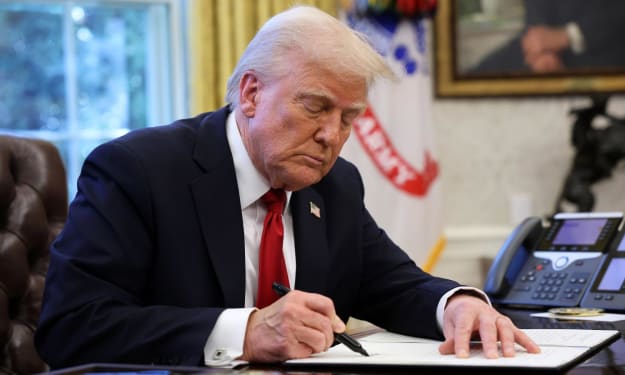
Trump Targets College Accreditation Process in New Executive Order On April 23, 2025, former President Donald Trump signed a series of executive orders aimed at overhauling the U.S. higher education system. Central to these directives is a new executive order that targets the college accreditation process, seeking to eliminate what the administration deems as "woke" ideologies and enforce stricter accountability standards.
By Tanjib @vocalabout a year ago in Earth
What is the Cause of an Earthquake?
The Earth's Moving Plates: Plates Moving Around the Earth The lithosphere, the Earth's outermost layer, is broken up into numerous, substantial pieces known as tectonic plates. These plates move all the time and slowly move across the surface of the Earth. Most of the time, we don't notice this movement. However, at the edges where these plates meet, a lot of pressure can build up. Lines of Pressure and Fault When two tectonic plates grind against each other, they can become locked together due to friction. Over time, as the plates continue to try to move, stress builds up in the rocks at the plate boundaries. The pressure eventually becomes too much, and the rocks suddenly break or slip along a fault line, which is a crack in the Earth's crust. The Release of Energy
By Sammo Tahsinabout a year ago in Earth
Embrace Natural Beauty. AI-Generated.
Rustic Elegance: Why Wooden Planters Are the Secret to Stunning Garden Décor Designing an inviting garden or balcony space is about more than just greenery—it’s about creating a sanctuary that reflects your personal style. And if you’re looking for a classic, elegant, and eco-friendly way to elevate your outdoor aesthetic, wooden planters are the answer.
By The Deco Loftabout a year ago in Earth
North America’s Underside is Slowly Melting into the Earth: A Hidden Geologic Process Unveiled. AI-Generated.
North America’s Underside is Slowly Melting into the Earth: A Hidden Geologic Process Unveiled Deep beneath the surface of the western United States, a silent and powerful process is unfolding — one that scientists believe could reshape how we understand Earth’s internal dynamics. The underside of the North American tectonic plate is slowly melting and dripping into the mantle. This phenomenon, known as "delamination," is not only fascinating from a scientific perspective but could have serious implications for the region's geology, including volcanic activity and seismic risks.
By Adnan Rasheedabout a year ago in Earth
NASA rover discovers out-of-place 'Skull' on Mars, and scientists are baffled
In a startling development that has reignited public imagination and scientific curiosity, a NASA rover has captured an image of what appears to be a skull-like object on the surface of Mars. The object, discovered by the Perseverance rover during its ongoing exploration of the Jezero Crater, is drawing widespread attention from scientists and spa.ce enthusiasts alike, with some calling it the most puzzling find since the infamous “Face on Mars” photographed by Viking 1 in 1976
By Sudipto Halderabout a year ago in Earth
NASA Finds "Skull Hill" Rock On Mars Believes It "Originated From Elsewhere"
NASA Finds "Skull Hill" Rock On Mars Believes It "Originated From Elsewhere" Mysterious Rock Formation on Mars Resembles a Skull Sparks Scientific Debate Over Its Unusual Composition and Origins
By Adnan Rasheedabout a year ago in Earth
Bearish Dollar Bets Move Toward Levels That Raise Risk of Recoil
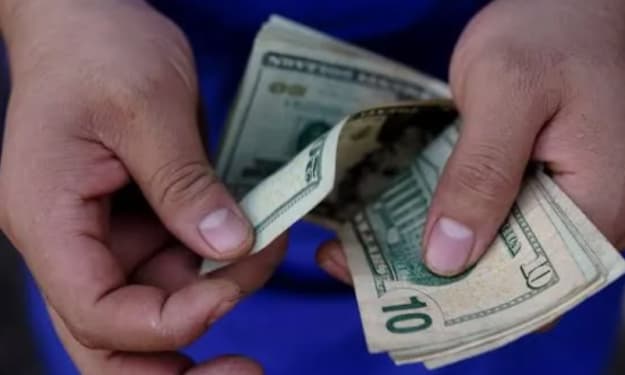
The risk of a sharp rebound is increased when bearish dollar bets reach extreme levels. April 22, 2025 The U.S. dollar is under mounting pressure as traders and investors continue to pile into bearish bets, driving the currency to multi-year lows. The crowded nature of these positions, on the other hand, is alarming financial analysts, who believe that the situation is ripe for a sudden and potentially sharp rebound—a scenario that is frequently referred to as a "short squeeze." The dollar's once-unchangeable status as the world's reserve currency is being challenged as the global financial community loses faith in U.S. economic policy and concerns about the Federal Reserve's independence grow. Yet paradoxically, a near-term rally may be sparked by this extreme bearish sentiment. Dollar drops to a low not seen in years The U.S. Dollar Index (DXY), which tracks the value of the dollar against a basket of major currencies, has dropped to its lowest level in over three years. The index has dropped nearly 9% since the beginning of 2025, indicating widespread dissatisfaction with the fiscal and monetary trajectory of the United States government. President Trump's increasingly protectionist stance, his public criticism of Federal Reserve Chair Jerome Powell, and investor concerns that the Fed's policy decisions are no longer immune from political influence are all major contributors to this decline. Global investors have moved away from the dollar and toward alternative assets like gold, the euro, and the Japanese yen as a result of these developments, which have created an atmosphere of economic uncertainty. Extremes of Bearish Sentiment Approach An unprecedented number of short positions have been created as a result of the dollar's weakness. The dollar's continued decline has been heavily bet on by institutional investors, asset managers, and hedge funds. The Commodity Futures Trading Commission (CFTC) recently released data that shows that net short positions in dollar futures have increased to their highest levels since 2020. Notably, companies like RBC BlueBay Asset Management have made their short positions public, citing a decline in investor confidence in the economic framework of the United States. Mark Dowding, BlueBay's Chief Investment Officer, stated, "The policy uncertainty in Washington is undermining the credibility of the U.S. dollar." "The dollar is no longer regarded as a safe haven." Even though the current fundamentals appear to support this overwhelming bearish consensus, seasoned traders are aware that when everyone is moving in the same direction, the risk of a countermove is greatly increased. Risks of Rebound on the horizon A sharp rebound in the dollar — even if only temporary — could be triggered by several factors. To begin, technical indicators indicate that the dollar is currently oversold. The DXY has recently experienced a false breakout and a descending triangle pattern, both of which are typically signs of reversals in technical analysis. Support levels at 95 and 90 are being closely watched, and in the event of a bounce, resistance is likely to emerge around 101 and 107. If the dollar begins to retrace, even modest upward momentum could force short sellers to cover their positions, sparking a rally.
By GLOBAL NEWSabout a year ago in Earth