short story
The Blue Butterfly , Kaitlyn's story and the unknown benefits of the blue butterfly pea flower
A little girl named Kaitlyn used to reside in a small community hidden deep within a verdant tropical forest.She was well-known around the hamlet for her love of the outdoors and her insatiable curiosity.
By Shamil Ahamed4 years ago in Earth
History of Earth
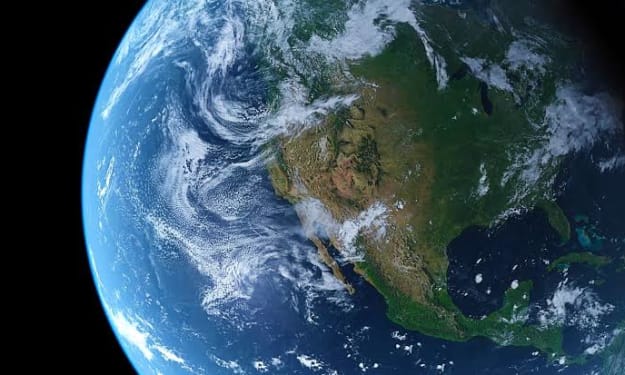
I. Introduction A. Definition of Earth: Earth is the third planet from the sun and the only known planet to support life. It is a terrestrial planet, meaning it is primarily composed of rock or metal. Earth has a diameter of about 12,742 km and is the fifth densest planet in the solar system. B. Importance of Earth: Earth is the only known planet in the universe that can support life. It has a diverse array of ecosystems and biomes that are home to countless species of plants and animals. Additionally, Earth's atmosphere, magnetic field, and distance from the sun all contribute to the planet's ability to support life as we know it. The planet is also an important scientific object of study for understanding the origins of the solar system and the potential for life on other planets. II. Physical Characteristics A. Size and Shape: Earth is the fifth largest planet in the solar system and has an equatorial diameter of 12,742 km and a polar diameter of 12,714 km. It is an oblate spheroid, meaning it is slightly flattened at the poles and bulging at the equator due to its rotation. B. Composition and Structure: Earth's composition is primarily made up of rock, with a small amount of metal in the core. The planet has three main layers: the crust, the mantle, and the core. The crust is the outermost layer and is composed of solid rock. The mantle is the layer beneath the crust and is composed of semi-solid rock. The core is the innermost layer and is primarily composed of iron and nickel. C. Surface features: Earth's surface is covered by 71% water, and the remaining 29% is land. The land is divided into many different landforms such as mountains, valleys, plateaus, and plains. The oceans are also a significant feature of the Earth's surface and are home to a diverse array of marine life. Earth's atmosphere is composed of 78% nitrogen, 21% oxygen, and small amounts of other gases. III. Climate and Weather A. Factors that influence climate: Climate is determined by a variety of factors, including the planet's distance from the sun, the tilt of its axis, and the composition of its atmosphere. The sun's energy drives the Earth's climate, with the amount of solar radiation received by different regions determining temperature and precipitation patterns. Other factors such as ocean currents, topography, and human activity also play a role in shaping Earth's climate. B. Types of climate regions: Earth has a wide variety of climate regions, including tropical, desert, temperate, and polar climates. These regions are determined by factors such as latitude, altitude, and proximity to oceans. C. Weather patterns and phenomena: Weather is the short-term state of the atmosphere, including temperature, humidity, wind, and precipitation. There are many different types of weather phenomena, including thunderstorms, hurricanes, tornadoes, and blizzards. These phenomena are driven by a variety of meteorological processes, such as the movement of air masses and the interaction of warm and cold fronts. IV. Life on Earth A. Diversity of life: Earth is home to a vast array of plant and animal species, including everything from single-celled organisms to complex mammals. The diversity of life on Earth is a result of millions of years of evolution and adaptation to different environments. B. Evolution of life: Life on Earth has evolved over billions of years, with the first simple life forms appearing around 3.5 billion years ago. Over time, these life forms have diversified and become more complex, eventually giving rise to the wide variety of species that exist today.
By Giridharan4 years ago in Earth
India won't be coerced by anybody, Jaishankar's message to Pakistan, China; 'There's only one Modi'
India won't be coerced by anybody, this was the message delivered by India's External Affairs Minister, Dr. S. Jaishankar, in a recent address to the Indian parliament. The statement was directed towards Pakistan and China, two of India's neighboring countries with whom India has had a history of tension and conflict.
By Naveed Jamal4 years ago in Earth
NATO hints at more heavy weapons for Ukraine
NATO has recently hinted at the possibility of providing more heavy weapons to Ukraine in order to strengthen the country's defense against Russian aggression. This move would mark a significant shift in the alliance's approach to the ongoing conflict in Eastern Ukraine, which has been raging for nearly seven years.
By Naveed Jamal4 years ago in Earth
Nepal crash: Dozens killed as plane crashes near Pokhara airport
On Friday, a passenger plane carrying 71 people crashed near Pokhara airport in Nepal, killing dozens of people. The US-Bangla Airlines flight, which was en route from Bangladesh's capital, Dhaka, to Pokhara, lost contact with air traffic control before crashing into a field near the airport.
By Naveed Jamal4 years ago in Earth
What is mountain?
I. Introduction A. A mountain is a large landform that rises above the surrounding terrain in a limited area. It is usually defined by its height and steepness, and is often considered a separate entity from a hill. B. Mountains play a crucial role in the ecosystem as they provide habitat for a wide variety of plant and animal species, act as water catchments, and help regulate the earth's climate. II. Types of Mountains A. Volcanic mountains are formed by volcanic activity and are characterized by steep slopes and a crater at the summit. Examples include Mount Fuji and Mount Vesuvius. B. Fold mountains are formed by the collision of tectonic plates and are characterized by folded rock layers. Examples include the Himalayas and the Andes. C. Plateau mountains are formed by the uplift of a plateau and are characterized by a flat top and steep sides. Examples include the Black Hills and the Blue Mountains. D. Dome mountains are formed by the uplift and erosion of a dome of rock and are characterized by a gentle slope and a circular shape. Examples include the Adirondacks and the Black Hills. III. Formation of Mountains A. Tectonic activity refers to the movement of the earth's crustal plates, which can cause mountains to form through the collision and uplift of rock layers. B. Volcanic activity refers to the eruption of molten rock from the earth's interior, which can create mountains through the buildup of volcanic material. C. Erosion and weathering refers to the gradual wearing away of mountains through the action of water, wind, and ice. IV. Famous Mountains A. Mount Everest is the highest mountain in the world, located in the Himalayas on the border of Nepal and Tibet.
By Giridharan4 years ago in Earth
Why is the Arctic warming so much faster? New
The Arctic is warming at a faster rate than the rest of the planet due to a phenomenon known as Arctic amplification. This occurs because as the polar regions warm, ice and snow melt, exposing darker land and water surfaces that absorb more solar radiation, causing even more warming. Additionally, the loss of sea ice in the Arctic can also cause more warming by altering ocean currents and weather patterns. Greenhouse gases are the main driver of this warming, with the majority of the warming caused by carbon dioxide emissions from human activities.
By yasir saleem4 years ago in Earth
Quadru-Haiku
Earth, Wind, Fire, Sea Elements in harmony flow Nature's symphony The earth lay barren, dry, and cracked, parched from the scorching sun. But then, the wind blew in, bringing with it the life-giving rain. The raindrops fell onto the dry earth, and soon, green sprouts began to appear, signaling the start of new life.
By yasir saleem4 years ago in Earth
World Without US
Sages meditated for Ages; the wise-men wrote millions of pages; kings and statesmen gave brilliant speeches—about joy and happiness, that has eluded the mankind in the known history. What a profound mystery! The pages of human history, daubed in bloodshed, very recently that of World War I & II and Nanking (China) ask the crying question. How to make this Planet Earth, heaven-like? The answer is simple and direct. Eyes full of understanding, the heart full of love and the life that refuses conflicts—enough. These alone are enough. Well, if peace is not possible for humanity, what is the alternative? Alan Weisman seems to have the answer.
By Muhammad Raza4 years ago in Earth
"Guardians of the Grasslands: The Quest to Save Africa's Lions"
The lion, also known as Panthera leo, is a large feline species native to Africa and parts of Asia. It is the second largest cat after the tiger and is known for its distinctive mane, which is only found in male lions. The lion is an apex predator and is at the top of the food chain. They are known for their strength, power, and majestic appearance.
By Ajith kumar4 years ago in Earth