short story
A Fragile Union
Amelia watched the rain pour down relentlessly, each drop a reminder of the world's changing climate. She had always been passionate about environmental issues, while her husband, Jack, remained skeptical about the extent of the crisis. Over the years, their differing beliefs had evolved into a silent battle that strained their once-strong marriage.
By Ogba Wisdom 3 years ago in Earth
Climate Anxiety
The Weight of the World Sophie's anxiety wasn't limited to just her own life; it extended to the planet as a whole. She would lie awake at night, her mind racing with thoughts of melting ice caps, rising sea levels, and catastrophic weather events. She felt a profound sadness for the generations that would inherit a world ravaged by climate change.
By Queen John3 years ago in Earth
The Magical Garden: Cultivating Healthy Habits and Joy
Once upon a time in a small, sunny town, there lived a curious and energetic girl named Lily. She was known far and wide for her insatiable curiosity and boundless energy. Yet, there was one place where she found solace and happiness that matched her endless enthusiasm "the garden".
By keshav jodheea3 years ago in Earth
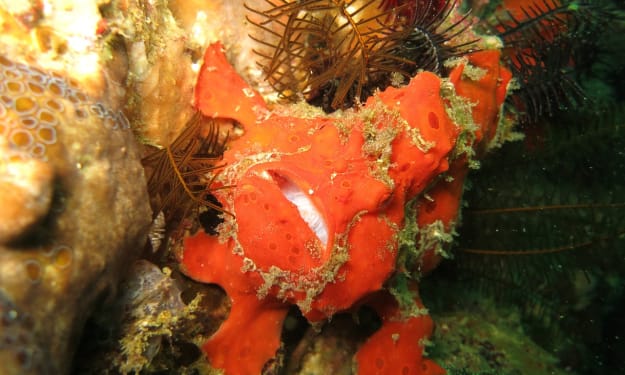
Yes, It's named as Frog but its not a Frog :)
Earth is an beautiful place contains with tons and tons of organism in micro level or macro level. It's full of surprise about the unknown part of the earth called ocean. Even though we're discovering new species daily from the ocean, it has no end to its deepness filled by huge amount of organisms. Yeah i have came across a fish, which can't swim. wait... what? A fish without the nature of swimming... yes, its true the frogfish cant swim. Read some intresting facts about this Psychedelic frogfish.
By Mohamed aashik3 years ago in Earth
Natural Disasters
The sun hung low on the horizon, casting an eerie red glow over the parched landscape. For Sarah, a lifelong resident of Green ridge, this was her home, her haven. But today, her beloved town was under siege by an unprecedented wildfire. As the flames danced closer, the evacuation order came - an urgent cry of despair. Sarah grabbed her daughter's hand, the flames licking at the edges of her vision. Her heart raced, not just from the inferno but from the realization that everything they held dear was threatened. They joined the frantic procession of cars fleeing the encroaching devastation. Smoke choked the air, and the sky became a sinister canvas of orange and black. Sarah's daughter clung to her, tears streaming down her face as they drove away from their home. Meanwhile, Mark, a firefighter with a decade of experience, was battling the blaze on the front lines. Sweat mixed with ash as he and his crew fought desperately to contain the unstoppable force of nature. It was a brutal, unforgiving battle, and with each passing minute, their hope dwindled. As the flames roared around them, Mark couldn't help but think of his own family. His wife and two young sons, who were now staying with relatives far from the danger. He longed to hold them close, to assure them that he'd return safely. But for now, duty bound him to this fiery inferno. Back in the evacuation center, Sarah clung to her daughter, their eyes fixed on the news reports. They watched in heart wrenching silence as images of their town engulfed in flames flickered across the screen. It was as if a piece of their souls had been consumed by the fire. Days turned into weeks, and the wildfire continued its relentless march. Sarah, Mark, and countless others remained in limbo, their lives suspended between fear and hope. The world outside Green ridge moved on, but for them, time stood still. Then, one fateful day, as Mark and his fellow firefighters battled exhaustion and despair, the wind shifted. It was a small miracle in the chaos, a gust of fate that gave them an edge. With renewed determination, they fought harder, using every ounce of their strength to contain the fiery beast. Sarah's eyes never left the television screen. As she saw the firefighters risking their lives to protect her town, tears flowed freely. These brave souls were the unsung heroes, the guardians of her precious home. Finally, after what felt like an eternity, news broke that the wildfire was under control. Sarah and her daughter, along with other displaced residents, were allowed to return to Green ridge. What they found was a landscape scarred by fire, but also a community united by resilience. Mark, his face smudged with soot and exhaustion, watched as the people of Green ridge slowly rebuilt their lives. The incepted sun now set on a town determined to rise from the ashes. In the aftermath of the wildfire, the emotions were raw and powerful. Fear had given way to relief, despair to hope, and isolation to unity. Green ridge had faced the fury o --- In the Shadow of Nature's Fury" Hurricanes, wildfires, and floods, each a relentless sentinel of climate change, continued their relentless onslaught, leaving humanity trembling in their wake. Chapter 1: The Unyielding Story In the coastal town of Havenport, the ever-rising sea levels were an ominous reminder of the planet's changing climate. Year after year, the hurricanes grew fiercer. When Hurricane Lucia arrived, it was a behemoth, its howling winds and torrential rains tearing through the seaside community. The once vibrant town square was now a sea of wreckage, leaving its residents in shock and disbelief. Maria, who had lived in Havenport her entire life, clung to her daughter as their home crumbled around them. The fear in her eyes mirrored the fear that gripped the entire town. Chapter 2: A World Ablaze In the heart of the Western Woodlands, a wildfire known as "The Inferno" raged unchecked. This colossal blaze had a voracious appetite, devouring acres of ancient trees in its path. It wasn't just the forest that burned; it was the dreams and livelihoods of the people who depended on it. Thomas, a ranger who had spent his career protecting this wilderness, watched helplessly as the inferno consumed everything he held dear. He choked back tears, knowing that the world his children would inherit would be forever changed. **Chapter 3: Waters of Wrath** Meanwhile, in the low-lying city of Riverdale, the riverbanks had burst, turning streets into surging torrents. Floodwaters crept higher each year, stealing homes and dreams with each relentless advance. Emily, a young mother, clasped her child's hand as they watched their belongings float away. The floodwaters showed no mercy, leaving behind a desolation that was as much emotional as it was physical. **Chapter 4: A Cry for Change** As these stories unfolded, the world watched in stunned silence. Fear and concern had given way to a growing chorus of voices demanding action. Protests swept through cities, and the youth took up the mantle of leadership, rallying for change. Scientists and experts continued to sound the alarm, underscoring the urgency of addressing climate change. **Chapter 5: The Resilience of Humanity** Yet, amid the chaos and despair, there was a glimmer of hope. Communities rallied together, offering a helping hand to those in need. New technologies emerged, promising a cleaner, more sustainable future. Governments began to take steps to mitigate climate change's worst impacts, investing in renewable energy and green infrastructure. As hurricanes, wildfires, and floods continued their unrelenting dance, humanity found strength in unity and resilience in the face of adversity. The devastating effects of these disasters were undeniable, but they also served as a stark reminder that it was not too late to alter the course of our planet's destiny. --- This story explores the emotional impact of hurricanes, wildfires, and floods linked to climate change while highlighting the resilience and hope that can emerge from adversity. It underscores the importance of addressing climate change to protect our world for future generations.
By Okonkwo chukwuma3 years ago in Earth
Exploring the Depths of Love: A Journey of Connection. Content Warning.
Introduction Love, often described as the most profound of human emotions, has been a subject of fascination, inspiration, and contemplation for centuries. From ancient philosophers to modern scientists, artists, and poets, the concept of love has been explored in countless ways, transcending cultural boundaries and evolving through the ages. In this article, we embark on a journey to delve into the multifaceted world of love, examining its various dimensions, manifestations, and the enduring questions it poses.
By Abdulkarim Shuaibu3 years ago in Earth
poverty
In the heart of a rundown neighborhood, the Smith family's home was a microcosm of despair. Mark and Sarah Smith, once vibrant and hopeful, had fallen victim to the cruel whims of a merciless economy. The factory that had been Mark's livelihood for decades had succumbed to the waves of recession, casting him aside like a forgotten tool in a dusty shed.
By Haruna Jallow3 years ago in Earth
"Lost and Found in Venice: A Journey of Discovery"
Once upon a time, in the enchanting city of Venice, a place where every street was a waterway and every building a masterpiece, lived a young woman named Isabella. She was an adventurous soul with a fervent desire to explore the world, and Venice had been her dream destination since she was a child.
By Bas Basvinth3 years ago in Earth
IF THE EARTH WAS FLAT
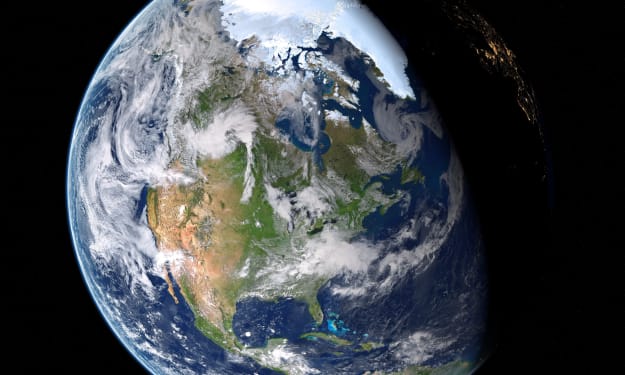
Imagine if the Earth had an edge, and it looked like the edge of a flat Earth. I know, I know, we've talked about it before, but there's something mesmerizing about it. The flat Earth solar eclipse, the diagonally growing trees, the Great Wall of ice guarded by NASA (of course), the flat earthers sure have a great imagination. But what if they were right? How would the Earth hold up in space? Would it revolve around the Sun, or would the Sun rotate around it? And why would you never walk to the Earth's Edge? For thousands of years, the general public thought that the Earth was flat and everything revolved around it. Then Nikolaus Copernicus came around with his spanking new theory. The theory said that the Earth wasn't flat and definitely not the center of anything. His observations led him to believe that our planet is orbiting the Sun. But here we are, 500 years later, and some people around the globe are convinced that the Earth is flat. Well, how would this even work? Do you know why the planets form in a spherical shape? One word: gravity. Gravity is what's pulling matter together equally from every side, and as a result, matter forms into a sphere. Of course, this wouldn't be the case for a flat Earth. Anti-round earthers think that there's no such thing as gravity. We only feel like there is because some mysterious force is accelerating the pancake-shaped Earth upwards. I don't need to tell you that you can't increase the speed forever. At some point, you'd be going too fast. Does anybody feel like a burnt pancake? If you want some real science, then yes, there would be gravity on a flat Earth, and it would be weird. The center of gravity on a flat Earth would be right here in the middle. Everything on Earth and around would be pulled to this point, and the further you got away from the center, the stronger this pull would be. At some point, it would begin to pull you downward, so you would have to start climbing. This would be the reason why you couldn't walk to the edge of a flat Earth. Gravity would be so strong around there that it would be impossible for you to make it. You might never see the gorgeous 45-meter-tall wall of ice called Antarctica, guard railing the Earth's Edge, and you'd never learn what's on the flip side. But at least you wouldn't fall off of it. There would be other side effects of this funny gravity. Objects closer to the edge of the Earth would fall sideways instead of down. Gravity would also make trees grow diagonally on most of the pancake-like Earth because they'd be reaching against the pull of gravity. All the rain, snow, and hail would fall toward the Arctic at the center of the Earth. The precipitation would converge and start to build up. The oceans would get sucked to the center of the disk too and form one big ocean in the middle. A big concern would be the air pressure on a flat Earth. Gravity would draw too much air toward the Earth's center, leaving the areas around the edge with no air pressure at all. That would be bad because people living in a flat Earth Australia wouldn't have enough oxygen to breathe. And if you lived closer to the Middle where the Arctic would be, you'd be crushed by the weight of the atmosphere. But not for long. A flat Earth wouldn't have a geomagnetic field around it. This field is generated by the movements of the Earth's core, and, well, a flat Earth just wouldn't have one. Nothing would be holding our atmosphere in place, and eventually, it would spill into space. We'd be exposed to solar radiation that would cause cancer and damage our DNA, and we'd have no breathable air anywhere on the planet. So I hope you're able to find a life support system lying around. Now, let's get to those questions we've all been waiting for. What would orbit what in this arrangement? Would there be a day and night cycle or time zones? Every flat earther knows that the Sun goes in circles around a pancake-shaped Earth, and so does the moon. They're both around 50 kilometers in diameter and act like huge spotlights. But let's bring good old science to the equation. If the sun worked as a spotlight, you'd see it from everywhere on Earth, even if it didn't shine directly on you. It would look like those alien abduction scenes. Wonder where they got that idea from? In this system, there would be no day and night cycle. That would be pretty strange. How am I supposed to get my beauty
By Akhil Raju3 years ago in Earth