short story
The Pencil's Tale - A Remarkable Journey: Learn, Grow, and Leave Your Mark!
Once upon a time in a quaint village, nestled between rolling hills and babbling brooks, there lived a wise and venerable pencil maker. This elderly artisan, known far and wide for his mastery of turning simple pieces of wood into instruments of creativity, had a peculiar tradition. Each time he crafted a new pencil, he would take the freshly made creation aside for a heartfelt conversation, imparting words of wisdom before it embarked on its journey into the world.
By Tallal Jafri3 years ago in Earth
Climate Challenges and Sustainable Solutions in the UAE: A Leap Towards a Greener Future
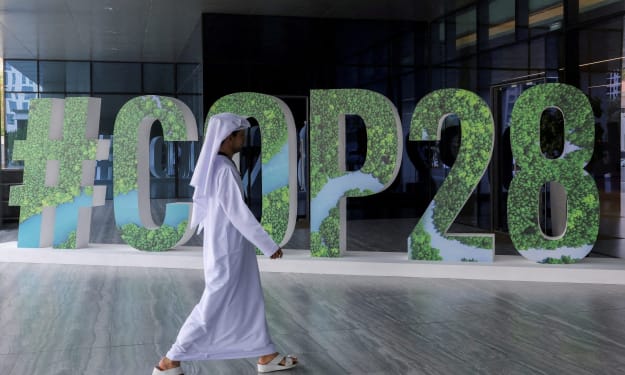
In the wake of the conclusion of COP28, a milestone climate summit that engaged oil-producing nations for the first time in a united effort to safeguard the planet, it’s time to celebrate the positive strides made in addressing global climate challenges.
By Andrea Zanon3 years ago in Earth
Diving into the Past: The Untold Story of IQ Tests
In the hallowed halls of psychology's past, a riveting tale unfolds—a story that begins in 1905 with two visionary psychologists, Alfred Binet and Théodore Simon. Their mission: to navigate the labyrinth of a child's mind in France, where struggling students awaited salvation. Little did they know that their creation, the IQ test, would become both a beacon of enlightenment and a mirror reflecting the darkness of flawed ideologies.
By Tallal Jafri3 years ago in Earth
New York Is Sinking Under It's Own Weight. Content Warning.
A recent study has uncovered a concerning issue in New York City: it's sinking due to the immense weight of its towering skyscrapers. This process, known as subsidence, describes the gradual settling or sinking of the Earth's surface, mainly attributed to the shifting of soft sediments and the city's substantial mass. Despite the seemingly minimal sinking rate of 0.04 to 0.07 inches per year, specific areas within the city experience even faster sinking rates. This poses a significant risk for a city already positioned low and accommodating over 8 million residents. Addressing the growing flood risk and sea level rise, local authorities must devise strategies, although erecting extensive seawalls might not be the most effective solution. Geologists emphasize the adverse impact of constructing more highrises near coastlines, rivers, or lakes, exacerbating future flood risks. Scientific calculations of New York City's building mass—over a million structures—amount to an astounding 1.68 trillion pounds, excluding the weight of roads, sidewalks, and other paved areas. Despite these calculations' limitations, researchers effectively considered the intricate geology beneath the city, identifying soil types prone to subsidence, highlighting the stability of Bedrock that anchors the skyscrapers. Utilizing satellite data and models, researchers generated a sinking map of the city, attributing increased urbanization, groundwater extraction, and drainage practices to worsen the sinking scenario. Similar sinking issues afflict other cities like Jakarta and Venice, each facing unique challenges. Jakarta anticipates partial submersion by 2050, while Venice's foundation on a marshy lagoon, compounded by groundwater extraction, rising sea levels, and tectonic movements, contributes to its slow descent. Venice's sinking rate, matching New York's at 0.04 to 0.07 inches per year, forecasts a significant decline below sea level in the next two decades. Faced with these risks, Venetians are building barriers to thwart encroaching waters, albeit with delays, while the city grapples with building damage due to constant water breaches. Similarly, New Orleans struggles with sinking issues, initially constructed marginally above sea level but now gradually subsiding. Its flat topography and the lower elevation around the French Quarter exacerbate the problem. Efforts to elevate homes and restrict building heights due to unstable soil have been insufficient, compounded by an ill-suited drainage system installed in the 1900s that exacerbated soil destabilization, leading to sinking areas and increased susceptibility to flooding, notably highlighted during Hurricane Katrina. Managing water consumption emerges as a key solution for sinking cities, emphasizing the need for innovative approaches like purifying surface water or converting seawater. An example of successful water management lies in Denmark's NY town, employing rainwater collection to supply toilets and washing machines, showcasing resourcefulness in urban water management. Thus, grappling with these sinking city challenges requires comprehensive strategies, innovative water management, and a concerted effort to sustain these urban centers against the threats of subsidence and rising sea levels.
By Cudjoe Justice3 years ago in Earth
The Weevils Might
An African tale of how weaevels came to being. Farming had been on its peak it was harvest and the harvest was bountiful, the weather did not stand in the way as it did in the past years, when during harvest the rains never left so gave farmers a hard time to finish harvest and prepare for the next farming cycle.
By George Wayne 3 years ago in Earth
True Tale of Real Beauty and the Beast
Once upon a time, in the sun-kissed year of 1537, a tale unfolded in the enchanting Canary Islands that would echo through history, potentially inspiring the timeless Disney classic, "Beauty and the Beast." Imagine, if you will, a world where fairy tales weren't just figments of imagination but had roots in the real lives of extraordinary individuals.
By Tallal Jafri3 years ago in Earth
Echoes of Earth
**Echoes of Earth: Navigating the Heart's Terrain in a Changing Climate** In the small coastal town of Eldridge, where generations had woven their lives into the fabric of the sea, Emily stood on the weathered pier, staring at the horizon. The once bustling harbor now lay subdued, echoing a silence that mirrored the desolation in her heart. Eldridge was not just a town; it was a heartbeat, pulsating with the rhythm of the waves and the laughter of families. Now, it was a wounded soul, battered by the relentless force of climate change.
By Amarachi Mbonu 3 years ago in Earth