short story
Quartz crystals on Mars could preserve signs of ancient life
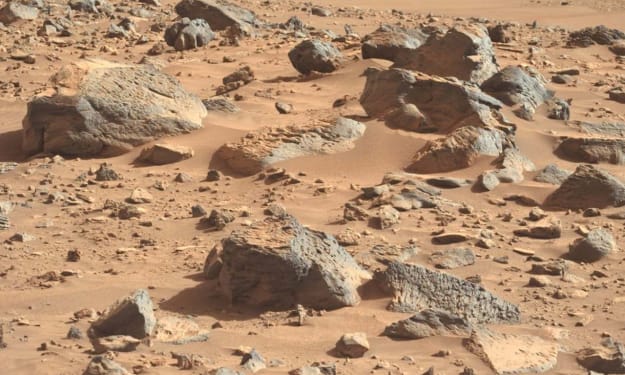
Quartz Crystals on Mars A Potential Key to Unlocking Ancient Life The discovery of pure quartz crystals on Mars marks a groundbreaking moment in planetary science offering new insights into the planet’s geological past and the potential for ancient extraterrestrial life. Alongside quartz NASA’s Perseverance rover has also identified opal and other minerals that indicate significant hydrothermal activity. This discovery could be pivotal, as hydrothermal environments on Earth are known to harbor microbial life. If similar conditions once existed on Mars, these crystals might contain well preserved biosignatures offering crucial evidence of past Martian life.
By Adnan Rasheed2 years ago in Earth
Adventures of Life on Planet Mars
Chapter 1: Daily Grind on Mars Morning on Mars was, like, always chilly. Red sunlight kinda seeped through the windows, lighting up the cramped hallways of the habitat. Malik woke up slow, peeking out his room's window at the same old view - red rocks and dusty skies. Seen it a million times, same routine every day for the past two years since he landed here.
By mohamed elsayed2 years ago in Earth
A problem with the ground system damaged NASA's SpaceX Crew-10.
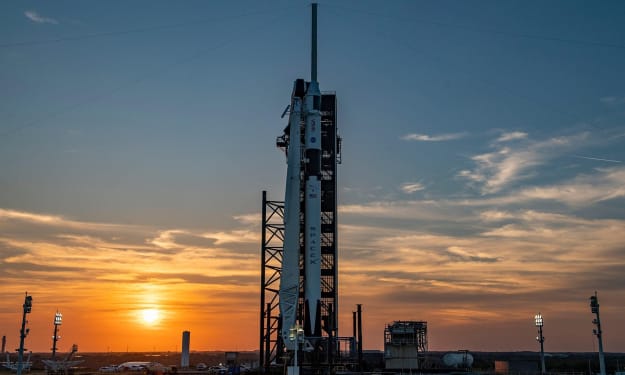
NASA’s SpaceX Crew-10 Mission: Launch Scrubbed Due to Ground System Issue As part of NASA's Commercial Crew Program, SpaceX and NASA were scheduled to launch the Crew-10 mission to the International Space Station (ISS). However, a problem with the ground system discovered during pre-launch preparations at the Kennedy Space Center in Florida prevented the eagerly anticipated liftoff. This unexpected delay has prompted further analysis to ensure a safe and successful launch for the crew aboard the Dragon spacecraft.
By Sohel Tanvir2 years ago in Earth
Four small planets discovered orbiting the nearest single star to Earth
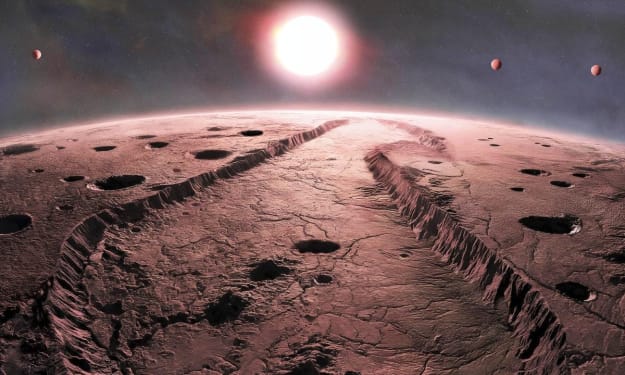
Four small planets discovered orbiting the nearest single star to Earth Barnard’s Star one of the closest stars to our solar system has long fascinated astronomers due to its proximity and rapid movement across the sky. Located just six light years away it is the second closest star system to Earth after the Alpha Centauri system. For decades scientists have speculated about the possibility of planets orbiting Barnard’s Star hoping to uncover clues about planetary formation and the potential for life beyond our solar system. Now recent observations have provided compelling evidence for the existence of four miniature planets orbiting this star marking a significant milestone in exoplanetary research. These newly discovered planets are estimated to be between 20% and 30% the mass of Earth making them some of the smallest exoplanets ever detected. Their orbits are incredibly short with each planet completing a full revolution around Barnard’s Star in just a few days. This discovery is groundbreaking not only because it adds to our growing catalog of exoplanets but also because it highlights the increasing precision of modern astronomical instruments in detecting small and elusive celestial bodies.
By Adnan Rasheed2 years ago in Earth
Falcon 9 launches NASA astrophysics and heliophysics missions
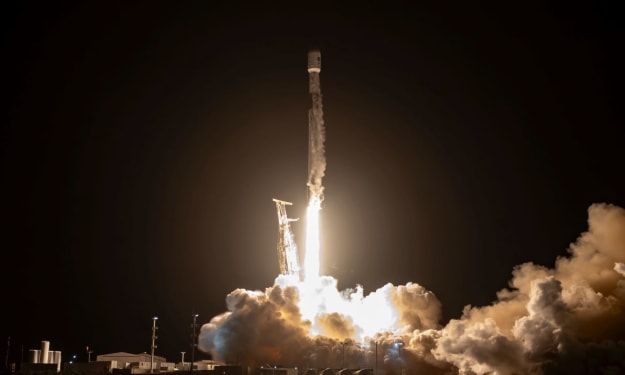
Falcon 9 launches NASA astrophysics and heliophysics missions. The SpaceX Falcon 9 rocket successfully launched from Vandenberg Space Force Base in California at 11:10 p.m. Eastern carrying two critical NASA missions into space. The payload included the Spectro-Photometer for the History of the Universe Epoch of Reionization and Ices Explorer (SPHEREx) spacecraft and four satellites for the Polarimeter to Unify the Corona and Heliosphere (PUNCH) mission. This launch marked an important step in NASA’s astrophysics and heliophysics research, using a rideshare approach to maximize efficiency. Following deployment all five spacecraft established communication with their respective controllers and were reported to be functioning as expected.
By Adnan Rasheed2 years ago in Earth
The Riches of the Amazon Rainforest: A History of Wealth and Mystery. AI-Generated.
The History and Net Worth of the Amazon Rainforest Introduction The Amazon Rainforest, often referred to as the "lungs of the Earth," is one of the most significant natural ecosystems on the planet. Spanning over nine countries in South America, it covers approximately 5.5 million square kilometers. The Amazon's history dates back millions of years, evolving into a diverse and rich biome that sustains over 10% of the world’s known species. Beyond its ecological importance, the Amazon holds immense economic value, from timber and minerals to pharmaceutical and agricultural resources. Estimating the net worth of the Amazon Rainforest is challenging, but its contributions to global biodiversity, climate stability, and economic potential make it invaluable. Ancient History and Indigenous Inhabitants Long before European explorers arrived, the Amazon was home to advanced indigenous civilizations. Archaeological findings suggest that complex societies thrived in the region over 12,000 years ago, with settlements, roads, and even early forms of agriculture. The indigenous tribes utilized the rainforest’s vast resources sustainably, relying on hunting, fishing, and medicinal plants for survival. Even today, over 400 indigenous groups call the Amazon home, preserving their traditional knowledge and cultural heritage. European Exploration and Colonial Exploitation The first European explorer to traverse the Amazon was Francisco de Orellana in 1542. The Spanish expedition encountered vast landscapes, uncharted rivers, and indigenous warriors. With the colonization of South America, European powers began exploiting the Amazon’s resources. The rubber boom of the late 19th and early 20th centuries brought wealth to industrialists but devastated indigenous communities. Extractive industries, including gold mining and logging, further intensified during colonial rule, leading to large-scale deforestation and ecosystem damage. Economic Value of the Amazon Rainforest The Amazon Rainforest has an immense economic worth, with its resources spanning multiple industries:
By Say the truth 2 years ago in Earth
Elevate Your Outdoor Space with Professional Terrace Design and Garden Lighting in NYC
New York City is known for its bustling streets, towering skyscrapers, and vibrant culture. However, amid the urban chaos, many New Yorkers crave a personal outdoor retreat where they can unwind and reconnect with nature. Whether you have a rooftop, balcony, or patio, a well-planned terrace design in New York can transform your space into a green haven. To further enhance your outdoor ambiance, garden lighting & irrigation solutions ensure a functional and visually appealing setting that remains lush and inviting throughout the year.
By PlantSpecialists2 years ago in Earth
The Silent Invaders: How Invasive Species Threaten Ecosystems and Biodiversity
Introduction Nature thrives on balance, with ecosystems forming over thousands of years through intricate interactions between species. However, when an invasive species enters a new habitat, this delicate balance is disrupted. Invasive species—non-native organisms that spread rapidly and harm native ecosystems—are one of the biggest threats to biodiversity worldwide. Their impact extends beyond ecological damage, affecting economies, agriculture, and even human health.
By InkForChange2 years ago in Earth
SpaceX Starship rocket lost during 8th test flight, debris shoots through sky
SpaceX's eighth flight test of its Starship spacecraft ended with a 'rapid unscheduled disassembly,' the same wording Elon Musk's company used when Starship's January flight exploded in the sky. SpaceX's Starship rocket broke up during its eighth uncrewed flight test on Thursday, sending debris shooting through the sky and temporarily affecting flights at Miami-area airports. It was SpaceX's second such setback since January. SpaceX on Thursday lost communication with the rocket just over nine minutes after the launch. Elon Musk's company said the rocket "experienced a rapid unscheduled disassembly," the same language it used when Starship's last test flight in January unexpectedly exploded in the sky The 400-foot spacecraft, composed of both the Starship vehicle and Super Heavy rocket, launched just after 6:30 p.m. ET Thursday.The Federal Aviation Administration said in a statement to USA TODAY Thursday that it activated a debris response area and "briefly slowed aircraft outside the area where space vehicle debris was falling or stopped aircraft at their departure location." Greg Chin, a spokesman with the Miami-Dade Aviation Department, said that "some flights" were delayed at Miami International Airport between 7 and 7:30 p.m. ET "due to falling debris from the SpaceX launch over the Atlantic Ocean." The FAA said that normal operations resumed Thursday night night. As of 8:30 p.m. ET, the National Airspace System Status page listed a departure delay at Miami International due to "space launch debris," though the FAA said in a follow-up email that the airspace was open. Despite Thursday's setback, SpaceX was able to complete its third return and catch of the rocket booster at the launch pad, but it did not complete a Starlink payload deployment test. The Starship vehicle was intended to land in the Indian Ocean. "Obviously a lot to go through, a lot to dig through, and we're going to go right at it," SpaceX's Dan Huot said during the livestream of Thursday's launch. "We have some more to learn about this vehicle." More video of Starship test flight 8 after it exploded… from Jarod Long “Captured this while driving Southeast on Queens Hwy in Exuma Bahamas at 6:40pm ET. It was a lot more colorful than what shows up in the video.” Previous launch ended in fiery explosion The previous Starship demonstration on Jan. 16 ended in a fiery explosion after the Starship vehicle was lost during its suborbital flight. Mission controllers lost contact with the spacecraft within 8 1/2 minutes of its flight before determining that it was destroyed in what the company called a “rapid unscheduled disassembly.” Video on social media showed the explosion and its aftermath as remains of the spacecraft are seen breaking up in what looks like a stunning meteor shower.SpaceX, which conducted an investigation with the FAA, determined that the mishap was due to a series of propellant leaks and fires in the aft section of the vehicle that caused “all but one of Starship’s engines to execute controlled shut down sequences." This led to the communication breakdown and the vehicle to trigger its own self destruction.This story has been updated with new information Starship flew within a designated launch corridor to safeguard the public both on the ground, on water, and in the air. Following the anomaly, SpaceX teams immediately began coordination with the FAA, ATO (air traffic control) and other safety officials to implement pre-planned contingency responses.Approximately two and a half minutes into flight, the Super Heavy booster shutdown all but three of its Raptor engines as planned for hot-staging separation. Starship then successfully lit its six Raptor engines and separated from the Super Heavy booster to continue its ascent to space. The Super Heavy booster then relit 11 of 13 planned Raptor engines and performed a boostback burn to return itself to the launch site. As Super Heavy approached the launch site, it relit 12 of the planned 13 engines at the start of its landing burn to successfully slow the booster down. The three center engines continued running to maneuver the booster to the launch and catch tower arms, resulting in the third successful catch of a Super Heavy booster.
By Havana Music2 years ago in Earth
Starship launch: How to watch Elon Musk's SpaceX conduct latest rocket launch from Texas
SpaceX's massive Starship spacecraft is due to get off the ground again Monday evening from South Texas for the second time this year. The impending launch, which was pushed from Friday before the Federal Aviation Administration gave the green light, comes little more than a month since the previous flight test in January ended with the vehicle unexpectedly exploding in the sky. The most recent demonstration of the biggest and most powerful rocket ever built also included the successful return of the booster, known as the Super Heavy, at the launch pad.The 400-foot vehicle, composed of both the 165-foot Starship spacecraft and the 232-foot Super Heavy rocket, is being developed and tested before eventually being used on future crewed spaceflight missions. SpaceX envisions the spacecraft as being a fully reusable transportation system that will be vital for when NASA astronauts return to the moon, perhaps as early as 2027. SpaceX CEO Elon Musk has also made clear his ambitions for Starship to ferry the first humans from Earth straight to Mars. Here's how to watch the Starship test launch, and what to know about SpaceX's goals for the flight: SpaceX is planning to launch its Starship on Monday on its eighth flight test from the company's Starbase in Boca Chica near Brownsville, Texas. The launch window opens at 6:30 p.m. EST. How to watch SpaceX livestream SpaceX will host a livestream of the flight test that will begin about 40 minutes before liftoff. The webcast is available on its website and on social media platform X. Coverage will also be available on SpaceX's on new X TV app. "As is the case with all developmental testing, the schedule is dynamic and likely to change, so be sure to check in here and stay tuned to our X account for updates," SpaceX said. SpaceX once again plans to attempt a third return and catch of the rocket booster at the launch pad, which would cause sonic booms in the area around the landing zone. The maneuver, which was first pulled off once during the October demonstration, was called off during the November launch, which then President-elect Donald Trump attended. The Starship vehicle itself is targeted to land once again in the Indian Ocean. However, SpaceX plans to conduct experiments geared toward one day returning the vehicle, known as the the upper stage, back to the launch site. In another objective, SpaceX will take a second shot at a Starlink payload deployment test – a key capability for the vehicle in the future that was called off during the previous launch. The four Starlink simulators, similar in size and weight to next-generation Starlink satellites, will be on the same suborbital trajectory as Starship and are expected to burn up on reentry.Additionally, the company plans to once again reignite its Raptor engines in space to attempt an orbital burn – a crucial maneuver to one day bring a vehicle back to the ground. Starship's Eighth Flight Test Starship’s eighth flight test lifted off from Starbase in Texas at 5:30 p.m. CT on Thursday, March 6. The Super Heavy booster successfully lit its 33 Raptor engines and propelled Starship through a nominal first-stage ascent. Approximately two and a half minutes into flight, the Super Heavy booster shutdown all but three of its Raptor engines as planned for hot-staging separation. Starship then successfully lit its six Raptor engines and separated from the Super Heavy booster to continue its ascent to space. The Super Heavy booster then relit 11 of 13 planned Raptor engines and performed a boostback burn to return itself to the launch site. As Super Heavy approached the launch site, it relit 12 of the planned 13 engines at the start of its landing burn to successfully slow the booster down. The three center engines continued running to maneuver the booster to the launch and catch tower arms, resulting in the third successful catch of a Super Heavy booster. Starship continued its ascent to its planned trajectory. Prior to the end of the ascent burn, an energetic event in the aft portion of Starship resulted in the loss of several Raptor engines. This in turn led to a loss of attitude control and ultimately a loss of communications with Starship. Final contact with Starship came approximately 9 minutes and 30 seconds after liftoff. Starship flew within a designated launch corridor to safeguard the public both on the ground, on water, and in the air. Following the anomaly, SpaceX teams immediately began coordination with the FAA, ATO (air traffic control) and other safety officials to implement pre-planned contingency responses. Any surviving debris would have fallen within the pre-planned Debris Response Area. There are no toxic materials present in the debris and no significant impacts expected to occur to marine species or water quality. If you believe you have identified a piece of debris, please contact your local authorities or the SpaceX Debris Hotline at 1-866-623-0234 or at [email protected]. With a test like this, success comes from what we learn, and today’s flight will help us improve Starship’s reliability. We will conduct a thorough investigation, in coordination with the FAA, and implement corrective actions to make improvements on future Starship flight tests.
By Havana Music2 years ago in Earth
The Moon
The Moon: Earth’s Timeless Companion The Moon, Earth’s only natural satellite, has captivated human imagination for millennia. It has inspired myths, guided calendars, and influenced tides — all while silently orbiting our planet. Despite its calm appearance in the night sky, the Moon is a dynamic celestial body with a rich history and profound significance for life on Earth. This article explores the Moon’s origin, structure, effects on Earth, and its future in both science and exploration. Origin and Formation of the Moon The Moon is thought to have formed around 4.5 billion years ago, shortly after the Earth’s formation. The most widely accepted theory is the Giant Impact Hypothesis. According to this theory, a Mars-sized body called Theia collided with the young Earth. The impact was so massive that it ejected a large amount of debris into space. This debris eventually coalesced under the influence of gravity, forming what we now know as the Moon. Evidence supporting this theory includes the similarities between the chemical composition of the Moon and Earth’s outer layers, as well as the Moon's lack of a substantial iron core, suggesting it was formed from the Earth's mantle rather than from an independent planetary body. Structure and Composition of the Moon The Moon's structure is layered, much like Earth’s, though its composition and scale differ significantly. The Moon is about 3,474 kilometers (2,159 miles) in diameter — roughly a quarter of Earth’s size — and has a much weaker gravity, about 1/6th of Earth’s. The Moon’s structure consists of the following layers: Crust: The outermost layer, averaging about 50 kilometers thick, is composed mostly of silicate rocks. The crust is heavily cratered due to billions of years of meteor impacts. Mantle: Beneath the crust lies the Moon’s mantle, composed of solid rock rich in magnesium and iron. It is believed to have once been molten, helping to shape the Moon’s surface through volcanic activity. Core: The Moon's core is small, with a radius of about 350 kilometers. It contains a solid inner core made of iron and a fluid outer core, though both are much smaller compared to Earth’s core. Unlike Earth, the Moon lacks a global magnetic field, though localized magnetic anomalies exist, likely remnants from its early history when its core was more active. The Moon’s Influence on Earth Despite its smaller size, the Moon exerts a powerful influence on Earth. Its gravitational pull affects multiple aspects of our planet's natural systems: Tides: The most obvious effect of the Moon on Earth is its control over ocean tides. The Moon’s gravity pulls on Earth’s oceans, creating bulges of water that result in high and low tides. These tidal movements are essential for various ecosystems, helping to shape coastlines, regulate marine life cycles, and even influence weather patterns. Stabilizing Earth’s Axis: The Moon plays a critical role in stabilizing Earth’s tilt on its axis, which is responsible for the planet's seasons. Without the Moon, Earth’s axial tilt could vary dramatically, causing extreme climatic shifts that would make life as we know it far less stable. Slowing Earth’s Rotation: The Moon is gradually slowing down Earth’s rotation through a process called tidal friction. Over millions of years, this has lengthened our days. Scientists estimate that when the Moon first formed, a day on Earth was only about 5 hours long! The Moon’s Surface and Features The Moon's surface is a stunning, desolate landscape shaped by billions of years of cosmic impacts and volcanic activity. Key features of the Moon’s surface include: Craters: The Moon is dotted with thousands of impact craters caused by collisions with asteroids and comets. Notable craters include Tycho, with its distinctive ray system, and Copernicus, a large crater visible even to the naked eye. Maria (Lunar Seas): The Moon’s dark plains, known as maria (Latin for "seas"), were formed by ancient volcanic eruptions. They are composed of basaltic lava and cover about 16% of the Moon’s surface. The most famous maria include the Sea of Tranquility and the Ocean of Storms. Highlands: The Moon’s lighter, more reflective areas are its highlands, consisting of rugged mountains and older rock formations. These areas are heavily cratered and provide evidence of the Moon’s ancient past. Lunar Dust: The Moon’s surface is covered with a fine, powdery layer of dust called regolith. This dust was created by the constant bombardment of micrometeorites over billions of years. Interestingly, this dust poses a challenge for future lunar missions as it can damage equipment and be harmful if inhaled. The Moon and Human Exploration Human fascination with the Moon has led to incredible feats of exploration. Apollo Missions: The most famous lunar missions were NASA’s Apollo missions from 1969 to 1972. Apollo 11 marked a historic moment when Neil Armstrong became the first human to walk on the Moon, famously declaring, "That’s one small step for man, one giant leap for mankind." Scientific Discoveries: These missions brought back over 380 kilograms (840 pounds) of lunar rock and soil samples, helping scientists better understand the Moon’s composition and history. The discovery of water ice in permanently shadowed craters near the poles has renewed interest in future missions. Future Missions: Today, space agencies like NASA, ESA, and China’s CNSA are planning new lunar missions. NASA’s Artemis program aims to return humans to the Moon by the mid-2020s, with the goal of establishing a sustainable human presence and using the Moon as a stepping stone for future Mars exploration. The Moon’s Future and Its Role in Space Exploration The Moon's future is intertwined with human ambition and scientific curiosity. It may serve as a critical hub for future space exploration in several ways: Lunar Bases: Plans are underway to build permanent bases on the Moon, which could serve as research stations or refueling points for missions to Mars and beyond. Mining Resources: The Moon contains valuable resources like helium-3, which has potential for future nuclear fusion energy, and water ice, which can be converted into oxygen and hydrogen for rocket fuel. Astronomical Observations: The Moon's lack of atmosphere makes it an ideal location for telescopes, offering clearer views of the universe than Earth’s surface allows. Conclusion The Moon, though seemingly distant and silent, remains a vital part of Earth’s natural systems and human exploration efforts. It has shaped our planet's history, influenced our cultures, and now promises to be a gateway to deeper space exploration. As we prepare for a new era of lunar exploration, the Moon stands as both a reminder of our past and a beacon guiding us toward an exciting future.
By Budhirai Tripura2 years ago in Earth