short story
Earth Could Have Billions More People Than We Ever Realized.
Earth Could Have Billions More People Than We Ever Realized. For decades global population estimates have been the foundation of policymaking, infrastructure planning and resource allocation. However a new study suggests that we may have vastly underestimated the world’s rural population by as much as 84 percent in some cases. If true, this revelation could mean that Earth's actual population is billions higher than previously thought. A research team led by environmental engineer Josias Láng Ritter from Aalto University has provided the first concrete evidence that a significant portion of the rural population is missing from global datasets. Their study published in New Scientist highlights a striking discrepancy in population data particularly in less developed rural areas where data collection has historically been inconsistent and inaccurate.
By Adnan Rasheed2 years ago in Earth
The ‘Space Laser’ Wars Have Begun—And America Wants to Be First to Develop the High-Powered Weapons
The ‘Space Laser’ Wars Have Begun—And America Wants to Be First to Develop the High-Powered Weapons The concept of space based laser weapons has long been a staple of science fiction but it is now rapidly becoming a reality. As technological advancements accelerate major global powers particularly the United States are investing heavily in the development of high powered laser systems designed for space warfare. The emergence of these weapons marks the beginning of a new era of military competition one that extends beyond the Earth’s surface and into the vastness of space. The United States recognizing the strategic advantages of space based lasers has committed substantial resources to research and development in this field. The Pentagon and other defense agencies are exploring the potential of laser weapons to enhance national security neutralize threats and establish dominance in space. Unlike traditional kinetic weapons which rely on projectiles or missiles lasers offer near instantaneous response times precision targeting and the ability to disable enemy satellites and other space assets without generating debris. This makes them an attractive option for modern warfare particularly as nations become increasingly reliant on satellite networks for communication navigation surveillance and military operations. One of the key motivations behind the U.S. push for space-based laser technology is the growing threat posed by adversarial nations particularly China and Russia. Both countries have been actively developing their own space weaponry including anti satellite (ASAT) missiles and electronic warfare capabilities. In recent years China has demonstrated its ability to destroy satellites using ground based missiles while Russia has been accused of testing space based weapons capable of targeting American and allied assets. These developments have raised concerns in Washington about the vulnerability of U.S space infrastructure and the need to counter potential threats with advanced defensive and offensive measures.
By Adnan Rasheed2 years ago in Earth
Unseen Anomalies Are Shaping Our Understanding of Earth’s Tectonic Plates
Unseen Anomalies Are Shaping Our Understanding of Earth’s Tectonic Plates. For decades scientists have relied on the traditional model of plate tectonics to explain Earth's geological activity. This model developed in the mid 20th century describes how the planet’s rigid outer shell is divided into massive plates that move and interact causing earthquakes volcanic eruptions and the formation of mountains. However recent discoveries of unseen anomalies beneath the Earth's surface are challenging our conventional understanding of these processes. These unexpected findings suggest that the planet’s interior is far more complex than previously thought opening new avenues for research and potentially reshaping our understanding of how Earth’s tectonic system operates. One of the most intriguing discoveries comes from deep sea exploration and seismic imaging technology which have revealed previously undetected structures beneath the Earth’s crust. Scientists have found massive mysterious blobs of dense material lurking at the boundary between the Earth’s mantle and core. These structures known as Large Low Shear Velocity Provinces (LLSVPs) were first detected through seismic wave studies. Unlike the solid mantle these regions slow down seismic waves indicating that they may be composed of a different material than the surrounding rock. Some researchers believe these anomalies could be remnants of ancient tectonic plates that were subducted and sank deep into the planet over millions of years while others suggest they could be chemically distinct regions that have existed since Earth's formation. Another anomaly altering our perception of plate tectonics is the discovery of hidden fragmented plates. Traditionally scientists have categorized Earth's tectonic activity based on the interactions of large plates such as the Pacific North American and Eurasian plates. However recent research using advanced satellite technology and GPS data has revealed microplates smaller previously overlooked tectonic fragments that move independently. One such example is the Capricorn Plate in the Indian Ocean which was once considered part of a larger structure but is now recognized as a separate entity. The recognition of these microplates has significant implications as they may influence seismic activity in ways previously unaccounted for potentially leading to a reassessment of earthquake risk in various regions. The role of deep mantle plumes another unseen anomaly is also reshaping how scientists view tectonic movement. Mantle plumes are upwellings of hot rock that rise from deep within the mantle and can create volcanic hotspots such as those responsible for the Hawaiian Islands. Traditionally mantle plumes were thought to be relatively stationary acting independently of plate movements. However new studies suggest that these plumes may interact more dynamically with the overlying tectonic plates than previously believed. This interaction could explain irregular volcanic activity in regions far from plate boundaries challenging the conventional understanding that most volcanic activity is strictly tied to subduction zones and rift boundaries. Additionally recent studies of the Earth's lithosphere the rigid outer layer that includes the crust and upper mantle have revealed that it is not as uniform as once thought. The lithosphere varies in thickness and strength which can significantly influence tectonic movement. For example regions where the lithosphere is unusually thin or weak may experience unique forms of deformation such as the slow creeping motion seen in the Basin and Range Province in North America. This observation suggests that the traditional rigid plate model may need to be revised to incorporate a more fluid and dynamic understanding of how different parts of the lithosphere behave under stress.
By Adnan Rasheed2 years ago in Earth
The Day the Lettuce Laughed
When Mundane Meets Madness: A Grocery Store Odyssey We’ve all been there: a quick trip to the grocery store for milk and eggs, only to find ourselves lost in aisles of fluorescent-lit monotony. But what if that humdrum errand became a portal to the gloriously absurd? Buckle up for a surreal comedy where logic takes a vacation, and sentient vegetables reign supreme.
By mohamed khalil2 years ago in Earth
The Future of Space Exploration: Humanity’s Next Giant Leap
**The Future of Space Exploration: Humanity’s Next Giant Leap** *March 19, 2025* --- ## **Introduction** Space exploration has long captivated humanity, from the Moon landing in 1969 to the latest missions to Mars. As technology advances, the possibilities of space travel and extraterrestrial colonization are becoming more tangible. This article explores the most recent developments in space exploration, the challenges ahead, and the potential for a future beyond Earth.
By ziad alsed2 years ago in Earth
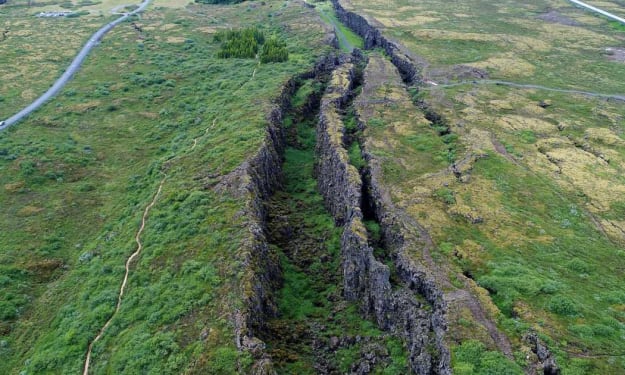
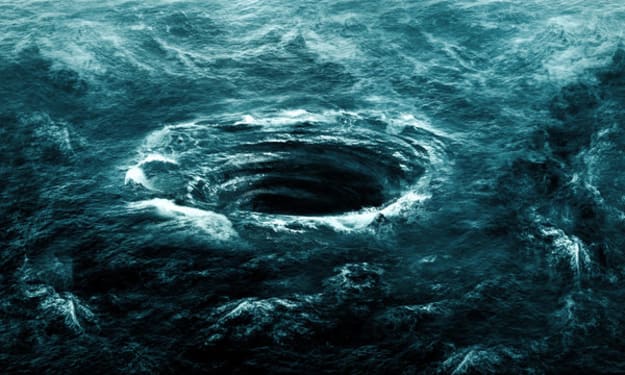
10 Mysterious Places on Earth Science Can’t Explain
The world is full of strange and unexplainable places. While science has solved many of nature’s mysteries, some locations continue to baffle experts. From gravity-defying hills to unexplored deep-sea anomalies, these sites raise more questions than answers. Here are 10 of the most mysterious places on Earth that science can’t fully explain.
By Muhammad Hakimi2 years ago in Earth
Fight between bald eagle and Canada goose in Burlington bay 'very symbolic,' says photographer . AI-Generated.
Fight between bald eagle and Canada goose in Burlington bay 'very symbolic,' says photographer A bald eagle may have thought it spotted an easy lunch in a Canada goose sitting on an icy bay in Burlington, Ont., but according to Mervyn Sequeira — who watched and photographed a 20-minute battle between the two birds — the goose held its own.
By Md Naim Hasan2 years ago in Earth
Traveling is a Drug
Traveling is a Drug Travel has a way of altering your perspective. The moment you arrive in an unfamiliar place, something shifts inside you. The air carries a different scent, the streets pulse with new energy, and your routine dissolves into the background. It’s more than just visiting new places—it’s about transformation, breaking patterns, stepping into uncertainty, and discovering yourself in unexpected ways.
By ZLATO Peak2 years ago in Earth