short story
"Scorpions: Nature’s Ancient Survivors with a Deadly Secret"
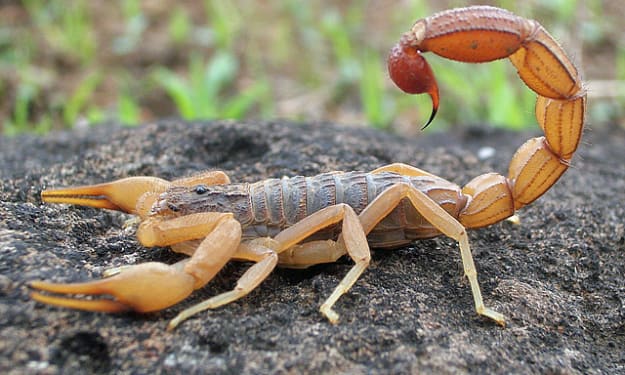
Scorpions are among nature's most fascinating and mysterious creatures. Not only have they managed to survive on Earth for hundreds of millions of years, but they have also adapted to some of the harshest environments known to man. These venomous arachnids are often feared, yet they are also admired by scientists for their evolutionary resilience and medical potential. Physical Characteristics Scorpions typically range from 8 to 21 centimeters in length, although fossil records reveal that some prehistoric species grew up to half a meter long. Their body is divided into three segments: the cephalothorax (head), the mesosoma (abdomen), and the metasoma (tail). The tail ends in a venomous stinger used for defense and hunting. Their powerful pincers are not only used to capture prey but also to sense vibrations and navigate their environment. Exceptional Survival Skills What truly sets scorpions apart is their incredible survival ability. Scientific studies have shown that a scorpion can survive up to a year without food. This is due to their highly efficient metabolism, which allows them to conserve energy in extreme conditions. Whether in scorching deserts or cold mountain terrains, scorpions have developed biological mechanisms to thrive where few other creatures can. Ancient Origins According to paleontological evidence, scorpions have existed for over 430 million years. This makes them one of the oldest living species on the planet—predating the dinosaurs by hundreds of millions of years. Early scorpions were much larger than today’s species, likely due to higher atmospheric oxygen levels during the Paleozoic era. Their ancient lineage is a testament to their adaptability and strength in the face of changing environments and extinction events. The Power of Venom While scorpions are often feared for their venom, this very feature is turning out to be a treasure trove for modern medicine. The venom contains a complex mixture of neurotoxins and proteins, many of which have shown promising results in the treatment of serious diseases such as cancer, multiple sclerosis, and autoimmune disorders. Scientists have isolated compounds from scorpion venom that target cancer cells without harming healthy ones, leading to experimental drugs and potential future therapies. Venom is extracted in controlled laboratory settings and studied for pharmaceutical applications. What was once seen solely as a tool of fear and defense is now being viewed as a source of healing and hope. Habitat and Lifestyle Scorpions are predominantly nocturnal creatures, hiding under rocks, in burrows, or within crevices during the day and emerging at night to hunt insects and small animals. They are opportunistic predators and can adapt their diet and behavior based on environmental availability. They thrive in arid deserts, humid rainforests, and even mountainous regions. This wide adaptability contributes to their presence across every continent except Antarctica. Cultural Symbolism and Human Interaction Throughout history, scorpions have held symbolic meaning in various cultures. In some Middle Eastern and African traditions, they represent protection and transformation, while in others they symbolize danger and death. In astrology, Scorpio is a zodiac sign associated with intensity and mystery, further emphasizing the scorpion’s deep cultural impact. Despite their sometimes fearsome reputation, scorpions are not aggressive toward humans unless provoked. Only a small percentage of scorpion species possess venom potent enough to be lethal to humans, and even those rarely cause fatalities thanks to medical advancements. Conclusion Scorpions are far more than just venomous pests lurking in the shadows. They are living fossils—ancient survivors of a world that has drastically changed around them. Their ability to endure extreme conditions, survive long periods without food, and adapt over millions of years makes them one of the most resilient creatures on Earth. Furthermore, their venom, once solely associated with fear, is now being studied as a powerful resource for developing life-saving medications. As science continues to explore the hidden potentials of nature’s creatures, scorpions stand as a powerful reminder of how little we still know—and how much we have yet to learn. May we learn to respect these creatures not only for their danger but also for their contributions to the world of science and medicine. And may we all remain safe and protected from the risks of the wild.
By Insect Legendsabout a year ago in Earth
Emerald Valleys and Sapphire Skies: Discovering Afghanistan’s Natural Wonders
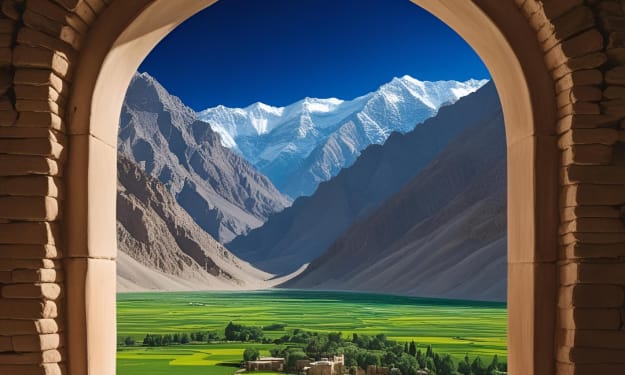
I arrived in Afghanistan not seeking war stories, nor political headlines—I came chasing colors. As a photographer and a wanderer of the forgotten, I had spent years chasing the world’s fading beauty. And now, I was here, drawn by whispers of emerald valleys and sapphire skies. Afghanistan, for most, meant conflict. For me, it meant a mystery yet untold.
By Mohammad Tariq Sideeqiabout a year ago in Earth
All About the World's Largest Coral Reef
All About the World’s Largest Coral Reef: The Great Barrier Reef The world's largest coral reef is the **Great Barrier Reef**, a natural wonder so vast it can be seen from outer space. Located in the Coral Sea off the coast of Queensland, Australia, this underwater paradise is one of the most diverse and complex ecosystems on the planet. It holds immense ecological, economic, and cultural value, and has become a symbol of both nature's beauty and fragility. ## Geography and Size The Great Barrier Reef stretches over **2,300 kilometers (1,400 miles)** along the northeastern coast of Australia. It covers approximately 344,400 square kilometers (133,000 square miles) and is made up of more than 2,900 distinct reefs and 900 islands. To put this into perspective, it is about half the size of Texas and larger than Italy as a whole. It is the "largest coral reef system in the world" due to its enormous size, and it is one of the "Seven Natural Wonders of the World." The Great Barrier Reef Marine Park, which was established in 1975 to help safeguard the ecosystem from human influence, encompasses the reef. ## Biodiversity: A Living Work of Art The Great Barrier Reef, also known as the "rainforest of the sea," is one of the richest ecosystems in the world. ** It supports an extraordinary variety of marine life: - **Over 1,500 species of fish** - **400 species of coral** - **134 species of sharks and rays** - There are thirty species of marine mammals, including dolphins and dugongs. - **6 species of sea turtles** - More than 200 different kinds of birds The reef is also home to thousands of species of mollusks, sea snakes, sponges, and microscopic plankton. Many of these organisms have yet to be fully studied or even discovered. ## Formation and Structure Coral reefs are built by tiny marine animals called **coral polyps**. These polyps secrete calcium carbonate, forming a hard skeleton that becomes the foundation of the reef. Over millions of years, layers upon layers of coral build up, creating massive structures. The Great Barrier Reef began forming around **20 million years ago**, but its current structure is estimated to be about **6,000 to 8,000 years old**, shaped by changing sea levels and climate conditions over time. ## Importance of the Reef ### Environmental Importance The reef plays a crucial role in maintaining the health of the ocean. It provides habitat and food for countless marine species, contributes to carbon and nitrogen cycling, and helps protect coastal areas from erosion by acting as a natural barrier against storms and waves. ### Economic Value Tourism to the Great Barrier Reef generates **billions of dollars** each year for the Australian economy. Millions of people visit each year for marine tours, snorkeling, and scuba diving. Additionally, the reef supports commercial fishing industries and provides job opportunities for thousands of people. ### Cultural Significance The Great Barrier Reef holds deep cultural and spiritual significance for the **Aboriginal and Torres Strait Islander peoples**, who have lived in the region for tens of thousands of years. These Indigenous communities continue to play a crucial role in the reef's stewardship and maintain a strong connection to it. ## Riparian Dangers Despite its beauty and importance, the Great Barrier Reef is under serious threat from a combination of natural and human-induced factors: 1. **Climate Change**: Rising sea temperatures have led to widespread **coral bleaching**, where corals expel the algae that live in their tissues and provide them with color and nutrients. In 2016, 2017, and 2020, severe bleaching events destroyed a significant portion of the reef. 2. **Pollution**: Runoff from agriculture carries pesticides, fertilizers, and sediments into the ocean, which harms coral health and disrupts the balance of the ecosystem. 3. **Crown-of-Thorns Starfish**: These predators that eat coral have had population explosions that have destroyed substantial portions of the reef. 4. **Overfishing**: Unsustainable fishing practices deplete key species and disturb the delicate ecological balance. 5. **Coastal Development**: Infrastructure projects and dredging can damage marine habitats and increase pollution. ## Conservation Initiatives Diverse conservation efforts have been carried out in response to these threats: - **Great Barrier Reef Marine Park Authority (GBRMPA)**: Oversees the management and protection of the reef, enforcing zoning laws and regulations. - **Reef 2050 Plan**: A long-term sustainability strategy developed by the Australian and Queensland governments. - **Coral Restoration Projects**: To rebuild damaged areas, scientists are experimenting with coral farming and transplanting methods. - **Climate Action**: Global efforts to reduce greenhouse gas emissions are vital to the reef’s long-term survival. Additionally, many non-governmental organizations, Indigenous groups, researchers, and local communities are involved in reef monitoring, education, and protection. ## A Natural Treasure Worth Protecting The Great Barrier Reef is more than just a stunning natural site — it is a vital part of the planet’s ecological web, a source of livelihoods and inspiration, and a testament to the wonders of marine biodiversity. There is still hope despite the significant difficulties it faces. We have the power to work toward the goal of securing the long-term preservation of this global treasure through collective action.
By Al Amin Islam about a year ago in Earth
When Earth Was No More
Title: When Earth Was No More When the sky turned crimson and the oceans began to boil, humanity realized they had pushed Earth beyond its breaking point. Centuries of pollution, wars, and unrelenting industrialization had finally caught up. The planet that once flourished with life was now a dying shell. The air grew toxic, food became scarce, and nature once abundant and vibrant—faded into memory.
By Author kelechiabout a year ago in Earth
Global Warming: Causes, Effects, and Solutions to Save Our Planet.
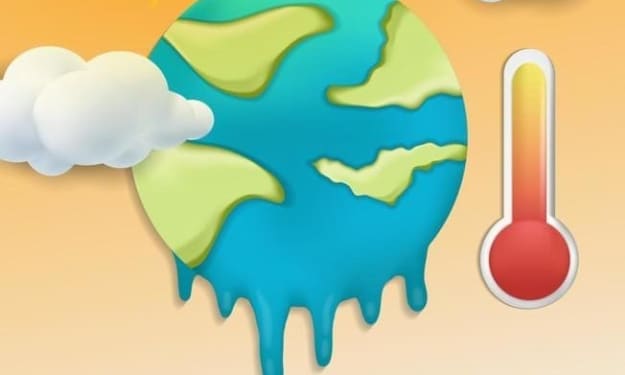
Global warming is no longer a teleological mystery—it’s a vital reality that affects our climate, weather patterns, and ecosystems right now. As the Earth’s average temperature rises, the balance of nature is being distorted in an unprecedented way – and we urgently need to learn more about it, to understand the consequences, and to put some practical measures in place.
By Muhammad Hidayatullahabout a year ago in Earth
BMW
BMW's trademark got approved, leading to the acquisition of car plants. These plants produced small Austin cars during tough times. These small cars became popular. BMW is a well-known car maker loved by many. They make modern, powerful, and stylish cars. BMW's path wasn't always smooth. It faced challenges and growth. Its history is unique.
By Mostafa Al Akloukabout a year ago in Earth
Char Dham Yatra:
Char Dham Yatra is one of the most revered pilgrimages in India, encompassing four sacred shrines—Yamunotri, Gangotri, Kedarnath, and Badrinath—nestled in the majestic Himalayas of Uttarakhand. This spiritual journey is undertaken by thousands of devotees every year, seeking divine blessings and inner peace amidst the breathtaking landscapes of the Garhwal region.
By Travel to Nirvanaabout a year ago in Earth
When Glaciers Roamed Mars
When Glaciers Roamed Mars Mars often perceived as a cold and barren wasteland holds a rich history of climatic shifts that hint at a once warmer and wetter planet. While today the Martian landscape is dominated by dry rocky terrain scientists have long theorized that vast amounts of water once flowed across its surface. Evidence from river valleys lake beds and ice deposits suggests that glaciers and water bodies played a crucial role in shaping the Red Planet's topography. Recent research conducted by the Planetary Science Institute (PSI) sheds new light on the existence of subglacial melting in Mars’ northern Arabia Terra region, particularly in and around a mid sized crater and the adjacent Heart Lake System.
By Adnan Rasheedabout a year ago in Earth