short story
Not India, This Is the USA”: Viral Clothesline Video Sparks Unexpected Culture Clash
‘Not India, this is USA’: Viral Video of Clothes Drying in Backyard Triggers Heated Discussion, Backlash In the age of social media, even the most mundane aspects of daily life can spark viral debates — and the latest example is a video that has divided the internet over something as simple as drying clothes in the backyard.
By Sultan Khanabout a year ago in Earth
Coolroom Service: Why It’s Essential for Your Business
In a world of hospitality, food production, drugs, and floristry, it is not only important to maintain proper storage temperature - this is important. This is the place where Coolroom Service comes. Whether you own a restaurant, a catering business, a supermarket, or a laboratory, it is important for quality control, compliance with regulations, and customer satisfaction.
By Coolroom Serviceabout a year ago in Earth
The Hidden World of the Centipede: Nature's Swift and Secretive Predator
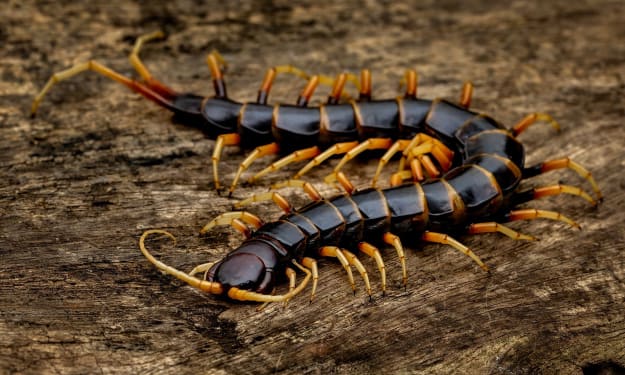
In the damp corners of our homes, beneath rocks in the forest, or buried deep in the soil, a long, segmented creature moves with astonishing speed. The centipede, whose name means "hundred feet," is one of the most misunderstood yet fascinating predators in the insect world. Despite their unsettling appearance, these creatures have a unique and important role in ecosystems. Anatomy of a Night Hunter Centipedes belong to the class Chilopoda and can be found on every continent except Antarctica. Ranging in size from a few millimeters to over a foot long, these invertebrates have between 15 and 177 pairs of legs, depending on the species. Contrary to their name, no centipede actually has exactly 100 legs. Their bodies are flat and flexible, allowing them to slip into narrow cracks and crevices. The first pair of legs has evolved into venomous fangs known as forcipules, used to paralyze their prey. Their antennae are highly sensitive, helping them navigate and hunt in complete darkness. The Perfect Predator Centipedes are carnivorous and feed on insects, spiders, and even small vertebrates such as lizards or mice, depending on their size. They are fast, agile, and lethal. A single bite from a large centipede can kill prey quickly, thanks to their venom. Their hunting style is silent and efficient. They rely on speed and stealth to ambush their prey, wrapping around them and injecting venom before devouring them. This role helps control insect populations, making centipedes beneficial to the balance of natural habitats. Living in the Shadows These creatures are nocturnal and prefer moist environments. During the day, they hide under rocks, logs, leaves, or inside walls and basements. At night, they emerge to hunt. Their preference for darkness and hidden places has earned them a fearful reputation among humans. Many people encounter them in their homes and panic. But while their appearance may be intimidating, most centipedes are harmless to humans. Bites are rare and usually not medically serious, though they can be painful. A Survivor Through Time Fossil records show that centipedes have existed for over 400 million years, evolving and adapting through countless environmental changes. Their resilience makes them one of the oldest surviving land arthropods. Some ancient centipedes, such as the extinct Arthropleura, could grow over two meters long, making them among the largest invertebrates to ever crawl the Earth. Today’s centipedes are much smaller, but their adaptability remains impressive. Cultural Fascination and Fear Throughout history, centipedes have appeared in folklore, mythology, and art — often symbolizing fear, mystery, or protection. In some Asian cultures, large centipedes are used in traditional medicine and believed to possess spiritual power. In horror literature and films, their image is often used to evoke discomfort or fear. Their alien-like body and rapid movement make them an ideal creature for spooky tales. But in truth, they are more helpful than harmful. Conservation and Curiosity Though not endangered, centipedes are sensitive to environmental changes, particularly pesticide use and habitat destruction. As we expand cities and alter natural landscapes, their populations may decline in some areas. Learning about these creatures can help reduce irrational fear and encourage respect for their role in nature. Observing centipedes in their natural environment reveals a creature finely tuned for survival — fast, quiet, and effective. Final Thoughts The centipede is a creature of darkness, not evil — a predator, not a pest. Its presence reminds us that nature’s design includes all shapes and strategies. Every creature, even those that crawl in shadow, has its place and purpose. So the next time you see a centipede, pause your fear. Instead, marvel at its ancient design, its quick movements, and its secret life. For in the quiet corners of the world, the centipede reigns as a silent and swift guardian of the balance of nature.
By Insect Legendsabout a year ago in Earth
The Butterfly’s Secret: A Journey Through Change, Color, and Courage
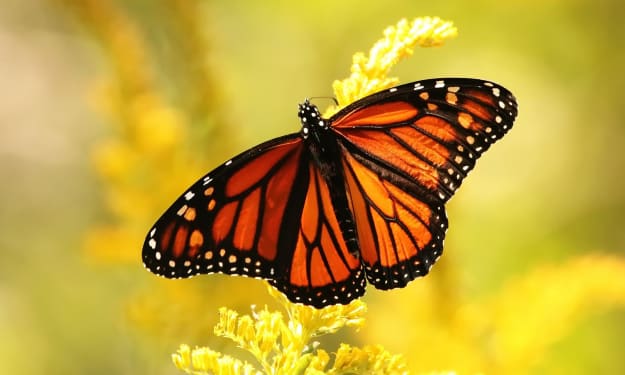
In the quiet corners of gardens, forests, and meadows, a tiny creature begins a journey that is nothing short of miraculous. The butterfly, with its delicate wings and graceful flight, wasn’t always a symbol of beauty and transformation. Its life begins humbly, as a caterpillar inching along leaves, focused solely on eating and growing. But hidden within this crawling creature is a blueprint for greatness. It teaches us that beginnings do not define the end, and that within the ordinary lies the potential for the extraordinary. The Metamorphosis Miracle The butterfly's life is divided into four main stages: egg, larva (caterpillar), pupa (chrysalis), and adult. Each stage carries its own challenges and beauty, but the transformation from pupa to butterfly — called metamorphosis — is perhaps one of the most astonishing in the animal kingdom. Inside the chrysalis, the caterpillar’s body dissolves into a kind of biological soup. From this fluid, a new form is built — wings, antennae, new legs. It is like watching a story of destruction and rebirth happen in silence, inside a fragile shell. The process is so profound that scientists still study the genetic and cellular mysteries that guide this transformation. This incredible metamorphosis shows us that true change often happens in quiet, unseen places. Just as the caterpillar must endure the stillness and vulnerability of the chrysalis, we too must sometimes retreat to grow, to heal, and to re-emerge stronger. Nature's Masterpiece Butterflies come in over 20,000 species around the world. Their wings display every color imaginable, often with patterns that serve as camouflage, warnings, or courtship signals. Some butterflies mimic leaves to hide from predators, while others display bright colors to warn that they are toxic. Their beauty is not just skin-deep. Butterflies play vital roles in ecosystems: they pollinate flowers, serve as food for other animals, and act as indicators of a healthy environment. When butterflies thrive, nature is usually in balance. Some butterflies migrate thousands of miles, such as the Monarch, which travels from North America to Mexico. This epic journey, driven by instinct and perseverance, adds yet another layer of awe to their story. Cultural and Emotional Symbolism Across cultures, butterflies symbolize change, hope, and the soul. In many traditions, seeing a butterfly is believed to be a message from a loved one or a sign of good fortune. Their short but vibrant lives remind us to live fully and embrace our own transformations. In literature and poetry, the butterfly often represents personal growth and emotional healing. It whispers the truth that pain and darkness can lead to flight and light. Artists have painted them, writers have praised them, and spiritual leaders have reflected on their journey as a metaphor for enlightenment. Threats and Conservation Despite their beauty, butterflies are facing serious threats: habitat loss, climate change, and pesticides are reducing their numbers rapidly. Species like the Monarch butterfly have become symbols of the environmental crisis. But the story isn’t over. Conservation efforts, like planting native flowers, avoiding chemical sprays, and creating butterfly gardens, can help protect these winged wonders. Every garden can become a sanctuary. Communities, schools, and individuals can all contribute to building environments where butterflies can thrive. Organizations across the globe are now tracking butterfly populations, engaging in habitat restoration, and raising awareness about pollinator protection. Supporting these efforts means supporting biodiversity and the health of our planet. What the Butterfly Teaches Us The butterfly teaches us to be patient with change. That growth can be uncomfortable, even painful — but it leads to something beautiful. It reminds us that we all have a hidden potential waiting to take flight. It teaches resilience, grace, and the power of quiet evolution. Just as the butterfly spreads its wings after transformation, we too can emerge from our trials with renewed strength and color. Their journey encourages us to trust the process, no matter how uncertain it seems. So next time you see a butterfly, pause for a moment. In that fleeting dance of color, a quiet wisdom glows. Let it remind you that beauty often rises from the most unexpected places.
By Insect Legendsabout a year ago in Earth
The Lion and the Elephant
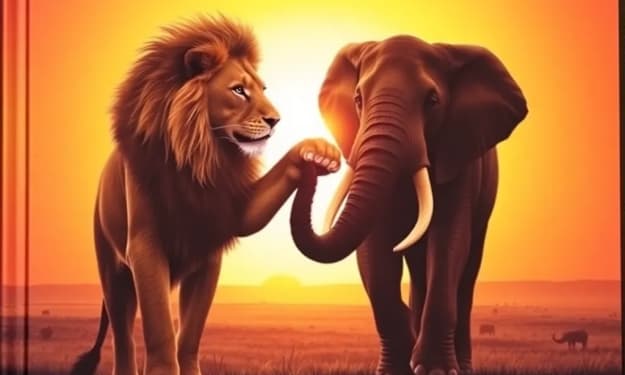
In the heart of the savanna, where the golden grasses swayed in the breeze, two creatures ruled in their own way: Leo, the lion, and Elara, the elephant. Both were majestic, both powerful, but they were worlds apart in how they ruled the land. Leo, the king of the savanna, with his golden mane and booming roar, commanded respect through his might and fear. Elara, with her towering frame and graceful movements, ruled through wisdom, compassion, and a deep connection with the earth.
By Telhar Aliabout a year ago in Earth
The Lion and the Lamb
Once upon a time, in a lush, untamed jungle nestled between rolling hills and vast rivers, there lived a mighty lion named Leo. Leo was the undisputed king of the jungle. His golden mane shone under the sun like the rays of the morning, and his roar echoed through the forest, sending shivers down the spines of every creature. He was strong, fearless, and respected by all the animals, from the smallest insect to the tallest giraffe.
By Telhar Aliabout a year ago in Earth
The Forest Fire of America
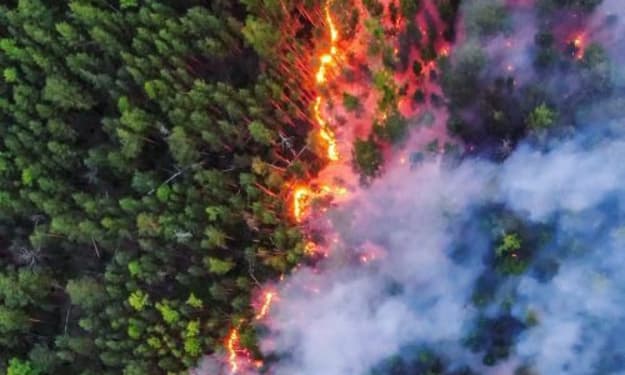
It was a dry summer, and the winds had been unforgiving across the western United States. The forests, once lush with towering pines, were now a tinderbox waiting for the smallest spark to ignite them. In the heart of California, nestled between rugged mountains and serene valleys, a fire began, small at first but soon spreading with terrifying speed.
By Telhar Aliabout a year ago in Earth
EARTH 2125
By 2125, Earth is no longer the planet we once knew—it’s something entirely new. Shaped by climate change, technological evolution, and the shifting values of humanity, the world has transformed in ways both breathtaking and sobering. If we could step into a time machine and walk the Earth a century from now, what would we see? Let’s take a journey into the future of our planet. --- Climate and Environment: A Planet Reclaimed One of the most dramatic changes in 2125 is the environment. After centuries of pollution, deforestation, and rising temperatures, nature has responded in unexpected ways. Large portions of Earth’s equator are now uninhabitable due to extreme heat, with temperatures reaching up to 60°C (140°F). These areas, once densely populated, have been abandoned and reclaimed by nature. Forests with genetically modified flora adapted to extreme climates grow in places where cities once stood. Towering solar trees and algae-covered towers clean the air and provide shade in urban spaces. The polar regions, now partially ice-free, have become hubs of global agriculture. With the melting of ice sheets, vast new territories opened up in Greenland, Canada, and Siberia. Though the rising sea levels swallowed many coastal cities—New York, Venice, Mumbai—new floating and vertical cities now rise above or beyond the old ones. Rivers and lakes, once drying and shrinking, are now carefully managed by AI-controlled systems. Many ecosystems were rebuilt with synthetic biology: lab-designed coral reefs, cloned endangered species, and bio-domes help preserve what was almost lost. Nature didn’t die—it adapted. And in some places, it’s fighting back. --- Cities and Architecture: Living With the Land Cities in 2125 are no longer just concrete jungles. They breathe, grow, and respond like living organisms. Vertical cities—miles high—stretch into the sky, covered in plant life. Entire neighborhoods are designed to move slightly throughout the day to follow the sun or avoid the wind. Homes are no longer static structures. Smart walls adjust to temperature, light, and even mood. People live in modular living pods that can detach and reattach elsewhere. Need a change of scenery? Your entire house can be flown to another region. Underground and underwater cities are also thriving. These environments are shielded from surface climate issues and powered by geothermal energy. Some even feature artificial stars for sunlight simulation. The idea of “sustainable” has evolved to “symbiotic”—cities no longer just reduce harm, they actively repair and enhance their environments. --- Technology: The Earth is Always Listening Technology in 2125 is no longer just in your pocket—it’s in the air, the soil, the trees. Earth's surface is embedded with a planetary-scale Internet of Things (IoT), allowing AI systems to monitor and manage everything from water flow in a forest to the emotional health of a community. Neural interfaces allow people to connect with machines through thought alone. Physical devices like phones and computers are considered outdated. Communication is now visual, sensory, and immersive—messages are experienced rather than read. Transportation is largely autonomous. Flying taxis, magnetic trains, and zero-emission vehicles dominate. Personal travel has become more of a leisure activity, since remote presence and holographic projections are widely used for work and social life. The downside? Privacy is almost non-existent. In exchange for security and efficiency, most people live in a state of voluntary transparency. --- Human Culture and Society: A Redefined Civilization Earth’s population has declined slightly—not due to disaster, but by choice. Many have left to live in orbiting space habitats or on Mars colonies. The humans who stayed became deeply connected to Earth’s wellbeing. Instead of global nations, the world is divided into eco-regions. Governance is handled by hybrid councils of humans and AI, focused not on profit, but planetary health and social harmony. Education is continuous and experiential. Children learn by doing—exploring forests, building machines, planting crops, and engaging with historical simulations. Empathy is a core subject, alongside science and creativity. Work is not about survival anymore. AI and robotics handle most labor. Humans focus on problem-solving, storytelling, and innovation. Basic income is universal. Mental health is taken seriously. Time is valued as the most precious currency. --- The Emotional Landscape: Wonder and Warning Despite all the advancements, Earth in 2125 carries the emotional weight of its past. Ghost cities still stand beneath the oceans. Forests whisper through genetically engineered leaves that were once burned to the ground. Monuments and museums tell stories of the planet’s near-death and rebirth. There’s wonder—yes. Earth has become more alive, more interconnected, and more beautiful in strange, futuristic ways. But there’s also a warning. The scars of the past remain visible to remind future generations: Earth is not invincible. She is patient, powerful, and fragile all at once. We broke her once. We may not get a second chance if we do it again. --- Final Thought: The Earth of 2125 is a planet reimagined—not utopia, not dystopia—but something deeply real. It's a future shaped by both human failure and human resilience. And the most powerful truth? That future still depends on what we choose today.
By SHADOW-WRITESabout a year ago in Earth
"Komodo Dragon: The Lethal Lizard from the Ancient World"
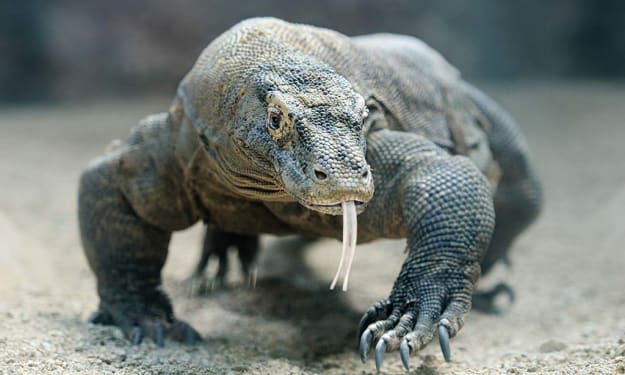
The Komodo dragon, a giant lizard found on a handful of islands in Indonesia, is one of the most fascinating—and terrifying—creatures on Earth. It’s not just its size or appearance that captures attention, but also its deadly nature and ancient history. This apex predator has survived for millions of years, unchanged and perfectly adapted to its environment. The Legacy of the Komodo Dragon The Komodo dragon, scientifically known as Varanus komodoensis, is the largest living species of lizard. It can grow up to 10 feet long and weigh over 300 pounds. With its muscular body, sharp claws, and powerful jaws, it’s built to be a top-tier predator. It hunts a variety of animals, including deer, wild boar, and even smaller dragons. But what truly sets the Komodo dragon apart from other predators is its venom. It’s not just its physical prowess that makes it deadly, but the toxic bacteria and venomous proteins in its saliva. When it bites its prey, the dragon’s saliva injects toxins that cause rapid blood loss, paralysis, and eventually death. It’s this combination of physical strength and venom that allows it to bring down prey far larger than itself. Evolutionary Survivor The Komodo dragon has existed for millions of years, surviving major climate changes and environmental shifts. Its lineage dates back to the late Pleistocene era, which means it was alive at the same time as some of the largest mammals to have ever roamed the planet, such as woolly mammoths and saber-toothed tigers. Interestingly, the Komodo dragon’s survival can be attributed to its isolation on the islands of Indonesia. The isolation allowed it to evolve without much competition from other large predators. Over time, it adapted to its environment, becoming the fearsome creature it is today. The Dragon’s Unique Hunting Strategy The Komodo dragon doesn’t rely solely on its venom to hunt—it’s also an incredibly patient predator. The dragon typically stalks its prey quietly, waiting for the perfect moment to strike. Once it gets close enough, it delivers a swift, powerful bite. The dragon’s prey, often unaware of the venom in its mouth, attempts to flee. However, the toxins slowly take effect, weakening the animal and making it easy for the dragon to track down. Komodo dragons also have a strong sense of smell, which helps them detect carcasses from miles away. Their acute sense of smell, combined with their ability to travel long distances, makes them effective scavengers as well as hunters. Komodo Dragon and Human Interaction While the Komodo dragon is primarily a predator, it has been known to show curiosity toward humans. In fact, there have been occasional reports of dragons approaching people or their campsites. However, the dragon’s interest in humans is usually not aggressive. It’s thought that the dragons are simply exploring or investigating unfamiliar creatures. Humans have, however, posed a threat to the Komodo dragon’s existence. Due to habitat loss and poaching, the population of these incredible creatures has declined. Conservation efforts are underway to protect them, and Komodo National Park in Indonesia is one of the few places where you can see these dragons in their natural habitat. A Symbol of Strength and Survival The Komodo dragon is more than just a deadly predator. It symbolizes the strength and resilience of nature. For millions of years, it has adapted, survived, and thrived in one of the harshest environments on Earth. Its presence reminds us that life on our planet is often more complex and powerful than we realize. Conclusion The Komodo dragon is one of nature’s most ancient and fascinating creatures. With its lethal venom, strength, and ability to survive through millennia, it has earned its place as one of the planet’s most formidable predators. But beyond its danger, it also represents the ancient, enduring power of life on Earth.
By Insect Legendsabout a year ago in Earth