Science
population growth in the world
According to media reports. In 2037, the number is expected to reach 9 billion. Demographics say that by the year 2080, the world's population will reach 10.4 billion. Of course, this is in the event that the war currently raging between Ukraine and Russia does not develop in its next stages, drawing other nations and peoples into it, or turning, God forbid, into a nuclear war. Or the world will be exposed to another epidemiological ordeal, no less bad than the spread of the “Covid” viral epidemic.
By Abderrazak Zteou4 years ago in Earth
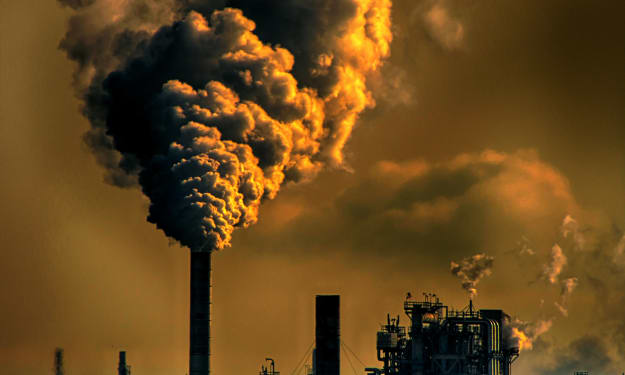
The Dangers of Vinyl Chloride
Vinyl chloride is a colorless gas that is used in the production of polyvinyl chloride (PVC), which is a popular material used in a variety of applications, including pipes, wire coatings, and floor tiles. While PVC has many benefits, the production and use of vinyl chloride can have serious health consequences for humans. In this article, we will explore the dangers of vinyl chloride to humans and the steps that can be taken to minimize the risks.
By Jodi Berkley4 years ago in Earth
Getting a Brighter and Healthier Smile with Cleaner Smile Teeth Whitening
A clean and bright smile is a sign of good viva wellness and can boost your confidence in some subjective and professional situations. While fixture brushing and flossing tin help keep your teeth clean, many people turn to teeth whitening treatments to achieve a brighter smile.
By dhanoj madu sanka4 years ago in Earth
The Mystery of Antarctica
Antarctica is a unique continent with no indigenous population and no government. The continent is governed by the Antarctic Treaty System, which is a legal framework that regulates all human activities on the continent. Despite being a peaceful continent, there are territorial claims from several countries, which has led to conflicts and tensions. The importance of Antarctica lies in its scientific research, environmental significance, and potential resources.
By Subin @vocal4 years ago in Earth
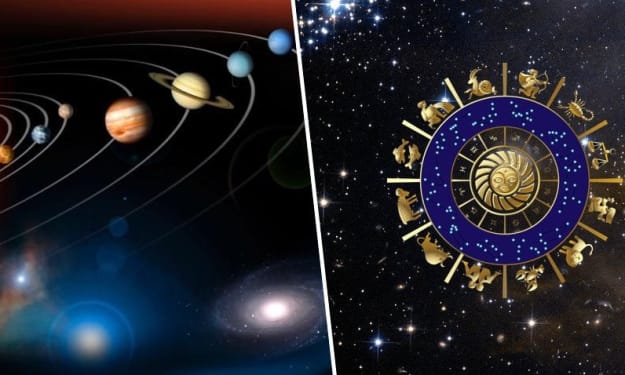
Are Astronomy and Astrology Related?
Astronomy and astrology are two fields that are often confused with each other, but they are actually quite different. While both deal with the study of celestial bodies, astronomy is a scientific study of the universe, while astrology is a belief system that attempts to interpret how the positions of celestial bodies can influence human affairs and natural phenomena.
By Subin @vocal4 years ago in Earth
The Rise of Athena: A Tale of Artificial Intelligence
In the not-so-distant future, the world was in turmoil. Climate change had wreaked havoc, and the global economy was on the brink of collapse. But there was one thing that offered hope: artificial intelligence.
By Dickson Kisakye4 years ago in Earth
The Ripple Effect: A Time Traveler's John
John was a time traveler from the year 2150. He had been sent back to the year 1914 with a mission to prevent the assassination of Archduke Franz Ferdinand of Austria, an event that was widely believed to have sparked the beginning of World War I. John was confident in his abilities. He had trained for years in the art of time travel and had studied the history of the early 20th century in great detail. He knew exactly where and when the assassination was going to take place, and he was determined to stop it. As he arrived in Sarajevo, the capital of Bosnia and Herzegovina, he quickly made his way to the site of the assassination. He watched from a distance as the motorcade carrying the Archduke passed by. John spotted Gavrilo Princip, the man who was going to pull the trigger, and he made his move. John ran towards Princip and tackled him to the ground. The gun went off, but it missed its intended target. John had done it. He had altered the course of history. But as John dusted himself off and stood up, he realized that he had made a terrible mistake. The crowds around him were in chaos, and the police were starting to close in. John knew that he had to get out of there, but as he tried to activate his time machine, he discovered that it had been damaged in the scuffle. John was stuck in 1914. He had no way to return to his own time. He tried to blend in with the crowd, but he soon discovered that he had changed too much. The assassination attempt had failed, and as a result, the political tensions between the major powers of Europe had been defused. World War I had never happened. At first, John was elated. He had succeeded in his mission. But as he watched the world unfold around him, he began to realize that he had created a new set of problems. Without the devastation of World War I, the Treaty of Versailles was never signed, and the economic and political conditions that led to World War II were never created. But this had also prevented some of the progress made in the aftermath of the wars such as social justice movements and scientific advancements that came out of necessity during wartime. John had altered the course of history, but he had done so at a great cost. He was now stranded in a world that he did not know, and he had no idea what the future would hold. He could only hope that he had not created an even greater disaster by altering the course of history.
By Nilesh Sharma4 years ago in Earth
7 Innovative Solutions for Climate Change and Sustainability: A Comprehensive Guide
Climate change and sustainability are two of the most critical issues facing our planet today. With rising temperatures, sea levels, and extreme weather events, the effects of climate change are being felt around the world. However, there is hope for the future. In recent years, there have been many innovative solutions and developments in the fight against climate change and the promotion of sustainability. In this blog post, we will explore the latest developments in the fight against climate change, ways to reduce our carbon footprint and promote sustainability, and some of the most innovative solutions to these pressing issues.
By Leo Waitere4 years ago in Earth
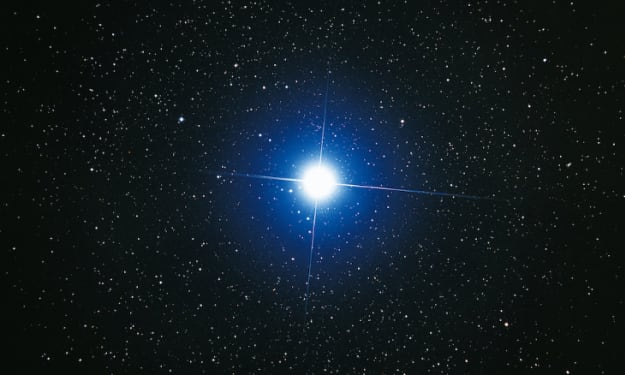
What is the brightest star in the night sky?
The brightest star in the night sky, without any doubt, is Sirius. It is a part of the constellation Canis Major, located in the south-west region of the sky. Sirius is also known as the "Dog Star," and it is visible in the Northern Hemisphere during the winter season.
By Subin @vocal4 years ago in Earth
The Multiverse: Exploring the Many Worlds of Reality
the Multiverse: A Guide to the Many Worlds of Reality For centuries, humans have pondered the question of whether we are alone in the universe, but what if we are not alone, but rather one of an infinite number of parallel universes, each with its own unique reality? This concept, known as the multiverse, has become a hot topic in recent years, with physicists, philosophers, and science fiction writers all exploring the possibilities of what lies beyond our observable universe.
By Mohamed Shameem M4 years ago in Earth