Science
The importance of personal growth in a relationship
Personal growth is an important aspect of our lives, and it can play a significant role in our relationships as well. When we are growing and improving as individuals, we bring a sense of positivity and vitality into our relationships. In this article, we will explore the importance of personal growth in a relationship and provide tips on how couples can support each other's personal growth.
By Rajveer Digital Marketer4 years ago in Earth
best places to visit in the world
There are incalculable lovely and intriguing objections all over the planet, each with its own exceptional allure. From normal marvels to social fortunes, there is something for everybody. Here are the absolute best places on the planet that ought to be on everybody's movement list of must-dos.
By deepanshu negi4 years ago in Earth
What will our growing megacities really look like
Consider the world's largest cities. the metropolises. giants with populations exceeding 10 million. Of course, Tokyo will be on your list. Delhi, Shanghai, Mexico City, New York, and Cairo are similar. Possibly Lagos, Jakarta, and Chongqing if you take pride in maintaining a current understanding of world geography
By Jacob Damian4 years ago in Earth
GPT-4
GPT-4: The Future of Language Processing Artificial intelligence has revolutionized the world in many ways, from self-driving cars to virtual assistants and everything in between. But one area where AI has truly made its mark is in language processing. Thanks to advancements in natural language processing (NLP) and machine learning, computers are now capable of understanding human language to a remarkable degree. One of the most impressive examples of this is the GPT series of language models developed by OpenAI. GPT stands for "Generative Pre-trained Transformer" and refers to a type of neural network architecture that is specifically designed for language processing. The GPT series has already achieved a lot, but what does the future hold for GPT-4? First, let's take a closer look at what the GPT series is and how it works. What is GPT? GPT is a type of language model that is designed to generate natural language text. It uses a technique called "unsupervised learning," which means that it learns to generate text by analyzing huge amounts of existing text data. This data is typically taken from the internet, which means that GPT has access to an almost limitless source of language samples. GPT uses a type of neural network called a "transformer," which is specifically designed for sequence-to-sequence tasks like language processing. The transformer architecture was first introduced in a 2017 paper by Google researchers, and has since become the standard for many NLP tasks. The GPT series currently consists of three models: GPT-1, GPT-2, and GPT-3. Each model is larger and more powerful than the previous one, and has achieved impressive results in a variety of language tasks. For example, GPT-2 is capable of generating coherent paragraphs of text that are almost indistinguishable from human-written text. It can also answer questions, summarize text, and perform other language-related tasks with a high degree of accuracy. What's Next for GPT-4? So, what can we expect from GPT-4? Unfortunately, OpenAI has not yet released any details about their plans for GPT-4, so we can only speculate based on what we know about the current models and the direction of AI research in general. One possibility is that GPT-4 will be even larger and more powerful than its predecessors. GPT-3 already has 175 billion parameters, making it the largest language model in existence by far. However, researchers have shown that even larger models can be trained, and there is evidence to suggest that larger models are more effective at language tasks. Another possibility is that GPT-4 will be designed to address some of the limitations of the current models. For example, GPT-3 is still not perfect at generating coherent and logical text, and can sometimes produce nonsensical or contradictory output. GPT-4 may incorporate new techniques for improving text coherence and consistency. Another area where GPT-4 could improve upon its predecessors is in its ability to handle multiple languages. GPT-3 is already capable of generating text in multiple languages, but it is still primarily focused on English. GPT-4 may be designed to be more language-agnostic, and to handle a wider range of languages with equal accuracy. One exciting possibility for GPT-4 is that it could be designed to learn from more than just text data. Currently, GPT models are trained solely on text, but there is evidence to suggest that incorporating other types of data, such as images and audio, could lead to even more powerful language models. GPT-4 may be the first model to incorporate these additional modalities into its training data. Finally, GPT-4 may incorporate new techniques for improving the transparency and interpretability of its output.
By Mohideen Abdul kather4 years ago in Earth
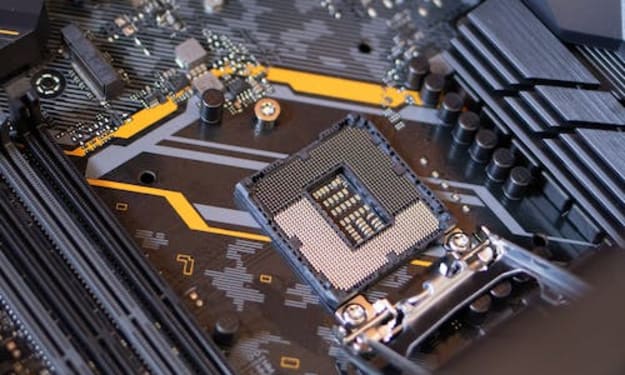
The Current State and Future of Technology
Technology has become an integral part of our lives, and it continues to advance at a rapid pace. The current state of technology is characterized by innovation in various fields such as artificial intelligence, virtual reality, robotics, and blockchain technology. The future of technology is exciting, and it presents numerous opportunities and challenges. In this article, we will explore the current state and future of technology.
By Furkan Vişne4 years ago in Earth
Unlocking the Potential of Mushroom Farming: Your Comprehensive Guide to Sustainable and Profitable Cultivation
Mushroom farming, also known as fungi culture, is an agricultural practice that involves cultivating edible and medicinal mushrooms in controlled environments. This farming method has gained popularity in recent years due to its high profitability, low startup costs, and sustainable production practices. In this blog, we will discuss mushroom farming in detail, covering everything from the benefits of mushroom cultivation to the different types of mushrooms and techniques used in mushroom farming.
By Zarina Khan4 years ago in Earth
The Role of Technology in Combating Climate Change
Climate change is one of the biggest global challenges facing the world today. Its impact is already being felt in different parts of the world, including rising sea levels, increased frequency of extreme weather events, and changes in ecosystems. To address this challenge, it is important to leverage technology in finding solutions to mitigate climate change.
By HSE Insider4 years ago in Earth
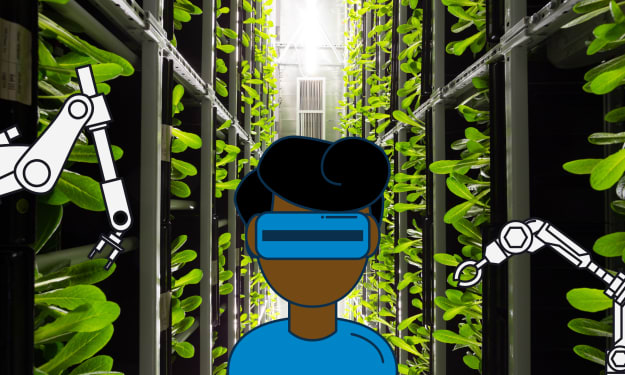
The Future of Agriculture Is Vertical: 6 Benefits You Need to Know
Our current food system is facing multiple challenges that could have catastrophic consequences for the planet. Climate change is one of the most critical obstacles, as conventional agricultural practices contribute significantly to greenhouse gas emissions and weather fluctuations that can harm crop production.
By Eshan Samaranayake4 years ago in Earth