Science
Understanding the Demise of Bees – The Role of Parasites, Pesticides, and Human Impact
Human society is extremely complex and fragile, built upon various pillars. One of them is the honey bee. One out of three meals eaten by humans is made possible by honey bees. They are so important that if all the honey bees were to die out, thousands of plants would follow, which could lead to millions of people starving in the following years. On top of that, honey bees have a huge economic impact. The dollar value of plants pollinated by them each year is around $265 billion. Food we take for granted would just stop existing without them, or there would be a massive decrease in productivity. Food including apples, onions, pumpkins, and also plants used for feeding livestock and thus extremely important for our milk and meat.
By Joshua Rogers3 years ago in Earth
The Unsolved Mysteries of the Bermuda Triangle: A Deep Dive into the Unknown
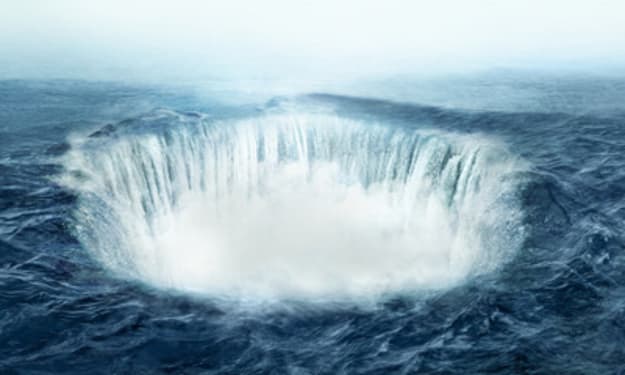
The Bermuda Triangle, also known as the "Devil's Triangle," is a region in the western part of the North Atlantic Ocean where ships and aircraft have disappeared under mysterious circumstances. This area, roughly bounded by Miami, Bermuda, and Puerto Rico, has been a subject of fascination and fear for decades. While many theories have been proposed to explain the strange occurrences, the Bermuda Triangle remains an unsolved mystery, shrouded in a veil of uncertainty. In this article, we will take a deep dive into the unknown, exploring the history, the theories, the scientific investigations, and the unexplained phenomena associated with the Bermuda Triangle.
By Krishna raj3 years ago in Earth
Science in Everyday Life: How Scientific Discoveries Impact our Daily Lives
Introduction: Science is a fundamental aspect of modern life that has enabled humanity to achieve some of the most remarkable accomplishments in history. From space exploration to advancements in medicine, science plays a crucial role in shaping our daily lives in countless ways.
By Kasturi Chatterjee3 years ago in Earth
Ten places exist where gravity seems to behave in a peculiar or mysterious way.
Imagine if I told you that there are certain locations around the world where the force of gravity doesn't seem to behave as it should. It's true - in these areas, objects appear to move against the laws of physics by rolling uphill, water flows upward, and people stand at seemingly impossible angles. These peculiar places have captured the attention of both tourists and scientists for many years, from the well-known Mystery Spot in Santa Cruz, California to Magnetic Hill in Moncton, Canada, and the gravity hills in Pennsylvania, USA. Let's take a journey to discover these intriguing places where gravity appears to be completely out of sync with what we expect.
By Bob Oliver3 years ago in Earth
What if we lived on a planet with no sun?
Rogue planets are some of the most fascinating celestial bodies in our galaxy. These planets have been ejected from their own star systems and are now floating aimlessly through space. They are not just theories, as scientists have detected some in our galaxy, and estimates suggest there may be lots of them out there. These planets are some of the largest known objects in the universe, with some being massive gas giants, many times larger than Jupiter. They could potentially have their own moons and mini-systems orbiting around them. The existence of rogue planets was first theorized in the early 1990s. Before that, it was believed that all planets were formed in a star's protoplanetary disk, which is a swirling disk of gas and dust that surrounds a newly formed star. However, astronomers started to notice that some stars had disks that were missing some material, suggesting that some of it had been ejected. This led to the idea that planets could be ejected from their star systems if they interacted with other planets or if their star went supernova. It is estimated that there may be billions of rogue planets in our galaxy alone. These planets are incredibly difficult to detect because they do not emit any light of their own and are too far away from any star to reflect any light. However, scientists have been able to detect some rogue planets through a technique called microlensing. This involves observing the light of a distant star as a rogue planet passes in front of it, causing a brief but detectable increase in brightness. Living on a rogue planet would be a unique and challenging experience. The most obvious problem we would face is the lack of light and heat. We would have to find new and innovative ways to generate electricity without relying on solar power. One possibility is geothermal energy, which every planet has an internal source of. We could also use nuclear power, which is already used on some spacecraft. For lighting, we could use bioluminescent organisms or build really bright flashlights. Another challenge of living on a rogue planet is the lack of an atmosphere. Without an atmosphere, there would be no air to breathe, and the temperature on the planet would be wildly fluctuating. To survive, we would need to generate our own oxygen and probably create something like a space-age biosphere. We could grow some plants that could produce oxygen or learn to filter the air like a high-tech air purifier. Water would also be essential for survival on a rogue planet. Some rogue planets may have underwater oceans, which we could tap into for drinking, farming, and manufacturing. Alternatively, we could get water from comets, ice mining, or even from the atmosphere. We would also need to find and mine some resources to build our homes and other structures, and a rogue planet might not have the same kinds of resources as a planet that orbits a star. We may have to rely on resources from nearby asteroids and things like that, and if we want to extract resources from the planet itself, we might need to drill down through miles of ice and rock. Despite the challenges of living on a rogue planet, there are also some potential benefits. For example, there could be valuable resources on these planets that are not found on other planets. These resources could include rare metals, minerals, and gases that are essential for space exploration and development. There is also the possibility of discovering new forms of life that are adapted to the extreme conditions of rogue planets. In conclusion, rogue planets are some of the most intriguing and mysterious objects in our galaxy. While living on a rogue planet would be a unique and challenging experience, it is not impossible. With innovative technology and a pioneering spirit, we could potentially create a sustainable and thriving civilization on a rogue planet.
By Aman Sehmbi3 years ago in Earth
New Study of Uranus’ Large Moons Shows 4 May Hold Water
Re-analysis of data from NASA’s Voyager spacecraft, along with new computer modeling, has led NASA scientists to conclude that four of Uranus’ largest moons likely contain an ocean layer between their cores and icy crusts. Their study is the first to detail the evolution of the interior makeup and structure of all five large moons: Ariel, Umbriel, Titania, Oberon, and Miranda. The work suggests four of the moons hold oceans that could be dozens of miles deep.
By Imeth Githsara3 years ago in Earth
For the first time, scientists watched a dying star swallow a planet whole
Astronomers have spotted a star devouring one of its planets for the first time. It is a stunning preview of our own planet's fate, when, in roughly 5 billion years time, Earth too will likely be engulfed by our rapidly expanding sun.
By Imeth Githsara3 years ago in Earth