Science
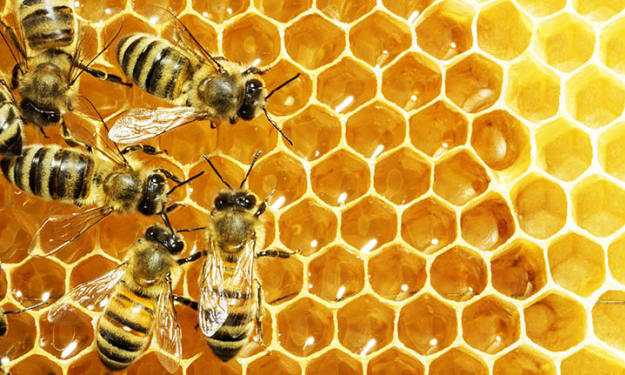
BEES Being Extremely Essential for the ecoSystem
Bees are small, but they play a huge role in maintaining the ecosystem. They are responsible for pollinating approximately 75% of the world's crops, including fruits, vegetables, and nuts. Bees also pollinate flowers that provide food and habitats for other wildlife, making them an essential part of the natural environment. The relevance of bees for the ecosystem is therefore undeniable.
By Neusa Moreno3 years ago in Earth
Unsolved Mysteries of the 21st Century
The Frigid land of Antarctica is the coldest and most inhospitable continent in the world. It stretches over 5 million square miles and is covered in ice sheets that breach more than a mile deep. The average daily temperature is negative 49 degrees Fahrenheit and wind speeds can reach over 100 miles per hour. There are only scientists who work in research stations scattered across the continent, mainstream geologists have long believed that ancient humans never settled on Antarctica because of its hostile climate.
By Beulah Francis3 years ago in Earth
What Would a Trip to the Mariana Trench Be Like?
What Would a Trip to the Mariana Trench Be Like? The Mariana Trench is the deepest known point in the world's oceans, reaching a depth of nearly 11 kilometers (7 miles) below sea level. This makes it an incredibly remote and inhospitable environment, with intense pressure, extreme cold, and complete darkness. However, despite these challenges, there has been increasing interest in exploring the depths of the Mariana Trench and learning more about the unique creatures that call it home. So, what would a trip to the Mariana Trench be like? Let's find out.
By Daniel Ellison3 years ago in Earth
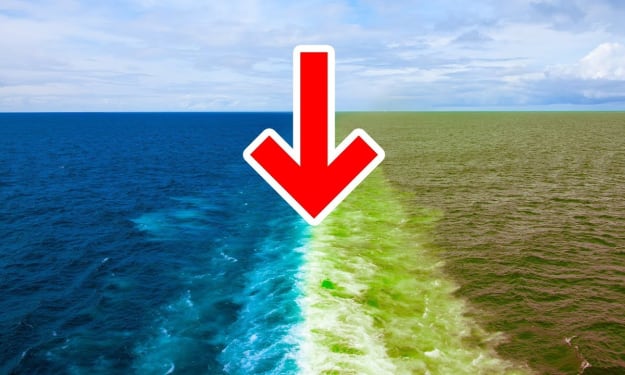
Why the Atlantic and Pacific Oceans Don't Mix
The Atlantic and Pacific Oceans are two of the largest bodies of water on Earth, covering more than 200 million square kilometers combined. Despite their size and proximity to each other, these two oceans do not mix, and the reasons why are fascinating.
By Daniel Ellison3 years ago in Earth
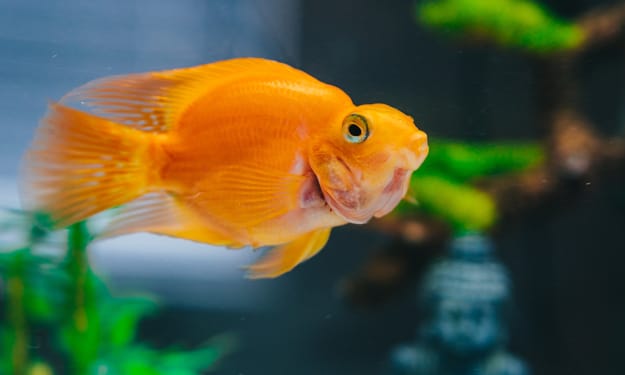
Common Goldfish Diseases and How to Treat Them.
Goldfish are a popular and beloved pet for many people around the world. These beautiful and graceful creatures are not only easy to care for, but they are also relatively hardy and resilient. However, like all living creatures, goldfish are susceptible to various diseases and health problems. In this article, we will discuss some of the most common goldfish diseases and how to treat them. Swim bladder disorder Swim bladder disorder is a common condition that affects many goldfish. The swim bladder is an organ located in the fish's abdomen that helps it regulate buoyancy and control its movements in the water. When this organ becomes damaged or infected, the fish can have difficulty swimming and staying upright. Some common symptoms of swim bladder disorder include floating to the surface or sinking to the bottom of the tank, difficulty swimming or staying upright, and loss of appetite. Treatment: There is no specific cure for swim bladder disorder, but there are a few things you can do to help your goldfish recover. One of the most important things you can do is to ensure that the water in the tank is clean and well-maintained. You can also try feeding your goldfish small meals throughout the day instead of one large meal to help prevent overeating, which can contribute to swim bladder disorder. Ich Ich is a parasitic disease that affects many different types of fish, including goldfish. It is caused by a small, white, ciliated parasite called Ichthyophthirius multifiliis. The parasite attaches itself to the fish's skin and gills, causing irritation and discomfort. Some common symptoms of Ich include white spots on the fish's body and fins, lethargy, loss of appetite, and rapid breathing. Treatment: There are several different medications available that can be used to treat Ich. These medications are typically added to the water in the tank and work by killing the parasites. It's important to follow the instructions on the medication carefully, as some medications can be harmful to certain types of fish or plants. You should also remove any carbon from the filter before adding the medication, as carbon can absorb the medication and render it ineffective. Fin rot Fin rot is a bacterial infection that can affect the fins and tail of goldfish. It is typically caused by poor water quality or stress, which can weaken the fish's immune system and make it more susceptible to infection. Some common symptoms of fin rot include ragged or frayed fins, discoloration, and loss of fin tissue. Treatment: To treat fin rot, you should first address the underlying cause of the infection by improving the water quality in the tank and reducing any sources of stress for the fish. You can also add aquarium salt to the water to help prevent the spread of the infection. In severe cases, antibiotics may be necessary to help clear up the infection. Dropsy Dropsy is a serious condition that can affect goldfish and other types of fish. It is typically caused by a bacterial infection that affects the fish's internal organs, causing them to swell and become inflamed. Some common symptoms of dropsy include a swollen abdomen, protruding scales, and lethargy. Treatment: Unfortunately, dropsy is a difficult condition to treat, and many fish do not survive. If caught early enough, antibiotics may be effective in treating the infection and reducing the swelling. However, in many cases, the best course of action may be to euthanize the fish to prevent further suffering. Velvet disease Velvet disease is a parasitic infection that affects the skin and gills of goldfish. It is caused by a small, yellow-green parasite called Oodinium pillularis. Some common symptoms of velvet disease include a yellow or gold dust-like coating on the fish's skin
By Mr Royal Honey 3 years ago in Earth
Goldfish Myths and Misconceptions Debunked.
Goldfish are one of the most popular types of aquarium fish, and have been kept as pets for centuries. Despite their popularity, there are several myths and misconceptions about goldfish that persist. In this article, we will debunk some of the most common goldfish myths. Myth #1: Goldfish can live in small bowls One of the most persistent myths about goldfish is that they can live happily in small bowls. In reality, goldfish require a lot of space to swim and grow, and they produce a lot of waste. A small bowl does not provide enough space or filtration to keep a goldfish healthy. Goldfish should be kept in a tank that is at least 20 gallons, with a filtration system that is rated for the size of the tank. The tank should also be cycled, meaning that beneficial bacteria have had time to establish themselves and break down waste products. Myth #2: Goldfish have a three-second memory Another common myth about goldfish is that they have a memory span of only three seconds. This myth is simply not true. Goldfish have been shown to have a memory span of several months, and they are capable of learning and remembering complex tasks. In fact, goldfish have been trained to perform tricks and recognize their owners. They can also learn to associate certain behaviors with food, such as swimming to the surface when their owner approaches the tank. Myth #3: Goldfish are a low-maintenance pet Goldfish are often touted as a low-maintenance pet, but this is not entirely true. While goldfish may not require as much attention as some other pets, they still require regular care and attention. Goldfish tanks need to be cleaned regularly to remove excess waste and maintain water quality. The water temperature also needs to be kept within a certain range, and the pH levels need to be monitored to ensure that they are suitable for goldfish. Myth #4: Goldfish can live on a diet of flakes While goldfish can certainly survive on a diet of flakes, this is not the most nutritious or healthy option for them. Goldfish require a varied diet that includes both plant and animal matter. In addition to flakes, goldfish should be fed a variety of foods, such as pellets, frozen or live foods, and vegetables. This will provide them with a balanced diet and ensure that they receive all of the nutrients they need to stay healthy. Myth #5: Goldfish are a short-lived pet Goldfish are often thought of as a short-lived pet, but this is not necessarily true. While some goldfish may only live for a few years, others can live for up to 20 years or more with proper care. The lifespan of a goldfish depends on several factors, including their genetics, environment, and diet. By providing your goldfish with a suitable environment and a balanced diet, you can help to ensure that they live a long and healthy life. Myth #6: Goldfish can be kept with any other fish Goldfish are often considered a beginner fish, and many people assume that they can be kept with any other fish. However, this is not always the case. Goldfish can be aggressive towards other fish, especially those with long fins. They also produce a lot of waste, which can lead to water quality issues in a tank with other fish. If you want to keep goldfish with other fish, it is important to choose compatible species that can tolerate the same water conditions and do not pose a threat to each other. In conclusion, goldfish are a popular and fascinating pet, but there are several myths and misconceptions about them that persist. By understanding the truth about goldfish and providing them with the care they need, you can ensure that they live a long and healthy
By Mr Royal Honey 3 years ago in Earth
The Importance of Proper Goldfish Nutrition and Feeding.
Goldfish are among the most popular fish species for aquariums and backyard ponds, known for their bright colors, playful personalities, and hardy nature. However, like any living creature, goldfish require proper nutrition and feeding to thrive and maintain optimal health. In this article, we will discuss the importance of proper goldfish nutrition and feeding, as well as some tips for ensuring your goldfish receive the nutrients they need to flourish. The Basics of Goldfish Nutrition Goldfish are omnivorous, meaning they require a balanced diet that includes both plant and animal-based foods. In the wild, goldfish feed on a variety of foods, including algae, plants, small insects, and crustaceans. In captivity, goldfish can be fed a variety of foods, including commercial pellets, flakes, and frozen or live foods.
By Mr Royal Honey 3 years ago in Earth
THINGS TO KNOW ABOUT THE GIANT CREATURES THAT EXISTED
I'm going to share with you some of the largest and most impressive animals that have ever lived on Earth. The Argentinosaurus was one of these creatures, and scientists believe it was one of the largest land animals in existence. It had a length of up to 100 feet and a weight of up to 100 tons. This giant leg bone was found by a farmer while tending his cattle, and this is how the first fossils of the Argentinosaurus were discovered.
By Chidi Kalu Ekeh3 years ago in Earth
Dinosaurs Could Have Evolved If They Never Went Extinct
Dinosaurs are some of the most fascinating creatures to have ever walked to Earth it's a shame that we won't be able to have Jurassic Park where we can see some of the coolest creatures come to life but we are actually living with some creatures that are just as old as dinosaurs such as crocodiles and sharks they haven't changed much since they appeared millions of years ago but most dinos didn't make it when the asteroids struck Earth in a way the asteroid was a giant reset button for the planet after hitting Earth this space traveler wiped out almost every living thing the sky was covered with Ash which blocked out sun rays that meant that plants couldn't grow and this made a lot of herbivores like really hungry as a result they had to change their diet and adapt to the new changes this for some of those dinosaurs to take on a new path in life turning into some Modern animals we know today if the asteroid had changed its course just a bit then dinosaurs would have remained the dominant species so what would have happened if dinosaurs had stuck around well first of all Evolution would have played out differently for them maybe during those millions of years humans would not have evolved to be on top of the food chain imagine a world where dinosaurs still existed today if dinosaurs had evolved as humans did then we'd have to compete with them there were multiple species of humans but Homo sapiens also known as us Prevail a humanoid Dino or dinoid would be something strange first of all they would look different more reptilian than us our brain sizes would differ and they would be physically bigger and stronger putting a human in a dinoid side by side would be interesting first of all dinoids would have scales as opposed to human skin and their teeth would be sharper they would probably not have five fingers on each hand and their nails would be sharp claws also we don't know what they would sound like but they'd possibly be guttural like crocodiles dinosaurs had very good Vision compared to mammals so it's possible we'd see dinoids with large eyes the population of Earth has reached a staggering 8 billion people and we've changed our environment to suit our needs with that said if dinoids were the dominant creatures then the environment would be suited for them speaking of physical features scientists predicted what dinos would look like if they had evolved into intelligent creatures that walked upright and had opposable thumbs these Wiggly thumbs are important for evolution since they helped humans start using tools for defending themselves and hunting the creature may not look like the ideal reptile and its appearance might not be flattering but if dinosaurs had evolved then these creatures could be your classmate or colleague at work not all dinosaurs were alike as their fossils have shown some were gigantic. While others resembled any modern day animal the biggest land walking dinosaur was the titanosaur although the measurements are only rough estimates based on fossilized bones it's estimated that the dyno was around 122 feet long and lived between 195 million years ago it was so massive that its weight was equivalent to 18 modern day elephants there were dinosaurs all over the world in different time areas climates and Landscapes however only a handful were known as Giants but though they excelled in body size they lacked in brain size some of the most well-known dinosaurs like the Allosaurus and stegosaurus had very small brains like me which means it would have been nearly impossible for them to properly evolve into intelligent beings tell me about it but in the late Cretaceous Period the T-Rex roamed the land it had larger brains and its Allosaurus counterparts which were millions of years behind even so the T-Rex's brain only weighed just under a pound a human brain is nearly three pounds it might have been cool to see a T-Rex evolve into an intelligent being with opposable thumbs on its tiny stick hand contrary to popular belief the T-Rex was actually quite slow and a human could have easily outrun it so we know that these days they wouldn't belong in any competitive sports that involve running we know that dinosaurs could be herbivores and carnivores but throughout the revolution one thing remained the same they had small brains other forms of dinosaurs were around too such as long-legged and horned dinosaurs either way they were on top of the food chain even when little mammals had Cameo appearances we have to consider that when the asteroids dropped and wiped out dinosaurs mammals took over the scene. If dinosaurs and mammals had shared the dominant position in the food chain and had followed a similar path in their evolution then today's reality would be completely different than what we have now dinosaurs would have bigger brains and would compete with humans for the title of the smartest creature one of the reasons why humans and parrots can talk is because of the strength and shape of our tongues the evolved dinosaurs would have a different skull shaped to fit such a tongue if they wanted to talk like humans one of the reasons why humans made it to where we are now is because we evolved the stand upright to detect Predators this was one challenge we had to overcome in order to survive but what would dinosaurs need to challenge if they were already the most dominant creatures some of the big brain dinosaurs had long legs which means they could run fast detect predators and grab food that otherwise would be beyond their reach their evolutionary path would be very different from that of humans and maybe even more advanced their brains could have evolved into something impressive they could turn out smarter than us and possess quicker reflexes imagine dinosaurs discovering gravity instead of Isaac Newton or a dinosaur writing plays and poems better than William Shakespeare imagine dinosaurs possessing the creative knowledge to produce some of the finest art in history music and Cinema would revolve around dinosaur culture and fashion would look otherworldly we would live in peace with dinoids but we would certainly compete with them the World Cup would feature dinosaurs and humans playing for their national teams but clubs would be exclusively human or dinosaur some professions would be dominated solely by one species and more physically demanding jobs would be taken by dinosaurs like laborers and security guards eventually dinosaurs would take over the world since th ey would be physically stronger than humans and would have better advantages than us humans on the other hand would need to figure out a way to keep up with Dinosaurs mammals had a different path of evolution where they never became gigantic super beasts as dinosaurs did instead their brains developed and grew big but even though humans are the smartest creatures on the planet we don't have the biggest brain animals like orcas whales elephants and other Apes have bigger brains here so why are we smarter than them the answer is we don't know the brain is the most complex organ we have and we know so little about it we don't even know exactly why it's so complex or why it behaves like that today's dinosaur descendants like crows and parrots have complex brains which allows them to communicate use tools and even count bigger doesn't always mean better in this case a parrot's brain is smaller than a cat's but it's far more complex and intelligent than that of any feline out there some scientists argue that dinosaurs from the movies aren't 100 accurate and that they used to have feathers in terms of evolution some small feather dinos might have followed the path of primates they might have evolved into a tree dwelling primate they may also have followed the path of becoming another species of human.
By Camella Luzana3 years ago in Earth
The Incredible World of Containerboard: Sustainability and Versatility
In a rapidly changing world of e-commerce, packaging, and sustainability, containerboard has emerged as an unsung hero most people encounter daily. You might be wondering, what precisely is containerboard? Containerboard is the industry term for the heavy paper or paperboard used to create corrugated and solid fiber containers. These packaging products, in turn, are the go-to choice for industries worldwide due to their incredible versatility, strength, and eco-friendliness.
By Sarthak Joshi3 years ago in Earth