Science
Imagine a scenario where earth was essentially as large as these exoplanets.
Imagine a scenario where earth was essentially as large as these exoplanets. there are many billions of outsider universes in the Smooth Manner system and researchers have previously found and affirmed more than 5 000 of them they call these universes exoplanets some of them are minuscule like Kepler 37b this minuscule planet is considerably more modest than Mercury the littlest planet in our nearby planet group Kepler 37 is simply marginally bigger than our own Moon it could undoubtedly supplant our Vast sidekick in the night sky just it's very distant from us this little space rock is found 208 light a long time from Earth where it circles a star that is a digit more modest and cooler than our sun little rough universes like Kepler 37b are a really uncommon find since they're so small they're more hard to recognize yet researchers have still figured out how to affirm around 200 of these universes the majority of them are numerous multiple occasions nearer to their Stars than our planet is to the Sun and kepler-62c is no exemption this blemishes measured exoplanet circles its star approximately multiple times nearer than Mercury circles our sun it just takes a little north of 12 Earth days to make a full circle Kepler's 62c should be searing sweltering and incredibly volcanic certainly not the sort of spot you'd need to visit nor is this exoplanet koi 55b researchers think this planet used to be the size of Jupiter however at that point its Sun detonated into a red monster and gulped down the planet ah nothing unexpected there koi 55b is unquestionably near its star near such an extent that it takes this horrible World under five hours to make one circle and koi 55b is dissipating such a lot of that it will before long vanish from its planetary framework it's in good company a significant number of these planets have their environments torn Away by their host Stars exactly 41 light a very long time from Earth there's a super Earth that used to be a smaller than expected Neptune GJ 1132b could have had a thick hydrogen air before yet it's young warm star stripped it away leaving just a rough center behind when its star Stripped Away its unique air a portion of the gases were consumed into the planet's mantle and presently through this planet's volcanism they're delivered back GJ 1132b might have turned into a possibly tenable world yet it's multiple times nearer to its star than Mercury is to the Sun no opportunities for life on this super Earth yet life may be conceivable on these marginally bigger super Earths researchers have found a large number of these universes circling In Their sun-like Stars tenable zones and that is uplifting news currently we'd need to proceed to investigate a greater amount of these planets up near figure out what their airs resemble this one appears to be charming kepler-452b is 1.6 times the size of Earth and it's around 6 billion years of age Earth is a young person contrasted with this world our planet is just four and a half billion years of age OK now I realize this is your most loved exoplanet Kepler-22b and I like it too this super Earth may be canvassed in a super sea it sits serenely in its star's tenable zone and has an enormous potential for Life the main issue is that it's huge Kepler-22b is 2.4 times bigger than Earth and multiple times more monstrous if Kepler-22b was the size of Earth it would have a typical surface temperature of around 16 degrees Celsius but since it's significantly greater than Earth it very well may be a rough planet a water world or even a vaporous Planet like Neptune and discussing geisha's planets at this size exoplanets quit being super Earths and become gas goliaths the greater part of all exoplanets we've found are either neptune-like ice Goliaths or gas monsters like Jupiter and a considerable lot of them circle excessively near their host stars and they address a significant expense for that vicinity for one they're extraordinarily blistering and some of the time their host star tears their air away similar to what GJ 1132b went through yet among them there are a few cold planets too this is Kepler 16b it's not exactly as extensive as Jupiter but rather the cool thing about it is that it circles not one yet two stars just you wouldn't have the option to see those stars since you wouldn't have the option to remain on its surface you see Kepler 16b is a Saturn estimated gas monster it could have a few rough components inside it yet it's two host stars are a lot cooler than our sun making Kepler 16b a freezing dead world talking about dormant universes well that may be what Earth becomes in the event that we don't attempt to stop environmental change you've seen the many fierce blazes spreading across Canada well this is because of environmental change making the world more blazing and drier this harmful air advanced toward New York Toronto Detroit and Chicago bringing about a portion of the most terrible air quality on the planet California is attempting to forestall out of control fires by deliberately copying huge number of Sections of land a year this is to diminish vegetation that could fuel a disastrous out of control fire and this is only one illustration of how we want to assist with environmental change verify how your neighborhood and national legislatures are helping since we just have one Earth and we don't believe that it should transform into one of these dreadful exoplanets OK now on to the universes that are greater than Jupiter this heavenly exoplanet has the thickness of a marshmallow toi 3757b is marginally bigger than Jupiter yet it's not close to as enormous yet there are consistently greater and badder planets out there like Kepler's 7 being this one is fascinating Kepler 7B is bigger than Jupiter yet it has half of Jupiter's mass this implies the planet resembles a light Cloud a singing blistering really light cloud kepler-7b is a sweltering Jupiter planet it's multiple times more sizzling than the lord of the nearby planet group still kepler-7b isn't the most sizzling or the strangest of the exoplanets a portion of these gas monsters are so unbelievably sweltering that they destroy particles definitely and a few planets are ill-fated 1400 light years from Earth a star somewhat greater and more blazing than our sun is gobbling up its planet this planet is called wasp 12b it's practically twofold the size of Jupiter yet it won't keep going extremely lengthy to the extent that planetary lives go wasp 12b is so near its star that all that's needed is north of one Earth day to finish its circle its own star is truly eating the planet's climate making it stretch into the state of this egg 10 million years from now wasp 12b will be gone and some exoplanets are unfathomably colossal the greatest one of them is right multiple times bigger than Jupiter hd100546b isn't only multiple times bigger than Jupiter it's likewise multiple times more enormous HD circles its star multiple times further away than Jupiter circles the sun that is very far and it makes researchers can't help thinking about how this tremendous exoplanet shaped so distant from its star there's no question that some exoplanets out there look encouraging for finding life we've found a considerable amount of them circling in the tenable zone of Their Stars as a matter of fact a portion of these universes could try and be preferable for life over Earth yet that is a story for another consider the possibility that.
By Firyad Blbas3 years ago in Earth
What if the Earth stops spinning?
Hey there! Have you ever wondered what would happen if the Earth suddenly stopped spinning? Well, let's imagine for a moment that it did. Right now, our planet is spinning really fast at its equator, about 1,000 miles per hour! But as you move closer to the poles, the rotation gets slower.
By eshaal afshan3 years ago in Earth
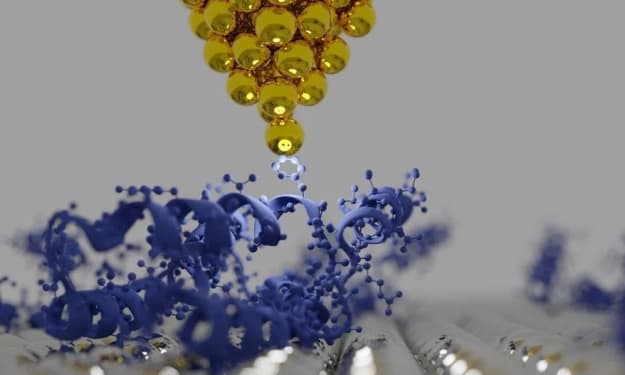
Atomic Force Microscopy: Illuminating the Nanoscale World of Biology
Introduction: The microscopic world has been a realm of fascination and discovery for scientists across generations. However, conventional microscopy methods have their limitations, especially when it comes to exploring nanoscale structures without harming living samples. Fortunately, in the mid-1980s, a breakthrough technology known as Atomic Force Microscopy (AFM) revolutionized the field of nanobiology. This remarkable innovation allows researchers to observe and manipulate tiny biological entities in real-time without causing harm. In this blog, we will delve deeper into the power of AFM and its profound impact on the realm of biology.
By Rohit Singh3 years ago in Earth
How was the year 2020
The life is going as usual as in the other years in the past going except some countries of Europe and china. In Pakistan the situation was not much dangerous and the virus was almost unknown. Later in February the situation becomes harsh and the cases start appear and the patients comes into the hospital with this virus that affects them badly. In the mid of February, the situation becomes out of control and government had to make a plan to overcome this situation and compete this virus and its effects on the people. Later on, they setup a plan to close all of the country and happening and people had to stay at home.
By maryam nisar3 years ago in Earth
Transforming Food Waste: The Journey from Farm to Compost
Unveiling the Heart of Food Waste Management In a small town, located 80 miles east of the vibrant city of San Francisco, lies a bustling site that holds a secret to a greener tomorrow - the transformation of food waste into valuable compost. Every day, more than a dozen trucks arrive at this unassuming location, laden with discarded food waste. But this seemingly mundane process of unloading waste holds the key to a remarkable journey orchestrated by some of the tiniest and most underrated workers on the planet - microorganisms!
By Rohit Singh3 years ago in Earth
The Last Sanctuary
Amidst a world choked with smog and desolation, a small group of individuals clung to the faint glimmer of hope that somewhere, hidden from human hands, a sanctuary of nature's untouched beauty still existed. They were unlikely companions, brought together by fate and a shared longing for the Earth's lost splendor.
By LEGEND BMGO3 years ago in Earth
The Witness Tree
Once, in a forgotten corner of the world, there stood an ancient tree. Its gnarled branches reached high into the sky, and its roots delved deep into the earth. This tree had witnessed centuries of human history, silently observing the rise and fall of civilizations, the passing of generations, and the changing landscape around it.
By Paul Ndirangu3 years ago in Earth
15 Real-Life Horror Stories That Will Send Shivers Down Your Spine
Introduction: The fascination with horror stories has intrigued human minds for centuries, drawing us into the mysterious and terrifying unknown. In this blog, we have compiled a chilling collection of 15 true horror stories, based on real-life events that will leave you questioning the unexplained and the terrifying. From harrowing accidents to encounters with the supernatural, these tales will surely send shivers down your spine. So, buckle up and prepare for a journey into the dark and eerie side of reality.
By Rohit Singh3 years ago in Earth
The James Webb Space Telescope
The James Webb Space Telescope: A New Era of Discovery The James Webb Space Telescope (JWST) is the most powerful telescope ever built. It was launched on December 25, 2021, and it is now orbiting the Sun about a million miles away from Earth. The JWST is designed to study the universe in infrared light, which allows it to see through dust and gas that would otherwise obscure our view.
By saharshraj jambhule3 years ago in Earth
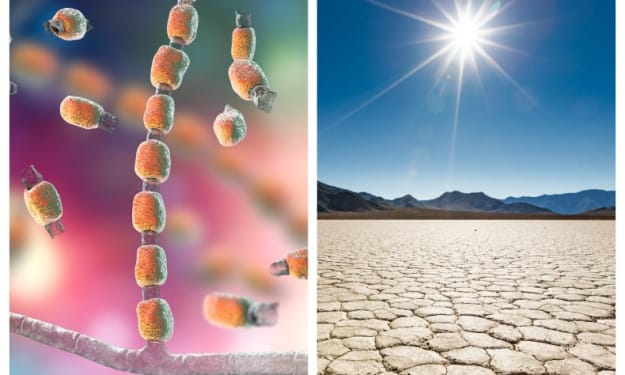
Unraveling the Mysterious World of Coccidioides: Valley Fever and Beyond
Welcome back to our blog! In our previous post, we delved into the intriguing world of Coccidioides, the unique fungus responsible for causing Valley Fever. Today, we continue our exploration, diving deeper into the various aspects of this enigmatic pathogen and its impact on human health and the environment.
By Rohit Singh3 years ago in Earth
What is solar net metering
Solar net metering is a system where we can consume our electricity bills. Through solar net metering we can use solar systems at home appliances and save our electricity provided through meters by the government. The electricity produced through this is cost free.
By maryam nisar3 years ago in Earth
Vessels of Honor. Content Warning.
Love Thanksgiving is When we Give thanks and When we Give out of Love The holiday season beings with the start of Thanksgiving. This is a time to take the emphasizes off us, focus on appreciating others, and give thanks. This should be the mindset, not only during he holiday season, but throughout the year – to show love and appreciation for others.
By Adeleye Michael Oluwatoyin3 years ago in Earth