Science
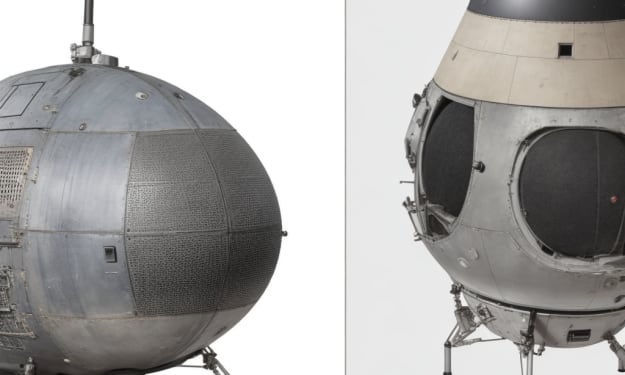
"ROSCOSMOS' Luna 25: Russia's Striking Re-visitation of Moon Investigation"
**Russia's State Space Company ROSCOSMOS and the Luna 25 Mission to the Moon** **Introduction** Russia, a trailblazer in space investigation, plays had a crucial impact in propelling human information about the universe. From sending off the primary satellite, Sputnik, to sending the main human, Yuri Gagarin, into space, Russia has made various significant commitments to space science and innovation. One of its critical and progressing projects is the investigation of our heavenly neighbor, the Moon. The State Space Company ROSCOSMOS, the administrative body liable for Russia's space science program, set out on an aggressive mission named Luna 25. This article dives into the set of experiences, targets, and significance of this mission.
By khushi Rajput 3 years ago in Earth
Title: "Rising Tides, Unbroken Spirits"
Once upon a time, in a small coastal village named Harmony Bay, there lived a community bound together by the soothing rhythm of the waves and the salty breeze that filled their lungs each morning. Generations of families had thrived here, relying on the bounties of the sea and the beauty of their surroundings. But as the world changed, so did their lives, and the unrelenting march of climate change brought challenges that tested their very existence.
By Vlad Cadabniuc 3 years ago in Earth
Voyage Across the Cosmos: Unveiling the Marvels of Our Universe
Introduction: The Cosmic Odyssey Begins In the vast expanse of the universe lies a journey that transcends the boundaries of human imagination. Our voyage takes us from the familiar embrace of our own planet to the mind-boggling expanses of galaxies and stars scattered across the cosmic canvas. Prepare to be astonished as we navigate through the wonders that both humble and inspire us. Earth and the Solar System: A Familiar Starting Point At the heart of our cosmic journey is Earth, a dazzling blue gem nestled in the darkness of space. Its lush landscapes and teeming life hint at the diversity that exists within the universe. Zooming out to the solar system, we encounter the moon – seemingly close, yet distant enough to hold a staggering 252,088 miles at its farthest point. This distance puts into perspective the vastness that lies between celestial bodies, an expanse that could comfortably accommodate all the planets that make up our solar neighborhood. The Planetary Panorama: Enigmatic Worlds Our expedition extends to the captivating array of planets that orbit our sun. Among them, Jupiter captivates with its enigmatic Great Red Spot, an awe-inspiring storm that could engulf Earth twice over. Saturn, with its breathtaking rings, stands nine times wider than our home planet. Some of its ring fragments are so vast that they rival Earth's mountains. But as incredible as these planets are, they bow to the might of the sun – a fiery ball that bestows light and life upon our solar system. Shifting Perspectives: Earth's Humbling Views A shift in perspective reveals Earth's true place in the cosmos. Seen from the moon, Mars, or just beyond Saturn's rings, our planet appears as a mere speck of blue against the backdrop of the universe. This is a reminder of the unfathomable number of stars that populate the cosmos – more than all the grains of sand on Earth's shores. Among these stars, the colossal VY Canis Majoris outshines our sun, dwarfing it by a factor of 2,000. Yet even VY Canis Majoris is but a tiny spark compared to the galaxies that fill the cosmic tapestry. Galactic Wonders: Exploring the Milky Way Now, let your imagination soar as we envision our solar system reduced to the size of a quarter, while the Milky Way galaxy unfolds before us. The galaxy's diameter stretches across the United States countless times, its magnificence beyond comprehension. Even within the Milky Way, NGC 674 emerges, a galaxy spanning an astonishing 200,000 light-years – a titan that dwarfs our own home among the stars. These galaxies are the building blocks of the universe, each containing untold secrets and revelations that continue to elude us. The Cosmic Mosaic: Unveiling Distant Galaxies A gaze through the Hubble telescope reveals a captivating mosaic of galaxies, a testament to the universe's boundless creativity. Each galaxy houses countless stars, some of which ignited over 11 billion years ago, during the dynamic period that followed the Big Bang. This era of prolific star formation showcases the universe's ever-evolving nature, as well as its awe-inspiring beauty that captivates and challenges our understanding. A Humbling Reminder: Our Pale Blue Dot Amid the grandeur of the cosmos, it's essential to recall our place within it. When life's trivialities loom large, consider Earth – our oasis of life in a vast cosmic desert. This planet, our shared home, is a testament to the extraordinary potential of existence. It urges us to cherish every moment and foster the unity that binds us together on this pale blue dot. Conclusion: Embracing Cosmic Majesty As our cosmic odyssey concludes, the universe's grandeur leaves an indelible mark on our minds and hearts. This journey beckons us to explore, learn, and remain awestruck by the mysteries waiting to be unraveled. The universe invites us to embrace its beauty, wisdom, and the boundless potential that ignites our curiosity.
By Geeta Arora3 years ago in Earth
Eternal Echoes: Earth's Story Unveiled
artritin In the boundless expanse of the cosmos, a small blue and green orb known as Earth spun silently through the vastness of space. It was a world of wonder, a tapestry woven with the threads of time and life. This is the story of Earth - a story of birth, evolution, and the delicate dance of existence. Chapter 1: Birth of a Planet. Billions of years ago, a cosmic symphony of gas and dust gave rise to Earth. In the crucible of the early solar system, gravity and heat molded the planet's molten core. Over eons, the surface cooled, forming oceans that shimmered like liquid sapphire beneath the sun's gentle caress. The stage was set for life to erge. Chapter 2: The Cradle of Life In the gentle lapping of the primordial oceans, the first stirrings of life emerged. Microscopic organisms danced upon the waves, tiny miracles that marked the dawn of a new era. As time flowed, these simple life forms evolved, adapting to their changing environment. They grew, diversified, and gradually sculpted the planet's atmosphere. Chapter 3: A Symphony of Species The Earth's stage was set for the grand performance of life's diversity. The ages unfolded, each one introducing new players to the cosmic drama. Towering dinosaurs ruled the land, their thundering footsteps shaking the very ground. Majestic forests stretched towards the sky, their leaves whispering secrets to the wind. Ancient oceans teemed with creatures, strange and wondrous, weaving tales of survival and adaptation. Chapter 4: The Rise of Humanity In the blink of geological time, a new chapter dawned - the age of humanity. Walking upright, with curious minds and clever hands, humans embarked on a journey of exploration and discovery. They crafted tools, tamed fire, and painted their stories upon the walls of caves. As civilizations bloomed, they built towering monuments, forged mighty empires, and peered into the night sky with dreams of distant worlds. Chapter 5: A Precarious Balance As humanity's influence spread, so too did its impact on the planet. The echoes of progress carried with them unintended consequences. Forests fell to the march of industry, rivers grew polluted, and the very air grew thick with the byproducts of innovation. The delicate balance that had allowed life to flourish for millennia was under threat. Chapter 6: A Call to Action Amidst the challenges, a spark of awareness ignited. Voices rose in unison, urging for change and conservation. Conservationists, scientists, and ordinary people joined forces, driven by a shared love for Earth's beauty. Protected areas were established, laws were enacted, and global initiatives took root. Slowly, the tide began to turn as humanity learned to tread more lightly upon the world it called home. Chapter 7: Hope Renewed In the 21st century, a new sense of hope emerged. Technological innovations promised cleaner energy, while communities rallied to restore ecosystems and protect endangered species. Awareness of the planet's fragility gave rise to a renewed commitment to sustainable practices and responsible stewardship. From the depths of the oceans to the heights of the mountains, Earth's resilience began to shine once more. Epilogue: A Shared Legacy And so, the story of Earth continues - a narrative woven by the countless lives that have graced its surface. It is a story of challenges and triumphs, of evolution and adaptation, of growth and change. As the planet hurtles through space, it carries with it the echoes of every creature that has ever called it home. In the quiet stillness of a starry night, one can almost hear the whispers of the past, the voices of those who have walked its lands and sailed its seas. And as humanity continues to write its chapter in the Earth's tale, one thing becomes clear: the story of Earth is a story of interconnectedness, of unity in diversity, and of the shared responsibility to ensure that its beauty endures for generations yet to come.
By G Sivaraman3 years ago in Earth
A Changing Tide
In a not-really far off future, the world was held by the tenacious hug of an Earth-wide temperature boost. The once-dynamic scenes had begun to wilt, and the skies above were stained with a shocking, never-ending cloudiness. Individuals all over the planet had become fatigued of seeing the staggering effect of their past activities on the climate. It was right now that a gathering of visionary, not entirely set in stone to reverse the situation and save the planet from additional debasement.
By Bazil Odongo3 years ago in Earth
Shores of Hope:A Tale of Climate Refugees
The sun hung low in the sky, casting a warm golden glow over the small coastal village of Rishika. For generations, its inhabitants had lived off the bounties of the sea, embracing the rhythm of the tides as their own heartbeat. But as the years passed, the rhythms began to change, and so did their lives.
By Andrew McKenzie3 years ago in Earth
The Silent Witness
In the wake of devastation, where the sun's feeble rays barely pierced the thick veil of smog, there existed a lone survivor. A survivor burdened with memories of a once-vibrant world, now reduced to a desolate wasteland by the relentless onslaught of climate change. This survivor, nameless and scarred by the weight of solitude, stumbled upon a forgotten bunker nestled amidst the ruins of what was once a bustling city.
By Atauwu Elijah3 years ago in Earth
Whispered Wonders: Rediscovering the Ozone Layer
"The 1980s were an era of big hair, neon colors, and the rise of MTV. Amidst all the cultural trends and pop phenomena, a less visible but crucial issue began to emerge: the thinning of the ozone layer. In a puzzling revelation, every October witnessed the appearance of a hole in the ozone layer over the South Pole, an alarming occurrence that raised questions about the environment's fragility. Picture this: the hole was as vast as the entire continental United States. The ozone layer, a protective belt of gaseous molecules encircling Earth, had come under an unprecedented threat. By 1980, scientists were raising red flags about the looming catastrophe. The possibility of completely annihilating the ozone layer, a shield safeguarding all living organisms from harmful ultraviolet radiation, was predicted to become a harsh reality by 2050. Such a scenario would bring about ecosystem collapses, an epidemic surge in skin cancer cases, and the demise of life as we knew it. It was a dire warning that humanity could not afford to ignore. So, what led to this impending ecological disaster, and how did we manage to steer away from the brink? To unravel this narrative, we must first delve into the science behind the ozone layer. Imagine it as a protective belt, a guardian of sorts, comprised of gaseous molecules enveloping our planet. This vital shield absorbs harmful ultraviolet radiation emanating from the Sun, serving as a shield for every living being on Earth. But despite its potent defense mechanism, the ozone layer is surprisingly delicate. In 1985, a startling revelation emerged: a massive depletion of the ozone layer was detected over Antarctica. An astonishing 40% of the layer had vanished, resulting in the formation of a daunting "hole." This discovery sent shockwaves through the scientific community. What's more, this hole expanded every spring, becoming progressively worse with each passing year. The gravity of the situation was undeniable; it was a wake-up call that could no longer be ignored. Dr. Susan Solomon, an atmospheric chemist hailing from Boulder, Colorado, emerged as a key figure in this unfolding narrative. In 1986, she led a team of scientists on an expedition to Antarctica, determined to decipher the cause behind the ominous ozone hole. Dr. Solomon vividly recalls the challenges of working in such an extreme environment, where the primary goal was to avoid frostbite while meticulously collecting data. The mission aimed to not only measure ozone levels but also analyze various chemicals contributing to its depletion. Scientific tools like balloons and ground-based measurements were deployed, all leading to a unanimous revelation: the primary culprit was chlorine, a byproduct of man-made compounds known as Chlorofluorocarbons (CFCs). CFCs, once harmless on the ground, underwent a sinister transformation in the stratosphere. Under the Sun's influence, they broke down into chlorine, which then interacted with ozone molecules to create oxygen and chlorine monoxide. Subsequent interactions led to a devastating chain reaction, causing further ozone depletion. What compounded the problem was the exceptionally long lifespan of CFCs in the atmosphere, persisting for up to 150 years. Consequently, the accumulation of CFCs year after year had led to an exponential increase in their concentration. In the late 1980s, the urgency of the situation became even more pronounced, with a staggering 50% drop in ozone levels. This looming catastrophe triggered one of the most remarkable displays of global collaboration and action on climate issues. The success of this endeavor could be attributed to the "three P's": personal impact, perceptible consequences, and practical solutions. Skin cancer, a direct consequence of ozone depletion, made the threat personally relatable to everyone. Satellite measurements vividly depicted the destruction of ozone, making the issue perceptible to the masses. Moreover, finding alternatives to CFCs, like substitutes for aerosol cans, proved to be a practical and feasible solution. The public played a pivotal role in driving change. Scientists like Dr. Solomon communicated their findings through press conferences, highlighting the urgency of the situation. The ozone hole even found its way into popular culture, with TV shows and movies incorporating references that resonated with the public. This collective awareness exerted pressure on global leaders, compelling them to take action. This culminated in the Montreal Protocol, a groundbreaking international agreement that acknowledged the peril of ozone depletion and outlined measures to combat it. The Montreal Protocol, the first and only universally ratified treaty, marked a turning point in environmental cooperation. By encouraging the reduction of ozone-depleting substances and supporting developing nations in adopting alternative technologies, the protocol laid the foundation for a global shift away from CFCs. As the protocol came into effect in 1989, the consumption of ozone-depleting substances, including CFCs, plummeted. Over three decades later, the ozone hole ceased its expansion and is now slowly contracting. Experts predict a full recovery by 2065. But the journey doesn't end here. As CFCs were phased out, Hydrofluorocarbons (HFCs) emerged as replacements. While not harmful to the ozone layer, HFCs are potent greenhouse gases that contribute to climate change. This realization prompted an amendment to the Montreal Protocol in 2016, extending its scope to include the phase-out of HFCs. However, this represents just one facet of the broader challenge of climate change. Climate change remains a pressing global concern, demanding collective action on an unprecedented scale. While progress has been made, the looming threat of climate catastrophe by 2030 underscores the need for sustained efforts. The personal impact of climate change, perceptible consequences, and practical solutions continue to guide us on a path towards a sustainable future. As the world unites once again to tackle climate change, the lessons learned from the successful healing of the ozone layer serve as a beacon of hope, reminding us of our capacity to overcome seemingly insurmountable challenges when we act together."
By Shubham Bajaj3 years ago in Earth
Top 10 Amazing and Interesting Facts of The World!
The world is teeming with surprises and undiscovered information that remains largely unknown to us. With approximately 200 countries, billions of individuals, a diverse range of plant and animal species, and the hidden wonders of nature, there are countless captivating and enjoyable facts to explore. For those who have a penchant for discovering intriguing tidbits about the world, we present a compilation of the top ten astonishing facts.
By Paulla Kantasak3 years ago in Earth
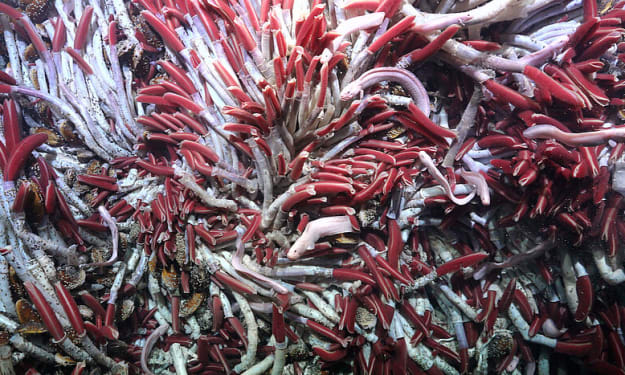
HYDROTHERMAL VENTS REVEAL UNIQUE, UNEXPECTED MARINE ECOSYSTEM
I started snorkelling at a very young age, and I always found underwater swimming in lakes and ponds more enjoyable than doing laps in a concrete pool. There’s something compelling about the underwater world and its inhabitants.
By David Morton Rintoul3 years ago in Earth