Science
Climate change impacts
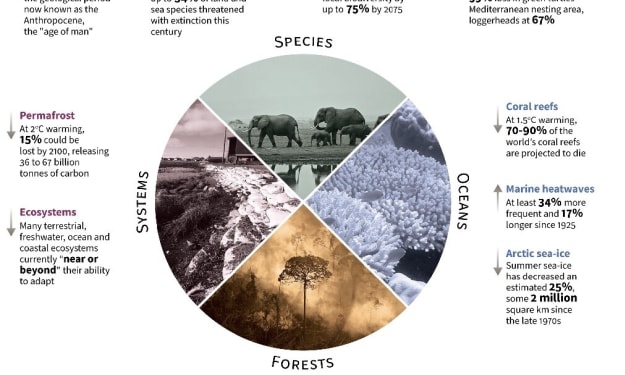
Climate change is having a profound and wide-ranging impact on our environment, with consequences that are becoming increasingly evident. The Earth's climate has always fluctuated naturally over long periods of time, but the current changes are occurring at an unprecedented rate and are primarily driven by human activities, particularly the burning of fossil fuels and deforestation.
By Alhagie Sait Ceesay3 years ago in Earth
Lost in the Last Oasis
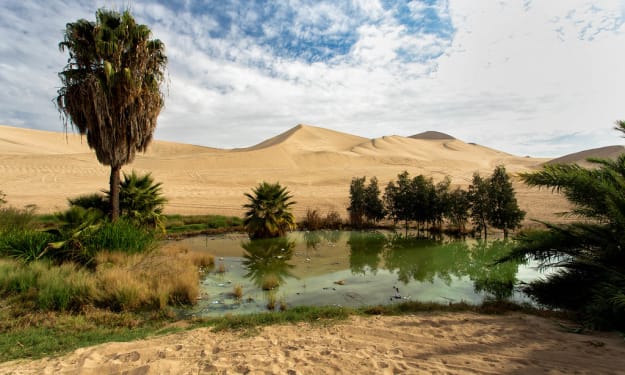
In a world plagued by relentless environmental degradation and climate catastrophes, the narrative unfolds around a small community struggling to survive amid dwindling resources and a vanishing landscape. The story centers on Maya, a young woman whose memories are imbued with images of lush forests, vibrant wildlife, and pristine waters—scenes that now exist only in faded photographs and the tales of the older generation.
By Ivan Heritier3 years ago in Earth
How is global warming affecting our planet?. Content Warning.
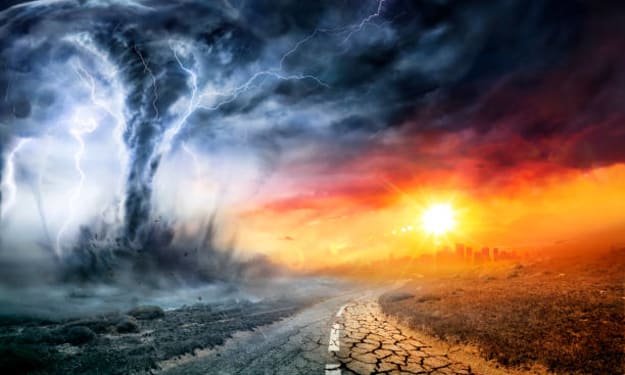
Global warming, also known as climate change, refers to the long-term increase in Earth's average surface temperature due to human activities, primarily the burning of fossil fuels and deforestation. This phenomenon has far-reaching consequences for our planet, affecting various aspects of the environment, ecosystems, and human societies. In this research, we will explore the extensive impacts of global warming on our planet.
By Prince Ansu3 years ago in Earth
What about the absent segments of the rainbow?
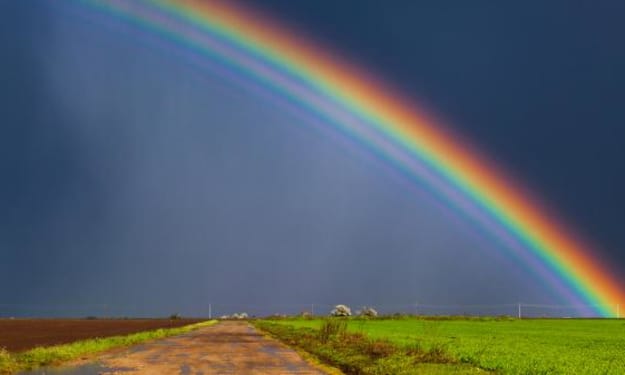
Do you know the composition of the sun? Unfortunately, we can't physically travel to the scorching star to collect samples, like we did with the moon. However, there's a way to study its composition without venturing so far away. Instead of relying on a traditional rainbow, we use a more precise tool called a Fraunhofer spectrum, which consists of dark lines in the spectrum of light. These lines are akin to the mysterious dark marks observed in the spectra of stars, including our very own Sun. They appear because certain gas elements in the atmosphere selectively absorb the Sun's radiation at specific wavelengths. The first person to notice these lines was an English physicist named William Hyde Wollaston in 1802. However, it was the German physicist Joseph von Fraunhofer who made these lines famous by plotting over 500 of them and assigning some letters from A to G to the brightest ones. Even today, we use these letters to identify the lines. In our solar system, we've identified about 25,000 Fraunhofer lines.
By Trine Hauge Schreiber3 years ago in Earth
Maya's Song : A Tale of Love and the Healing Forest. Content Warning.
Some time ago, settled in a little town, there carried on with a little youngster named Maya. Maya had consistently felt a profound association with nature. The woodland encompassing her town was her safe-haven — where she felt generally alive and settled. The transcending trees murmured old mysteries, and the energetic natural life moved through the undergrowth, making an orchestra of life.
By Carlos Liptos3 years ago in Earth
EARTH'S ENIGMATIC ABYSSES
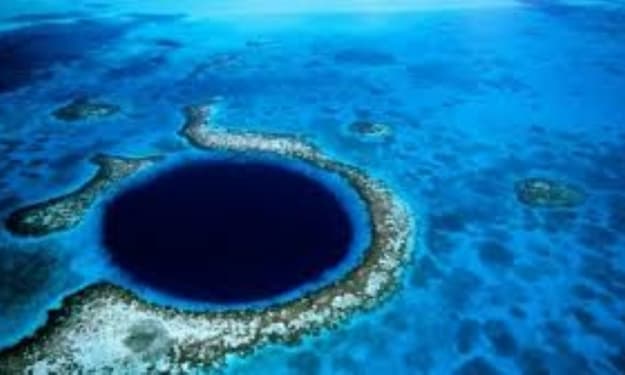
The Mariana Trench and The Great Blue Hole Nestled in the South Pacific Ocean, the Mariana Trench is a remarkable geographical feature, forming a crescent-shaped scar on the seabed between Hawaii and the Philippines. It stands as a testament to the Earth's astonishing depths, plunging a staggering seven miles into the planet's crust, thus earning the distinction of being the deepest point on Earth. To put it in perspective, consider this: if you were to drop Mount Everest into this chasm, the peak of the world's highest mountain would still find itself submerged an astonishing 7,000 feet below sea level. The Mariana Trench is a realm of unimaginable depth, a place where the ordinary rules of our world cease to apply.
By Judy Sibby3 years ago in Earth
OYMYAKON
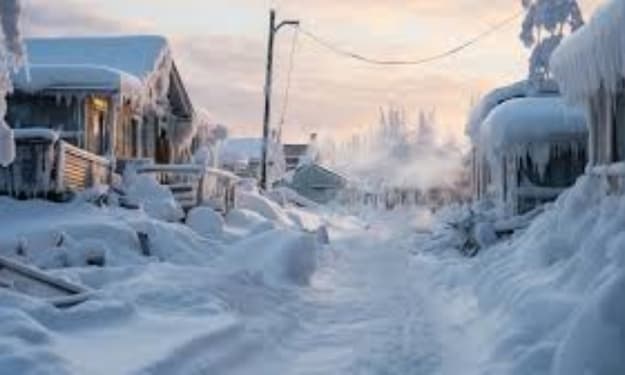
Oymyakon: Surviving the Coldest Town on Earth In the vast, unforgiving landscape of Eastern Russia lies a small town that strikes fear into the hearts of even the hardiest souls. Oymyakon, with its bone-chilling temperatures, is a place where extreme cold is a way of life. This remote town, home to around 500 people, holds the dubious distinction of being the coldest permanently inhabited place on Earth. Its frigid embrace is relentless, with winter temperatures averaging a staggering -58 degrees Fahrenheit. However, the mercury can plummet even further, sending shivers down your spine as it dips to an unimaginable -90 degrees Fahrenheit. To put this in perspective, the average temperature on Mars, our neighboring red planet, is a "balmy" -81 degrees Fahrenheit. Yes, you read that right - Oymyakon can be even colder than Mars.
By Judy Sibby3 years ago in Earth
DEATH VALLEY
The Extreme Realities of Death Valley, California Death Valley in California is a place like no other, where the scorching heat can turn the ground into a makeshift stovetop. In this desert basin, temperatures have reached an astonishing 134 degrees Fahrenheit (56 degrees Celsius), marking the highest recorded air temperature on Earth. The unique topography of the region, with its deep craters and mountain ranges, contributes to this extreme climate by trapping hot air and preventing rain clouds from forming, resulting in perpetual drought. While Death Valley's mesmerizing landscapes draw visitors from all over the world, the journey comes with inherent risks, including heatstroke and encounters with its diverse population of dangerous animals. In this article, we will delve into the fascinating yet perilous world of Death Valley.
By Judy Sibby3 years ago in Earth
SNAKE ISLAND. Content Warning.
Snake Island: The Forbidden Paradise of Deadly Serpents Nestled in the treacherous waters of the Atlantic Ocean off the coast of Brazil lies an island that has earned a fearsome reputation – Snake Island. Officially known as Ilha da Queimada Grande, this seemingly idyllic island has become a sanctuary for one of Latin America's most deadly serpents, the Golden Lancehead. With approximately 4,000 venomous snakes inhabiting its dense vegetation, Snake Island is a place only for the brave or the foolhardy. In this article, we will delve into the enigmatic history of Snake Island, the perilous creatures that call it home, and the reasons behind the strict prohibition on visitors.
By Judy Sibby3 years ago in Earth
NAICA CRYSTAL CAVE
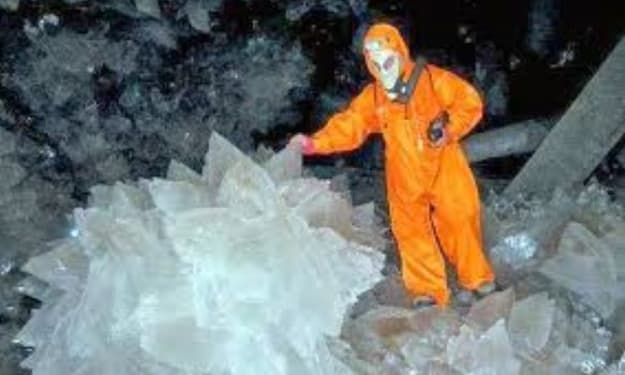
The Enigmatic Beauty and Peril of Naica Crystal Cave The world is full of breathtaking wonders, some of which hide in the most unexpected and perilous places. The Naica Crystal Cave, a mesmerizing underground cavern located nearly 1,000 feet beneath a mountain in Naica, Mexico, is a testament to nature's awe-inspiring beauty and inherent danger. This hidden gem is adorned with enormous milky-white selenite crystals, colossal in size and weight. The formation of these oversized pillars is a geological marvel, the result of volcanic minerals in water slowly crystallizing over thousands of years as temperatures in the cave system gradually cooled.
By Judy Sibby3 years ago in Earth
The Looming Threat: Climate Change and Its Impact on Future Generations
Once upon a time, in a small coastal town, there lived a young girl named Lily. She spent her childhood exploring the sandy shores, chasing seagulls, and collecting colorful seashells. Every evening, her grandfather would sit with her on the porch, watching the sun dip below the horizon, casting a warm, orange glow over the world. He used to tell her stories about the sea, stories that filled her heart with wonder and love for the environment.
By Rubayat Hasan3 years ago in Earth