Science
Inter-Generational impact
Title: "Legacy of the Sycamore Grove" Nestled in a quiet corner of the countryside stood the Sycamore Grove, a place of timeless beauty and unmatched tranquility. Generations of the Thompson family found refuge under the grand, sprawling branches of the sycamore tree - a cherished haven where stories were shared, laughter echoed, and profound connections to nature were forged. For Emma Thompson, a young environmental activist, the grove was a reminder of her deep roots and an ever-present symbol of the enduring legacy her family sought to uphold.
By Nsah Heribert3 years ago in Earth
E-bikes: A Catalyst for Healthier and Prosperous Cities
Recent data suggests that e-bikes are transforming urban transportation, often spurred by policies and financial incentives making them more affordable. E-bikes offer a pragmatic solution to mitigate congestion issues, diminishing the number of cars on the road, resulting in less pollution and noise. Their maneuverability in traffic contributes to more efficient transport systems, reducing road infrastructure costs and greenhouse gas emissions. E-bike transport is also cost effective as battery charges to cover up to 50 miles per day cost 25Cents.
By Andrea Zanon3 years ago in Earth
Beneath the Surface
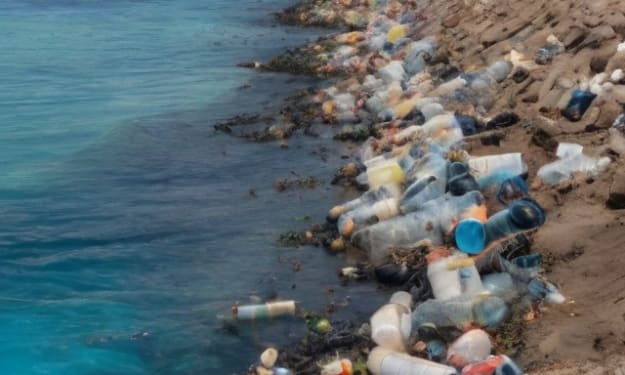
The Caribbean coastline of the YucataCaption: Dive into the heart of the Caribbean, where a diver's battle against plastic pollution mirrors the universal fight for our oceans. Explore the hidden world beneath the waves, where hope glimmers amid the debris.n Peninsula has long been renowned for its pristine beaches, crystal-clear azure waters, and a rich tapestry of marine life. A haven for both nature enthusiasts and locals, it beckons with promises of breathtaking underwater vistas. Yet, beneath this idyllic surface lies a stark tale, a narrative woven not by nature's whims but by the relentless tide of pollution.
By Christopher Ezeh3 years ago in Earth
Whispers of the Forgotten Forest. Content Warning.
In the heart of a mystical forest, hidden from the world, stood the ancient trees that bore witness to centuries of life. Their branches whispered secrets carried by the wind, and their roots intertwined like an intricate tapestry connecting the spirits of the forest. Yet, the tranquility of this enchanted realm was shattered by the encroaching threat of destruction.
By Jonathan Bin wakandwa zakitoka3 years ago in Earth
Natural Custodians
Natural Custodians The Arctic is warming up to four times faster than the rest of the world. Ice caps are melting and sea ice is retreating, changing the weather and disrupting marine life. To protect these polar ecosystems, we need to understand them. And no one knows the Arctic as well as the indigenous communities that live here. Greenland is the world's largest island. It is one of the most extreme environments on Earth where polar night or 24 hour daylight can last for months and temperatures can reach -50. Inuit have thrived here since time immemorial. But the Arctic is changing, and it's happening in mere decades. Indigenous peoples of the far north have been adapting to change for millennia. A new generation of Greenlanders is combining science and traditional knowledge and in the process, reframing perceptions of the Arctic. In Greenland, journalists and scientists come for one thing, for climate change. How do you see that as a Greenlander? There's a very powerful narrative around the Arctic these days and Arctic indigenous peoples, that we are the place of climate change. But we've lived here on these lands for thousands of years and there's a lot more to us than climate change. What indigenous scientists can do is to bridge some of that gap. As a microbiologist I'm interested in understanding how being in nature, eating from nature impacts us through connecting us to the microbiology of our environment. Microbial species outnumber the stars in our galaxy, and they impact every living thing on earth, including Arctic biomes. What we're looking at here is the downstream effect of nutrients like phosphate, silicate and nitrogen. how they affect the fjord systems out there specifically the phytoplankton. So this is a land-terminating glacier, feeding in via rivers. And so what's the difference between a marine-terminating glacier and a land-terminating one? The marine-terminating glacier creates an upwelling effect on nutrients, and these nutrients spike the biological production in the fjords. Well, when they retreat back, we lose part of the microscopic plankton and they are in turn food for higher organisms like whales, for instance. It's all connected, right? In Kalaallisut, we have this incredibly meaningful word, Sila. Sila means the weather, it means consciousness, it means the spirit, it means outside. We're not separate from nature. When our minds are well, when the Sila inside of us is well, we can treat our environment well. Right now, my work is very much focused on building the Sila biology program. We're going to be outside a lot like, that supports mental health but it's also an excellent way of learning biology. When we eat from nature, when what we wear comes from nature. We are conscious that what we do has consequences. People assume that it will have a really strong smell, but it's not strong, it's just very particular. It's very particular to iginneq. I'm currently so excited that I can't even think, I'm just in eating mode. My biggest hope is that we'll have Indigenous students coming out of this program who can use the skills that they've learned to make a difference for their communities. Arctic peoples are uniquely placed to understand what is happening here and what it means to heal our relationship with nature. We just need to be willing to listen and to learn. Prada group and IOC/UNESCO launched SEA BEYOND to promote ocean education around the world. SEA BEYOND represents Prada Group's long-term commitment to supporting educational programs that connect the younger generation with marine ecosystems. That's why Prada is donating one percent of profits from its Re-Nylon collection to generate innovative approaches, science-based solutions and humanitarian projects that address the global challenges facing our ocean.
By Sandeep Bhandari3 years ago in Earth
MYSTERIOUS DRAGON FIREBALLS “THE NAGA FIREBALLS”
In our world today, there is a constant argument between those who believe in supernatural events and those who try to explain them scientifically. One specific debate is about the Naga fireballs, a mysterious phenomenon. And in this article, we will not just talk about the Naga fireballs and the story behind this yearly phenomenon.
By Ruth Wairimu3 years ago in Earth
Wars Destroy Environment
In our world today, wars have become synonymous with destruction and devastation. Lives are lost, cities are reduced to rubble, and communities are left in ruins. However, one aspect of war that often goes unnoticed is the environmental impact it has. The destruction of the environment caused by wars is a pressing issue that needs to be addressed urgently.
By Ahsan Khan 3 years ago in Earth
Unveiling the Large Hadron Collider
The Large Hadron Collider (LHC) stands as the largest and most powerful atom smasher globally, designed to hunt for new particles and explore the fundamental forces of nature. With a massive 27-kilometer underground loop, supercooled magnets, and enormous detectors, the LHC propels particles at extraordinary speeds, leading to high-impact collisions.
By Jason Gerard3 years ago in Earth
5 Utterly Wild Fun Facts About the Kangaroo
Ah, the kangaroo — those adorable creatures renowned for their cute little hops, have always been considered quite the charismatic animals. Yet, beyond being fun to observe wandering about in zoos, they hold a world of scientific fascination! Get ready to be amazed as we delve into five incredible facts about the kangaroo. From their unique reproductive methods to astonishing adaptations for survival, each revelation adds a layer to the wonder that is the kangaroo. Join me on this journey into the scientific marvels of these marsupials, and you’ll discover that there’s much more to them than meets the eye!
By Olivia L. Dobbs3 years ago in Earth