Science
What If You Traveled One Billion Years Into the Future?
If you traveled 10,000 years into the future, what would planet Earth look like? Would most of its surface be covered in volcanoes, or would it be frozen in ice? What if you traveled even further to one million years in the future? Would all of the oceans have evaporated, or would it have become one giant water world? Okay, now what about 1 billion years? Would there be any humans left, or would they have settled in other parts of the galaxy?
By Dhrubajyoti Kalita2 years ago in Earth
What's The Biggest Hole We Can Possibly Dig On Earth...
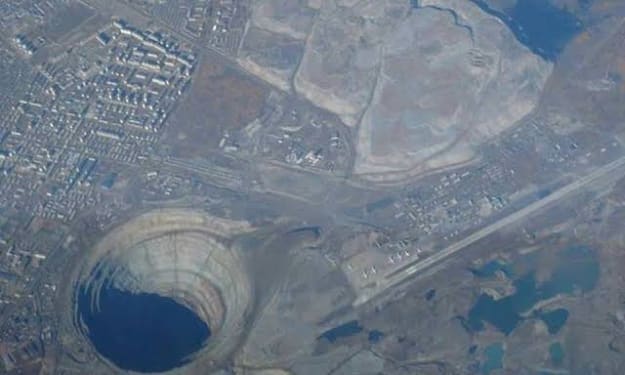
So at some point in their lives, nearly everybody has wanted to dig a hole down to the center of the Earth. The only problem is, nobody ever has actually dug a hole down that far. This leads us to the question that this video is all about: If humanity decided that digging a hole was the #1 objective of our species, then how deep down could we actually dig with modern-day technology? Let's say that we start somewhere on the Earth's surface and just start digging from there- -not too far down at 1.8 meters and we arrive at the standard grave depth in Western culture. So if you are afraid of zombies, this is how far down they'll be coming from. 4 meters down and we arrive at the depth that pharaoh Tutankhamun's tomb was discovered at. A little further, at six meters below the surface, we've reached the maximum depth that metal detectors can pick up signals from. At 12 meters, we can find the deepest burrows dug by animals - the Nile crocodile. A little further down at 20 metres and we arrive at the depth of the Paris Catacombs beneath the city of Paris - - a tomb that holds the remains of over 6 million people. Double that distance to 40 meters down and we can see the deepest swimming pool in the world. If you drained this pool and jumped into it from the top, it would take nearly 3 seconds before you would hit the bottom. 100 meters down is the usual distance that governments bury their nuclear waste at, and just beneath that at 105.5 meters down is the deepest metro station in the world, located in Kiev. Moving on to 122 meters down and we see the deepest known point that a plant's roots have ever reached- - a fig tree in South Africa. 220 meters down and we arrive at the deepest river in the world - the Congo River in Africa. Beyond that at 240 meters, you can ride through the deepest railway tunnel in the world that connects the Japanese islands of Honshu and Hokkaido. But at 287 metres down, you can drive through the deepest road tunnel in the world in Norway 305 meters down and you would still be vulnerable to the B82 Earth-penetrating nuclear warhead which can destroy structures up to this depth beneath the surface. Incredibly though at 392 meters, we arrive at the deepest well and possibly deepest hole ever dug by hand. This is the Woodingdean Water Well in the UK and it was dug all the way back in 1862. At 603 meters down,we arrived at something terrifying- - the deepest vertical drop inside of a cave. If you were unfortunate enough to be in this cave and fall down this hole, the fall would be higher up than falling from the top of the One World Trade Center in New York and the fall would take you over 11 seconds before hitting the bottom. Even further down though at 700 meters is where the Chilean miners were trapped at for 69 days back in 2010. 970 meters down is the deepest hole ever dug that still has an open sky above it - - the Bingham Canyon open pit mine in Utah. This pit is so deep that you could place the tallest building in the entire world in the center and still have over 100 more meters to the surface. Much further down at 1,410 meters though is where the deepest concert ever held happened by the band, 'Agonizer' in Finland 1642 meters down is the depth of the deepest lake on Earth- - Lake Baikal in Russia, and 1857 meters down is the deepest part of the Grand Canyon. The deepest known cave on Earth is located 2,197 meters beneath the surface in Georgia but the deepest hole that you could actually fall into goes waaaaay deeper than even this- - All the way down at 3,132 meters is the bottom of the Moab Khotsong mineshaft in South Africa. Taking the elevator takes 4 1/2 minutes to reach the bottom but if you fell into it from the top, it would take you 25 entire seconds for you to hit the bottom and think about what you've just done- - long enough to receive and miss an entire phone call. Even further down at 3,600 meters is the deepest point that a multicellular organism has been found alive- - this freaky looking worm. But human beings themselves have been even deeper than this. 4,000 meters down is the deepest part of the deepest mine on Earth, also located in South Africa. The trip from the surface down to the bottom takes over an hour to complete and the temperature at the bottom can reach a sweltering 66 degrees Celsius. 6000 meters is the average depth of the oceanic crust beneath the ocean floor. Waaaaay down at 8,848 meters is the height of Mount Everest if it were placed underground instead 10,994 meters down is the bottom of the Marianas Trench, which is the deepest part of the ocean. I already covered the depth of the ocean in another video but unbelievably humans have actually dug down significantly deeper than even this. For reference about what's next, 11887 meters is the average altitude that a commercial airliner flies at, but deeper than that at 12,262 meters is the depth of the Kola Superdeep Borehole: A project where the Soviet Union attempted to drill all the way through the Earth's crust. They only reached a third of the way there though because the temperature at this depth reached 180 degrees Celsius, which was too hot for the drill to continue operating any further. The hole is also only 23 centimeters wide, so luckily you can't accidentally fall into it. If you dropped a quarter down the shaft though, it would take about 50 seconds before it hit the bottom. Recently, however, this depth has been surpassed by the Z44-Chavyo oil and gas well which has drilled down to a depth of 12,376 meters - - that's the equivalent of stacking 15 Burj Khalifas on top of each other and currently represents the deepest hole that humanity has ever dug. The crust, however, can extend down to 70,000 meters below the Earth's surface and the planets center is located 6,731 kilooometers down. If the surface of the Earth is Lisbon, Portugal and the planet's center is Astana, Kazakhstan, then humanity so far has just ventured this tiny insignificant and don't forget to hit the bell for updated videos. You can visit my Patreon by clicking here if you'd like to directly support the channel and vote on future video topics And I hope to see you next Friday for another new video then.
By Dhrubajyoti Kalita2 years ago in Earth
Hidden Realms Intertwined . AI-Generated.
The scientific community has been discussing the theory of parallel worlds for a long time. Unfortunately, we haven't advanced enough to prove or disprove it yet. However, it remains an intriguing theory, which is why there are many unusual urban legends about visitors from parallel realities. Let's explore a few of them.
By Ankita Bee2 years ago in Earth
The Dynamic Symphony of Volcanoes: Unveiling Nature's Marvels and Mysteries
**The Dynamic Symphony of Volcanoes: Unveiling Nature's Marvels and Mysteries** Volcanoes stand as majestic sentinels of Earth's geological theater, casting both awe and trepidation in their fiery displays. Beyond their immediate spectacle, volcanoes wield profound influences on ecosystems, geological formations, and even human history. Let's embark on a journey through the captivating world of volcanoes, exploring their diverse impacts with a lens of curiosity and scientific inquiry. ### Volcanoes: Nature's Eruptive Sculptors Volcanoes, born from Earth's tumultuous interior, shape landscapes with breathtaking artistry. From the towering stratovolcanoes like Mount Fuji to the gentle slopes of shield volcanoes like Mauna Loa, their forms and behaviors vary widely. These volcanic structures result from the interplay of magma composition, eruption types, and tectonic settings. #### Eruption Types and Their Impacts Volcanic eruptions manifest in diverse forms, each leaving distinct imprints on the land and atmosphere. Explosive eruptions, typified by ash plumes and pyroclastic flows, can unleash devastation over vast areas. The eruption of Mount Tambora in 1815, the most powerful in recorded history, ejected massive volumes of ash and gases, causing global climate impacts and the infamous "Year Without a Summer." In contrast, effusive eruptions, characterized by lava flows and gentle eruptions, contribute to the formation of shield volcanoes and lava plateaus. Hawaii's Kilauea volcano, with its persistent lava flows, exemplifies the gradual yet transformative power of effusive eruptions. ### Plants as Volcanic Indicators Nature's subtle guardians, plants near volcanoes, often provide early warnings of impending volcanic activity. A notable phenomenon observed is the greening of plants followed by browning during volcanic unrest. This change reflects variations in carbon dioxide levels and soil conditions influenced by underground magma movements. Scientists utilize satellite data to monitor these vegetative responses, offering insights into volcanic dynamics. #### Volcanoes and Geothermal Life Beyond their visual grandeur, volcanoes harbor unique ecosystems thriving in extreme conditions. Hydrothermal vents, found in volcanic regions like the mid-ocean ridges, sustain diverse life forms adapted to high pressures and temperatures. These ecosystems, rich in exotic microbes and deep-sea creatures, offer glimpses into life's resilience and adaptability in extreme environments. ### Geological Marvels: Gems from Volcanic Depths Volcanic processes not only shape landscapes but also yield nature's precious treasures. Diamonds, coveted for their brilliance and rarity, form deep within Earth's mantle in kimberlite pipes, brought to the surface through volcanic eruptions. Other gems like peridot and obsidian, born from volcanic activity, showcase nature's artistic prowess in crafting dazzling geological marvels. #### The Transition Zone: Insights from Earth's Depths Delving deeper into Earth's interior, the transition zone within volcanoes reveals astonishing transformations in mineral compositions. Olivine, a common mineral in volcanic rocks, undergoes metamorphosis into exotic materials like wadsleyite and ringwoodite under extreme pressures and temperatures. These minerals not only intrigue geologists but also hint at Earth's complex geological processes hidden beneath its surface. ### Volcanoes and Planetary Connections Studying volcanoes extends beyond Earth, offering parallels and insights into planetary processes. Mars, with its ancient volcanic terrains, presents intriguing similarities to Earth's volcanic landscapes. Ancient hot springs on Mars, akin to those on Earth, may have harbored life-supporting environments, shaping our quest for understanding extraterrestrial life. #### Volcanoes and Mass Extinctions: Unraveling Earth's History Volcanic eruptions, historically linked to mass extinctions, have left indelible marks on Earth's evolutionary timeline. The Permian-Triassic extinction, Earth's most catastrophic extinction event, possibly resulted from colossal volcanic eruptions in the Siberian Traps. Similarly, the Cretaceous-Paleogene extinction, marking the end of dinosaurs, is associated with volcanic activity concurrent with asteroid impacts. ### Convergence of Science and Conservation As we unravel the mysteries of volcanoes, scientific endeavors converge with conservation efforts. Monitoring volcanic activity aids in risk assessment, disaster preparedness, and safeguarding vulnerable communities. Early warning systems, leveraging scientific insights and technological advancements, enhance resilience and mitigate volcanic hazards. #### Volcanoes: Guardians and Alchemists of Earth's Wonders In the grand tapestry of Earth's natural wonders, volcanoes stand as guardians and alchemists, shaping landscapes, fostering life, and offering glimpses into planetary processes. From the lush vegetation surrounding volcanoes to the exquisite gems forged in their fiery depths, each facet unveils nature's intricate interplay of forces and phenomena. ### Conclusion: Embracing Nature's Dynamic Forces Volcanoes epitomize nature's dynamism and resilience, reminding us of Earth's perpetual transformations. As stewards of this wondrous planet, our exploration of volcanoes extends beyond scientific inquiry to conservation, education, and appreciation of Earth's majestic wonders. Embracing nature's dynamic forces, we embark on a journey of discovery, curiosity, and reverence for the awe-inspiring spectacles that shape our world.Start writing...
By Mbeha maliwa 2 years ago in Earth
Boquila trifoliolata: Nature’s Master of Disguise
In the temperate rainforests of southern Chile and Argentina hides a peculiar species of vine. Discovered early in the 2010s, this strange species called Boquila trifoliolata (locally titled the pilpil), has the incredible ability to mimic the leaves of other plant species it grows upon. The leaves of the pilpil, though naturally stubby and lobed, grow to nearly perfectly match the leaves of multiple other species near it, showcasing one of the most incredible feats of camouflage ever found in the plant kingdom.
By Olivia L. Dobbs2 years ago in Earth
The Secrets Beneath Our Feet
Do you remember that diagram from elementary school showing Earth's layers? Turns out, it might not be as accurate as we once thought. But before we rush to explore other planets, shouldn't we first understand our own? Let's delve into what lies beneath our feet and the incredible discoveries made through one of humanity's deepest ventures: the Kola Superdeep Borehole.
By Zelene Taylor2 years ago in Earth
A Cosmic Ballet: The Spectacular Nova Burst Painting the Night Sky Anew
In the vast canvas of the cosmos, where stars twinkle like diamonds scattered across an endless expanse, a celestial event of unprecedented magnitude is set to unfold. NASA astronomers, with bated breath and eager anticipation, have announced the imminent arrival of a once-in-a-lifetime spectacle—a nova explosion that promises to embellish the night sky with a dazzling new star.
By Zyad Ahmed2 years ago in Earth
Unveiling Earth's Enigma: USC Researchers Prove Earth’s Core Is Losing Speed
Introduction: In the intricate dance of celestial bodies, Earth remains an enigma, revealing its secrets cautiously over millennia. Yet, in a groundbreaking revelation, researchers at the University of Southern California (USC) have thrust one of Earth's most profound mysteries into the limelight. Their groundbreaking study has unveiled a startling truth: Earth’s core, the silent orchestrator of our planet’s dynamics, is losing speed. In this comprehensive exploration, we delve into the implications of USC's discovery, unraveling the intricacies of Earth's inner workings and contemplating the profound impact on our understanding of the cosmos.
By Zyad Ahmed2 years ago in Earth
The Ultimate Guide to Designing a Pollinator Paradise. AI-Generated.
Creating a Pollinator-Friendly Garden: Learn how to attract and support pollinators like bees, butterflies, and hummingbirds through careful garden design, plant selection, and maintenance practices.
By Timothy A Rowland2 years ago in Earth
Creating a Butterfly Paradise. AI-Generated.
Learn how to create a butterfly garden that attracts and supports butterflies, promotes biodiversity, and contributes to the overall health of the ecosystem, while also providing tips for designing, maintaining, and creating a welcoming environment for these delicate creatures.
By Timothy A Rowland2 years ago in Earth