Science
Unsettling Developments in Japan: The Earthquake That Shook More Than Just the Ground
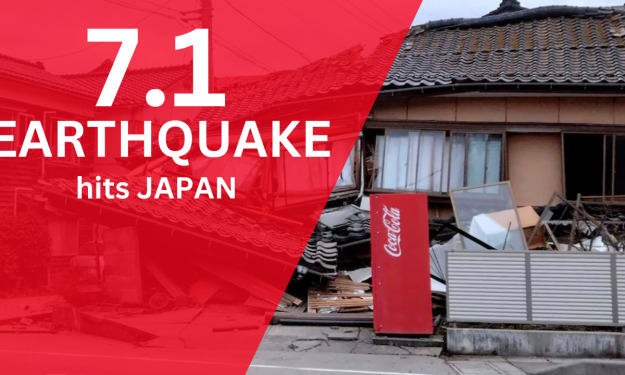
On Thursday, southern Japan was rocked by a magnitude 7.1 earthquake that, at first glance, seemed to pass with little fanfare. The initial tremor, while significant in its own right, appeared to cause minimal damage and led to a quick scaling back of the tsunami warning. This seemed to signal a return to normalcy. However, beneath the surface of this seemingly ordinary seismic event lay a series of unsettling developments that have left the nation on edge.
By Cris Hibaya2 years ago in Earth
Sustainable Living
In moment's world, where environmental challenges are enhancing, the conception of sustainable living has come decreasingly pivotal. Sustainable living focuses on reducing our environmental footmark, making it not just a choice, but a necessary step toward a more flexible future. As we grapple with issues like climate change, resource reduction, and pollution, new and innovative results are arising to help us move towards a more sustainable and greener hereafter.
By Joseph Balami2 years ago in Earth
Green Technologies: Innovations for a Sustainable Planet
Introduction In recent decades, the urgency to address climate change and reduce environmental impact has led to the birth and development of green technologies. These innovations aim to promote a sustainable future by reducing the use of non-renewable resources, limiting greenhouse gas emissions, and promoting energy efficiency. Technological progress in this area not only represents a response to growing environmental concerns but also offers new economic and social opportunities. In this article, we will explore some of the most promising green technologies and their potential for a more sustainable future.
By Fabio Smiraglia2 years ago in Earth
Bridging the Divide: Cape Town's Persistent Racial Chasm and the Legacy of Apartheid
In the heart of Cape Town, a starkly divided cityscape lays bare the enduring legacy of South Africa's apartheid era. The divide is not just a geographical one but a reflection of deep-seated socio-economic disparities that persist decades after the official end of apartheid. This story unfolds across a seemingly innocuous strip of land—a narrow stretch that separates the affluent beachside community of Strand from the densely populated township of Nomzamo. Although they are only a few meters apart, the two areas could not be more different.
By Rapelang Malebelle2 years ago in Earth
How many things are There!?
Hey, Vsauce. Michael here. Imagine if we gathered every single human alive today and threw them into the Grand Canyon. The result would be a fascinating yet sobering sight. The Grand Canyon, a colossal natural wonder, wouldn’t even be remotely filled by all 7.159 billion of us. We would form only a modest pile, a mere fraction of the Canyon’s vast expanse. This visualization not only offers a stark perspective on humanity's physical scale relative to the natural world but also prompts a deeper reflection on the nature of "things" and our place within the universe.
By Rapelang Malebelle2 years ago in Earth
How Will Our World End?
The question of how our world will end is one that has fascinated humanity for centuries. From religious prophecies to scientific predictions, the concept of Earth's demise has been explored in countless ways. While the idea of the world ending can be unsettling, it also invites us to reflect on the nature of existence, the fragility of our planet, and the forces beyond our control. Let's delve into some of the most compelling theories about how our world might meet its end.
By marufhasan2 years ago in Earth
What if Earth Stops Spinning!
If the Earth were to suddenly stop spinning, the consequences would be nothing short of apocalyptic. At the equator, you’d be thrust eastward at speeds reaching 1,000 miles per hour, a result of the planet’s rotational velocity. This catastrophic initial impact would likely be fatal for most, as the sudden deceleration would send everything not firmly anchored into a violent state of inertia. Buildings, people, and objects would be hurled across the surface, creating chaos on an unprecedented scale.
By Rapelang Malebelle2 years ago in Earth
Scientist discovered underwater lake that kills everything it touches . AI-Generated.
hey guys thanks for watching beyond science it's Mike Chen it's probably weird to think that there are rivers lakes and even water falls within our oceans but they do exist because water density can change due to water temperature and sailing levels and researchers have recently discovered another one of these ocean lakes this time at the bottom of the Gulf of Mexico but this lake it's a bit different because researchers notice that most of the sea creatures that wander into the lake did not come back out this lake lies nearly 3,300 feet below the surface is about a hundred feet in circumference about twelve feet deep and it looks like an underwater graveyard littered with bodies of sea creatures that had wondered inside due to its warm water temperature according to a report in the Journal of Oceanography the water in the lake within the sea also dubbed the Jacuzzi of despair is about five times as salty as the water surrounding it the water also has a high toxic concentration of methane and hydrogen sulfide which is why it does not mix with the surrounding waters it's dubbed a jacuzzi because water temperature inside the lake is 65 degrees Fahrenheit which is like a hot tub compared to water surround it this deadly Lake was likely formed as sea water seeped into the cracks in the seabed and mixed with the region's subsurface salt formations methane gas then bubbled up taking the deadly water with it next up let's talk about dark matter dark matter is something we've never seen but we think Dark Matter makes up up around at 27% of the universe although we've never seen it researchers think is there because of the gravitational effects it has a matter that we can see but according to a new paper by Professor Eric Valenti from the University of Amsterdam dark matter does not exist and apparently neither does gravity according to Professor van Lindy gravity is not a fundamental force of nature after all but rather an emergent phenomena he says our current ideas about space time and gravity urgently need to be rethought we have long known that Einstein's theory of gravity cannot work with quantum mechanics as large scales it seems gravity just doesn't behave the way Einstein's theory predicts next a mysterious and is coming from the ocean floor and it nobody knows what it is in northern Canada a pinging sound can be heard in the region throughout the summer the source of the sound is still a mystery with explanations ranging from mining to submarines to environmental activists using the sound to scare away wildlife in the area so anyways wouldn't be able to hunt them the Canadian military is also aware of the noise and says it's looking into it internal correspondence between the sources in the Department of National Defense obtained by CBC News suggests submarines were not immediately ruled out but we're also not considered a likely cause so I don't know if not subs that may be Santa's workshop getting ready for Christmas and finally are you sick of exams and all that memorization and stress don't you wish people could just realize your genius without having to force you to solve math problems well some scientists seem to agree with this because researchers from King's College London have used a new genetic scoring technique to predict academic achievement from DNA alone the research is based on a recent genome-wide Association study that examined almost 10 million single nucleotide polymorphisms which are the most common type of genetic variations among people and they have identified 74 genetic variants that were significantly associated with years of completed education their findings show that what makes students achieve differently in their educational achievement is strongly affected by DNA differences on average those with a higher polygenic score would obtain a grade between a and B whereas those with a lower score obtained an entire grade below of course this does not take into account of effort and we all know that just because you're talented doesn't make you successful so to summarize in this video we covered a super dangerous lake in the ocean that would melt you gravity may just be an illusion something is scaring away all the fish in northern Canada and the DNA testing may replace SATs in the future alright guys thank y'all so much for
By Jariatu Kallon2 years ago in Earth
The most dangerous places on earth. Content Warning. AI-Generated.
Death Road Overview Planning a road trip? You might want to avoid Yungas Road in Bolivia. This nerve-wracking route snakes along a sheer cliff-face, rising to 15,260 feet above sea level. In some sections, it's only 10 feet wide with no guardrails, leaving drivers vulnerable to a terrifying 2,000-foot drop.
By Adebayo Mahmud2 years ago in Earth
Philippines Is Drowning: Unprecedented Flooding Hits Hard, Government’s Bold Response Shines
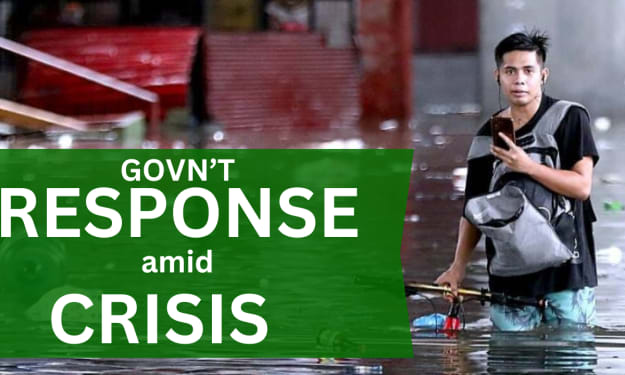
We begin with a stark and urgent update from the Philippines, where the nation is reeling from a historic flooding crisis of catastrophic proportions. Over 1 million people have been displaced as torrential rains have overwhelmed entire cities and towns, submerging vast areas under several feet of water.
By Cris Hibaya2 years ago in Earth
The Yellowstone volcano
Deep beneath Yellowstone National Park lies one of the world’s largest supervolcanoes, a force of nature responsible for the park’s famous geysers and hot springs. However, this geological marvel also conceals a massive magma chamber, a reservoir far larger than previously imagined. In 2015, researchers from the University of Utah made a startling discovery: not only was the magma chamber significantly more extensive than expected, but there was also a second, even larger reservoir beneath it. Together, these two chambers hold enough magma to fill the Grand Canyon 11 times over.
By David Shoremekun2 years ago in Earth