Science
A Love Story Amidst the Warming Earth. Content Warning.
Elena stood at the edge of the crumbling coastline, the salty breeze tangling her hair as she stared at the encroaching waves. The ocean had swallowed her hometown, little by little, until nothing remained but memories. She closed her eyes, the sound of the crashing waves filling her ears, and thought of the day she’d met Max.
By JOSEPH Tetteh2 years ago in Earth
Ecofeminism and Sustainability: Can They Work Together?
Ecofeminism – The augmented reality of ecology The overwhelming evidence of the IPBES Global Assessment, from an extensive range of various fields of information, affords an ominous image,” stated IPBES Chair, Sir Robert Watson. “The health of ecosystems on which we and all different species depend is deteriorating extra rapidly than ever. We are eroding the very foundations of our economies, livelihoods, meals safety, fitness, and the best of lifestyles internationally. The trade-off between the existence of humans and nature can reside amicably if we chose to create a balance between the two.
By Hridya Sharma2 years ago in Earth
THE WORLD WE WANT
THE YOUTH CREATING A PEACEFUL FUTURE. As a child, I was raised by my grandparents in a rural community in West Africa where friendship was highly valued. Having numerous friends was not considered newsworthy, as the elders often said, “When a dog bites a human, it is not news, but when a human bites a dog, it becomes news.”
By Kelvin Sena Datsa2 years ago in Earth
How Cosmic Rays Affect Human Health and Technology on Earth?
Cosmic rays, the high-energy particles that travel across the universe at nearly the speed of light, are an invisible force that constantly bombards our planet. While they may sound like something out of a science fiction novel, cosmic rays are very real and have significant implications for both human health and technology on Earth. Understanding these effects not only deepens our appreciation for the mysteries of the universe but also inspires us to develop solutions to protect our future.
By Shahida Akter2 years ago in Earth
Top 5 Solar Energy Myths Debunked
Solar energy is rapidly becoming one of the most popular sources of clean energy worldwide. However, despite its growing adoption, there are still several misconceptions that prevent many people from making the switch. At Honest Power, we believe in the power of transparency and education. That’s why we’re here to debunk the top five myths about solar energy, helping you make an informed decision about your energy future.
By Somos Gniallz2 years ago in Earth
5 countries with the largest lakes
The Five Largest Lakes in the World Lakes, these vast bodies of freshwater, are essential to life on Earth, providing resources for drinking, irrigation, transportation, and recreation. While there are countless lakes around the world, a few stand out due to their sheer size and depth. Let's explore the five largest lakes on our planet.
By Moharif Yulianto2 years ago in Earth
5 countries with the deepest seas
The Five Deepest Seas in the World The Earth's oceans, vast and mysterious, are home to some of the planet's most extreme depths. While the Mariana Trench, a subduction zone in the western Pacific Ocean, is the deepest point on Earth, there are other seas that boast impressive depths, each with its own unique characteristics and geological formations. Let's explore the five deepest seas on our planet.
By Moharif Yulianto2 years ago in Earth
Science Tips Chapter 3
1. Why do we get goose bumps? There are sweat hairs on the surface of our skin, and there is an arrector pili muscle under each pore. When stimulated by nerves (for example, when we are angry, afraid, or cold), the body temperature will drop, and the arrector pili muscle will contract and make the hair stand up, forming goose bumps. In addition to the function of heat preservation, this physiological system can also make the animal's body look larger than it actually is, thereby scaring off the enemy.
By Dreamweaver2 years ago in Earth
Science Tips Chapter 2
1. Why can't ostriches fly? Ostrich is a kind of bird with a huge body, but they can't fly into the sky! This is not because their wings are useless, but because their feathers are too soft and their wings are too small, which is not suitable for flying at all. In addition, the muscles of ostriches are not well developed and the sternum is flat, which is not helpful for flying. Ostrich lives in Africa. Because they have lived in desert areas for a long time, their bodies have gradually evolved into their current appearance in order to adapt to the environment.
By Dreamweaver2 years ago in Earth
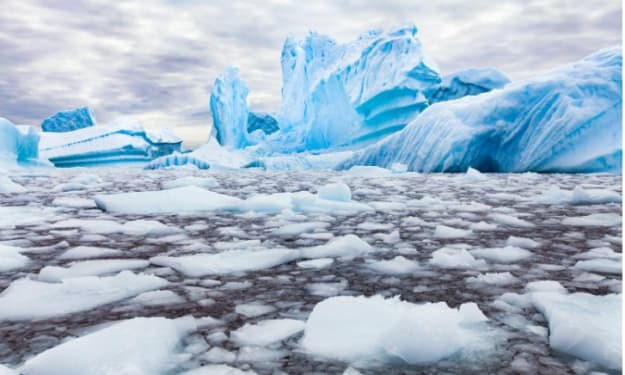
Rethinking the "Doomsday Glacier": Researchers Question Alarming Predictions of Antarctic Ice Collapse
Positive news concerning Earth's climate has been scarce in recent years due to the prevalence of frightening occurrences such as strong heat waves, destructive floods, powerful hurricanes, and blazing wildfires.
By Francis Dami2 years ago in Earth