
How Cosmic Rays Affect Human Health and Technology on Earth?
Created by Sazim Hossain
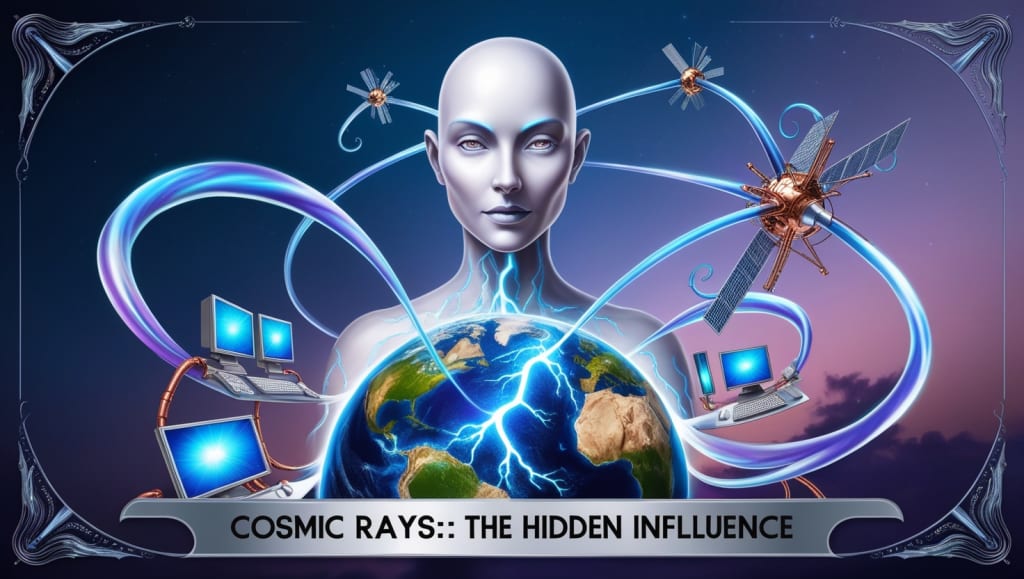
Cosmic rays, the high-energy particles that travel across the universe at nearly the speed of light, are an invisible force that constantly bombards our planet. While they may sound like something out of a science fiction novel, cosmic rays are very real and have significant implications for both human health and technology on Earth. Understanding these effects not only deepens our appreciation for the mysteries of the universe but also inspires us to develop solutions to protect our future.
What Are Cosmic Rays?
Cosmic rays originate from various sources, including the sun, distant stars, and even supernovae—massive explosions that mark the death of stars. These rays are composed of atomic nuclei and subatomic particles, such as protons, electrons, and neutrons. When they collide with the Earth's atmosphere, they create secondary particles that shower down on us, contributing to the ever-present background radiation.
The Impact on Human Health
One of the most direct ways cosmic rays affect us is through their impact on human health. While the Earth's atmosphere and magnetic field provide a protective shield that absorbs much of this radiation, some cosmic rays still manage to reach the surface. For most people, the exposure is minimal and doesn’t pose a significant health risk. However, for those who spend extended periods at high altitudes—such as pilots, flight attendants, and astronauts—the risk increases.
Air Travel and Increased Exposure
Commercial airline passengers and crew are exposed to higher levels of cosmic rays due to the reduced protection from the atmosphere at cruising altitudes. Studies have shown that airline crews, who spend thousands of hours in the air, have a slightly higher risk of developing certain types of cancer compared to the general population. The increased radiation exposure is particularly concerning during solar storms, when the intensity of cosmic rays spikes.
Astronauts and Space Missions
For astronauts, the situation is even more critical. In space, beyond the protective layers of the Earth's atmosphere and magnetic field, cosmic rays pose a significant health hazard. Prolonged exposure can increase the risk of cancer, damage DNA, and potentially cause other health issues like cataracts or neurological disorders. NASA and other space agencies invest heavily in research to understand these risks and develop protective measures for astronauts, especially as humanity plans for longer missions to Mars and beyond.
The Technological Impact
Beyond human health, cosmic rays also have a profound impact on technology. As our world becomes increasingly dependent on sophisticated electronics, understanding how cosmic rays affect these systems is crucial.
Electronics and Satellite Disruptions
One of the most significant technological challenges posed by cosmic rays is the disruption of electronic devices. When a cosmic ray collides with the semiconductor materials in electronic circuits, it can cause what is known as a “single-event upset” (SEU). This is essentially a glitch that can alter the data in a computer’s memory or cause malfunctions in other electronic systems.
In 2003, a cosmic ray was believed to be responsible for the malfunction of the Japanese satellite Midori-II, which lost contact with Earth and eventually failed. On a more relatable scale, cosmic rays have been known to cause errors in consumer electronics, such as laptops or smartphones, although these are usually rare and minor.
Air Traffic Control and Power Grids
Cosmic rays can also affect critical infrastructure like air traffic control systems and power grids. High-energy particles can induce surges in electrical systems, potentially leading to outages or other issues. For example, during a powerful solar storm in 1989, cosmic rays caused a major blackout in Quebec, Canada, leaving millions without power for hours.
As our reliance on technology grows, so does the need to protect these systems from the potential disruptions caused by cosmic rays. Engineers are developing more robust and radiation-hardened technologies, particularly for satellites, space probes, and other critical infrastructure that operate in high-radiation environments.
Turning Challenges into Opportunities
While cosmic rays present challenges, they also inspire innovation. The need to protect human health and technology from cosmic radiation drives advancements in fields ranging from aerospace engineering to medicine. For instance, research into the effects of cosmic rays on the human body has led to better understanding and treatment of radiation-related health issues, not only for astronauts but also for cancer patients undergoing radiation therapy.
Moreover, studying cosmic rays gives us valuable insights into the universe. The particles that reach Earth carry information about the most energetic and violent processes in the cosmos, from supernovae to black holes. By understanding cosmic rays, we deepen our knowledge of the universe and our place within it.
Conclusion
Cosmic rays, though invisible and often overlooked, have a significant impact on our lives. From the health risks faced by airline crews and astronauts to the potential disruptions of our technology, the influence of these high-energy particles is far-reaching. However, rather than being a source of fear, cosmic rays can be seen as a catalyst for progress, driving innovation and expanding our understanding of the universe. As we continue to explore the cosmos and push the boundaries of technology, our ability to adapt to and mitigate the effects of cosmic rays will be crucial in shaping our future on Earth and beyond.
About the Creator
Enjoyed the story? Support the Creator.
Subscribe for free to receive all their stories in your feed.
Comments
There are no comments for this story
Be the first to respond and start the conversation.