Science
The Internet Apocalypse: What Happens If the Web Shuts Down Forever
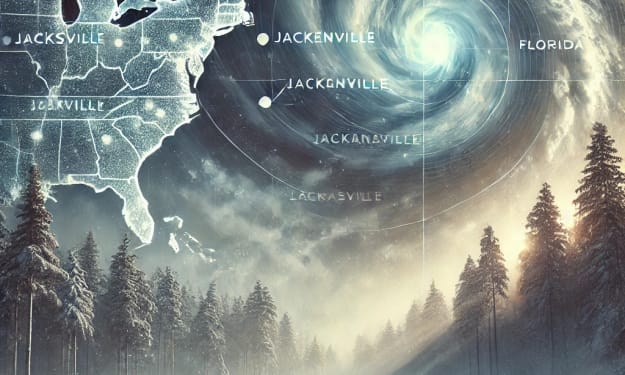
The beginning of zombies, the attack of beasts from an alternate reality, world calamities, or even the vanishing of honeybees—none of these scenarios seem as terrifying anymore. But what if the entire internet were to shut down across the globe? This kind of apocalypse is not only frightening but also surprisingly plausible. Imagine a world where TikTok, YouTube, Instagram, and all our favorite platforms suddenly vanish. It may sound ideal to some, but in reality, the collapse of the internet could cause far more chaos than we realize. The internet has become deeply woven into the fabric of the global economy, city infrastructure, healthcare systems, and the personal lives of billions. A global internet shutdown in 2025 would be catastrophic. The rumors of such an event have already started spreading like wildfire online, sparked by reports of powerful solar flares capable of disrupting digital communication. --- ### **The Rumor Mill** It all began with a real NASA article discussing how artificial intelligence helped scientists predict solar storms. However, someone misinterpreted the article, jokingly claiming it predicted an "internet apocalypse." This term quickly gained traction, with headlines claiming that the internet would shut down for months due to solar activity. Though exaggerated, the concerns are rooted in real science. In the summer of 2025, scientists do predict heightened solar activity, with flares reaching their peak intensity. These solar storms emit massive electromagnetic waves that can interact with Earth's magnetic field. However, predicting the exact impact remains a challenge. While AI systems are improving early warning capabilities, we are still far from fully understanding or mitigating the potential consequences of such events. --- ### **Historical Lessons: The Carrington Event** The most powerful solar storm on record occurred in 1859, known as the Carrington Event. Astronomers observed intense sunspots and blinding flashes of light. Soon after, a massive electromagnetic storm disrupted telegraph systems worldwide. Sparks flew from machines, operators reported electric shocks, and vivid auroras were visible as far as the tropics. Although communication technologies were primitive at the time, the disruption was significant. Now, imagine such a storm striking our modern, hyperconnected world. --- ### **Immediate Impact of a Global Internet Shutdown** In the first few moments, you would notice minor inconveniences—websites failing to load, music stopping mid-stream, and Netflix going offline. However, these small annoyances would soon escalate into widespread panic. Without internet connectivity: - Communication collapses. Apps like WhatsApp, email, and video calls become useless, leaving people disconnected from friends and family. - Offices shut down. Major corporations lose billions as work grinds to a halt. - Financial systems freeze. Banks can’t process transactions, ATMs stop working, and digital wallets become inaccessible. --- ### **Economic Chaos** The global economy would face unprecedented challenges. Logistics systems dependent on online tracking and communication would fail, halting supply chains. Supermarkets and stores reliant on electronic payment systems would be unable to process purchases, leading to panic buying and riots. Fuel stations, reliant on internet-based inventory systems, would also shut down, creating massive traffic jams as people scramble to find working pumps. --- ### **Infrastructure Breakdown** Essential services like electricity, water supply, and healthcare would be severely affected. Power plants, which rely on internet-based systems, could experience failures. Hospitals would struggle to access digital medical records or coordinate care. Emergency services would be overwhelmed as communication systems falter. --- ### **Life After the Shutdown** Despite the chaos, humanity would adapt. Electricians and engineers would work to restore power grids and essential systems. People would return to older technologies, such as landline telephones, fax machines, and printed maps. Corporations like Google and Microsoft would focus on rebuilding new, more resilient methods of data transmission. In the long term, society might even benefit. With no internet to distract us, people might experience improved mental health, better sleep, and sharper focus. Local communities could grow stronger as people are forced to interact face-to-face. However, these benefits would not come without significant hardship during the initial years of adjustment. --- ### **A Better Future?** Ultimately, humanity would innovate its way out of the crisis. The disappearance of the internet could inspire the development of a more secure and reliable system of communication—one that isn’t as vulnerable to solar storms or other global threats. While the "internet apocalypse" may not be imminent, it highlights how dependent we’ve become on digital connectivity. As we face an uncertain future, it’s a reminder to back up our data, strengthen our systems, and prepare for the unexpected.
By Nora Ariana2 years ago in Earth
Loki: Myth vs. Marvel – The Tale of a Trickster
Loki: the delightful trickster, a fan-favorite outsider who conquered hearts worldwide. This video contains a few spoilers, but not too many—just enough to make you fall for this extraordinary character if you haven’t already. Played by English actor Tom Hiddleston, Loki made his Marvel Cinematic Universe (MCU) debut in *Thor* (2011). Since then, Loki has appeared in four more movies, and despite having less than 80 minutes of total screen time, his charm left fans wanting more. His impact was so profound that Loki eventually got his own series, aptly named *Loki*, with its first season premiering in 2021. Season 2 followed in October 2023. Marvel drew inspiration for characters like Loki and Thor from Norse mythology. Loki, in particular, is based on the fire and mischief deity of the same name. However, how does the film version compare to the mythical figure? Let’s find out. In the MCU, Loki is depicted as a broad-shouldered man with dark hair and piercing blue eyes. In contrast, Norse mythology describes Loki with fiery red hair, a male-and-female physique, and scars stitched around his mouth. According to legend, his lips were sewn shut as punishment for breaking a wager. Loki’s shapeshifting abilities—also shown in the films—are another key trait. Initially, Loki was introduced as a villain, opposing the Avengers and his stepbrother Thor, the God of Thunder. However, the movies hinted at Loki's earlier bond with Thor, highlighting shared adventures where Loki's cunning complemented Thor's strength and naivety. Over time, Loki’s scheming soured their relationship. In mythology, Loki and Thor aren’t brothers. Some stories describe Loki as a "half-breed" with unpredictable traits. His father, Farbauti, was a Jotunn (a mystical giant), while his mother, Laufey, was a goddess. The MCU altered this dynamic, portraying Laufey as Loki’s biological father—a Frost Giant—whom Odin defeated and left for dead. Odin found the infant Loki in Jotunheim, adopted him, and raised him as a son. Despite this upbringing, Loki eventually betrayed Laufey to prove himself worthy of Asgard’s throne. Mythological accounts depict Loki's relationship with the Norse gods as complex. He was both a companion and a trickster who sought to disrupt their control. One example of Loki’s mischief involved Thor’s wife, Sif, renowned for her golden hair. Loki, out of boredom, cut off her hair. Furious, Thor confronted Loki, who eventually replaced Sif’s hair with a golden wig crafted by dwarves. This prank, though disruptive, served to stir up change and avoid stagnation in Asgard, earning Loki both love and forgiveness from the gods—temporarily. However, Loki's deeds grew darker over time. He orchestrated the death of Balder, the god of goodness and Odin’s most beloved son. Loki discovered Balder could only be harmed by mistletoe. Crafting a mistletoe dart, he tricked the blind god Hodr into fatally striking Balder. This act branded Loki as the ultimate villain. The gods punished him by binding him beneath a snake that dripped venom onto his face. His devoted wife, Sigyn, caught the venom in a bowl, but when she emptied it, the drops caused Loki immense pain, said to trigger earthquakes. Legend states Loki will eventually break free during Ragnarok, the apocalypse, to exact revenge. Interestingly, Loki had a family in mythology. He was married to Sigyn, with whom he had two sons, Narfi and Vali. Sigyn’s loyalty to Loki was evident during his punishment. Besides Sigyn, Loki had other relationships, including with the giantess Angrboda, who bore him monstrous children, and an infamous encounter as a shapeshifting mare that led to the birth of Sleipnir, an eight-legged horse later gifted to Odin. One legend highlights Loki’s trickery. A giant agreed to build a wall around Asgard in exchange for the sun, moon, and Freya. Thinking the giant would fail, the gods accepted. But the giant worked swiftly, aided by his horse, Svadilfari. Panicked, Loki transformed into a mare to distract the horse. The giant failed to complete the wall, leading to his demise at Thor's hands. Meanwhile, Loki, in mare form, gave birth to Sleipnir, a steed capable of traveling between worlds at lightning speed. Loki’s shapeshifting extended beyond this story. He transformed into animals, old women, and even political figures, sacrificing his identity to drive the narrative forward. The Disney+ *Loki* series explored this trait by introducing alternate versions of Loki, including a boastful old man and even a crocodile. Loki’s moral ambiguity is part of his allure. He is neither entirely good nor evil, bringing vitality and unpredictability to the stories he inhabits. This complexity fuels debates about his capacity for love. The first season of *Loki* addressed this with a peculiar romance between Loki and Sylvie, a female variant of himself. Sylvie, based on Lady Loki from the 2008 comics, is independent and strong-willed, contrasting with mythological Loki’s loyal yet mischievous spouse. Their dynamic adds intrigue to the series, leaving fans curious about their future. In the show, Loki becomes the chosen guardian of time, tasked with maintaining universal balance. While myths don’t explicitly connect Loki to time, his magic and defiance make him a fitting candidate for such a journey. Whether he’s forging chaos or saving the day, Loki continues to transcend time, space, and expectations—remaining an irresistible figure across all dimensions.
By Nora Ariana2 years ago in Earth
Winter Storm Enzo: Snow Forecast and Weather Updates
As winter settles in, many are turning their attention to the snow forecast and weather conditions associated with Winter Storm Enzo. This significant storm system is expected to bring widespread impacts, including snow, rain, and strong winds, to various parts of the United States. Let’s dive into the details of the snow forecast, regional weather updates, and what to expect in the coming days.
By Delta Roblox Executor Download APK 2026 latest New Update2 years ago in Earth
8 Fast Facts About Sharks: Shocking Revelations about the Ocean’s Apex Predators
8 Fast Facts About Sharks: Shocking Revelations about the Ocean’s Apex Predators Humans have been fascinated by sharks for centuries. These mighty creatures have existed for over 400 million years—long before dinosaurs walked the planet. While sharks are often known for being feared predators, they are also immensely varied and critically important to the health of ocean life. In this article, we’ll dive into eight fast facts about sharks that showcase their unique adaptations, surprising behaviors, and important role in the ecosystem. Whether you’re a marine life expert or simply interested in these amazing beings, these facts will make you see sharks differently. Sharks Are of Ancient Lineage Sharks are among the oldest living beings on Earth. Sharks have existed for more than 400 million years — long before the origin of the first dinosaurs — according to fossil evidence. Their early forebears emerged during the Devonian period, often known as the “Age of Fishes.” Sharks share a cartilage-based, lightweight, flexible skeleton unlike bony fish and other marine animals. This ability to adapt is likely not only responsible for their evolution into diverse marine ecosystems, but it has also helped them survive through a number of major extinction events. Sharks Have a Sixth Sense Sharks have a remarkable superpower called electroreception. This means they have the ability to detect the electrical fields created by other living organisms. They deploy special sensory organs known as ampullae of Lorenzini, which are located on the surface around their snouts, to detect even the weakest electrical impulses. The ability proves invaluable for: Hunting in dim or turbid waters Finding prey buried beneath sand Magnetic field-based navigation through the ocean Thanks to electroreception, sharks are some of the most efficient hunters in the animal kingdom. Sharks Belong to More Than 500 Species
By Kalpesh Vasava2 years ago in Earth
Ahmed Shary Rahman: Revitalizing Industry
In the heart of Bangladesh, Beximco’s industrial park is redefining sustainable manufacturing. Often referred to as the “Lungs of Gazipur,” this facility is a unique example of how large-scale industry can integrate nature into its operations. The park is home to over 300,000 trees, a zoo, and various facilities designed not just for productivity but also for the well-being of its employees. This green approach demonstrates that industrial progress and environmental responsibility can go hand in hand.
By Ahmed Shary Rahman2 years ago in Earth
Top 10 Mysterious Planets That Baffle Astronomers. Content Warning. AI-Generated.
Top 10 Mysterious Planets That Baffle Astronomers Introduction The space has for a long time been a mystery to humankind. While much may have been learned about our immediate solar system, the discovery of exoplanets, so-called worlds orbiting other stars, ushers in even more overarching mysteries. Some of them would change our current understanding of just how stars and planets form and evolve, while others still raise a question of whether or not alien life exists. These 10 mysterious planets represent some of the strangest and most intriguing worlds ever discovered, each raising more questions than answers. 10. Kepler-78b: The Hellish Twin of Earth Kepler-78b is an exoplanet that astronomers initially thought could be a rocky twin of Earth. It is almost identical to our planet in size and density and orbits a star roughly 400 light-years away. That's where the similarities end. Kepler-78b is close enough to its parent star that it completes a full orbit in a meager 8.5 hours, which slings its surface temperature to over 2,000°C-hot enough to vaporize most metals. But as scorching as Kepler-78b may be, the real enigma is how this world came to be. As far as any theories of planetary formation are concerned, no planet should be able to form or survive at such proximity to its star. Even more mysterious is its fate: Kepler-78b is slowly spiraling toward its host star and is expected to meet its demise a few million years from now. Despite that doom, it has given scientists much-needed lessons in the conditions that exoplanets can take. 9. WASP-12b: The Planet Being Eaten Alive The object, WASP-12b, is located about 1,400 light-years from Earth. This gas giant, named a "hot Jupiter," goes around its host star in about one day-long orbit. Consequentially, the proximity is causing the host star to distort gravitationally with the planet due to its excessive attraction-which is basically tearing it to shreds-so it had been tagged also as "doomed" by astronomers: What makes WASP-12b even stranger is its albedo-or lack thereof. The planet absorbs just about all the light it gets, making it one of the darkest planets ever discovered. Scientists believe that its atmosphere is full of complex chemicals, including vaporized metals, which serve to absorb light rather than reflect it. As the star continues to strip its outer layers off the planet, WASP-12b's atmosphere forms a glowing trail of gas, reminiscent of a comet's tail. Eventually, in time, it will be fully engulfed by its star. This provides astronomers with a rarely seen glimpse into the life cycle of gas giants and their interactions with their host stars. 8. Gliese 581c: The Possible Second Earth When Gliese 581c was discovered in 2007, it was hailed as one of the most promising candidates for habitability outside our solar system. Located just 20 light-years away, this rocky planet lies within the habitable zone of its star, where temperatures could allow liquid water to exist. But since then, further research has called that into question; it's now thought that carbon dioxide could dominate the atmosphere of the exoplanet, with a runaway greenhouse effect somewhat like that which affects Venus. If so, the surface is probably far too hot for life to exist. Adding to the intrigue, Gliese 581c's parent star is a red dwarf-a class of star prone to frequent solar flares that could strip the planet's atmosphere over time, leaving it barren. Despite these challenges, Gliese 581c remains one of the most intriguing targets for future exploration and a symbol in the search for Earth-like worlds. 7. HD 209458b: The Planet with Disappearing Atmosphere Nicknamed “Osiris,” HD 209458b is a gas giant that’s slowly losing its atmosphere to space. Located 150 light-years away, it was one of the first exoplanets discovered with a leaking atmosphere. This phenomenon occurs because the planet orbits extremely close to its star, causing its outer layers to be heated and stripped away by stellar winds. What makes HD 209458b special, though, is the level of detail astronomers have managed to glean about its atmosphere. The observations have turned up signs of hydrogen, carbon, and even oxygen streaming out into space. This has helped scientists learn how atmospheres behave under such extreme conditions, offering clues about the evolution of planets in hostile environments. Despite its hostile conditions, HD 209458b has turned out to be a treasure chest of data that has helped astronomers fine-tune methods for probing the atmospheres of extrasolar planets. 6. Kepler-22b: A World in the Habitable Zone Kepler-22b was the first planet to be discovered through the habitable zone of a star much like our Sun. This planet, 600 light-years away, is about 2.4 times Earth's size and thus falls under the category called "super-Earths. What really makes Kepler-22b so mysterious is its composition: it is unsure whether it is a rocky planet, a gas giant, or an ocean world completely covered by water. If it's an ocean world, it might host alien life beneath its surface. Adding to the intrigue, Kepler-22b's star is extremely stable-a factor that could support life. But much about this enigmatic world is left to speculation as there is not enough data. 5. 55 Cancri e: The Diamond Planet Imagine a diamond-rich world; that is what 55 Cancri e promises, lying 40 light-years away from Earth in the direction of the constellation Cancer. 55 Cancri e is called a super-Earth because it measures twice the size of Earth and has a mass eight times as heavy. Such extreme composition develops from its high carbon content with intense pressure. Astronomers theorize that its surface could be rich in graphite and diamond, one of the most eccentric worlds ever discovered. But 55 Cancri e is anything but luxurious: it orbits its parent star so tightly that surface temperatures reach as high as 2,400°C. The resulting extreme heat would mean the planet's surface would be covered in flowing lava, hostile to life as we know it. Even more interesting, though, is its "day-night cycle." Due to one side constantly facing its star, day is permanent on that side, while the other side is in complete darkness. This huge difference in temperature adds another layer of mystery, which makes 55 Cancri e one of the most studied planets in its category. 4. TrES-2b: The Darkest Planet Ever Found TrES-2b is no ordinary gas giant. At about 750 light-years from Earth, it is considered the darkest planet ever found. This "hot Jupiter" reflects less than 1% of the light that reaches it and is thus darker than coal. Scientists believe that the atmosphere of TrES-2b contains certain light-absorbing chemicals, such as vaporized sodium, potassium, and titanium oxide. These chemicals trap light instead of reflecting it, giving the planet its eerie black appearance. Despite the gloom, it emits a dim red glow at a temperature above 1,800°C. This is because the heat emanates from the interior, in continuous bombardment with energy from its star. The mystery properties of TrES-2b raise many questions about how such planets can form and why they all have unique atmospheric compositions. Its discovery has sparked interest in studying similar dark exoplanets across the galaxy. 3. Rogue Planets: Drifters Without Stars Most mysterious objects that populate the galaxy are rogue planets. While many planets orbit their stars, some just wander aimlessly in space. Such gravitational ejections emanate from initial star systems following gravitational interactions that are expected. What makes rogue planets so intriguing is the possible harboring of life on them. Some scientists theorize that rogue planets could retain heat from their formation or have thick atmospheres that trap geothermal energy, thus allowing subsurface oceans to be present. These may host microbial life shielded by layers of ice. Detection of such rogue planets is highly difficult as they neither emit light nor reflect enough to get spotted by telescopes. However, with recent technological advancement, a few such wanderers were identified by astronomers, which hinted at the huge population of rogue planets present in the Milky Way. 2. GJ 1214b: The Water World Because of its unique composition, GJ 1214b is often referred to as a "water world." This super-Earth, located 40 light-years away from Earth, is believed to be covered with complete water and a thick atmosphere filled with steam. Mystery ensues because of GJ 1214b's most signature attribute-water. Scientists say the high pressure and temperature within the planet might be able to create states of water that are unknown on Earth: "hot ice" or even "superfluid water.". The planet’s thick atmosphere also raises questions. It’s unclear what gases make up its air, but studies suggest it could contain hydrogen, helium, and water vapor. If life exists on GJ 1214b, it would need to adapt to an environment completely unlike anything we’ve seen before. 1. Proxima b: Earth’s Mysterious Neighbor Proxima b is probably the most interesting exoplanet to date. Orbiting Proxima Centauri, the closest star to our solar system, this rocky planet actually lies in the habitable zone of its star. It's 4.2 light-years from Earth-the nearest exoplanet from us that might support life. There are, however, some significant challenges for Proxima b. Its parent star is a red dwarf star that has powerful solar flares which could, over time, strip away the planet's atmosphere. If Proxima b had a magnetic field strong enough to protect it, it might still support liquid water on its surface. Adding to the mystery, the ground details of Proxima b are yet to be known by scientists. It could be a desolate, abysmal desert; a lush, vibrant world teeming with life; or maybe something totally unexpected. Proxima b is one of the best chances humanity has to find alien life, and future missions could reveal its secrets.
By Kalki MUSIC2 years ago in Earth
A Planet at a Crossroads
Imagine standing on a beach, the waves lapping at your feet. The horizon stretches endlessly before you, but the calm is deceptive. Beneath the surface lies a storm brewing—a storm of rising seas, vanishing species, and communities on the brink of collapse. Climate change is not just a scientific phenomenon or a political debate; it is an emotional reality that touches every facet of our lives. We often hear statistics: the Earth has warmed by more than 1.1°C since the pre-industrial era. Ice sheets are melting at an alarming rate, and carbon dioxide levels are higher than they’ve been in 800,000 years. These numbers are terrifying, but they fail to capture the heartbreak of watching a forest burn or seeing a child struggle to breathe in smog-choked air. Climate change is not just happening in the distant future—it is here, now, and it hurts. For families in low-lying coastal areas, the pain is palpable. Entire villages in the Pacific Islands are disappearing beneath rising seas. Imagine having to leave your ancestral home, the land where your parents and grandparents were born, knowing it will soon be swallowed by the ocean. The trauma of displacement is not just physical; it is emotional and cultural. It is the loss of identity, the severing of a bond between people and their land. Farmers, too, are feeling the weight of a changing climate. Droughts are becoming longer and more intense, leaving parched fields where crops once thrived. Floods are washing away entire harvests, destroying livelihoods in an instant. A farmer in sub-Saharan Africa or South Asia doesn’t need a climate report to know the weather is changing; they see it in their empty water reservoirs and in the hunger etched on their children’s faces. Even in cities, far from the coasts or farmlands, climate change is a daily reality. Heatwaves bake urban areas, turning them into ovens. Vulnerable populations—the elderly, the homeless, the poor—suffer the most. Wildfires rage on the outskirts, sending ash raining down on streets and homes. Children grow up in a world where they can’t play outside because the air is unsafe to breathe. This is not the future we dreamed of for them. And then there’s the emotional toll on those who are fighting to save the planet. Environmental scientists, activists, and everyday people who care deeply about the Earth often grapple with a profound sense of grief. This grief is not just for what has been lost—the glaciers, the forests, the species—but for what might still be lost if we fail to act. It is a grief mixed with frustration, knowing that solutions exist but are not being implemented fast enough. Yet, amidst this despair, there is hope. The human spirit is resilient, and countless people around the world are rising to the challenge. Young activists like Greta Thunberg have inspired millions to demand change. Communities are banding together to plant trees, clean rivers, and embrace renewable energy. Scientists are developing innovative technologies, from carbon capture to solar-powered desalination, to mitigate the worst impacts of climate change. But hope alone is not enough. We must act. Climate change demands more than individual efforts; it requires collective, systemic change. Governments must implement policies that reduce emissions and transition to renewable energy. Corporations must prioritize sustainability over profit. And individuals must use their voices, their votes, and their choices to demand a better future. This is a moment of reckoning for humanity. The Earth is resilient, but it has its limits. If we fail to act, the world we leave behind will be unrecognizable—hotter, harsher, and less hospitable to life as we know it. But if we rise to the challenge, we can create a future that is cleaner, greener, and more equitable. The clock is ticking, but it is not too late. The fight against climate change is not just a battle for the planet—it is a battle for our hearts, our homes, and the generations yet to come. Let us meet this challenge with the courage, compassion, and urgency it demands. The Earth is counting on us, and we must not let it down.
By Monike Gold2 years ago in Earth
Nature’s Reckoning
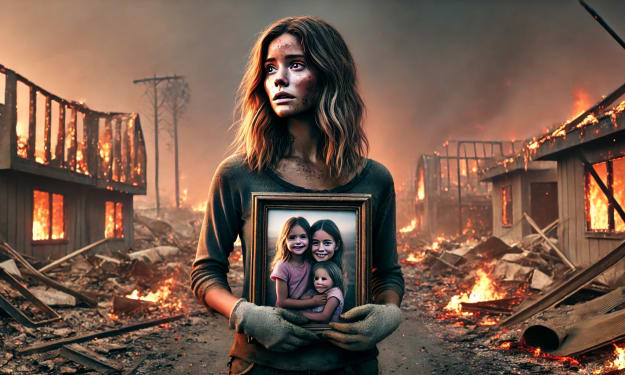
The air smelled of ash and despair. Sophia Walker stood on the cracked sidewalk of her once-thriving Los Angeles neighborhood, her hands trembling as she cradled a picture frame pulled from the debris. The smiling faces of her two daughters looked back at her, untouched by the flames that had swallowed their home.
By Mirhadi Tahsin2 years ago in Earth
Dada Book Online: Your Trusted Platform for Online Sports with Safe Guidance. AI-Generated.
The Essence of Sportsmanship: Building Character and Community Dada Book online Sports are more than just competition; they are a reflection of human character, determination, and resilience. At the heart of every game lies the spirit of sportsmanship—the commitment to fairness, respect, and camaraderie that transcends the boundaries of winning and losing. Sportsmanship is not just an ideal for athletes; it’s a principle that shapes individuals, strengthens communities, and enriches society.
By dada book online2 years ago in Earth