Science
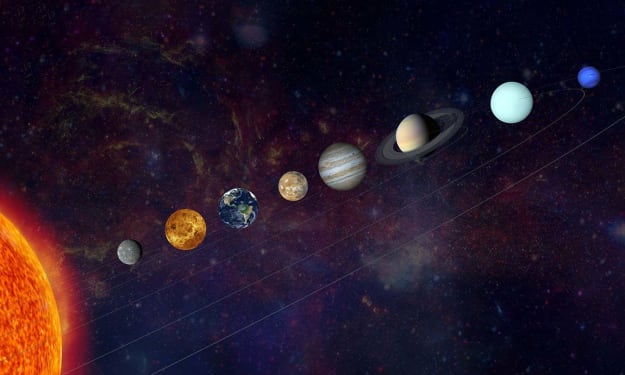
How to See All the Planets of the Solar System in the Night Sky at Once
How to Observe All the Planets of the Solar System in the Night Sky Simultaneously: Sky enthusiasts (who are often passionate) dream of witnessing all the planets in our solar system at once. Such rare phenomena occur only under specific conditions, which require careful planning, observation skills and the right tools. 1. The Rare Opportunity of Planetary Alignment: The planets of the solar system—Mercury, Venus, Earth, Mars, Jupiter, Saturn, Uranus and Neptune—follow their respective orbits. However, occasionally they align in such a manner that they can all be observed from Earth simultaneously. This event is referred to as a planetary alignment, although it does not happen frequently.
By Adnan Rasheed2 years ago in Earth
Crop Circles: A Mystery Unraveled – The Truth Behind the Phenomenon and Its Artistic Legacy
Recollect how odd examples started to show up on fields with corn and weed during the '90s and toward the start of the 2000s in Southern Britain? Many individuals believed these were messages from extrasolar civilizations. Hollywood even made motion pictures dedicated to this peculiarity, but then for some reason, all the examples vanished. Maybe they quit being in vogue and the inhabitants of different planets decided not to draw flattened crops anymore. As a matter of fact, this is somewhat true; the justification for their vanishing relates to a specific art form becoming disagreeable. But to understand what it means, we must first find out where these circles came from. The original reports of odd examples in fields showed up in the seventeenth century in certain handbooks and scientific publications. People wrote about flattened crops. The reports were not convincing and had no proof. In the late 60s of the twentieth century, people in Australia began reporting odd mathematical imprints in the fields. At the same time, a similar situation was described by the inhabitants of Wiltshire, Britain. Nevertheless, no one provided any proof. Then news about bizarre flattened crops showed up in Australia during the '60s of the twentieth century, but this time, people managed to solve the mystery of this phenomenon. It turned out that pieces of folded floating reeds in the tidal pond made designs that seemed as though they were handcrafted. Such circles were common during the rainy season when little hurricanes swept over the tidal ponds. A local farmer then said he saw a space object flying over the fields and making designs, but locals dismissed this myth and uncovered the truth. Stories about extraterrestrial civilizations became well known in the '40s because of the famous story of a spaceship that crashed in New Mexico. Rumors said that CIA agents took the crew to secret bases. News about it spread all around the US. The public truly believed that scientists were studying the advancements of the space visitors and conducting probes on their bodies. Many even believed that people still saw odd flying objects, circles over Nevada. The appearance of bright lights in the night sky of New Mexico became a frequent event, and many travelers came to see something like this with their own eyes. But it was all fiction. Those secret bases were, and are, merely proving grounds for reconnaissance planes. Of course, many of them looked unusual, and people believed they had seen ships from other galaxies, and that object that fell in New Mexico was a regular weather balloon. All these crop circle stories and legends about secret bases became a topic of discussion for two friends, Doug Bickett and Dave Laugh, in the late '70s. They liked hanging out near Winchester, Britain, and they started thinking about how to trick people using these Flying Saucer stories. That night, they decided to create mathematical patterns in the fields together and wait for society to react. Eventually, they arrived at a certain farmer’s field in South Britain and started carrying out their plan. They used ropes, a bit of wire attached to a baseball cap, and boards to make a beautiful design. When the task was finished, nobody attached any significance to this. Then, two friends began drawing circles in different fields for a while. They made paintings that stunned local farmers, but after the media learned about the baffling phenomenon, the work of Bickett and Laugh became famous worldwide. The artists were in no rush to reveal the origin of the circles, so thousands of tourists and enthusiasts of extraterrestrial civilizations started coming to the south of Britain. Oh, by the way, people who believed in the remarkable idea of these examples got the nickname “cropies.” The examples in the fields reached the peak of their popularity, and the artists admitted how they had created them. Sure, many cropies were disheartened, but the work of the two friends inspired many others to make similar things. Despite there being nothing mysterious about this phenomenon, it was still quite impressive. Many artists started drawing flattened crops for the purpose of promotion. For example, during the Olympic Games in London in 2012, a group of farmers made the Olympic symbol of five rings by flattening grass in a field. Many claimed that these were the greatest Olympic rings in history. A couple of years later, locals saw a huge pattern with odd mathematical shapes in the south of San Francisco. Nobody had seen anything like it. Even the circles made by the two friends from Britain weren’t so odd. Of course, many media outlets said that spaceships from different planets had left a message for Earth. But these fantasies were quickly dispelled because Nvidia admitted to creating the example. The odd drawing in the field was the image of a new chip the company wanted to introduce at the upcoming CES exhibition. Flattened crops have become a popular phenomenon in some countries. Many people like painting graffiti on the walls, others decorate asphalt with bright calligraphic patterns, and some have become fond of creating hints of extraterrestrial developments in cornfields. Artists use wooden boards to stomp on the shapes with smooth lines and a high bite mark. They walk inside the grooves left by work vehicle tires. Consequently, the example appeared to be made by a spaceship that didn’t touch the ground: triangles, spinners, sickles, and complex mathematical examples. Artists try to make beautiful and extravagant designs. Of course, many people don’t like this art. Imagine you're a farmer, and these circles frequently appear in your field. You lose crops and money because of a group of fans who love to express them as alien messages. One Illinois paper called these designs a plague during the '90s because artists made them repeatedly, ruining sowed fields. One of the most famous instances of this phenomenon is known as the Julia set. In 1996, large circles appeared near Stonehenge. Nobody attached much significance to them, but the odd truth in the story was that a local pilot was flying over the field an hour before the designs appeared and didn’t see anyone there. Such a massive circle could never have been made in an hour. So many believed in its extraordinary origin. Once again, journalists interviewed local residents and got different versions. Some claimed that the circles had been left by a flying saucer, while others said it was the work of an artist. Then, the creator of the Julia set went out and admitted that he had done all the work the night before the pilot saw them. Around the same time, other baffling circles showed up in a rural field in the English town of Chiseldon. Nobody paid much attention to them, as they were obviously just another work by local artists. But then, 8 years later, this pattern became famous again because of an odd stone found in Roswell, New Mexico. A farmer saw an unusual pattern carved on the surface of a smooth stone. He photographed it and posted it online. Users immediately noticed similarities between the pattern on the stone and the flattened crops in Chiseldon. They named the stone the Roswell Rock. The unusual relic attracted interest due to its magnetic properties. It started turning when a magnet was nearby. Its smooth surface, perfectly engraved design, and magnetic properties led people to believe that the fine might have been a piece of a spaceship from another planet that left the patterns and etched it. Further investigations showed that the Roswell Rock had no odd properties. X-rays and computed tomography revealed nothing extraordinary. Clearly, it was the work of the very same artist who had made those circles around and around. Despite all the exposure, myths about the strange examples persist, and people continue to believe in them. Some hope that there is intelligent life somewhere among the stars, while others love fan networks and gather at themed festivals dedicated to extraterrestrial life. But today, we don’t hear much about this phenomenon because it’s not so popular anymore. Well, maybe it’s time for the cropies to create something new and show us astounding things that will make people believe in life from other planets once more.
By Nora Ariana2 years ago in Earth
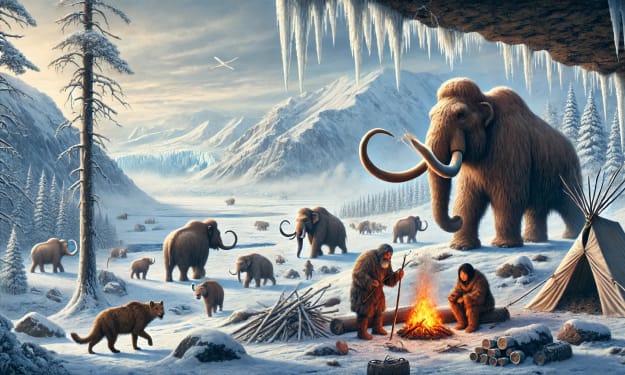
The Ice Age Uncovered: Myths, Facts, and the Reality of Earth's Frozen Past
When we hear "Ice Age," many of us imagine a frozen planet in an eternal winter, where humans huddle in shelters, and mammoths and saber-tooth tigers roam vast icy landscapes. However, this idea isn't entirely accurate. Let’s dive into what the Ice Age really was, how long it lasted, and whether we might be heading for another one. First, it's important to clarify that there wasn’t just one Ice Age. Earth has experienced at least five major ice ages. The first occurred between 2.4 and 2.1 billion years ago, while the most recent began 2.6 million years ago and lasted until about 11,500 years ago. Some scientists even argue that we’re still in an Ice Age. Why? Because Earth continues to experience warm and cold phases, and the planet hasn’t fully reverted to a non-glacial state. An Ice Age consists of two main stages. The **glacial period**, or the colder phase, is when global temperatures drop, glaciers expand, and sea levels fall as water becomes locked in massive ice sheets. During the last glaciation, ice covered large parts of Canada, Greenland, Scandinavia, Eurasia, and even parts of South America. Despite this, not the entire planet froze. Even during the coldest periods, regions like Africa and the tropics remained relatively warm, though temperatures there were about 10°F cooler than today. For example, if modern-day Africa averages 77°F, it would have been closer to 67°F during the Ice Age—chilly but livable. Humans were already around during the last Ice Age. Early Homo sapiens, along with other human species, lived primarily in Africa. Around 2 million years ago, some groups began migrating to colder climates, including Europe and Scandinavia. These regions could be harsh, with average annual temperatures in places like Germany dropping to 32°F, similar to modern-day Iceland. Yet humans not only survived—they thrived. The colder climate encouraged innovation. Humans began sewing clothes to keep warm, developing tools for hunting, and building shelters. Hunting required strategic thinking, which spurred the development of intelligence. Survival became a mental exercise, and this necessity likely accelerated human advancement. During the Ice Age, humans hunted animals that were well-adapted to the cold. Mammoths, for instance, were covered in thick fur, providing excellent material for clothing. Their bones were used for construction, and their meat was a vital food source. Mammoths survived harsh conditions thanks to stored fat reserves that sustained them during times of scarcity. Other animals included saber-tooth cats, which were fearsome predators, and giant ground sloths, towering up to 12 feet tall. Interestingly, many Ice Age animals were much larger than their modern counterparts, a phenomenon linked to evolutionary adaptations before the Ice Age. The end of the Ice Age brought significant changes. As glaciers melted, water trapped in ice caps was released, causing sea levels to rise dramatically—by as much as 400 feet in some cases. Land that was once exposed became submerged. This transition marked the beginning of the **interglacial period**, a warmer phase that started around 11,500 years ago. Some scientists believe we’re still in this period today. The interglacial phase follows a natural cycle triggered by solar radiation, which warms the Earth. Melting glaciers release carbon dioxide (CO2), further accelerating the warming process. While this cycle has occurred for millions of years, human activities in the last 150 years—such as industrialization and deforestation—have amplified the warming trend, leading to climate change concerns. In conclusion, the Ice Age wasn’t a time of unrelenting cold and snowball Earth scenarios. Instead, it was a complex era with fluctuating temperatures, thriving human communities, and giant animals. As Earth continues to warm, we might be witnessing the final stages of the most recent Ice Age—a reminder of the planet's ever-changing climate.
By Nora Ariana2 years ago in Earth
The Quantum Divide
Chapter 1: The Rise of NeuroLink In 2050, the world was no longer divided by borders but by access to technology. At the heart of this divide was NeuroLink, a groundbreaking quantum neural interface that connected human consciousness to an ever-evolving AI ecosystem. Developed by SynerTech Corp, it promised to revolutionize humanity, allowing people to work, learn, and live through an augmented reality overlay.
By Mirhadi Tahsin2 years ago in Earth
Advanced Robotics
Introduction to Advanced Robotics The Harmony of Advanced robotics represents the cutting edge of technological innovation, combining elements of artificial intelligence (AI), mechanical engineering, computer science, and electronics. This chapter provides an overview of advanced robotics, focusing on their development, applications, and potential to transform industries.
By Uko Osinachi Happiness2 years ago in Earth
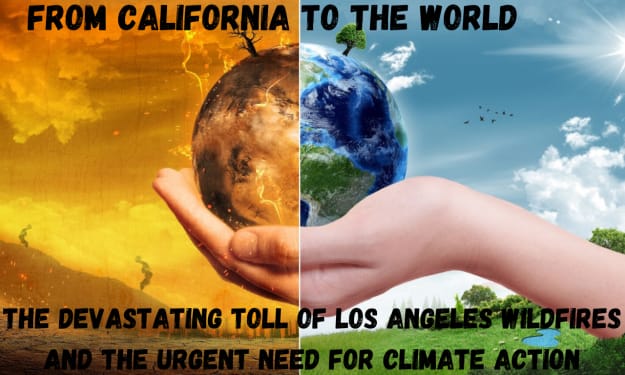
The Los Angeles Wildfires and the Urgency of Rethinking Global Warming
The skies over Los Angeles are shrouded in a smoky haze, a stark reminder of the wildfires that have become an increasingly devastating feature of California’s landscape. These fires, fueled by rising global temperatures and prolonged droughts, serve as a fiery warning: we must reevaluate our understanding of global warming and its driving forces.
By mureed hussain2 years ago in Earth
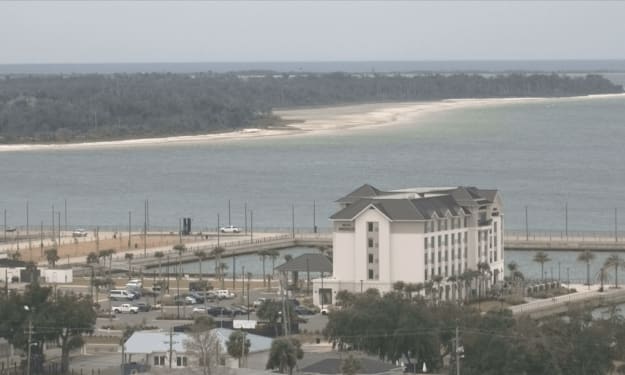
The Panama City Beach . AI-Generated.
Panama City, Florida, has officially declared a local state of emergency following an unusual winter weather system that brought snow to the panhandle. The declaration, announced on the evening of January 21, 2025, underscores the serious impact of Winter Weather System Enzo on the region. The storm's rare snow event, coupled with its potential risks to people and property, has prompted city officials to take swift action.
By Tanushree Das2 years ago in Earth