Science
The Missing Pieces in the 6th Mass Extinction
Earth has experienced five mass extinctions over the past 500 million years, each wiping out a significant percentage of species due to natural disasters such as asteroid impacts, volcanic eruptions, and rapid climate changes. However, scientists now warn that a sixth mass extinction is underway, driven not by nature, but by human activity. Deforestation, pollution, climate change, and overexploitation of species are accelerating biodiversity loss at an unprecedented rate. Yet, despite mounting evidence, critical gaps remain in our understanding of this crisis. These missing pieces make it difficult to predict the full impact of the sixth extinction and identify the most effective solutions.
By Ninette Ferriera 2 years ago in Earth
The Power of Small Steps: How Tiny Habits Shape Your Future
When we think of success, we often imagine grand, life-changing moments—landing a dream job, launching a thriving business, or making a scientific breakthrough. But the truth is, real success doesn’t come from massive, overnight changes. It’s the small, consistent steps we take daily that determine our future. Whether it’s personal growth, career advancement, or even technological innovation, the principle remains the same: small, incremental improvements lead to extraordinary results over time. This article explores the science behind small habits, how technology follows the same principle, and how you can apply it to your life. The Science Behind Small Changes Our brains are wired for habit formation. Each time we repeat an action, our neural pathways strengthen, making the behavior more automatic. This is why habits—whether positive or negative—shape our lives more than sheer willpower. James Clear, in Atomic Habits, emphasizes the power of tiny improvements. He explains that if you improve by just 1% every day, the change may seem insignificant at first. But over a year, this compounds into a 37x improvement! This concept, known as compounding growth, applies to all areas of life. Consider fitness: If you do one push-up a day, it feels small, but in a month, you’ve done 30. If you increase the number slightly each week, in a year, you could be doing hundreds. The same applies to learning a new skill, saving money, or developing a mindset of resilience. Neuroscientific research also supports this idea. The basal ganglia, a part of the brain responsible for habit formation, strengthens connections with repetition. This means that what starts as a conscious effort eventually becomes second nature. That’s how successful people automate good behaviors while eliminating bad ones. Technology and the Power of Small Steps The world’s greatest technological advancements didn’t happen overnight. Every innovation, from artificial intelligence to space travel, started with simple ideas that evolved through consistent, small improvements. 1. Space Exploration: Small Failures, Big Wins SpaceX, the aerospace company founded by Elon Musk, is a perfect example of how small steps lead to breakthroughs. Their first attempts at launching reusable rockets failed multiple times. But instead of giving up, they analyzed each failure, made small improvements, and tried again. Today, SpaceX has revolutionized the space industry with rockets that can land and be reused—reducing costs and making space travel more sustainable. 2. Artificial Intelligence: Learning Through Data Artificial Intelligence (AI) didn’t suddenly become intelligent. Early AI systems were simple rule-based programs that could perform basic tasks. Over time, as researchers fed more data, improved algorithms, and increased computational power, AI evolved into powerful deep learning models. Today, AI assists in everything from medical diagnosis to self-driving cars, all thanks to continuous, incremental progress. 3. Smartphones: A Decade of Tiny Innovations If you compare the first-generation iPhone (released in 2007) to today’s smartphones, the difference is massive. But this transformation didn’t happen instantly. Each year, small changes—better cameras, faster processors, and improved software—pushed the technology forward. These small innovations added up, shaping the powerful devices we now rely on. The lesson? Progress happens in small, deliberate steps, not in giant leaps. How to Apply This to Your Life Now that we’ve seen how small changes drive both personal and technological advancements, how can you apply this principle to your own life? Here are some practical steps: 1. Start with Micro-Habits Big goals can feel overwhelming. Instead, break them down into micro-habits. Want to write a book? Start with 100 words a day. Want to get fit? Do one push-up. These small actions are easy to do and build momentum. 2. Focus on Consistency, Not Perfection Consistency beats intensity. Showing up every day, even in a small way, matters more than making a huge effort once in a while. If you’re learning a language, practicing for 10 minutes a day is better than cramming for three hours once a month. 3. Track Your Progress Use technology to your advantage. Apps like Notion, Habitica, or Duolingo can help track habits and keep you accountable. Even writing down small wins in a journal can boost motivation. 4. Embrace Failure as a Stepping Stone Both in personal growth and technology, failure isn’t a setback—it’s part of progress. The key is to analyze what went wrong, make small adjustments, and try again. This mindset shift can help you stay motivated despite obstacles. 5. Leverage the Power of Environment Your environment influences your habits. If you want to read more, keep books within reach. If you want to eat healthier, stock your kitchen with nutritious options. Make good habits easy and bad habits hard. Final Thoughts: The Power of Small Steps Success is rarely about big, dramatic changes. Whether in personal growth or technological innovation, it’s the small, consistent steps that create long-term impact. By understanding the power of tiny habits and compounding growth, you can achieve remarkable progress in any area of life. So, what’s one small step you can take today? Start now—because small actions, done consistently, lead to extraordinary results.
By Pure Crown2 years ago in Earth
How big is the universe ?
Earth, our home, is a small blue dot adrift in the vast cosmic sea, where every person you’ve ever known and every event in history has occurred. This is where our journey begins. But as we zoom out beyond our planet, past the moon, and beyond the sun, we embark on an epic quest to understand the true size of our universe.
By silvestus Wambua savali2 years ago in Earth
The Science of Motivation: How Your Brain Drives Success
Motivation is the driving force behind every goal we set, the energy that propels us forward in the face of obstacles. But have you ever wondered how your brain fuels this powerful force? Understanding the science behind motivation can give you insights into how to optimize your efforts, increase productivity, and ultimately achieve success. In this article, we'll explore the intricate relationship between the brain and motivation, and how you can harness this knowledge for your personal and professional growth. The Neurobiology of Motivation Motivation, at its core, is a complex interplay of chemicals, neural circuits, and brain regions that influence our behavior. At the heart of this system is the brain's reward system, which is responsible for driving us to pursue goals and rewards. This system is regulated by neurotransmitters like dopamine, serotonin, and norepinephrine, each playing a unique role in motivation and mood regulation. Dopamine is the most well-known neurotransmitter involved in motivation. Often called the “feel-good” chemical, dopamine is released when we anticipate a reward, such as when we achieve a goal or experience something pleasurable. This release of dopamine motivates us to keep going, pushing us to repeat behaviors that bring positive outcomes. Serotonin, on the other hand, is linked to feelings of well-being and happiness. While not as directly involved in goal pursuit as dopamine, serotonin contributes to maintaining a positive mindset, which is crucial for staying motivated over time. Finally, norepinephrine plays a role in arousal and alertness. It helps us focus on tasks by making us more attuned to our environment, allowing us to stay engaged in the pursuit of our goals. Together, these chemicals form a motivational circuit that supports our ability to take action, focus, and stay engaged in tasks. Understanding this neurobiological process is the first step in unlocking the secrets of motivation. The Brain's Reward System: How It Drives Us Forward Our brain's reward system is a complex network of regions responsible for processing rewards and reinforcing behaviors that lead to positive outcomes. Key areas of the brain involved in motivation include the prefrontal cortex, the nucleus accumbens, and the ventral tegmental area (VTA). The prefrontal cortex is responsible for decision-making, planning, and self-control. It helps us prioritize long-term rewards over short-term gratification, an essential aspect of sustained motivation. When we plan for future success, the prefrontal cortex activates, setting the stage for focused action. The nucleus accumbens is often referred to as the brain's "pleasure center." It plays a significant role in processing rewards and reinforcing behaviors that lead to them. When we receive positive feedback or achieve a goal, the nucleus accumbens activates, releasing dopamine and reinforcing the behavior that leads to the reward. The ventral tegmental area (VTA) is the source of dopamine release in the brain. It sends dopamine signals to the prefrontal cortex and nucleus accumbens, creating the feeling of motivation and reinforcing goal-directed behavior. When the VTA is active, we're more likely to feel excited and energized to pursue our goals. By understanding how these brain regions work together, we can begin to appreciate the intricate mechanisms that drive us forward and help us achieve success. The Power of Intrinsic vs. Extrinsic Motivation Motivation can be broadly categorized into two types: intrinsic and extrinsic. Both types play essential roles in driving behavior, but they come from different sources. Intrinsic motivation arises from within. It's the desire to engage in an activity because it’s inherently enjoyable or fulfilling. For example, you might write stories or engage in a hobby simply because you love doing it. Intrinsic motivation is often more sustainable and powerful because it is not reliant on external rewards. Extrinsic motivation, on the other hand, comes from external sources, such as rewards, praise, or recognition. This type of motivation can be effective in the short term, especially for tasks that we might not find inherently enjoyable. For instance, a person might work overtime to earn a bonus or receive a promotion. While extrinsic motivation can drive immediate action, it is often less enduring than intrinsic motivation. Research has shown that a balance of both types of motivation is key to achieving long-term success. Intrinsic motivation fosters a sense of fulfillment, while extrinsic motivation can provide the external validation necessary to keep moving forward. Setting Goals: A Blueprint for Motivation Setting clear, achievable goals is one of the most powerful ways to tap into your brain’s motivational power. When we set a goal, the brain immediately begins to chart a path toward achievement, activating the reward system. The process of working toward a goal, and the satisfaction of checking it off, triggers dopamine release, which keeps us motivated to continue. Several strategies for goal-setting maximize motivation. The SMART framework (Specific, Measurable, Achievable, Relevant, Time-bound) is one of the most effective ways to ensure your goals are well-defined and attainable. By setting goals that are clear and measurable, you're more likely to stay on track and feel motivated to push through challenges. Breaking larger goals into smaller, manageable tasks is another powerful strategy. This approach makes the goal less daunting and provides frequent opportunities to celebrate small victories, further reinforcing the reward system in your brain. Overcoming Obstacles: The Role of Perseverance and Resilience Motivation doesn’t always stay high, especially when obstacles arise. In times of difficulty, our brains may release higher levels of stress hormones, like cortisol, which can dampen motivation and focus. However, building resilience and practicing perseverance can help us push through these moments. When we face challenges, our brains interpret these obstacles as a potential threat, activating the fight-or-flight response. But by practicing resilience, we can reframe these challenges as opportunities for growth. Developing a growth mindset—the belief that abilities and intelligence can be developed through effort—has been shown to enhance motivation during tough times. Conclusion: Unlocking Your Motivation The science of motivation offers a fascinating look into how our brain drives us to succeed. By understanding the neurobiology of motivation, the roles of intrinsic and extrinsic factors, and how our brain's reward system works, we can optimize our approach to goal-setting and perseverance. Ultimately, motivation is not just about willpower; it’s about understanding how to tap into the brain’s powerful mechanisms that drive us forward. Whether you’re aiming for personal growth, professional success, or creative achievements, unlocking the science of motivation can help you harness your full potential and achieve your goals.
By Pure Crown2 years ago in Earth
Chucky and Tiffany: The Twisted Love Story of Horror's Most Infamous Dolls
The image depicts two infamous dolls, Chucky and Tiffany, from the iconic horror movie franchise Child’s Play. Far from being ordinary toys, these characters have become central figures in a series of films that have captivated horror fans for decades.
By Nora Ariana2 years ago in Earth
The history of the telephone.
From telephone is conceptual beginnings in the 19th century to the advanced smartphones of today, the telephone has undergone significant changes, each bringing new possibilities for personal and business interactions. This essay explores the invention, development, and impact of the telephone from its early days to the present.
By Badhan Sen2 years ago in Earth
A Journey To A Plastic-Free World | Sustainability
A Journey To A Plastic-Free World | Sustainability Plastics are part of our daily lives. From packaging to electronics, medical devices to construction materials, its versatility and durability have made it a nonnegotiable for success. But the environmental cost of our commitment to plastic is enormous. Annually, more than 300 million tons of plastic are produced worldwide, and much of that goes on to pollute our oceans, killing wildlife and waging havoc on climate. As the awareness of plastic waste and pollution spreads, the demand for a plastic-free future couldn't be louder. This article looks at the problems, answers, and what we can do to help progress closer to a world free from plastic.
By Kalpesh Vasava2 years ago in Earth
Rockets Need Special Places to Launch
The launch of a rocket is a highly complex and precise operation that requires a carefully chosen location. Unlike airplanes, which can take off from almost any airport, rockets need specialized launch sites known as spaceports or launch complexes. These locations are selected based on several critical factors, including geography, safety, and the specific needs of the mission. Without these carefully designed sites, sending satellites, scientific instruments, and even astronauts into space would be far more challenging and dangerous.
By Ninette Ferriera 2 years ago in Earth
The science behind tides.
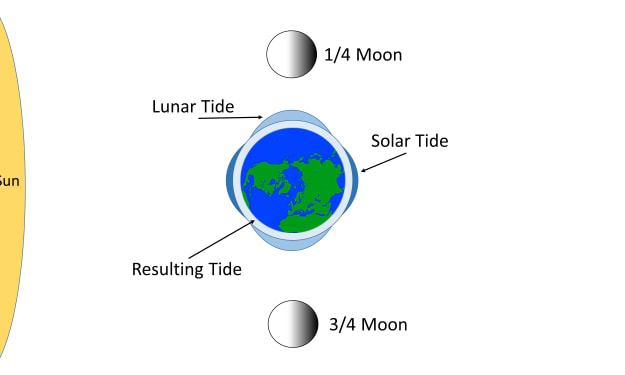
Tides periodic rises and falls of ocean water affect coastal regions worldwide, influencing marine life, navigation, and even human activities. Understanding tides requires delving into concepts of gravitational forces, celestial mechanics, and fluid dynamics.
By Badhan Sen2 years ago in Earth
The anatomy of a cell.
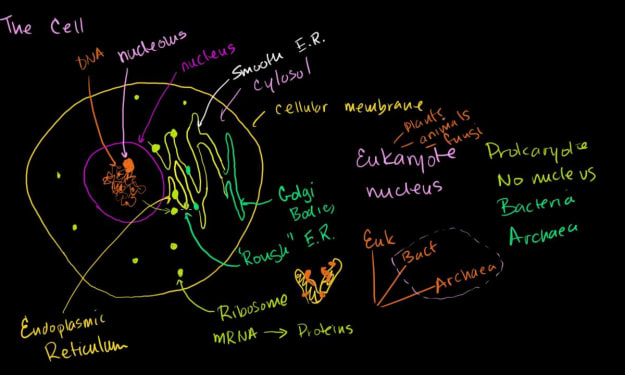
Cells vary in structure and function, but they share several essential components that enable them to sustain life. Broadly, cells are categorized into prokaryotic and eukaryotic types. Prokaryotic cells, such as bacteria, are simpler and lack a nucleus, whereas eukaryotic cells, found in plants, animals, fungi, and protists, are more complex and contain membrane-bound organelles. This article will explore the key structural components of a eukaryotic cell, highlighting their functions and significance.
By Badhan Sen2 years ago in Earth