Science
Partial solar eclipse 1 month away The moon will take a bite out of the sun on March 29.
Partial solar eclipse 1 month away The moon will take a bite out of the sun on March 29. A breathtaking celestial event is on the horizon as the moon will partially obscure the sun on March 29, 2025 creating a striking partial solar eclipse visible across North America Europe and parts of Northwest Africa. While this eclipse won’t bring total darkness it will still be a remarkable sight for sky watchers particularly in eastern North America where the partially eclipsed sun will rise dramatically above the horizon. A solar eclipse occurs when the moon passes between the Earth and the sun casting a shadow on our planet. In the case of a partial solar eclipse the alignment is not perfect meaning only a portion of the sun is obscured. Unlike a total eclipse where the sun is completely blocked for a brief period this event will leave a crescent shaped portion of the sun still visible, creating a mesmerizing effect often described as the sun having a bite taken out of it.
By Adnan Rasheed2 years ago in Earth
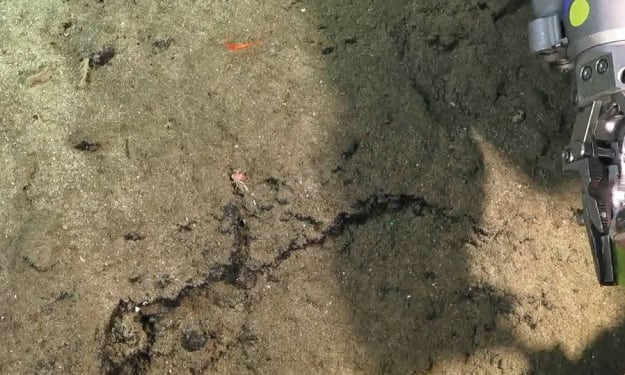
Orange deep sea creature with dense eyelashes discovered as new species.
Orange deep sea creature with dense eyelashes discovered as new species. Scientists aboard the research vessel Falkor exploring the depths of the eastern Pacific Ocean off the coast of Costa Rica made an extraordinary discovery an orange deep sea creature with dense eyelash like structures. The moment was captured on the camera of their remotely operated vehicle ROV thousands of feet below the surface in a mysterious underwater canyon. At first glance the researchers were captivated by the creature’s striking appearance but it wasn’t until later that they realized they had stumbled upon an entirely new species. The Falkor research vessel operated by the Schmidt Ocean Institute embarked on its journey in January 2019 for a weeks long survey of deep sea life. The mission aimed to explore the largely uncharted regions of the deep ocean focusing on marine biodiversity and collecting samples for scientific study. The expedition was equipped with cutting edge technology including high resolution cameras and robotic arms on the ROV allowing scientists to document and retrieve specimens from extreme depths.
By Adnan Rasheed2 years ago in Earth
The Future of Renewable Energy: Innovations That Will Change Our World
As the global community grapples with the pressing challenges of climate change, reliance on fossil fuels, and the quest for sustainable development, the conversation around renewable energy has become more critical than ever. The future of renewable energy is not just about replacing traditional energy sources; it's about leveraging innovative technologies to create a cleaner, more resilient world. Here, we explore some of the most exciting innovations in renewable energy that promise to transform our planet for the better. ## Breakthroughs in Solar Technology Solar energy has long been heralded as a cornerstone of renewable energy, and recent advancements are propelling this technology into the future. From photovoltaic cells to solar thermal energy systems, innovations are making solar power more efficient and affordable than ever. Researchers are now experimenting with perovskite solar cells, which can be produced at a fraction of the cost and have the potential to achieve higher efficiencies than traditional silicon-based cells. Additionally, building-integrated photovoltaics (BIPV) are merging solar technology with architecture, allowing buildings to generate their own energy without compromising aesthetic values. ## Wind Energy Expansion Wind energy continues to grow, with onshore and offshore wind farms becoming a staple in renewable energy portfolios. Innovations such as larger and more efficient turbines are enhancing energy capture, while advancements in floating wind technology are opening new avenues for harnessing wind power in deeper waters where wind speeds are higher. Furthermore, the development of vertical-axis wind turbines presents a new design paradigm that can be more effective in urban settings, allowing cities to utilize wind energy without requiring vast tracts of land. ## Energy Storage Solutions One of the significant challenges facing renewable energy is the intermittent nature of sources like solar and wind. Innovations in energy storage are critical to making renewable energy more reliable. Advances in battery technology, particularly lithium-ion and solid-state batteries, are improving energy storage capacities and efficiencies. Beyond batteries, technologies like pumped hydro storage and thermal energy storage are being optimized to retain and deploy energy generated during peak production times, ensuring a steady energy supply even when the sun isn’t shining or the wind isn’t blowing. ## Smart Grids and Decentralized Energy The future of energy distribution lies in smart grids—integrated systems that enhance electricity distribution efficiency through advanced communication technologies. These grids allow for real-time monitoring and management of energy consumption, enabling better integration of renewable sources. Decentralized energy production, where communities generate their own power through microgrids powered by solar, wind, or biomass, is also gaining traction. This not only guarantees energy security but also empowers local communities to take charge of their energy needs. ## Hydrogen as a Clean Fuel Hydrogen fuel is emerging as a key player in the future of renewable energy. Produced through methods such as electrolysis, where water is split into hydrogen and oxygen using renewable electricity, green hydrogen has the potential to decarbonize sectors that are difficult to electrify, including heavy industry and long-haul transportation. Recent breakthroughs in hydrogen storage and transportation are enabling more significant deployment of hydrogen as a clean energy carrier, potentially revolutionizing the way we think about energy consumption. ## Engaging with Communities Finally, the future of renewable energy is not just about technologies; it’s also about people. Engaging communities in sustainability initiatives is crucial for the widespread adoption of renewable energy practices. Education and advocacy are essential components in transitioning to a renewable energy future, as informed citizens can contribute to the demand for cleaner energy policies and practices. Governments, businesses, and organizations must work collectively to build awareness and facilitate access to renewable energy resources. ## Conclusion The future of renewable energy is bright, driven by constant innovation and a collective desire for a sustainable world. From advancements in solar and wind technology to the development of hydrogen fuel and smart grids, these innovations hold the potential to combat climate change and reshape how we power our lives. As we move forward, embracing these changes with enthusiasm and responsibility will be crucial in ensuring a cleaner, greener planet for generations to come. With the collaborative efforts of individuals, communities, and governments, we can create an energy landscape that not only meets our needs but also protects our environment.
By David Iliya2 years ago in Earth
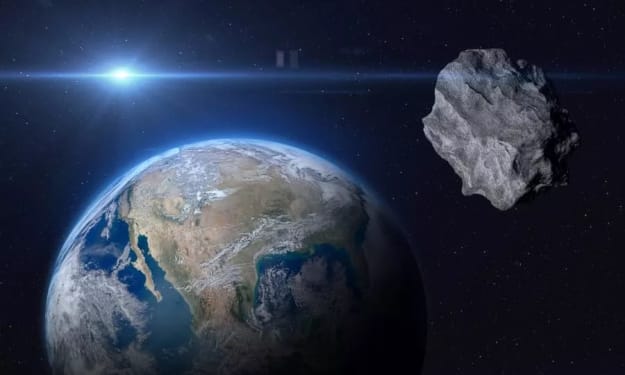
City killer asteroid could smash into MOON as Nasa warns probability of impact set to rise further.
City killer asteroid could smash into MOON as Nasa warns probability of impact set to rise further. NASA has recently raised concerns about a Big Ben sized asteroid that could collide with the Moon in the near future. Scientists have been closely monitoring the trajectory of this celestial body and the probability of impact is reportedly increasing. While the asteroid was initially considered a potential threat to Earth new calculations suggest that it may instead be on a collision course with the Moon. This alarming development has sparked discussions among experts regarding the potential consequences of such an event and what it could mean for future space exploration. The asteroid in question which measures roughly the same size as London's iconic Big Ben has been under observation by NASA’s planetary defense team for some time. Previously there were fears that this space rock could impact Earth with predictions estimating a 20 percent chance of collision by April. However updated calculations now indicate that the Moon could bear the brunt of this cosmic encounter. The probability of the asteroid hitting the Moon has been steadily increasing raising concerns about the potential impact and its implications for both lunar exploration and Earth's space environment.
By Adnan Rasheed2 years ago in Earth
House Sized Asteroid Approaching Earth Tomorrow NASA Reports.
House Sized Asteroid Approaching Earth Tomorrow NASA Reports. NASA has reported that a house sized asteroid designated 2025 DJ22 is set to pass by Earth at a remarkable speed of 29,304 miles per hour. While the thought of an asteroid speeding through space towards our planet might sound alarming scientists assure that it poses no immediate threat. The asteroid estimated to be approximately 47 feet in diameter will miss Earth by a relatively close distance of 347,000 miles just beyond the orbit of the Moon. Asteroids like 2025 DJ22 are a common occurrence in our solar system. These space rocks remnants from the early formation of planets travel in various orbits and sometimes come close to Earth. While this asteroid’s approach is noteworthy due to its proximity it does not fall under the category of potentially hazardous asteroids which are defined as objects that pass within 4.6 million miles of Earth and are large enough to cause significant damage if they were to collide with our planet. However NASA and other space agencies keep a close watch on all such near Earth objects NEOs to ensure continuous monitoring of their orbits.
By Adnan Rasheed2 years ago in Earth
Ethical dilemmas in artificial intelligence
However, its rapid advancement also brings a host of ethical dilemmas that require careful consideration. These dilemmas concern the responsible development, deployment, and use of AI, addressing issues such as fairness, accountability, privacy, and the potential for bias.
By Badhan Sen2 years ago in Earth
No one knows who named Earth. AI-Generated.
The Mystery of Earth's Name: Who Decided What to Call Our Planet? Ever wonder why our planet is called Earth? It's different from other planets in our solar system. They got their names from Roman or Greek gods. But where did "Earth" come from? It’s a mystery lost in time. This makes you ask a big question. Why is Earth's name so strange? What does this tell people about how our ancestors saw the world? Earth's Unique Naming Convention Most planets boast names tied to ancient gods. Earth? Not so much. It stands apart. It's a bit of a loner in the planetary naming club. Greco-Roman Influence on Planetary Names Mars, Venus, Jupiter: these are more than just celestial bodies. They echo with tales of Roman gods. Greeks had their own versions, shaping what we call these worlds. Ares became Mars. Aphrodite turned into Venus. Zeus evolved into Jupiter. This naming trend is easy to see across the solar system. Earth's Germanic Roots Unlike the others, "Earth" comes from old Germanic languages. The roots lie in words like erþō. This ancient word simply meant "ground" or "soil". Over time, it morphed into the "Earth" we know. A simple name for the ground beneath our feet. No gods. No myths. Proto-Germanic Origins and the Concept of "Ground" Let's dig deeper. Where did that old word erþō even come from? What did it mean to those who first spoke it? The Meaning of erþō For early Germanic people, erþō was essential. It meant more than just dirt. It meant life. Their lives depended on it. It was where they grew food. It was what they walked on. Erþō connected them to everything. This word held deep cultural importance. Evolution Through Old English As languages changed, erþō became eorþe in Old English. You can find it in old books. People used it every day. It was a common word for the ground. It shows how important the land was to them. No Single "Namer" Here's the thing. No single person chose the name "Earth". It wasn't a decision by a committee. The name arose slowly. People used it. It evolved. It's a name that grew from the ground up. The Absence of Mythology Why didn't Earth get a fancy, god-like name? It's an interesting contrast. Why does Earth stand out? Earth vs. Other Planets Other planets got cool names from mythology. Earth? It got a practical label. It makes you think about why. Was there a reason to give Earth such a simple title? Early Human Perception of Earth People saw Earth as something close. It was the ground. It was right there. Other planets seemed far away. They were connected to gods and myths. Earth was just, well, Earth. Why the Origin Remains Obscure It's hard to say who first said "Earth." The name changed little by little. How did this happen? Gradual Evolution of Language Languages don't change overnight. They shift slowly. Words change meaning. New words appear. It’s hard to pinpoint when "Earth" became its official name. Pre-Scientific Understanding Long ago, people didn't understand the universe as well. They cared about what was right in front of them. The ground. The soil. It makes sense that their name for Earth was so simple. Lessons from Earth's Namelessness So, what can we learn from all this? What does the name "Earth" tell us? It's more than just a word. A Reflection of Early Cultures The name shows how closely early people felt to the land. For those old Germanic and English cultures, Earth was life. They respected it. This connection is right there in the name. Humility in Perspective Earth's simple name can inspire you to feel small. It reminds you that you are just a tiny part of a big universe. It keeps you grounded. Conclusion So, who named Earth? No one really knows! "Earth" comes from old Germanic words. These words meant "ground." This name is different from how other planets got their names. The simple name shows how people long ago felt about the land. It can also remind you to appreciate our planet. It’s home, after all.
By Story silver book 2 years ago in Earth
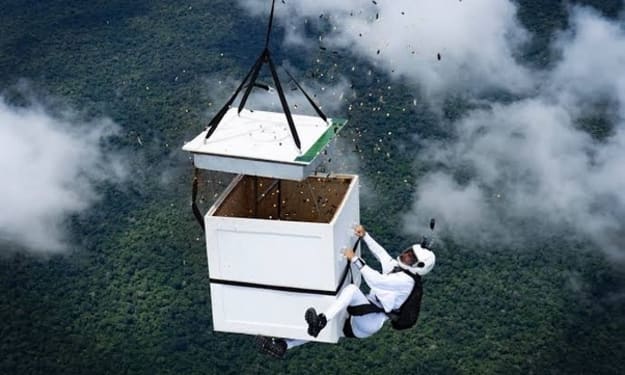
A jump, 100 million seeds, and the rebirth of the Amazon!
A small cargo aircraft was hovering in the sky at an altitude of 12,000 feet. Inside, Luiji Kani—a famous Brazilian skydiver and environmental worker—stood near the open hatch. In front of him was a large metal box containing 100 million seeds, meant to revive a destroyed part of the Amazon rainforest. This land, once green and full of life, had turned barren due to massive deforestation and devastating fires. Luiji took a deep breath and, without wasting any time, pushed the box out of the aircraft. Within seconds, he followed, diving straight into the open sky. The powerful wind currents hit his body, but his focus remained solely on the box, which was plummeting rapidly toward the earth. This was no ordinary skydive; it was a mission to restore life to a dying forest. The adrenaline rushed through his veins as he tried to reach the metal box. He extended his arms, and after a few tense moments, he managed to grab the edge of the box. But suddenly, a strong gust of wind spun him violently. His body flipped upside down, and his right wrist twisted sharply. A sharp pain shot through his arm. For a moment, he lost control, but years of skydiving experience helped him regain stability. He clenched his teeth, pushing aside the pain, and refocused on the mission. The altitude meter in his gear showed 6,000 feet. It was time. Using all his strength, he yanked open the box’s lid. As soon as the lid was off, the seeds burst into the air, scattering in all directions. The wind carried them over the land below—a vast area of burnt soil that once thrived with dense greenery. These seeds held the promise of rebirth. In a few years, they would grow into towering trees, some reaching heights of 50 meters, covering an area equivalent to 14,000 football fields. It was nature’s second chance. The Amazon rainforest is one of the most important ecosystems on Earth. It produces 20% of the world’s oxygen, regulates the climate, and provides a home for more than 10 million species of plants and animals. But human activities, including illegal logging, agriculture, and uncontrolled fires, have destroyed large portions of this vital forest. Scientists warn that if the deforestation continues, the Amazon may reach a tipping point where it can no longer regenerate itself. This mission was not just about planting trees; it was about restoring balance to nature. These 100 million seeds included a mix of native plant species, carefully selected to support biodiversity. Some would grow into towering hardwood trees, while others would provide food and shelter for animals. The idea was not just to replant trees but to rebuild an entire ecosystem. But the mission was not over yet. The danger was far from gone. Luiji's wrist throbbed in pain, and he still had to deploy his parachute. The altitude had dropped to 3,000 feet. He pulled the parachute cord, and the canopy burst open abruptly. A powerful jolt shook his entire body. For a moment, his vision blurred, and he felt like he might lose consciousness. But he fought against the dizziness and steadied himself. Slowly descending, he looked down. The seeds had dispersed exactly as planned. The barren land below would soon witness the miracle of regeneration. A wide smile spread across his face. His mission was successful. As he landed safely on a cleared patch of land, Luiji let out a deep breath of relief. He looked around and then up at the sky. He had done it. These seeds, now resting in the soil, would soon sprout with the arrival of the rains. This would not just be a new beginning for the forest but also a message to the world—one person, with courage and determination, could make a difference. Luiji Kani’s mission was not just an adventurous stunt; it was a call to action for the entire world. The Amazon rainforest, often called the "lungs of the Earth," had suffered immensely due to human activities. But if one person could take such a bold step toward its revival, imagine what humanity could achieve if they united for the cause. Perhaps, years from now, someone would walk through this forest, unaware of the extraordinary story behind its revival. They might not know that this lush green landscape was the result of one man’s daring leap—one jump that sowed the seeds of hope for the Earth’s future. A single jump, 100 million seeds, and the rebirth of the Amazon!
By Neeraj Tiwari2 years ago in Earth
Architects of Control
The Architects of Control: Who Profits from Humanity’s Repeated Resets? Throughout history, civilizations have collapsed, knowledge has been lost, and humanity has been forced to start over. But what if these resets aren’t accidents? What if they are carefully orchestrated events designed to keep true power out of the hands of the masses?
By Alexander Terrell2 years ago in Earth