Science
EARTH 2125
By 2125, Earth is no longer the planet we once knew—it’s something entirely new. Shaped by climate change, technological evolution, and the shifting values of humanity, the world has transformed in ways both breathtaking and sobering. If we could step into a time machine and walk the Earth a century from now, what would we see? Let’s take a journey into the future of our planet. --- Climate and Environment: A Planet Reclaimed One of the most dramatic changes in 2125 is the environment. After centuries of pollution, deforestation, and rising temperatures, nature has responded in unexpected ways. Large portions of Earth’s equator are now uninhabitable due to extreme heat, with temperatures reaching up to 60°C (140°F). These areas, once densely populated, have been abandoned and reclaimed by nature. Forests with genetically modified flora adapted to extreme climates grow in places where cities once stood. Towering solar trees and algae-covered towers clean the air and provide shade in urban spaces. The polar regions, now partially ice-free, have become hubs of global agriculture. With the melting of ice sheets, vast new territories opened up in Greenland, Canada, and Siberia. Though the rising sea levels swallowed many coastal cities—New York, Venice, Mumbai—new floating and vertical cities now rise above or beyond the old ones. Rivers and lakes, once drying and shrinking, are now carefully managed by AI-controlled systems. Many ecosystems were rebuilt with synthetic biology: lab-designed coral reefs, cloned endangered species, and bio-domes help preserve what was almost lost. Nature didn’t die—it adapted. And in some places, it’s fighting back. --- Cities and Architecture: Living With the Land Cities in 2125 are no longer just concrete jungles. They breathe, grow, and respond like living organisms. Vertical cities—miles high—stretch into the sky, covered in plant life. Entire neighborhoods are designed to move slightly throughout the day to follow the sun or avoid the wind. Homes are no longer static structures. Smart walls adjust to temperature, light, and even mood. People live in modular living pods that can detach and reattach elsewhere. Need a change of scenery? Your entire house can be flown to another region. Underground and underwater cities are also thriving. These environments are shielded from surface climate issues and powered by geothermal energy. Some even feature artificial stars for sunlight simulation. The idea of “sustainable” has evolved to “symbiotic”—cities no longer just reduce harm, they actively repair and enhance their environments. --- Technology: The Earth is Always Listening Technology in 2125 is no longer just in your pocket—it’s in the air, the soil, the trees. Earth's surface is embedded with a planetary-scale Internet of Things (IoT), allowing AI systems to monitor and manage everything from water flow in a forest to the emotional health of a community. Neural interfaces allow people to connect with machines through thought alone. Physical devices like phones and computers are considered outdated. Communication is now visual, sensory, and immersive—messages are experienced rather than read. Transportation is largely autonomous. Flying taxis, magnetic trains, and zero-emission vehicles dominate. Personal travel has become more of a leisure activity, since remote presence and holographic projections are widely used for work and social life. The downside? Privacy is almost non-existent. In exchange for security and efficiency, most people live in a state of voluntary transparency. --- Human Culture and Society: A Redefined Civilization Earth’s population has declined slightly—not due to disaster, but by choice. Many have left to live in orbiting space habitats or on Mars colonies. The humans who stayed became deeply connected to Earth’s wellbeing. Instead of global nations, the world is divided into eco-regions. Governance is handled by hybrid councils of humans and AI, focused not on profit, but planetary health and social harmony. Education is continuous and experiential. Children learn by doing—exploring forests, building machines, planting crops, and engaging with historical simulations. Empathy is a core subject, alongside science and creativity. Work is not about survival anymore. AI and robotics handle most labor. Humans focus on problem-solving, storytelling, and innovation. Basic income is universal. Mental health is taken seriously. Time is valued as the most precious currency. --- The Emotional Landscape: Wonder and Warning Despite all the advancements, Earth in 2125 carries the emotional weight of its past. Ghost cities still stand beneath the oceans. Forests whisper through genetically engineered leaves that were once burned to the ground. Monuments and museums tell stories of the planet’s near-death and rebirth. There’s wonder—yes. Earth has become more alive, more interconnected, and more beautiful in strange, futuristic ways. But there’s also a warning. The scars of the past remain visible to remind future generations: Earth is not invincible. She is patient, powerful, and fragile all at once. We broke her once. We may not get a second chance if we do it again. --- Final Thought: The Earth of 2125 is a planet reimagined—not utopia, not dystopia—but something deeply real. It's a future shaped by both human failure and human resilience. And the most powerful truth? That future still depends on what we choose today.
By SHADOW-WRITESabout a year ago in Earth
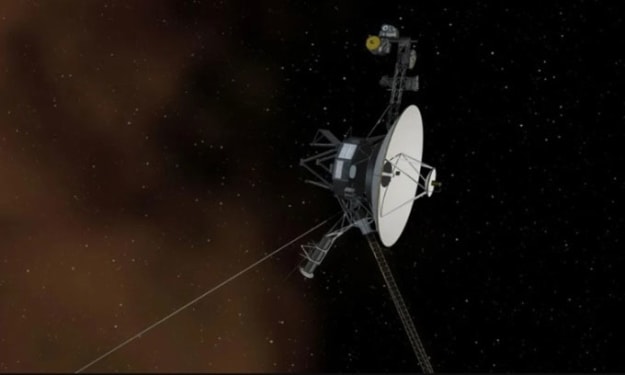
NASA Receives Communication Signal from Spacecraft 24 Billion Kilometers Away
After a prolonged period of communication issues with Voyager 1, NASA has finally received a meaningful and readable signal from the spacecraft, which is currently traveling through interstellar space. This marks a significant milestone in one of NASA's longest and most ambitious space missions.
By Eleanor Graceabout a year ago in Earth
From Sunrise to Status Updates: Life Through the Facebook Lens
In today’s digitally driven world, Facebook has grown beyond being just a platform for sharing photos or chatting with friends—it has become a significant part of our daily lives. For many, scrolling through Facebook is as routine as brushing their teeth in the morning or grabbing a cup of coffee. While it began as a simple social networking site, Facebook now plays a complex role in shaping our habits, social interactions, emotions, and even how we perceive the world around us.
By Asif Nawazabout a year ago in Earth
The Whispering Planet
No one believed Earth was the only cradle of life. They only lacked proof. That changed in 2083. It began with a signal. Not a loud, blinking broadcast, but a faint whisper carried across space repeating, rhythmic, like breathing. It came from Gliese-581g, a planet once dismissed as uninhabitable. Dr. Ada Nwosu, an astrophysicist from Lagos, was the first to decode the pattern. It wasn’t just noise. It was music. A harmonic sequence that matched no known natural source.
By Author kelechiabout a year ago in Earth
"Komodo Dragon: The Lethal Lizard from the Ancient World"
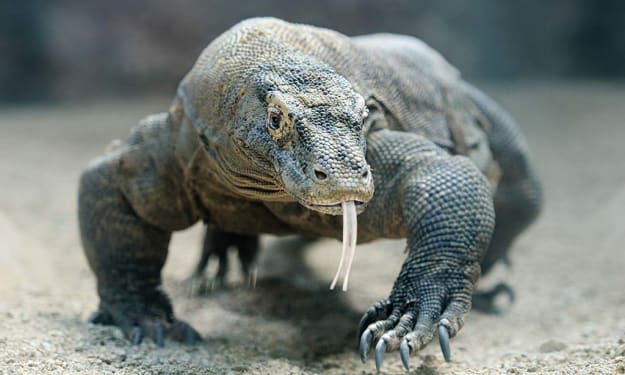
The Komodo dragon, a giant lizard found on a handful of islands in Indonesia, is one of the most fascinating—and terrifying—creatures on Earth. It’s not just its size or appearance that captures attention, but also its deadly nature and ancient history. This apex predator has survived for millions of years, unchanged and perfectly adapted to its environment. The Legacy of the Komodo Dragon The Komodo dragon, scientifically known as Varanus komodoensis, is the largest living species of lizard. It can grow up to 10 feet long and weigh over 300 pounds. With its muscular body, sharp claws, and powerful jaws, it’s built to be a top-tier predator. It hunts a variety of animals, including deer, wild boar, and even smaller dragons. But what truly sets the Komodo dragon apart from other predators is its venom. It’s not just its physical prowess that makes it deadly, but the toxic bacteria and venomous proteins in its saliva. When it bites its prey, the dragon’s saliva injects toxins that cause rapid blood loss, paralysis, and eventually death. It’s this combination of physical strength and venom that allows it to bring down prey far larger than itself. Evolutionary Survivor The Komodo dragon has existed for millions of years, surviving major climate changes and environmental shifts. Its lineage dates back to the late Pleistocene era, which means it was alive at the same time as some of the largest mammals to have ever roamed the planet, such as woolly mammoths and saber-toothed tigers. Interestingly, the Komodo dragon’s survival can be attributed to its isolation on the islands of Indonesia. The isolation allowed it to evolve without much competition from other large predators. Over time, it adapted to its environment, becoming the fearsome creature it is today. The Dragon’s Unique Hunting Strategy The Komodo dragon doesn’t rely solely on its venom to hunt—it’s also an incredibly patient predator. The dragon typically stalks its prey quietly, waiting for the perfect moment to strike. Once it gets close enough, it delivers a swift, powerful bite. The dragon’s prey, often unaware of the venom in its mouth, attempts to flee. However, the toxins slowly take effect, weakening the animal and making it easy for the dragon to track down. Komodo dragons also have a strong sense of smell, which helps them detect carcasses from miles away. Their acute sense of smell, combined with their ability to travel long distances, makes them effective scavengers as well as hunters. Komodo Dragon and Human Interaction While the Komodo dragon is primarily a predator, it has been known to show curiosity toward humans. In fact, there have been occasional reports of dragons approaching people or their campsites. However, the dragon’s interest in humans is usually not aggressive. It’s thought that the dragons are simply exploring or investigating unfamiliar creatures. Humans have, however, posed a threat to the Komodo dragon’s existence. Due to habitat loss and poaching, the population of these incredible creatures has declined. Conservation efforts are underway to protect them, and Komodo National Park in Indonesia is one of the few places where you can see these dragons in their natural habitat. A Symbol of Strength and Survival The Komodo dragon is more than just a deadly predator. It symbolizes the strength and resilience of nature. For millions of years, it has adapted, survived, and thrived in one of the harshest environments on Earth. Its presence reminds us that life on our planet is often more complex and powerful than we realize. Conclusion The Komodo dragon is one of nature’s most ancient and fascinating creatures. With its lethal venom, strength, and ability to survive through millennia, it has earned its place as one of the planet’s most formidable predators. But beyond its danger, it also represents the ancient, enduring power of life on Earth.
By Insect Legendsabout a year ago in Earth
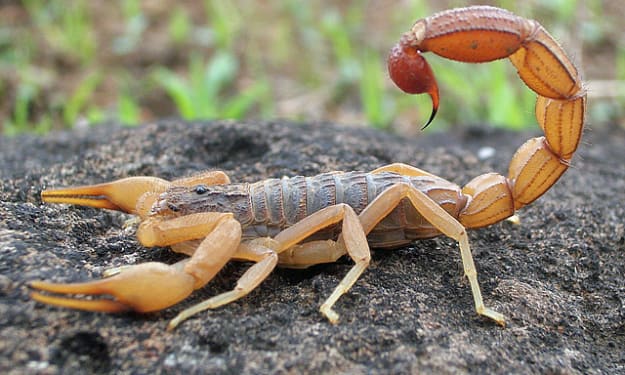
"Scorpions: Nature’s Ancient Survivors with a Deadly Secret"
Scorpions are among nature's most fascinating and mysterious creatures. Not only have they managed to survive on Earth for hundreds of millions of years, but they have also adapted to some of the harshest environments known to man. These venomous arachnids are often feared, yet they are also admired by scientists for their evolutionary resilience and medical potential. Physical Characteristics Scorpions typically range from 8 to 21 centimeters in length, although fossil records reveal that some prehistoric species grew up to half a meter long. Their body is divided into three segments: the cephalothorax (head), the mesosoma (abdomen), and the metasoma (tail). The tail ends in a venomous stinger used for defense and hunting. Their powerful pincers are not only used to capture prey but also to sense vibrations and navigate their environment. Exceptional Survival Skills What truly sets scorpions apart is their incredible survival ability. Scientific studies have shown that a scorpion can survive up to a year without food. This is due to their highly efficient metabolism, which allows them to conserve energy in extreme conditions. Whether in scorching deserts or cold mountain terrains, scorpions have developed biological mechanisms to thrive where few other creatures can. Ancient Origins According to paleontological evidence, scorpions have existed for over 430 million years. This makes them one of the oldest living species on the planet—predating the dinosaurs by hundreds of millions of years. Early scorpions were much larger than today’s species, likely due to higher atmospheric oxygen levels during the Paleozoic era. Their ancient lineage is a testament to their adaptability and strength in the face of changing environments and extinction events. The Power of Venom While scorpions are often feared for their venom, this very feature is turning out to be a treasure trove for modern medicine. The venom contains a complex mixture of neurotoxins and proteins, many of which have shown promising results in the treatment of serious diseases such as cancer, multiple sclerosis, and autoimmune disorders. Scientists have isolated compounds from scorpion venom that target cancer cells without harming healthy ones, leading to experimental drugs and potential future therapies. Venom is extracted in controlled laboratory settings and studied for pharmaceutical applications. What was once seen solely as a tool of fear and defense is now being viewed as a source of healing and hope. Habitat and Lifestyle Scorpions are predominantly nocturnal creatures, hiding under rocks, in burrows, or within crevices during the day and emerging at night to hunt insects and small animals. They are opportunistic predators and can adapt their diet and behavior based on environmental availability. They thrive in arid deserts, humid rainforests, and even mountainous regions. This wide adaptability contributes to their presence across every continent except Antarctica. Cultural Symbolism and Human Interaction Throughout history, scorpions have held symbolic meaning in various cultures. In some Middle Eastern and African traditions, they represent protection and transformation, while in others they symbolize danger and death. In astrology, Scorpio is a zodiac sign associated with intensity and mystery, further emphasizing the scorpion’s deep cultural impact. Despite their sometimes fearsome reputation, scorpions are not aggressive toward humans unless provoked. Only a small percentage of scorpion species possess venom potent enough to be lethal to humans, and even those rarely cause fatalities thanks to medical advancements. Conclusion Scorpions are far more than just venomous pests lurking in the shadows. They are living fossils—ancient survivors of a world that has drastically changed around them. Their ability to endure extreme conditions, survive long periods without food, and adapt over millions of years makes them one of the most resilient creatures on Earth. Furthermore, their venom, once solely associated with fear, is now being studied as a powerful resource for developing life-saving medications. As science continues to explore the hidden potentials of nature’s creatures, scorpions stand as a powerful reminder of how little we still know—and how much we have yet to learn. May we learn to respect these creatures not only for their danger but also for their contributions to the world of science and medicine. And may we all remain safe and protected from the risks of the wild.
By Insect Legendsabout a year ago in Earth
When Earth Was No More
Title: When Earth Was No More When the sky turned crimson and the oceans began to boil, humanity realized they had pushed Earth beyond its breaking point. Centuries of pollution, wars, and unrelenting industrialization had finally caught up. The planet that once flourished with life was now a dying shell. The air grew toxic, food became scarce, and nature once abundant and vibrant—faded into memory.
By Author kelechiabout a year ago in Earth
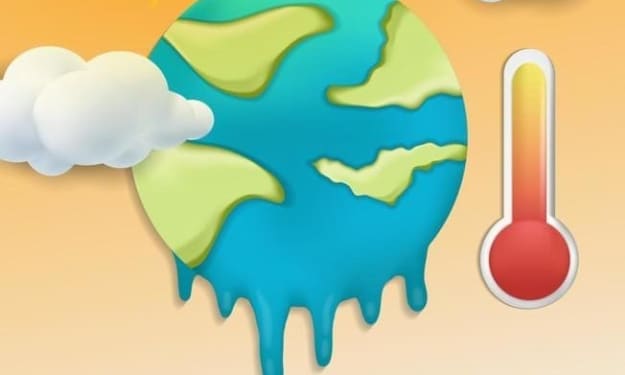
Global Warming: Causes, Effects, and Solutions to Save Our Planet.
Global warming is no longer a teleological mystery—it’s a vital reality that affects our climate, weather patterns, and ecosystems right now. As the Earth’s average temperature rises, the balance of nature is being distorted in an unprecedented way – and we urgently need to learn more about it, to understand the consequences, and to put some practical measures in place.
By Muhammad Hidayatullahabout a year ago in Earth
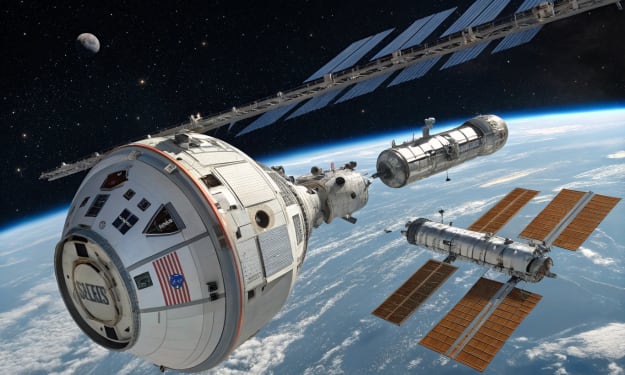
Astronauts Lost Control of Boeing Starliner During Its Docking Attempt with the International Space Station.
Boeing Starliner's Troubling Mission: Thruster Failures, Crisis Management, and the Path to Recovery In June 2024, during the much-anticipated Boeing Crew Test Flight, NASA and Boeing faced a far more critical situation than initially expected. Despite attempts by NASA to downplay the gravity of the situation, the astronauts aboard and the mission control team at NASA's Houston center were dealing with an escalating crisis as the Boeing Starliner suffered multiple thruster failures during its rendezvous with the International Space Station (ISS). The spacecraft, which had already been tested on unscrewed missions, proved unstable when it faced its most critical challenge: docking with the ISS.
By G.M. Rayhanabout a year ago in Earth