Science
Beyond the Stars: How JWST Is Redefining Cosmic Discovery
Floating more than a million miles from Earth, quietly orbiting the Sun at a gravitationally stable point called L2, the James Webb Space Telescope (JWST) is on a mission to uncover the deepest cosmic secrets. Since its deployment in 2021 and first images in 2022, JWST has not only met the world's sky-high expectations—it’s shattered them.
By Manas DAS Class 10 sec a roll 19about a year ago in Earth
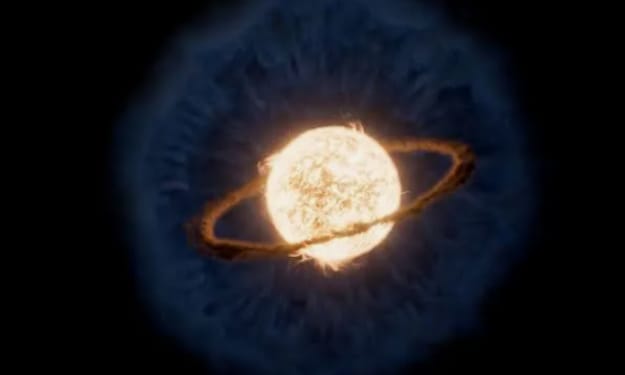
Webb telescope documents final moments of dying alien planet
A dying alien planet's final moments are captured by the Webb Telescope. In a groundbreaking observation that pushes the boundaries of modern astronomy, NASA’s James Webb Space Telescope (JWST) has captured the final moments of a distant alien planet as it spiraled toward destruction. An unprecedented look at the violent processes that control planetary death and the development of solar systems is provided by the discovery. A Planet’s Last Breath
By Kindless Exeabout a year ago in Earth
Pink Micromoon 2025: Date Time and Best Way to Watch April's Full Moon.
Pink Micromoon 2025: Date Time and Best Way to Watch April's Full Moon On Saturday April 12, 2025 skywatchers across the globe will witness a stunning lunar event the Pink Moon which also happens to be the first full micromoon of the year. While the name may suggest a rosy colored moon the “Pink Moon” actually gets its name from the blooming of pink wildflowers (like moss phlox) in early spring especially in North America.
By Adnan Rasheedabout a year ago in Earth
"The Lion and the Wise Monkey"
tnwl--- on Deep within the heart of the Emerald Jungle, where sunlight danced through thick canopies and birds sang their morning songs, there lived a powerful lion named Zubari. Known as the “King of the Jungle,” Zubari ruled the land with strength and courage, and all the animals feared him—some out of respect, others out of pure terror. Not far from Zubari’s territory lived a clever little monkey named Tiko. Unlike Zubari, Tiko wasn’t feared or admired for strength; instead, he was known for his quick wit, boundless curiosity, and mischievous pranks. While the lion prowled the forest floor with his roar, Tiko swung freely through the treetops, whispering jokes to the wind and making even the grumpiest owls chuckle. One dry season, the jungle began to suffer. The rivers thinned, fruits ripened too quickly and fell to the ground uneaten, and the heat made tempers flare. Zubari, used to having his needs met, grew restless. He roared louder and more frequently, demanding the animals bring him food and water. But the jungle could no longer provide as it once had. One day, Zubari wandered near the monkey’s grove, hungry and frustrated. There, in the tallest fig tree, he spotted Tiko, nibbling on sweet fruits and laughing to himself. “You!” Zubari roared, startling a flock of birds into the sky. “Come down this instant! Share your fruit with your king!” Tiko peeked down from the branches, wiped fig juice from his chin, and grinned. “Good morning, King Zubari. I’d love to share—if you can reach me.” Zubari growled. “Don’t mock me, monkey. I command you!” “But you see, mighty king,” said Tiko, still smiling, “mockery is not my intention. I only mean to remind you that sometimes, strength alone cannot feed a hungry belly.” Zubari, too tired to argue, sat beneath the tree. “Then come down and help me. My claws cannot pluck figs, and my roar cannot summon rain.” Tiko looked down thoughtfully. This was not the roaring beast of legends. This lion looked tired. Desperate. Humbled. “All right,” Tiko said. “Let’s make a deal. I will share my food and knowledge of the forest if you promise not to harm any creature who means you no harm.” Zubari hesitated. The lion in him wanted to deny any bargain with a monkey. But his stomach growled louder than his pride. “I agree.” So began an unlikely alliance. Each day, Tiko would guide Zubari to hidden oases, shaded fruit groves, and underground springs. In return, Zubari protected Tiko from snakes and leopards that lurked in the shadows. As weeks passed, the two shared stories—Zubari spoke of ancient lion battles and jungle traditions, while Tiko told tales of wind spirits, dancing trees, and clever beetles who outwitted crocodiles. They began to understand each other. Zubari learned to listen before he roared. Tiko learned that even kings can feel fear and pain. One day, a wildfire broke out on the western edge of the jungle. The flames raced fast, and the wind was cruel. Animals scattered in panic. Zubari and Tiko, caught in the middle, had to act. “Climb on my back!” Zubari roared. “I’ll carry you through the fire.” “No!” Tiko shouted. “The smoke will choke you. I’ll go ahead through the trees and lead you to the river path!” Without waiting, Tiko sprang into the canopy and swung swiftly, signaling with loud calls. Zubari followed the sound through thick smoke and falling embers until finally, they reached the riverbank—just as the fire closed behind them. Exhausted but alive, they watched the fire die down. The jungle would heal, but things had changed. After the fire, the animals of the jungle gathered. For the first time in memory, they saw the lion and the monkey standing side by side, neither dominant nor submissive—just two survivors, two friends. Zubari stepped forward. “My fellow creatures,” he said, his voice calm but strong, “the jungle belongs to all of us. I once ruled through fear, thinking power made me great. But it was Tiko’s wisdom, not my strength, that saved us.” Tiko smiled. “And it was Zubari’s courage, not my tricks, that protected me.” From that day on, the jungle thrived under a new kind of leadership. Zubari became a guardian instead of a tyrant. Tiko served as his advisor, helping resolve disputes with clever solutions instead of tooth and claw. Together, they taught the jungle a powerful truth: strength and wisdom, when united, can build a kingdom far greater than fear ever could. --- tht
By Hazrat umarabout a year ago in Earth
The Bewildering Failure of the Trump DOJ: Where Is the Man Who Was Wrongfully Deported to El Salvador?. AI-Generated.
Man wrongfully deported to El Salvador cannot be identified by Trump DOJ in court. Recently, a judge in the United States expressed concern about the Department of Justice's (DOJ) inability to provide information regarding a man's whereabouts who was wrongfully deported to El Salvador. The case has raised serious questions about the Trump administration’s handling of immigration policy and the subsequent treatment of deportees.
By Akram Muhammad Anzumabout a year ago in Earth
The Earth is 100% round?. AI-Generated.
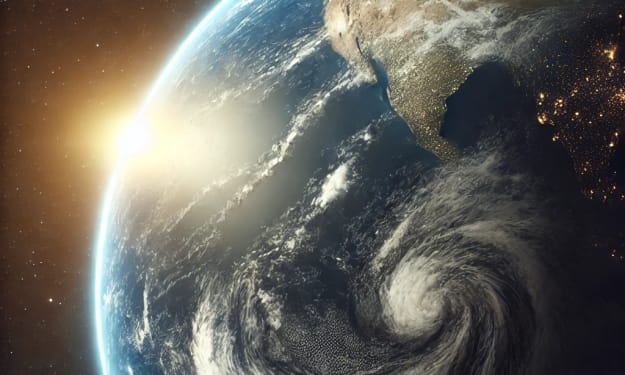
The Earth is frequently portrayed as a flawless sphere—a smooth, round ball effortlessly gliding through the vastness of space. We get pictures of the Earth that show it perfectly circling from early childhood, and our minds are trained to think of it that way. However, the actual shape of our planet is far more fascinating and intricate. Scientifically, the Earth is better described as an oblate spheroid—not a perfect sphere, but slightly flattened at the poles and bulging around the equator. This subtle bulging is caused by the Earth's rotation on its axis. A centrifugal force that pushes outward most strongly at the equator is produced as the planet spins. The equatorial region expands slightly outward as a result of this force, while the poles are gently pressed inward. The Earth's shape changes as a result, becoming slightly wider from east to west and slightly shorter from north to south. Simply put, our planet is like a ball that has been slightly compressed and is rapidly moving through space. To better understand this difference, let us look at some numbers. The diameter of the Earth at the equator is approximately 12,756 kilometers. In contrast, the distance from the North Pole to the South Pole—the polar diameter—is about 12,714 kilometers. Although a distance of about 42 kilometers may appear insignificant, it is significant on a planet of this size. It affects a wide range of scientific disciplines and technologies. Gravity, for instance, is influenced by this shape variation. Gravity is slightly weaker at the equator than it is at the poles, because the equator is farther from the Earth's center due to the bulge. This means a person would weigh just a little bit less in countries like Kenya, Ecuador, or Indonesia than they would at the North or South Pole. Though we do not notice this difference in daily life, it is critical for precision in scientific calculations. Modern satellite and navigation systems also depend heavily on the true shape of the Earth. The Earth's oblate shape necessitates GPS technology, which we rely on for everything from tracking our location to finding nearby restaurants. Positions would be off by several meters or more if it was based on the assumption that the Earth was a perfect sphere. Even the paths of satellites orbiting Earth are planned using precise models of its real shape. The equatorial bulge also plays a role in shaping our planet’s climate. Regions near the equator, such as Indonesia in Asia, Brazil and Ecuador in South America, and Uganda and Kenya in Africa, all lie along this widest stretch of the Earth. These places often receive more direct sunlight year-round, contributing to warmer climates and unique ecosystems. On the other hand, traveling northward toward Canada, Russia, or Norway—or southward into the frozen expanse of Antarctica—means moving along the Earth's slightly shortened vertical axis. Temperature, daylight patterns, and the kinds of plants and animals that can survive in these polar regions are all affected by the colder temperatures and slanted sunlight. The Earth’s seemingly minor asymmetry adds an elegant complexity to the design of our world. From space, the effects of the bulge and compression can't be seen with the naked eye, but they affect the systems that support life. The Earth's unique shape has a subtle effect on everything from the force of gravity to ocean currents, airplane flight paths, and weather satellites' operation. Although referring to our planet as "round" may appear straightforward, the reality is significantly more complex. Earth is not just a spinning globe—it is a finely tuned, living system whose shape, motion, and internal forces are all connected. It is dynamic, functional, and conducive to life in part because of its slight imbalance between the equator and poles. Nature has created a design that is both beautiful and necessary with its gentle curve and quiet tilt.
By Abul kalam azadabout a year ago in Earth
Saturday Night’s Celestial Show: The Full ‘Pink Moon’ and a Rare Micromoon
This weekend, skywatchers are in for a treat as April’s full moon, known as the "Pink Moon," rises on Saturday night (April 20, 2024). But there’s an extra twist—this full moon is also a micromoon, making it a unique celestial event.
By Shahi Sayeba Pritheyabout a year ago in Earth
8 LATEST IMAGES OF BLACK HOLES CAPTURED BY NASA HUBBLE SPACE TELESCOPE
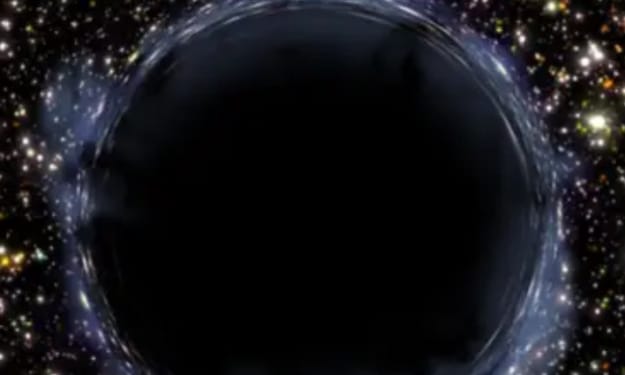
8 LATEST IMAGES OF BLACK HOLES CAPTURED BY NASA HUBBLE SPACE TELESCOPE........ 1. NGC 4951: A Seyfert Galaxy with an Active Core NGC 4951 is a spiral galaxy in the Virgo constellation, about 50 million light-years away. It has a bright, starry spiral structure that surrounds an active galactic nucleus. A supermassive black hole powers this nucleus and accretes surrounding matter, releasing electromagnetic radiation across the spectrum
By Kindless Exeabout a year ago in Earth