Science
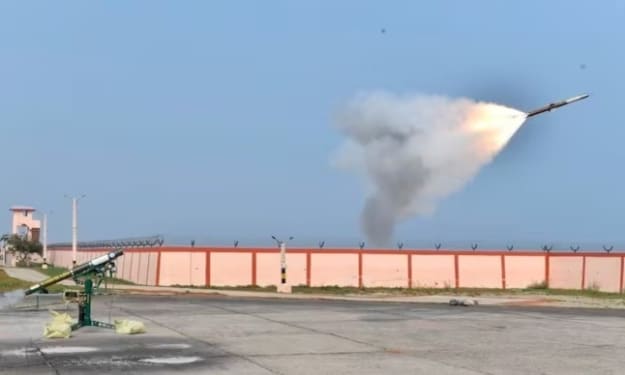
Words of war: What is Surface to Air Missile system?
Words of War: Understanding the Surface-to-Air Missile (SAM) System In the modern theatre of war, dominance in the skies can dictate the outcome of a conflict. As air forces grow more advanced and lethal, so too do the defenses developed to counter them. One of the most crucial elements of any nation's air defense network is the Surface-to-Air Missile (SAM) system. These systems are designed to detect, track, and destroy airborne threats such as fighter jets, bombers, drones, and even ballistic missiles. From the Cold War era to today's high-tech battlefields, SAM systems have evolved into a sophisticated shield that forms the backbone of military defense for many nations.
By Abjol Hussain Laskarabout a year ago in Earth
Swans: The Majestic Symbols of Grace, Survival, and Myth
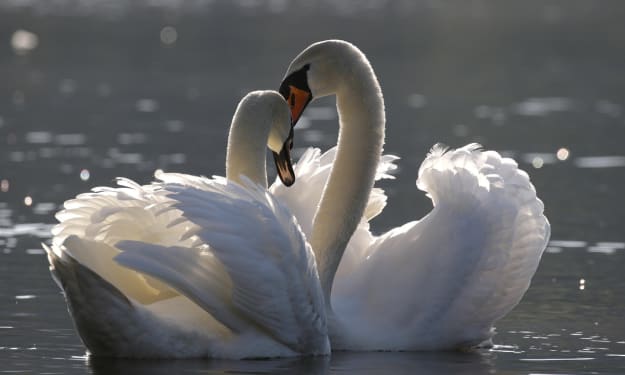
Introduction: The Allure of the Swan Swans have captivated humanity for millennia. With their snow-white plumage, serpentine necks, and ethereal presence, they embody elegance and mystery. But beyond their beauty lies a story of ecological resilience, cultural symbolism, and surprising scientific quirks. From Greek myths to modern conservation triumphs, swans are far more than just "pond ornaments." Let’s dive into their world. --- 1. Biology and Species: The Giants of the Waterfowl World What Makes a Swan? Swans belong to the genus Cygnus (family Anatidae), closely related to geese and ducks . They are the largest waterfowl, with some species weighing up to 35 pounds and boasting wingspans exceeding 10 feet—equivalent to a compact car! . Their elongated necks, equipped with 25 vertebrae (double a human’s count), allow them to forage underwater while keeping their bodies buoyant . Species Spotlight Mute Swan (Cygnus olor): Recognizable by its orange bill and S-curved neck, this Eurasian species was introduced to North America as an ornamental bird but is now invasive, outcompeting native wildlife . Trumpeter Swan (Cygnus buccinator): North America’s largest native swan, once near extinction (only 69 individuals in 1935), now thriving due to conservation efforts . Black Swan (Cygnus atratus): Native to Australia, its striking ebony feathers and red bill颠覆ed European beliefs that all swans were white—a metaphor for the unexpected . Tundra Swan (Cygnus columbianus): A migratory marvel, traveling 4,000 miles annually from the Arctic to warmer wetlands . --- 2. Behavior and Social Dynamics: Love, War, and Family "Till Death Do Us Part" Swans are icons of lifelong monogamy. They form bonds as early as 20 months old, with pairs staying together for decades . While "divorce" is rare (3% in mute swans), they may seek new mates if breeding fails or a partner dies . Their courtship rituals include synchronized head-bobbing and vocal duets—a ballet of devotion . Parenting: Tough Love on the Water Swans are fiercely protective parents. They build massive nests (up to 3 feet wide) near water, with both sexes sharing incubation duties—a rarity among waterfowl . Cygnets (baby swans) ride on their mothers’ backs for safety and stay with their parents for a full year, learning migration routes and survival skills . Aggression: Beauty with a Bite Despite their serene image, swans are territorial warriors. During breeding season, they hiss, flap their wings, and even break human bones to defend nests . In the UK, mute swans are technically still "property of the Crown," a medieval law reflecting their historical value—and tempers . --- 3. Ecological Role: Unsung Heroes of Wetlands Ecosystem Engineers Swans play a critical role in nutrient cycling. By feeding on aquatic plants like watercrowfoot, they prevent overgrowth that could choke waterways. Their droppings fertilize ecosystems, while undigested seeds in their feces promote plant diversity . In the U.S., landowners even "hire" mute swans to deter invasive Canadian geese—a natural pest control . Migratory Impact Tundra swans’ adaptation to eating agricultural waste (e.g., leftover corn) highlights their resilience amid habitat loss. However, this shift risks conflicts with farmers and exposes them to pesticides . --- 4. Cultural Symbolism: From Myths to Modern Media Mythology and Folklore Greek Mythology: Zeus transformed into a swan to seduce Leda, symbolizing divine power and transformation . Celtic Tradition: Swans represented the soul’s journey, often linked to mystical transitions . Native American Lore: Seen as messengers bridging the physical and spiritual worlds . Literature and Art Swan Lake: Tchaikovsky’s ballet immortalized swans as symbols of cursed beauty and duality . The Ugly Duckling: Hans Christian Andersen’s tale reframes swans as emblems of self-discovery . Modern Symbolism Swans adorn national flags (Finland), corporate logos, and even inspire psychological concepts like "black swan theory"—unpredictable, high-impact events . --- 5. Conservation: Triumphs and Ongoing Threats Success Stories The trumpeter swan’s rebound—from 69 to 76,000 individuals—is a conservation milestone. Protected habitats (e.g., U.S. national parks) and bans on lead fishing tackle (a major toxin) fueled this revival . Current Challenges Habitat Loss: Wetland drainage for agriculture threatens 50% of global swan populations . Climate Change: Arctic-nesting tundra swans face melting breeding grounds . Invasive Species: Mute swans disrupt North American ecosystems, sparking debates over culling vs. control . --- 6. Fun Facts to Share 1. Longevity: Wild swans live 20+ years; captive ones can reach 50 . 2. Constellation Connection: The Cygnus constellation mirrors a swan’s flight . 3. Speed Demons: They can fly 60 mph and "run" on water during takeoff . 4. Feather Facts: A single swan has 25,000 feathers—enough to fill a pillow! 5. Silent Flight: Their wing structure minimizes sound, making them stealthy fliers . --- Conclusion: Why Swans Matter Swans are more than just photogenic birds—they’re ecological linchpins, cultural touchstones, and symbols of nature’s fragility. Their survival hinges on balancing human needs with wetland preservation. As climate change accelerates, protecting these majestic birds isn’t just about nostalgia; it’s about safeguarding biodiversity itself. Call to Action: Support organizations like the National Wildlife Federation or local wetland trusts. Share this article to spread awareness—because every ripple of effort helps swans glide into the future.
By Ikram Ullahabout a year ago in Earth
The Bird that holds the rainforest together
When I first told people I was moving to Cairns in Far North Tropical Queensland, most assumed it was because of the Great Barrier Reef. And while the reef is magnificent, my heart was drawn inland—to the rainforest.
By Basil Sargurohabout a year ago in Earth
The Last Message from Mars
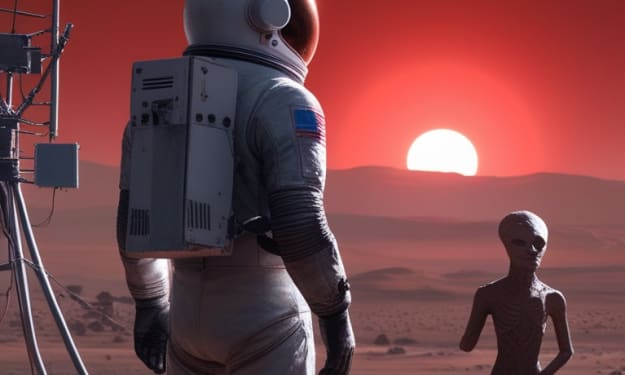
It was Sol 497 on Mars, and Commander Alex Raines had stopped counting the days. He stood alone outside the now-abandoned research station "Ares-7," staring at the dying sun through the red, dust-heavy sky. The landscape was eerily silent—just the hum of his suit systems and the distant whine of shifting sands. His oxygen levels were stable—for now—but his communication system was failing. His only companion was the empty horizon. He was the last survivor. The crew—six of the most elite minds from Earth—had been decimated after a freak storm disrupted the life support systems and caused a partial collapse of the base’s habitat modules. First it was Dr. Liang, then biologist Kara Mendez, and eventually Captain Rhodes himself. They died slowly, painfully, and Alex was left to bury them in the shallow red dirt, marking their graves with broken solar panels. A rescue mission from Earth was out of the question—budget cuts, political gridlock, and global conflict had shut down all interplanetary efforts. NASA had gone dark six months ago. Private channels yielded no response. Alex knew this would be his last transmission. But he couldn’t die without telling the truth. Inside the communication bay, he activated the emergency relay system. The old antennae crackled. A connection blinked green, weak but alive. The terminal screen glowed dimly. "This is Commander Alex Raines of Ares-7," he began, his voice dry and cracked. "If anyone receives this, please know: I am alive. For now. But more importantly, I’ve discovered something." He paused, choosing his words carefully. "Thirty kilometers west of the original landing site, under a canyon ridge, I found structures—clearly artificial. Carvings in an unknown script. Fossils. Not just microbial, but vertebrate. Humanoid." Alex took a breath, his voice shaking. "We were not the first intelligent life here. Mars had a civilization. Maybe they left. Maybe they died. But they were here. And the world must know." He uploaded his findings: high-resolution photos of the stone archways buried under layers of dust, scans showing metal alloys unknown to Earth's periodic table, and skeletal remains shaped alarmingly like human ancestors. Static swallowed part of his message. He punched the console. "I'm uploading visuals, coordinates, and scans. These are the last acts of a dying man. Please… don’t let this be forgotten." He ended the transmission. Outside, the Martian night fell quickly. The sky turned a deep violet, the stars shockingly close. Alex returned to his pod, watching the constellations shift slowly. He thought of his daughter, who would be twelve now. He had promised her he’d return. That promise had become his curse. He recorded a separate message for her, even if she never heard it. "Hey kiddo... It's Dad. I saw you in my dream today, building a rocket out of Legos. Remember when you said you'd fly here one day? Maybe you still will. Maybe someone will. I love you more than all the stars." Days passed. Then weeks. Rations dwindled. Power reserves fell into the red. The pod's heating systems failed. He wrapped himself in emergency foil, reading an old digital copy of Carl Sagan's Cosmos over and over. The words gave him comfort, but not warmth. One morning, as Alex drifted into half-consciousness, a blinking light appeared on the comms panel. A message. "Received. Data confirmed. Hold position. Rescue en route." Alex blinked. Could it be real? Or just a hallucination, a dying mind’s final comfort? He scrambled to the window, heart pounding. In the distance, over the Martian horizon, something flickered. Not a storm. Not static. Lights. As the hours passed, the lights grew brighter. Then came the rumble—the unmistakable vibration of descending thrusters. A sleek, unfamiliar craft breached the sky, coated in a metallic sheen unlike anything he’d seen. It wasn't Earth-made. His mind reeled. Was this the original Martian civilization returning? A different species answering his call? Or a black-ops project Earth had buried? The craft landed silently. A hatch opened. Silhouettes emerged—tall, humanoid, but not human. One raised a hand in greeting. Alex stepped forward, trembling. He realized then: his message had reached someone. Not Earth—but someone. And maybe, just maybe, Mars wasn’t done telling its story. Part 1: Solitude It was Sol 497. Commander Alex Raines had long stopped counting. Time on Mars felt different—slower, heavier. He stood outside the silent skeleton of the research station Ares-7, watching the dimming sun struggle through the thick red haze. The only sounds were the gentle hum of his suit and the whisper of Martian winds. There had once been life here—laughter, arguments, science. Six of Earth’s finest minds. But that was before the storm. A rogue electrical event had ripped through the atmosphere, frying life support, collapsing part of the habitat. One by one, his crewmates succumbed. Dr. Liang. Biologist Kara Mendez. Even Captain Rhodes. Each death had carved a hollow into his soul. He buried them in the dust, using broken solar panels as headstones. Now he was the last. No rescue would come. Earth was too broken—war-torn, disinterested. NASA had gone dark. Private channels returned static. The interplanetary dream had died with its dreamers. Part 2: The Discovery But Alex couldn’t let the truth die with him. He returned to the comms bay and booted the emergency relay system one last time. The antenna groaned to life, flickering weakly. A faint green glow blinked on the screen. A thread of hope. "This is Commander Alex Raines of Ares-7," he said, voice hoarse and dry. "If anyone receives this, know that I am alive. For now. But more importantly… I’ve discovered something." He took a breath. "Thirty kilometers west of the original landing site, beneath a canyon ridge, I found ruins. Structures that weren’t natural. Symbols etched into stone. Fossils—not microbial. Vertebrate. Humanoid." His hands trembled as he uploaded the data: high-res images of stone archways half-buried in dust, spectral scans of alloys unknown to Earth’s periodic table, and skeletal remains eerily similar to early hominids. "We were not the first. Something lived here. Intelligent. Advanced. Maybe they left. Maybe they died. But they were here. And the world deserves to know." Part 3: The Final Days Mars fell silent once again. Alex retreated to his pod, wrapped in thermal foil, surviving off ration crumbs and memory. He read Cosmos by Carl Sagan over and over, finding solace in the poetry of science. He recorded one final message—for his daughter. "Hey kiddo… it's Dad. I dreamed of you today. You were building a rocket out of Legos, remember? You said you’d come to Mars one day. Maybe you still will. Maybe someone will. I love you more than all the stars." The days blurred. The power dipped into red. Heating failed. The pod grew colder than death. And then—light. Part 4: Contact A blink on the console. A message: "Received. Data confirmed. Hold position. Rescue en route." Alex stared at the words, numb. Was it real? Or a hallucination, a dying mind’s farewell dream? Then he saw it—on the horizon. A shimmer. Not a storm. Not static. Lights. They grew brighter. A low hum filled the air. The ground vibrated. Something was descending—sleek, silent, and unlike any Earth-made craft. The ship touched down, graceful as a dream. Metallic, dark, smooth. A hatch hissed open. Silhouettes emerged. Tall. Humanoid. But… not human. One figure raised its hand in a gesture of peace. Alex stepped forward, heart pounding, breath shallow. His voice cracked: “Who are you?” And the answer came—not through ears, but inside his mind. "We are those who left… and those who returned. You called. We answered. You have awakened a memory buried in red silence." Tears welled in Alex’s eyes. He wasn’t alone anymore. Mars still had stories to tell.
By Abdul Rahman about a year ago in Earth
The Secret of Ember Island
Lina Malik was only 14 when she had devoured all the adventure novels in her grandfather's old bookroom. She grew up in a sleepy seaside town, but her imagination was filled with jungles, pirate vessels, and lost cities. But dreams do not usually come true until stormy summer.
By Hizb Ullahabout a year ago in Earth
Researchers say universe may end sooner than anticipated.
The universe has been a subject of curiosity for mankind since its beginning. Thinking and researching about the fate of the universe is a universal subject for mankind. Although different studies have said different things at different times, recent studies are revealing that the destruction of the universe is much sooner than we thought.
By Md Minhazur Rahmanabout a year ago in Earth