Science
The Moon: A Mysterious Companion
The Moon—one of the most familiar and captivating objects in the night sky. Since childhood, we’ve heard countless stories, poems, and songs inspired by it. However, the Moon is not just a subject of imagination; it is a scientific wonder as well. Every fact we learn about the Moon opens a new door to understanding space. In this article, we’ll explore the Moon’s formation, history, scientific features, and modern research related to it.
By Fahim Rahmanabout a year ago in Earth
Are We Losing Our Minds to Machines?. AI-Generated.
We are living in a time where machines are not just calculating or computing—they're thinking, creating, and expressing. From AI-generated novels and movies to digital paintings and virtual influencers, the line between human imagination and machine output is blurring faster than anyone expected. Artificial Intelligence (AI) is changing every aspect of our lives, but the most surprising impact may be the one happening deep inside us—in our minds, our creativity, and our sense of purpose. So here’s the question that should concern us all: Are we, in our excitement over AI’s power, unknowingly trading our own creative identity for convenience? Let’s dive deeper. AI: The New Creative Genius—or Just a Tool? Not long ago, creating something beautiful—a painting, a song, a short film—required hours of skill, emotion, and patience. Today, AI can do it in seconds. Type a prompt like “A futuristic city in the style of Van Gogh”, and tools like Midjourney will give you a masterpiece. Want a business name? A book idea? A catchy social media caption? ChatGPT, Gemini, and other AI platforms have it covered. It feels like magic. But the question is: at what cost? Because as machines become better at creating, we need to ask: what’s left for us to do? A World Full of Content—but Lacking Soul We scroll through endless AI-generated posts, videos, music—and while they may look perfect, something feels off. That missing piece is human depth. AI can mimic style. It can follow patterns. It can learn from millions of examples. But what it cannot do—at least for now—is feel. It doesn’t know what it means to lose someone, to fall in love, to face rejection and still keep going. It doesn’t have memories. It doesn’t dream. Human creativity is not just about the final product. It’s about the process, the emotion, the flaws, and the stories behind the creation. A poem written at 3 AM after a heartbreak is not the same as one generated by a prompt. We must not confuse content with connection. What Happens to the Artist Now? The most affected group is perhaps the one we least expected: creators. Writers, designers, illustrators, filmmakers, musicians—they all feel the ground shifting beneath them. AI tools are doing the jobs that used to be human-only, and they’re doing them faster, cheaper, and often—better, at least on the surface. This isn’t just an economic challenge. It’s a deep emotional one. Creative people don’t just work for money. They create because it's who they are. It gives them meaning. So what happens when a machine can do it better? Some are adapting. They’re using AI as a tool to enhance their work. Others are scared. Some are giving up. And many are asking: if my ideas can be copied by a machine, am I still original? Am I still needed? The Value of Human Stories Here’s the good news: yes, you are still needed. More than ever. Because machines don’t live. They don’t struggle. They don’t grow up in villages or cities. They don’t experience culture, love, loss, migration, faith, or conflict. Humans do. And those experiences are irreplaceable. The most powerful art, stories, and ideas still come from real life. From pain. From joy. From identity. What you bring as a human—a unique perspective, an emotional truth, a lived experience—cannot be programmed. So instead of fearing AI, use it. But never forget that your voice is still the heart of the message. Education Must Catch Up To protect human creativity, we need a serious shift in how we teach and learn. Right now, many schools are banning AI tools. But that’s short-term thinking. AI is not going away. In fact, it's only going to become more present in our lives. What we need is education that: Teaches students how to think, not just what to think Helps them ask better questions, not just give correct answers Encourages original thinking, emotional intelligence, and ethical awareness Young people need to learn how to work with AI without losing their own ideas. They need to understand when to rely on it, and when to trust themselves instead. This is the only way to ensure that the next generation grows up as creators, not just consumers. Don’t Be Afraid to Be Imperfect One of the biggest dangers of AI is its perfection. It can produce flawless grammar, perfect proportions, and ideal lighting. But that’s also what makes it lifeless. Human art is powerful because it’s imperfect. Because it’s messy. Because it’s full of doubt, struggle, and raw feeling. Don’t try to compete with the machine’s perfection. Compete with its lack of emotion. Create what a machine can’t: vulnerability, humor, chaos, unpredictability. That’s where your true power lies. AI Is a Mirror—Not a Master In the end, AI is just a mirror of us. It reflects back what we’ve already said, done, and created. It does not dream of the future—it simply rearranges the past. So the real danger is not AI taking over. It’s us forgetting who we are. We must not hand over our voices, our vision, or our values in exchange for convenience. We must stay curious. Stay passionate. Stay human. Let AI be the tool. But you be the story. Final Thoughts: The Future Is Still Ours The AI age is not something to fear—it’s something to face with wisdom. We stand at a crossroads. One path leads to a world filled with machine-made content that all looks the same. The other leads to a world where technology empowers humans to go deeper, be braver, and create more honestly than ever before. The choice is ours. Because in a world of artificial everything, the most valuable thing you can be—is real.
By RafiBinYousafabout a year ago in Earth
NASA Calculated When Life Will End on Earth: Here’s Our Deadline. AI-Generated.
NASA Calculated When Life Will End on Earth: Here’s Our Deadline The question of how long life will continue to exist on Earth has long intrigued scientists, philosophers, and the general public. While theories about Earth’s end span everything from nuclear war to climate disasters and cosmic collisions, NASA has recently contributed a more scientifically grounded estimate for when life on Earth might ultimately cease — and it’s more chillingly plausible than science fiction.
By Adnan Rasheedabout a year ago in Earth
NASA Researchers Discover What Happened to Mars’ Water. AI-Generated.
NASA Researchers Discover What Happened to Mars’ Water For years, scientists have been puzzled by a pressing question: if ancient Mars once had vast oceans, rivers, and lakes, where did all that water go? New research from NASA may finally be solving this Martian mystery.
By Adnan Rasheedabout a year ago in Earth
China and Russia Sign Landmark Deal to Build Nuclear Power Plant on the Moon. AI-Generated.
China and Russia Sign Landmark Deal to Build Nuclear Power Plant on the Moon China and Russia join forces to build a nuclear-powered lunar base by 2036, challenging U.S. dominance in space exploration and paving the way for long-term human presence on the Moon.
By Adnan Rasheedabout a year ago in Earth
Trump’s Middle East Tour: The Untold Strategic Depth Behind the Diplomatic Show
Introduction: More Than Just a Photo Op When former President Donald Trump embarked on his first international trip to the Middle East in May 2017, the White House presented it as a ceremonial visit—a gesture of goodwill to Muslim allies and a symbolic stand against extremism. Yet, beneath the carefully choreographed handshakes and grand speeches, the tour was a meticulously planned geopolitical maneuver that reshaped U.S. strategy in the region.
By Paradox 269about a year ago in Earth
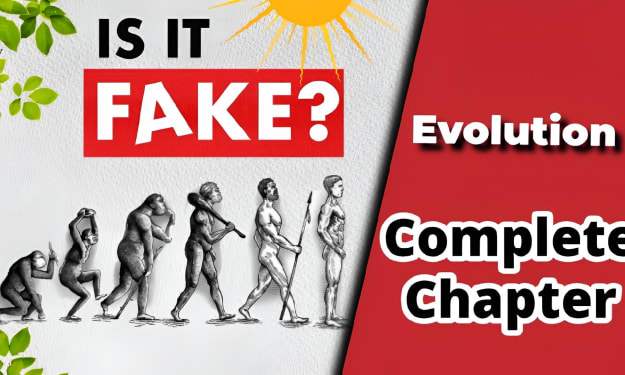
Evolution: Nature’s Timeless Artist . AI-Generated.
From the depths of ancient oceans to the towering skylines of modern cities, the story of life on Earth is one of transformation, resilience, and astonishing complexity. At the heart of this grand narrative lies evolution — nature’s silent, patient process that has sculpted every living being on our planet. The Meaning of Evolution Evolution is not merely a scientific term; it is the rhythm of nature, the unfolding of life’s story over billions of years. It is the process through which simple organisms became complex, where a single cell gave rise to whales, trees, butterflies, and even humans. Far from being a theory locked away in textbooks, evolution is a living truth written into every strand of DNA and every fossil buried beneath our feet. The Dawn of Life Life began nearly 3.8 billion years ago, not with a roar but with a whisper — a microscopic cell floating in Earth's primordial oceans. It was humble, fragile, and unaware of the epic journey it was about to embark on. This cell, through time, adaptation, and countless changes, multiplied, diversified, and evolved. Through a slow dance of trial and error, of extinction and survival, life morphed — fish developed limbs and crawled onto land, reptiles gave rise to birds, and mammals learned to walk upright and think. Charles Darwin and the Turning Point Though the process of evolution had been ongoing for eons, it was in 1859 that a man named Charles Darwin gave it a name and a framework. In his groundbreaking book On the Origin of Species, Darwin introduced the concept of Natural Selection — the idea that nature selects the traits best suited for survival, allowing those individuals to reproduce and pass on their characteristics. Darwin’s ideas were revolutionary. He did not just propose how species changed over time; he showed why and how some species thrived while others vanished. The Evidence for Evolution Today, we are no longer limited to theory. We have overwhelming scientific evidence that supports evolution: Fossils, which serve as nature’s photo album, capturing extinct species and revealing transitional forms. Comparative anatomy, which shows that the bone structure of a human hand is eerily similar to that of a bat’s wing or a whale’s flipper — a sign of shared ancestry. DNA evidence, which reveals deep genetic links between all living beings. For instance, humans share approximately 98.8% of their DNA with chimpanzees. Embryology, which shows that the early development of fish, birds, and humans look remarkably alike — a hint at a common beginning. The Evolution of Us: From Apes to Architects Human evolution is perhaps the most fascinating branch of this great tree of life. About six million years ago, our ancestors began diverging from the common ancestor we shared with modern apes. Walking upright, crafting tools, discovering fire, and developing language — these were not random leaps but part of a long journey shaped by survival and adaptation. Species like Australopithecus, Homo habilis, and Homo erectus paved the way for the emergence of Homo sapiens — us — around 300,000 years ago. We are the only species to look up at the stars and wonder, "Where did we come from?" Ironically, it is evolution that answers that question. Science and Faith: Conflict or Conversation? For some, the idea of evolution appears to challenge religious beliefs about creation. Yet, many thinkers — religious and secular alike — see no contradiction. While science explains the how, religion often seeks to explain the why. Many believe that evolution could very well be the method through which a divine power chose to shape life — an ongoing, majestic act of creation still unfolding. Why Evolution Matters Today Understanding evolution isn't just about knowing the past — it's about navigating the future: In medicine, it helps us understand how bacteria evolve resistance to antibiotics. In agriculture, it allows us to breed stronger crops and protect biodiversity. In climate science, it helps us predict how species might adapt — or fail to adapt — to a changing planet. Conclusion: A Story Still Being Written Evolution is not over. Even now, as you read this, life continues to change, adapt, and evolve. We are not the final chapter — perhaps only a compelling paragraph in a story that began long before us and will continue long after. To understand evolution is to connect with the pulse of nature, to hear the music beneath the silence, and to realize that every living being — from an ancient fern to a newborn baby — is part of one grand, unbroken chain of life. Evolution is not just the story of how we got here. It’s the story of what we are.
By RafiBinYousafabout a year ago in Earth
Scientists Find Significant Amounts of Water Hidden Beneath Mars’ Surface. AI-Generated.
Scientists Find Significant Amounts of Water Hidden Beneath Mars’ Surface In a groundbreaking discovery that could redefine our understanding of the Red Planet, scientists have uncovered significant amounts of water hidden beneath Mars’ surface. The revelation, made through a combination of satellite data, radar imaging, and surface analysis, has reignited hope for the possibility of life on Mars — past or present — and opened new doors for future human colonization efforts.
By Adnan Rasheedabout a year ago in Earth
The House That Waits
He had heard the rumors for years. Whispers among the villagers of a crumbling, mute structure standing at the edge of Blackwood Forest—a house long abandoned, its windows like hollow eyes watching the lonely road. Tonight, drawn by some irresistible force, Martin Crowley decided to see it for himself.
By Abdulrehma about a year ago in Earth