Nature
WILD LIFE
According to the International Union for Conservation of Nature there over 19,000 species currently threatened with extinction and the problem is only getting worse. let's begin with the basics as a little knowledge can go a long way this is a rare opportunity to study an endangered species the IUCN Red List shows an upward trend in the number of endangered animals since it was first released on the world wide web in the year 2000 one in four mammals one in eight Birds one-third of all in FIB Ian's and around 70% of the world's plant life are reportedly under significant threat of extinction and while statistics differ depending on the source the numbers routinely make for harsher reading every year by taking an interest in the problem you begin to help solve it and you don't have to tackle the whole world's issues either check out local initiatives to make a difference closer to home can I block it what a berry goes out to cut a very neat - number 9 reduce the threat of invasive species an invasive species is any non-native plant or animal entering into an environment and unbalancing it in some way especially behaving in a way that we're not used to they're doing things the ecosystem that we're not completely sure what kind of effect is going to be yet the problem which is commonly caused by mistakes in international trade and transport these foreign species disrupt settled ecosystems either as an unwanted predator by spreading disease or by simply of numbering other species over time you've heard of the pine beetle problem those pine beetles used to be killed by the cold winters but there are fewer days of frost and so the pine trees are being devastated intentional actions can also cause an invasion such as in 1930s Australia when cane toads were introduced to control the cane beetle only see the toads overrun the country itself we got a total of 34 females out of the system versus 26 miles which means you know it's less eggs particularly for the fully matured toads the problem naturally becomes increasingly difficult to manage but by tightening transport procedures and safety measures some invasions can be avoided you make it sound like we're under attack everywhere we are under attack everywhere number 8 raise awareness it's amazing what a little word of mouth can achieve and one of the best ways to help endangered species is to keep talking about them if you know about an animal's plight or the worrying status of a tree species then impart your wisdom onto others it doesn't have to be much and you don't necessarily need to be collecting donations just spread the word but I'm terribly sorry but it's against our cream to do harm to any living creature our mission is to help endangered species of course the onus is on the authorities as well to ensure that endangered animals is a topic regularly covered in school and the animal protection laws are clear and routinely brought up in government. Number 7 say no to pesticides and chemical fertilizers we have some scientific evidence now showing that there is a clear relationship between insecticides and B losses the temptation to use herbicides and pesticides in the agricultural industry is huge to the point where many growers see it as a necessity a key issue for him will be how to maximize his yield and minimize his losses to pests while herbicides ensure that no one wanted vegetation grows on or near crop pesticides ensure that unwanted critters aren't eating it the use of chemicals on farmland is subject to a wide range of laws all around the world and some substances are deemed less harmful than others those that we expose to both pesticides consistently perform the most poorly in all of our measures but their toxins pose an everyday risk to ecosystems and sometimes to us as consumers nearly all the teas we test have pesticide residue half of them with amounts exceeding maximum levels set in Canada where possible try to eat organically farmed produce it may cost a little extra and sometimes look a little strange but it's way better for the environment. Number 6 recycle we've gotta learn to reduce reuse recycle reduce reuse recycle louder according to Endangered Species International we use around 260 million tons of plastic annually plastic accounts for around 60 to 80 percent of marine debris and some plastics remain in the environment for hundreds of years animals injure themselves on our trash everyday or unknowingly ingest it and floating plastics can even be linked to the spread of invasive species mentioned earlier at the very least don't litter hey schmuck face you want to tell me what you're doing littering on my street but recycling is one of the simplest things you can do to help the environment but almost anything can be recycled that can be broken down into a single material if more people recycled fewer products would be needed less energy would be used making those products less space and fuel will be required and fewer animals would be displaced it's a chain reaction and you can play your part by reusing and recycling you see humans and animals can live in harmony. Number 5 build a wildlife garden and even making your own mowed and greening up your decking which basically means planting plants across areas whether it's in concert this one is achievable on a large or small scale in an ideal world we'd all like to plants wads of new trees which would be great but not always possible however what is possible for anyone with a little spare space is a wildlife garden the UK Wildlife Trusts estimates that there are 16 million gardens in Great Britain if every one of those provided a service to the natural world think how beneficial it could be replace stark fences with lush hedges build a pond to attract insects provide higher ledges to attract birds and hold back on the weed killer then sit back and watch nature thrive outside your window crazy little mini habitats around your garden and enriching it with flowers for bees and butterflies and burying plants or shrubs for birds number four volunteer at a wildlife agency RSPCA all creatures great and small there are plenty of admirable projects going on all over the world that needs your services but you don't always need to be on far-flung frontlines saving orangutangs in Borneo to make a difference wildlife agencies and initiatives require help and support at all stages the UK's Royal Society for the Prevention of Cruelty to Animals or RSPCA relies on volunteer administrators drivers photographers and public speakers just as much as those who help directly with animal care it's also the oldest and largest organization of its kind by volunteering at a wildlife agency not only are you helping to protect endangered species but you're also developing yourself as an individual it's win-win this is the definitely the most satisfying part and the bit I enjoy the most say this makes it all worthwhile really number three set up a sponsorship and make donations to charity here's where you can help endangered species and have a lot of fun at the same time why would you do that what's a charity thing no sponsorships are a great way for people to raise funds without causing too much disruption to their daily lives and there's usually two main ways of getting noticed in getting donations either do something that's really difficult or something that's really crazy run a marathon or wear your clothes backwards for a week your shirts inside out what your shirt it's in set out climb a mountain or cut off all your hair but be sure to keep the focus on the cause we're gonna have to raise money fast I'll drum up small-scale stunt work at birthday parties we're talking escape tricks fire-breathing any please the rugrat it's not about you it's about rebuilding animals lives and restoring habitats across the world number two stop purchasing products made from endangered animals to figure out how we got here we have to turn back the clock to the 1970s and 80s when the demand for ivory first skyrocketed this may seem a little obvious but illegal trade is an ongoing international problem basically for wildlife criminals the tiger is worth more dead than alive broken down into all its body parts package shipped and sold in two different component commodities and sometimes the legislation gets confusing between one nation and another the World Wildlife Fund has a buyer beware guide on which it implores tourists not to buy ivory either raw or carved any Tiger rhino or sea turtle product or any live monkey or ape among other things the list also advises against purchasing crocodile or snakeskin products live birds wild feathers and orchids common sense rules to a certain degree though if it looks as though a plant or animal may have been needlessly killed to make it then don't buy it before we unveil our topic here are a few honorable mentions Brian look out dog Dubai cat yep I'm very excited you seem it so what's all this I'm assuming there's nothing left in the store actually there are a number of things left no I meant you seem to be buying a lot of stuff number one enjoy a low-impact diet we may sometimes feel a little insignificant and wonder what we can really do to help an endangered species so far removed from our everyday lives but change really does begin at home tad would you like some mixed vegetables hell no yeah what did you say I said I don't want any damn vegetables all right that's it young man we all eat every single day and we can make a difference with our diets use natural products and meals and try to source them locally stop wasting food and cook in one pan using as little energy as possible grow an herb garden of your own and support local businesses rather than big often unreliable brands there are a few things more satisfying than a meal that you know has had minimal impact on the environment on the natural world and on endangered species she can hear vegetables and fruits say oh she can eat Freight fruit thia um any kind of fruit do you agree with My list how else can we help endangered species.
By Bestwrites3 years ago in Earth
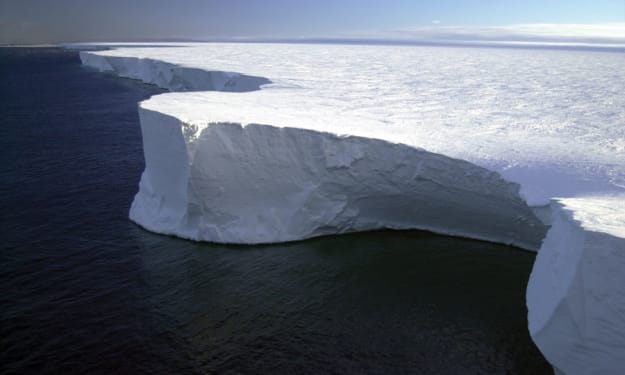
Reason behind Antartica ice wall
Antarctica is larger than the USA and Mexico combined and yet we still know next to nothing about what's hidden behind its menacing ice walls so what's actually lurking down near the South Pole well Gold spurting volcanoes human skulls and blood flowing waterfalls for starters folks dress warm because we're about to find out even more bones it might seem like Antarctica is nothing but ice ice and up did we mention ice but if we rewind the clock back to 71 million years ago lifeless flourishing there is no polar icecaps it was far warmer than it is now and Antarctica was reminiscent of a prehistoric Jurassic Park with dinosaurs strolling around alongside a range of other animals how do we know this well back in 2016 a team of researchers stumbled across a huge finding on James Ross island which is right about here now it wasn't pieces of the Titanic because that actually sank in the North Atlantic on the other side of the world it was in fact a ton of preserved bones these bones now considered fossils were analyzed and declared to be anywhere between 71 and 67 million years old most of them were related to ancient duck like creatures but don't you worry of course there were dinosaur bones to remember the Mosasaurus from Jurassic world well yeah they found evidence of that old beast floating around a human skull jump in the time machine skip back a few decades further and scientists actually discovered something even more intriguing a human skull yep back in 1985 researchers came across a human head which was thought to have been from the early 1820s making it one of if not the first landing in Antarctica we say landing because it supposedly belonged to an indigenous woman from southern Chile and was found right about here Yamata beach at Cape sheriff on the South Shetland Islands so you get the idea Antarctica isn't just ice and penguins it's a bone riddled graveyard as well mountains under the ice we're well aware of the immense amount of ice that covers Antarctica these days right the continent boasts around 90% of the planets freshwater ice with a 99% of the landmass being made up from two enormous three mile thick sheets of the stuff all up crossing roughly 5.4 million square miles that's like the contiguous United States three million 119,000 sorry Hawaii in Alaska not this time plus Argentina 1,100,000 Kazakhstan 1 million and France two hundred ten thousand 26 all rolled into one with a landmass that enormous you're probably thinking that there must be more to the story and you're right there is amazingly there's actually loads more to find including a mountain range but we're not talking about the Transantarctic mountains or Mount Erebus we're talking about the gambits of mountain range which is ready for it sneakily hidden away underneath the ice scientists actually discovered it back in 1958 when suddenly found themselves on thin ice within an area where it was supposed to be miles thick that the peaks below were discovered to be 9,000 feet high and close to 750 miles in width whoever thought that an entire Mountain would be good at hide-and-seek huh crystal spewing volcano you know what else is hiding behind that intimidating Antarctic ice wall a volcano that spurts of crystals whenever it darn well feels like it that's right Mount Erebus which is the second highest volcano in Antarctica and the southernmost active volcano on earth actually shoots out crystals from its central vent and has been doing so since way back in the 1970s these little crystals are called in North oklet's and look like this but they're not the only magic happening at this mysterious mountain American geologists have also found tiny crystals of metallic gold and nearby snow measuring up to 0.02 millimeters so like teeny tiny sadly though it's not enough to make us stinking rich any time soon the mountain only spurts about 80 grams of gold a day and considering that it covers a huge area with a peak of 3,700 94 meters good luck finding those microscopic specks but how is this even possible well Mount Erebus being you know a fiery volcano creates lava it's also one of the three permanent lakes of molten lava in the war that hot as heck lava amid searing gas and one of the elements in that gas is gold hallelujah when that gas makes contact with the icy air the temperature of the gas drops cooling from over 1,000 Celsius to under 100 Celsius creating tiny solids this entire process happens within a couple meters of the lava pool right speaking of gold want to know how much yours could be worth in the future check this out then the blood-red waterfall waterfalls are generally clear correct sometimes they can be a little brown if the water is muddy or white if the water is crashing hard but you know what they're usually not red waterfalls are not red ha well actually that's wrong in reality behind that ominous Antarctic wall of ice they are say hello to the appropriately named blood falls over at Taylor glacier located right about here take one look at that color and it's ominous bubbling and you'll understand how it got its name but what's the deal surely this isn't the aftermath of a gladiator battle or a massacre on ice thankfully there's nothing menacing going on over here the color is totally natural scientists initially thought that it was due to a collection of red algae from though because that sense been disproven after knocking their heads together and scanning the area beneath the falls researchers finally figured out that it was all thanks to a network of rivers and a glacier down under the ice surface all of which had flowing water that was abnormally high in iron it was the iron that caused the reddish tint hold on a second how can there be a flowing waterfall when the temperatures down there colder than my ex-girlfriends hard but well it's because those underground waters have a composition that includes a high level of salt water which by the way has a much lower freezing point compared to regular water so the high salt level combined with the iron is the reason why the blood falls don't freeze despite it being well below freezing temperatures at a mere 1.4 degrees Fahrenheit around negative 17 Celsius striped icebergs moving on most of the time the iceberg down in Antarctica are either snow capped in white or have a clear turquoise color reflect the water in sky but that makes plenty of sense you know it doesn't though green icebergs and black icebergs and royal blue icebergs yeah weird isn't it well they exist in incredibly they're actually rather common down near the South Pole these colors aren't just solid blocks of ice that looked like they've been mixed with some home brand food dye nope the colors usually appear in striped patterns it might seem crazy but it's actually true and there's a very simple explanation for it it's all due to the particular elements that were present in the water when they froze frozen water with algae becomes green grows and meltwater becomes blue and frozen water lined with the various sediments usually becomes black have you ever found a fly frozen in your ice cube tray similar concept to ATMs coming in way out of left field let's give a quick shout out to the two solitaire ATMs living in solitude down in Antarctica over at the McMurdo Station which is the largest scientific Basin across the entire region there is actually a shred of civilization wait how it sounds nuts but where do you think the researchers hang out when they're not climbing up Mount Erebus or playing tag with the Penguins McMurdo is home to some coffee shops a general store a post office and a few other bits and pieces and what do you need to buy things at these stores money since 1998 that pair of Wells Fargo ATMs have been the only means of withdrawing cash people might not venture down into Antarctica's icy abyss very often however that doesn't mean that it's a lifeless desert wait desert yeah you heard us right it might not have the sands of the Sahara man you wouldn't think a place largely covered in snow and ice would be dry but huzzah that's the case with Antarctica it's actually the try ass play Sun planet earth officially classified as a cold desert anyway where were we oh yeah life in the desert there are a number of endemic animals crawling swimming skating and hopping around the area some of which are cuddly and some of which are creepy and vicious all mostly hidden beyond the ice wall animals first off we've got the strange potentially scary yet definitely ugly sea pigs these so-called slugs of the sea have often been called the ugliest creature beneath the waves and it's not hard to see why then we've got our sea spiders these little critters can actually be found in other locations around the world however they're generally at sea Betsy growing up to a mere one millimeter in size in the Antarctic however things have taken a nightmarish turn Mother Nature has really outdone herself this time creating a concept called polar gigantism which effectively turns these teeny tiny sea spiders into pants wedding shriek inducing Sea Devils growing enormous ly to have a leg span of ten inches or 25 centimeters no thank you far friendlier are the emperor penguins phew these cute as a button birds are the largest of all species of penguin growing up to 45 inches and weighing up to 45 kilograms and in that bitterly cold weather we don't blame them for putting on a few extra pounds the chinstrap penguins by comparison are a little smaller but still just as cute rounding out our list of things hidden behind that menacing Antarctic wall we've got the enormous bird that is the wandering albatross with a captivating blue whale which is the largest animal ever known to have existed the killer whale aka the Orca which has actually rather friendly to humans and finally perhaps Antarctica's most violent creature of them all any guesses no not polar bears there they're the ones that go up in the north it's the leopard seal well that's all for what's really hiding out down in Antarctica do you want to visit there let us know in the comments make sure to like this video subscribe to the richest and join our notification squad thanks for watching and we'll see you next time
By Jashan sohi3 years ago in Earth
Exploring the World's Most Dangerous Destinations
Introduction As adventurous travelers, we often seek to explore the wonders of our planet. However, some places are best left unexplored due to their extreme dangers. From lakes that can kill you in an hour to islands filled with deadly creatures, these destinations are not for the faint-hearted. Let's journey through these treacherous locations and discover the reasons why they are infamous for their perilous nature.
By Lorelei Medel3 years ago in Earth
Extreme Weather Unmasked: The Reality of Climate Change Cannot Be Ignored
Introduction In recent years, the world has witnessed an alarming increase in extreme weather events, such as hurricanes, wildfires, floods, and heatwaves. These catastrophic occurrences not only disrupt lives and economies but also demand urgent attention to their underlying causes. While some may argue that discussing climate change during these events is inappropriate or opportunistic, it is essential to recognize that extreme weather events are, in fact, precisely the time to talk about climate change. This blog will shed light on why addressing climate change during such crises is crucial and how it can lead to meaningful action. Join the conversation and share your thoughts in the comments section below.
By Ravinder Kumar3 years ago in Earth
The Ice Wall Unveiled: Revealing the Secrets Behind Nature's Icy Marvel
Introduction The Ice Wall, a breathtaking natural phenomenon, has long captured the fascination of scientists, explorers, and nature enthusiasts alike. Formed at the confluence of massive glaciers and the sea, these towering ice structures exist predominantly in the polar regions of Antarctica and Greenland. As we delve deeper into the secrets behind the Ice Wall, we uncover the intricate processes that shape these icy marvels and their vital role in the Earth's climate and ecosystem.
By Sean Roque3 years ago in Earth
Old Secrets in the Shadows
Old Secrets in the Shadows: A Tree's Tale - Copyright ©2023 Vernon JB Pohl All rights reserved. No part of this book may be reproduced in any form without prior permission in writing from the author, this includes photocopies, recordings, or other electronic or mechanical methods. Reviewers may quote brief passages in reviews.
By Vernon JB Pohl3 years ago in Earth
Unveiling the Mysteries: Octopus Rumors of Extraterrestrial Origin
Introduction Throughout history, the octopus has captivated human imagination with its otherworldly appearance and astounding abilities. As a creature that resides deep within the ocean's depths, it has long been a source of fascination and mystery. Over time, various myths and rumors have emerged, with one of the most intriguing being the speculation that octopuses might be of extraterrestrial origin. In this article, we delve into the fascinating world of octopuses and explore the origins and validity of the alien rumors surrounding these enigmatic sea creatures.
By Sean Roque3 years ago in Earth
The White Rose: A Timeless Symbol of Purity and Elegance
In the enchanting realm of flowers, there exists a blossom of unparalleled beauty and grace—the White Rose. Distinguished by its velvety ivory petals, this delicate bloom reigns supreme in floral sophistication, making it a cherished choice for momentous occasions like weddings, anniversaries, and solemn ceremonies. Its timeless allure has left a profound impact on poets, artists, and lovers throughout history, serving as a muse for expressions of pure affection and heartfelt emotions.
By shully oprah3 years ago in Earth