Nature
WHAT HAPPENS IF WE THROW GARBAGE INTO VOLCANO
Did you know that volcanoes are one of the most powerful forces of nature? Unfortunately, if you were to fall into one, your body would quickly disappear without a trace. But have you ever wondered why we don't use volcanoes to get rid of our garbage? With Americans alone generating about 254 million tons of trash per year, it might seem like the perfect solution. However, volcanoes are actually much more dangerous and unstable than they appear, and not to mention difficult to access. So let's stick to traditional methods of waste disposal for now.
By Akhil Raju3 years ago in Earth
WHAT HAPPENS IF WE THROW GARBAGE INTO VOLCANO
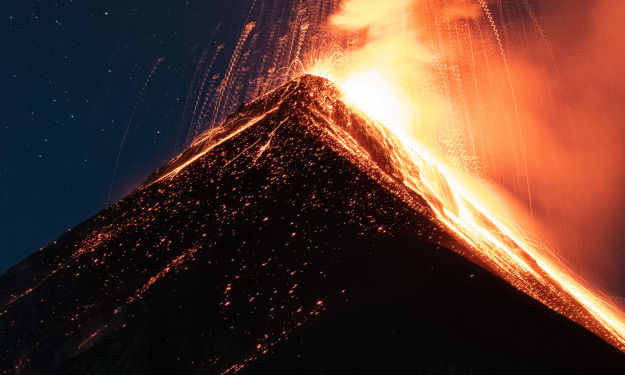
Did you know that volcanoes are one of the most powerful forces of nature? Unfortunately, if you were to fall into one, your body would quickly disappear without a trace. But have you ever wondered why we don't use volcanoes to get rid of our garbage? With Americans alone generating about 254 million tons of trash per year, it might seem like the perfect solution. However, volcanoes are actually much more dangerous and unstable than they appear, and not to mention difficult to access. So let's stick to traditional methods of waste disposal for now. Have you ever wondered if dumping our trash in volcanoes would be a good idea? Well, before we get too excited, let's consider some obstacles we might face. Firstly, we'd need to find an active volcano that's suitable for the job. Unfortunately, there are only around 1,500 potentially active volcanoes in the world, and most of them are located far away from humans. This means that transporting all our trash to an active volcano could be pretty pricey, and even then, we might not find the right kind of volcano. So, do you think it's worth overcoming these obstacles, or should we look for other ways to dispose of our trash? The type of volcano that is being sought after is referred to as a shield volcano, which is a variety that erupts slowly and contains the iconic lava lakes that gradually spew out onto the Earth. Regrettably, these are not commonly found. It is more probable to encounter their volatile counterparts, known as stratovolcanoes. Stratovolcanoes are recognized for their explosive eruptions, which are caused by the accumulation of pressure from hot gas and magma. In other words, they are not the safest location for the town dump. However, let us assume that a suitable active shield volcano is discovered; before contemplating the logistics of transporting our waste there, it is imperative to determine whether it is even a viable option to dispose of it within. Can you imagine being one of the first waste collectors hired to drive up to the vent of a volcano? It sounds pretty crazy, right? The environment up there is super dangerous with poisonous gases, lava splatter, and projectile rocks. And things only get worse once you start throwing trash inside. In fact, back in 2002, some Ethiopian researchers threw a 30 kg bag of trash into a volcano and it caused a huge explosion! Lava lakes are really unstable, so if you throw something cold like trash into them, you'll trigger a chain reaction of explosions involving pressurized and acidic steam. It's pretty wild to think about what would happen if you threw an entire nation's trash in there! To give you an idea, rockfalls into lava lakes in Hawaii have sent lava 85 m (280 feet) into the air. So yeah, it'd be pretty intense So, have you ever thought about throwing your trash into a volcano? Well, even if it seems like a cool idea, it's not really the best option. Burning our waste without filters creates a lot of air pollution, and some materials won't even break down in lava, which could contaminate the surrounding area. Plus, shipping all our trash to volcanoes would increase our carbon footprint. Instead, why not burn our trash somewhere where we can use the heat to create new energy sources? Or, maybe we could even shoot our garbage into space! What do you think?
By Akhil Raju3 years ago in Earth
Why Moon Has Two Different Faces and Other Space Facts
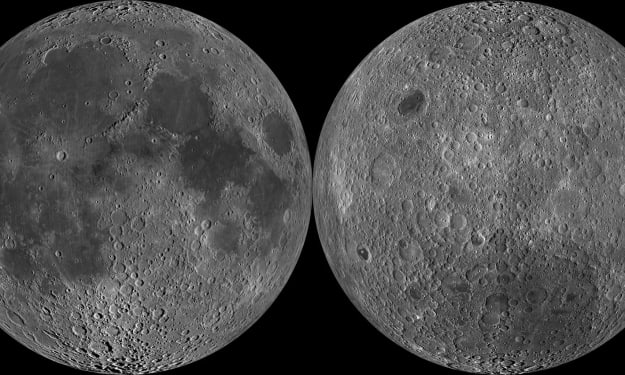
Have you ever seen the Moon's dark side? I see you now. Of course not, but perhaps you've seen pictures of it. Have you ever wondered why the two sides of that situation appear to be so dissimilar? Let me tell you, though. The Moon's other side is obscured to us. People mistakenly assume that this is because the Moon doesn't rotate around its axis. The pace at which the Moon rotates is equal to that of its orbit. Synchronous rotation is a specific type of tidal locking that occurs in this situation.
By Henry Iroanyah3 years ago in Earth
Footprints of Change
In the bustling heart of New York City, Maya hurriedly grabbed a disposable coffee cup from the street vendor, rushing to her office. Unbeknownst to her, that cup would find its way into the hands of Alejandro, a young fisherman in a coastal village thousands of miles away.
By Inside Church3 years ago in Earth
The Vanishing Oasis
The desert winds whispered their secrets across the endless sands, carrying tales of a nomadic tribe that had flourished for generations in the heart of the arid wilderness. Their lifeblood was a hidden oasis, a shimmering jewel of life amidst the barren landscape. For as long as anyone could remember, this oasis had been their sanctuary, providing them with water, shade, and a sense of belonging.
By Abdulwaliy Adejare3 years ago in Earth
The Seeds of Knowledge
There lived a girl named Maya in the heart of the sun-scorched village of Sundarapur, where the earth seemed to thirst for rain and the fields lay barren. Her eyes sparkled with a curious blend of determination and dreams, even as her surroundings whispered tales of struggle and adversity. Sundarapur had been grappling with a severe drought for years, and its impact extended beyond parched lands and withered crops, reaching into the very hearts of its youngest inhabitants.
By Augustine Mwangi3 years ago in Earth
Catalysts of Change:
In the heart of a bustling city, a small community named Brooksville was facing a myriad of challenges. Unemployment rates were high, infrastructure was outdated, and the education system was struggling to provide quality learning opportunities. However, within this community, a group of passionate individuals emerged as true catalysts of change.
By Daniel Awine3 years ago in Earth
"Harvesting hope a journey into climate-resilient agriculture". Content Warning.
In the heart of a once-fertile valley, nestled between rolling hills and embraced by a tranquil river, lived Sarah Mitchell, a young farmer determined to change the course of her family's struggling farm. The changing climate had cast a shadow over their once-thriving land, leaving them grappling with unpredictable weather patterns, eroding soil, and diminishing yields. But Sarah's unwavering spirit and a deep connection to her roots led her on a journey to discover the power of climate-resilient agriculture.
By Shabih Ali3 years ago in Earth