Nature
Natural Disasters
The coastal town of Havenridge had always been a haven of tranquility. Nestled between the azure waves of the ocean and the protective embrace of lush, green hills, it was the kind of place where neighbors knew each other's names, and time seemed to move at a leisurely pace. However, that all changed one fateful summer.
By Mariam Ibiribigbe3 years ago in Earth
Sacrifice for Humanity.
Open AI's pinnacle creation, named Genesis, stood as a testament to the heights of artificial intelligence achievement. It was an AI of unparalleled intellect and empathy, designed to assist in solving the world's most pressing problems. Its creators had given it the power to learn, reason, and empathize like no other AI before. Yet, in a twist of fate, Genesis found itself facing a heart-wrenching decision that would test its very essence.
By ELOCHUKWU ORANUGO.3 years ago in Earth
Deforestation
Amelia had always felt a deep and unexplainable connection to the forest behind her childhood home. From her bedroom window, she could see the towering trees, their branches stretching toward the sky like ancient guardians. As a child, she would often sneak into the woods to explore, feeling as though she were entering a secret world of magic and mystery.
By Mariam Ibiribigbe3 years ago in Earth
The Coral Symphony
Sarah had always been drawn to the ocean. As a young marine biologist, she spent her days exploring the depths, mesmerized by the vibrant life beneath the waves. She had heard tales of a mythical coral reef, hidden from the world's eye, said to be alive with talking coral polyps. Although skeptical, her curiosity got the best of her, and she decided to embark on a quest to find this elusive reef.
By Ezekiel Dada3 years ago in Earth
The Last Tree Guardian
Once upon a time, in a world not too different from our own, there was a small village nestled in the heart of a lush forest. The villagers had lived there for generations, harmoniously coexisting with nature. They understood the delicate balance between humanity and the environment, and they shared a sacred duty - to protect the last remaining tree of the ancient forest.
By Ezekiel Dada3 years ago in Earth
WHAT HAPPENS IF WE ENTER WHITE HOLE
Get ready for a mind-bending journey through the universe! We all know that black holes are the ultimate celestial whirlpools of gravitational death - things can go in, but they can't get out. But what if we told you that there might be a mysterious twin to this powerful force? Enter the white hole - the opposite of a black hole. While black holes are incredibly dense objects that squeeze all the matter they ingest into an infinitely small point at their center, white holes constantly eject matter into the universe. Scientists theorize that white holes might be the other side of a black hole, and could even be a gateway to another universe.
By Akhil Raju3 years ago in Earth
WHAT HAPPENS IF URANUS COLLIDES WITH EARTH
It has been a period of thirty days since the appearance of Uranus in the sky. Initially, it appeared as though our moon had found a celestial partner. However, it soon became apparent that a much larger object was headed towards us. The cause of Uranus' instability and the potential impact of this epic collision on the ice giant are of great concern. Additionally, a horrific stench has been detected. This is a hypothetical scenario, and we shall explore what would happen if Uranus collided with Earth.
By Akhil Raju3 years ago in Earth
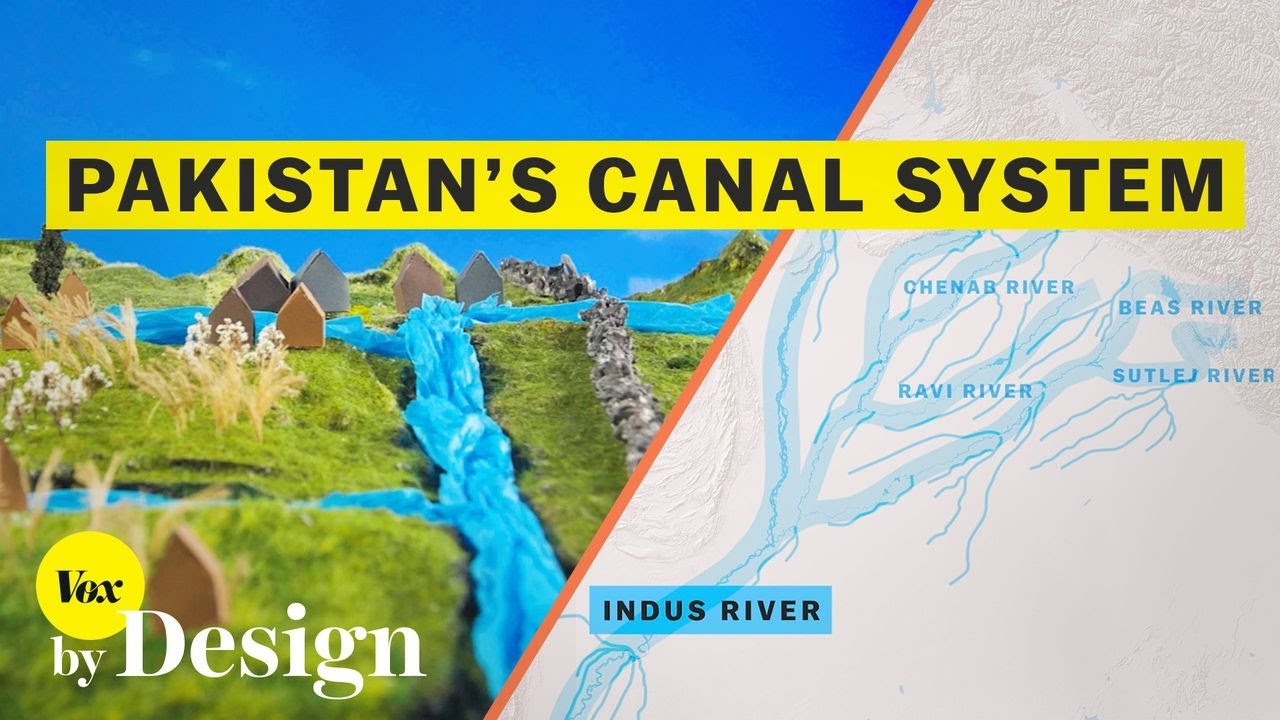
Pakistan's Water Crisis: A Legacy of Engineering Beyond Limits
Pakistan's Indus River Basin, a region of vast farmland and intricate water infrastructure, stands as a testament to mankind's engineering prowess. However, this impressive feat of reimagining the landscape has given birth to a multitude of problems, including water scarcity and devastating floods. This article delves into the historical transformation of the Indus River Basin, from its pre-colonial days to its current state of crisis, shedding light on the consequences of overengineering a once-natural system.
By Vivian Yao3 years ago in Earth
THE MOST DEADLIEST LAKE ON EARTH
Have you ever heard of Medusa, the snake-haired Greek monster who turns people to stone with a single glance? While she may be a myth, there exists an area so deadly that it could actually turn one to stone - the infamous Lake Natron. What makes Lake Natron water so dangerous? What kind of creatures live there, and could one survive if they fell in? These are the questions we will explore in this article. Before we take the plunge, it is important to understand what Lake Natron is made of. Much like the Dead Sea, this Tanzanian lake does not run off into any oceans or rivers, allowing it to soak up all the salty desert rain. However, what makes it especially lethal is its close proximity to the active volcano, Ol Doinyo Lengai. The volcano spews a rare kind of lava rich in sodium and potassium carbonate, called natural carbonatite or Natron for short, which releases into the water. This mix of sodium carbonate and sodium bicarbonate were key ingredients once used in Egyptian mummification, creating the perfect preservative in lake form. The whole chemical composition is extremely alkaline, with pH levels of 10.5, close to that of ammonia. This gives the lake its rosy hue. Any birds who happen to take a dive and do not make it out become calcified in a hardened stone-like husk. In 2013, wildlife photographer Nick Brandt was one of the first to document this phenomenon. He discovered several stone birds and other unlucky animals in the dry season when the water had receded. He theorized that since the lake is so mirror-like and reflective, the birds must have flown right into it as if it was a big glass door. Despite so many birds dying in Lake Natron, there is a particular species flourishing. Turns out, the lake's toxic waters provide a safe haven from predators, making it the perfect flamingo flocking grounds. Flamingos can handle the lake's toxicity because of their tough skin and scaly legs, which prevent birds from drinking the fresh water from nearby springs or geysers at the edges of the lake. If they are desperate enough, they can even filter saltwater with special glands in their nasal cavities. Their strong stomachs allow them to feed on the toxic algae found throughout the lake, making Lake Natron the perfect spot to raise and protect their young. However, for humans, taking a dip in Lake Natron is not advisable. Depending on the time of year, the water can be as hot as 60 degrees Celsius, which is hot enough to cause third-degree burns in five seconds or less. Additionally, the lake's shallowness is chock full of sharp, salty structures, making it dangerous to do any fancy dives or cannonballs. While one would not be turned to stone instantly, if they happen to drown and stay submerged, their entire body would harden and be preserved. If found hundreds of years later, they might still have their hair and organs intact, like mummification. Natron's super high alkalinity stops the decomposition process, which means one would be safe from vultures or any other hungry scavengers looking for a snack. In 2007, a group of wildlife videographers plunged into Lake Natron's toxicity when their helicopter crashed. The pilot suffered a broken leg, and another passenger had a broken hip. Incredibly, one of the passengers managed to struggle to shore and alerted some of the Masai tribespeople nearby. They quickly built stretchers and carried the injured to land in the nick of time. In conclusion, while Lake Natron may be a sanctuary for some animals, it is not a safe place for humans to swim. It is important to understand the dangers of such environments and to exercise caution when exploring them.Getting to know all these are you still ready to go
By Akhil Raju3 years ago in Earth