Nature
"Rivers, Mountains, and Oceans"
Mountains, rivers, and oceans—these natural treasures have captivated people for ages. Each of these components has its own special appeal and significance, influencing ecosystems, human civilizations, and even landscapes. We shall set out on a journey in this article to investigate the intricate beauty and significance of rivers, mountains, and oceans, probing the roles they play in our world. Rivers: The Lifelines of the Earth
By Misha story writer3 years ago in Earth
iPhone 15 Pro . Content Warning.
Apple recognized that the iPhone 15 Ace and 15 Genius Max experience the ill effects of overheating issues and blamed a bug in iOS 17. A fix is in progress, yet another issue has surfaced - remote charging may be harming the NFC module. There are a couple of disengaged occurrences revealed for the present, yet it has happened frequently sufficient that it can't be overlooked.
By Kazi Shaiful Islam3 years ago in Earth
Climate Change Lends New Color to the Ocean
Environmental Change Loans New Variety to the Sea Environmental change is making the world's seas become greener, as per another review distributed in the diary Nature. The investigation discovered that the greater part of the world's surface seas have encountered a huge change in variety throughout recent many years, with the tropical seas close to the equator turning into the greenest.
By M khalid habib3 years ago in Earth
The preople's love for Nature
Nature, with its vast landscapes, intricate ecosystems, and breathtaking beauty, has captivated the hearts of people for millennia. The love for nature runs deep within the human psyche and is an integral part of our identity as a species. This enduring bond with the natural world has profound implications for our well-being, culture, and the future of our planet.
By Hridoy Talukder3 years ago in Earth
"Biodiversity Bonanza"
The diverse range of living things that make up our world, or biodiversity, is frequently referred to as the beat of the earth. From the smallest bacteria to the greatest whale, it connects all living things as it pulses across ecosystems. All species, including humans, depend on biodiversity for their existence and well-being. It is not merely a source of wonder and inspiration. The significance of biodiversity, the risks it confronts, and the significance of conservation efforts to protect this abundance of life for future generations will all be covered in this article. The Marvels of Biodiversity
By Misha story writer3 years ago in Earth
rooted in change
Title: "Rooted in Change" Once upon a time, in the tranquil village of Willowbrook nestled deep within a lush valley, there lived a humble farmer named Samuel. For generations, his family had tilled the fertile soil, their lives intertwined with the land. But as the world outside evolved, so did the challenges facing Samuel's beloved village.
By Cyril Njoku3 years ago in Earth
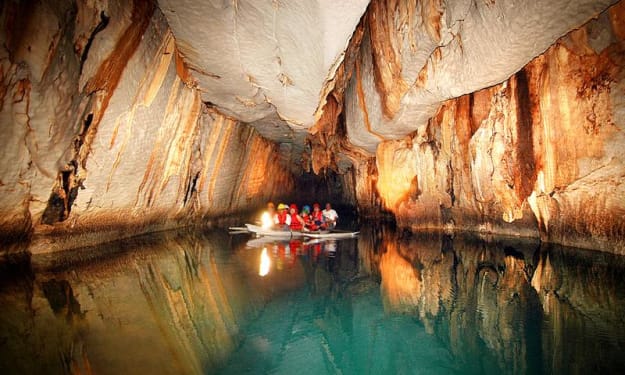
Ancient Underground River
Beneath the Amazon's Veil: Unearthing the Secrets of Ancient Underground Rivers In the heart of the Amazon rainforest, where the lush green canopy stretches as far as the eye can see, a discovery was made in 2020 that unveiled a hidden world beneath the forest floor—a network of ancient underground rivers. These subterranean waterways, spanning thousands of kilometers, offered a tantalizing glimpse into the intricate web of life that sustains the world's largest tropical rainforest. The story of the Amazon's ancient underground rivers began with the enduring curiosity of scientists and explorers, who had long suspected that more lay beneath the forest's verdant surface than met the eye. The Amazon, often referred to as the "lungs of the Earth," was known for its unparalleled biodiversity and ecological significance. However, much of its intricate hydrology remained a mystery. Equipped with cutting-edge technology, including ground-penetrating radar and satellite imagery, a team of researchers embarked on a quest to uncover the hidden rivers that coursed beneath the Amazon's dense canopy. Their journey took them deep into the heart of the rainforest, where the cacophony of wildlife sounds merged with the hum of unseen rivers beneath. The expedition was not without its challenges. Navigating the impenetrable rainforest terrain, with its labyrinthine network of rivers and tributaries, required equal parts scientific expertise and sheer determination. But the team persevered, driven by the knowledge that their quest could reveal profound insights into the Amazon's ecosystem and its resilience in the face of global environmental change. As the researchers delved into their work, using ground-penetrating radar to peer beneath the forest floor, they made a discovery that would redefine our understanding of the Amazon's hydrology—an intricate network of underground rivers, hidden from view but intricately connected to the rainforest's web of life. These ancient underground rivers, some spanning more than 6,000 kilometers in length, flowed silently beneath the Amazon's surface, their existence largely unknown to the world. Fed by the region's abundant rainfall, they meandered through porous layers of rock and sediment, shaping the landscape in subtle but profound ways. The significance of this discovery was twofold. First, these underground rivers played a crucial role in regulating the Amazon's ecosystem. They served as hidden conduits for water, transporting nutrients and supporting plant and animal life even during the dry season. In a region known for its dramatic wet and dry cycles, the presence of these subterranean rivers was a lifeline for the Amazon's flora and fauna. Second, the discovery had broader implications for our understanding of the Amazon's resilience in the face of climate change. As the world grappled with rising temperatures and shifting weather patterns, the Amazon rainforest faced increased stress. The hidden rivers, however, offered a buffer against drought, providing a steady supply of water that sustained the forest even during times of environmental uncertainty. But perhaps the most remarkable aspect of this discovery was the sense of wonder and awe it inspired. It was a testament to the Amazon's ability to keep its secrets hidden, even in an age of advanced technology and scientific inquiry. It was a reminder that, despite our knowledge and expertise, there were still mysteries to uncover in the natural world, and the Amazon held its secrets close. As the researchers continued their work, studying the dynamics of the underground rivers and their role in shaping the rainforest's biodiversity, they recognized the urgency of their findings. The Amazon, a vital global carbon sink and a sanctuary for countless species, faced unprecedented threats from deforestation, climate change, and human activities. Understanding the role of these hidden rivers in sustaining the forest's resilience became a matter of utmost importance. The ancient underground rivers of the Amazon, hidden from view but profoundly influential, were a testament to the rainforest's ability to surprise and inspire. They reminded us that, even in our age of scientific exploration, the natural world still held secrets waiting to be uncovered—a testament to the enduring wonder of our planet and the intricate tapestry of life that thrives within the Amazon's hidden depths.
By Raymark Marcos3 years ago in Earth
Greenland's "Grand Canyon"
Greenland's Hidden Secret: Unveiling the Grand Canyon of the Ice In the far reaches of the Arctic, where the Earth's icy mantle stretches as far as the eye can see, a team of intrepid researchers embarked on a journey that would uncover one of the Arctic's most astonishing geological secrets—Greenland's "Grand Canyon." Hidden beneath the colossal ice sheet that has blanketed this vast island for eons, this monumental discovery offered profound insights into the icy heart of Greenland and the mysteries of our planet's ever-changing climate. The story of Greenland's Grand Canyon began with a desire to unravel the mysteries of the world's second-largest ice sheet. Spanning over 660,000 square miles, the Greenland Ice Sheet is a sprawling expanse of ice that covers approximately 80% of Greenland's landmass. Beneath this frozen behemoth, the secrets of the Earth's geological history were locked away, waiting to be unveiled. The expedition team, a group of dedicated scientists, explorers, and glaciologists, embarked on a mission to unlock these secrets. Armed with state-of-the-art technology and a relentless spirit of discovery, they ventured deep into the heart of Greenland, where the ice sheet concealed the geological marvel that would later become known as Greenland's Grand Canyon. The journey was not without its challenges. Navigating the harsh Arctic terrain, with its biting cold and shifting ice, was a feat of endurance and determination. The team used ground-penetrating radar, ice-penetrating radar, and other specialized instruments to peer beneath the icy surface and uncover the hidden landscape. As they delved deeper into the ice, the team's instruments revealed a vast and awe-inspiring chasm—an immense canyon that stretched for over 460 miles (740 kilometers) beneath the Greenland Ice Sheet. This discovery, a geological marvel comparable in scale to the Grand Canyon of the American Southwest, was unlike anything ever before witnessed in the Arctic. The canyon's formation, the scientists believed, dated back millions of years, shaped by the relentless forces of nature and the ebb and flow of ancient glaciers. It was a testament to the dynamic history of the Arctic, where ice had carved a monumental masterpiece into the bedrock beneath. Greenland's Grand Canyon was more than just a geological curiosity; it held profound implications for our understanding of the Arctic's past and its future. The canyon's existence hinted at the presence of subglacial rivers and waterways, channels through which meltwater flowed beneath the ice sheet, affecting its stability and the rate of sea-level rise. Understanding the dynamics of these subglacial systems was of paramount importance in a world grappling with the impacts of climate change. As temperatures in the Arctic rose, the Greenland Ice Sheet was experiencing accelerated melting, contributing to rising sea levels worldwide. The presence of Greenland's Grand Canyon offered clues to the intricate interplay between ice, water, and bedrock, and how these factors influenced the ice sheet's response to a warming climate. In addition to its scientific significance, the discovery of Greenland's Grand Canyon ignited a sense of wonder and awe among those who beheld it. It was a reminder that even in the most extreme and remote corners of our planet, nature had carved breathtaking landscapes of unparalleled beauty and grandeur. The researchers continued their work, studying the canyon's features, its influence on ice flow, and its role in the broader context of climate change. Their findings would inform future scientific research and provide valuable insights into the Arctic's response to a changing world. Greenland's Grand Canyon, the hidden treasure of the Arctic, was a testament to the power of discovery and the enduring mysteries of our planet. It was a reminder that beneath the icy surface of the Greenland Ice Sheet, a world of wonders awaited exploration—a world that held the keys to understanding the past, present, and future of the Arctic and its role in the global climate system. As the expedition team departed from the Arctic, leaving behind the colossal ice sheet and the hidden marvel of the Grand Canyon, they carried with them a sense of profound awe and humility. They knew that their discovery was just one small piece of the ever-unfolding story of Earth's geological history—a story that continues to inspire wonder and drive our quest to unlock the secrets of our planet's icy heart.
By Raymark Marcos3 years ago in Earth
Unraveling the Enigma
When we think of towering mountain ranges, our minds often conjure images of dramatic clashes between tectonic plates, where immense forces converge to thrust rock upwards, shaping the Earth's surface into majestic peaks. This geological spectacle typically unfolds at the meeting points of these colossal plates. However, nature, in its unpredictable glory, occasionally throws us a curveball, confounding our expectations. Enter the Rocky Mountains of North America, an iconic range positioned incongruously in the heart of the continent, far from any conventional plate boundaries.
By Riya Punjabi3 years ago in Earth
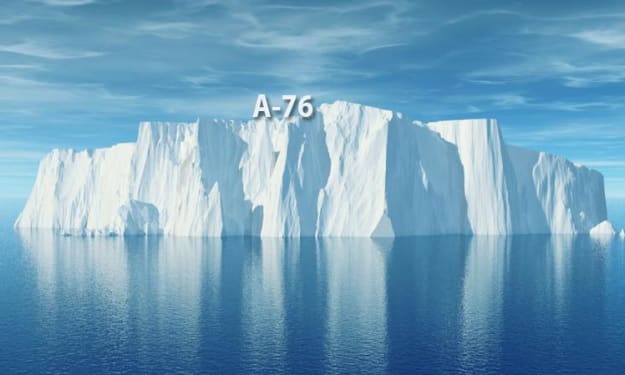
A-76 The Newly Discovered Antarctic Iceberg
A-76: The Colossus of the Antarctic Ocean In the vast, frigid expanse of Antarctica, where the unyielding grip of ice and snow stretches as far as the eye can see, a monumental event unfolded in May 2021—a colossal iceberg, named A-76, was born. This towering behemoth, estimated to be around 1,668 square miles (4,320 square kilometers) in size, emerged from the Ronne Ice Shelf, making it one of the largest icebergs ever recorded in human history. The story of A-76 begins within the heart of Antarctica, where a complex dance of ice, wind, and water shapes the continent's ever-changing landscape. The Ronne Ice Shelf, a massive expanse of floating ice extending into the Weddell Sea, has been a subject of scientific study for decades. It is here that the birth of A-76 took place, amidst the profound geological forces that define this frozen world. The journey to the discovery of A-76 was a testament to the ingenuity of modern Earth observation technology. Satellites orbiting high above the Earth's surface captured images of the Ronne Ice Shelf, monitoring its stability and the intricate dynamics of the ice flow. It was through this satellite imagery that scientists first noticed a significant rift, a long and ominous crack that had formed within the ice shelf. This rift was the precursor to the iceberg's birth—a slow and inexorable process that had been underway for years, if not decades. The rift slowly widened, driven by the relentless pressures of the ice and the relentless march of time. As the crack expanded, it signaled that a momentous event was on the horizon. In May 2021, the inevitable occurred. The vast iceberg, A-76, finally calved from the Ronne Ice Shelf. The process was a dramatic spectacle of nature's power—a titanic chunk of ice, larger than many small countries, breaking free and setting sail in the frigid waters of the Antarctic Ocean. A-76 was not alone in this endeavor; it joined a lineage of colossal icebergs that had calved from the Antarctic continent over the years. These behemoths, sculpted by the ceaseless forces of nature, held a unique allure for scientists, explorers, and the curious minds of the world. Their sheer size and power offered a glimpse into the grandeur and majesty of the natural world. As A-76 ventured into the Antarctic Ocean, it embarked on a journey filled with uncertainty. Its colossal presence had the potential to disrupt shipping lanes, affecting maritime navigation in the region. Satellites continued to track its movements, providing crucial data to ensure the safety of vessels in the area. The birth of A-76 also had broader implications for climate science. It served as a visible reminder of the ongoing changes occurring in Antarctica, where rising temperatures and shifting weather patterns were contributing to the destabilization of ice shelves. Understanding the behavior of icebergs like A-76 was vital for predicting future sea-level rise, a global challenge that had far-reaching consequences. But amid the scientific data and the broader implications, there was also a sense of wonder and awe that A-76 inspired. It was a reminder that our planet was a dynamic, ever-evolving entity, shaped by forces beyond human control. The birth of such a colossal iceberg was a testament to the enduring mysteries of the natural world. A-76 would continue its voyage, drifting through the Antarctic Ocean, its fate uncertain. Over time, it would undergo transformations, slowly breaking apart and melting as it encountered the warmer waters of the Southern Ocean. Its colossal mass would gradually diminish, and its journey would become part of the ongoing story of Antarctica's ice. As A-76 ventured further into the Antarctic Ocean, it left a lasting impression on those who gazed upon its monumental form. It was a reminder of the profound forces that shaped our planet and the inherent beauty of the natural world. A-76, the colossus of the Antarctic Ocean, had come into existence as a testament to the ongoing wonders and mysteries of the icy realm at the bottom of the world. In the annals of Antarctic exploration and scientific discovery, A-76 would be remembered as a testament to the enduring power and majesty of nature. It was a symbol of the delicate balance between the forces that shape our world and the relentless passage of time—an enduring legacy in the frigid waters of the Antarctic Ocean.
By Raymark Marcos3 years ago in Earth
Underwater Volcano Discovery
Kavachi: The Fiery Heart of the Abyss Beneath the tranquil waters of the South Pacific, where the sun-kissed surface belies the mysteries hidden in the depths, lies an enigmatic realm of fire and fury—a world where the Earth's restless heart pulses with elemental energy. In the year 2020, scientists and explorers embarked on a daring expedition that would unveil one of the ocean's most awe-inspiring secrets—the active underwater volcano named "Kavachi." The stage for this discovery was set in the Solomon Islands, an archipelago that stretches like scattered emerald jewels across the vast expanse of the South Pacific Ocean. Nestled amidst these islands, Kavachi emerged as a fiery testament to the Earth's dynamic and ever-changing geology. It was a sentinel of the deep, a testament to the volatile forces that shaped our planet. Kavachi, like its fiery counterparts around the world, was part of the "Ring of Fire"—a horseshoe-shaped ring encircling the Pacific Ocean, where tectonic plates collided and seismic activity was a way of life. The volcanoes of the Ring of Fire bore witness to the Earth's molten heart, where geological forces painted a canvas of creation and destruction in vivid hues of molten rock. The journey to uncover Kavachi's secrets began with a team of scientists and explorers aboard a research vessel. Equipped with state-of-the-art technology, including remotely operated vehicles (ROVs) and sonar systems, they set their course toward the coordinates where the volcano was believed to lurk beneath the waves. As the research vessel approached the designated location, the anticipation on board was palpable. Deep-sea exploration always held an air of unpredictability, and this expedition was no exception. Kavachi had a reputation for volatility, with its history punctuated by eruptions that had sent plumes of steam and ash soaring into the sky above the ocean's surface. The ROV, affectionately named "Argus," was carefully lowered into the inky abyss, its bright lights piercing the darkness like a beacon of discovery. Onboard cameras transmitted images back to the ship, offering a breathtaking view of the undersea world. As Argus descended into the depths, it passed through layers of blue—deeper and darker than any ocean's surface. Sunlight could not penetrate these depths, but life still thrived here, adapted to the unique challenges of the deep ocean. Strange and beautiful creatures drifted by, their existence a testament to the resilience of life. And then, as Argus descended further, a sight of sublime wonder came into view—an otherworldly landscape of towering spires, jagged ridges, and fumaroles billowing with heated gases. It was Kavachi, the underwater volcano, in all its breathtaking glory. The team watched in awe as Argus approached the volcano's summit. Kavachi's activity was evident; wisps of smoke and bubbles of gas escaped from its fiery maw. The water around the volcano was warmer than the surrounding sea, a testament to the geological cauldron that churned below. Kavachi was alive, its fiery heart beating with the relentless energy of the Earth's core. It was an ecosystem unto itself, a crucible where life had adapted to the extreme conditions of heat and pressure. Unique species of microbes, tube worms, and other creatures thrived in this harsh environment, forming a delicate balance amid the chaos of the volcanic activity. The ROV's instruments recorded data that would shed light on the volcano's behavior, offering insights into the dynamic geology of the seafloor. The scientists marveled at the intricate interplay between the forces of creation and destruction, where the Earth's crust was born anew with each eruption, adding to the ever-evolving map of our planet. As Argus circled Kavachi's summit, it captured images that would ignite the imagination of the world. The vivid colors of mineral deposits, the ghostly outlines of vent communities, and the fiery glow of molten rock were a testament to the sublime beauty of the deep ocean, a realm that remained largely uncharted and unexplored. The discovery of Kavachi, this fiery heart of the abyss, underscored the Earth's ceaseless dynamism—a reminder that our planet is a living, breathing entity, shaped by forces beyond our comprehension. It also offered a glimpse into the resilience of life, which, against all odds, had found a way to flourish even in the most extreme environments. As Argus resurfaced from the depths, the scientists and explorers on board the research vessel knew that their journey had been nothing short of extraordinary. Kavachi had unveiled its secrets, and in doing so, it had invited humanity to ponder the mysteries of our planet and the boundless wonders that lay beneath the surface of the world's oceans. Kavachi, the fiery sentinel of the South Pacific, had left an indelible mark on those who had ventured into its depths. It was a reminder that, even in the farthest reaches of our planet, there was still much to discover, explore, and marvel at—a testament to the enduring spirit of curiosity and the unquenchable thirst for knowledge that defines our species.
By Raymark Marcos3 years ago in Earth
What can individuals and communities do to address climate change?
Currently, climate change is considered to be one of the most urgent and significant challenges facing humanity. It results from the emission of greenhouse gases into the atmosphere, which retain heat and increase the Earth's temperature. Climate change's consequences are already evident worldwide, manifesting in more severe weather phenomena, rising sea levels, and alterations in flora and fauna.
By Smita Bimbra3 years ago in Earth