
Unraveling the Enigma
Why the Rocky Mountains Defy Geologic Norms
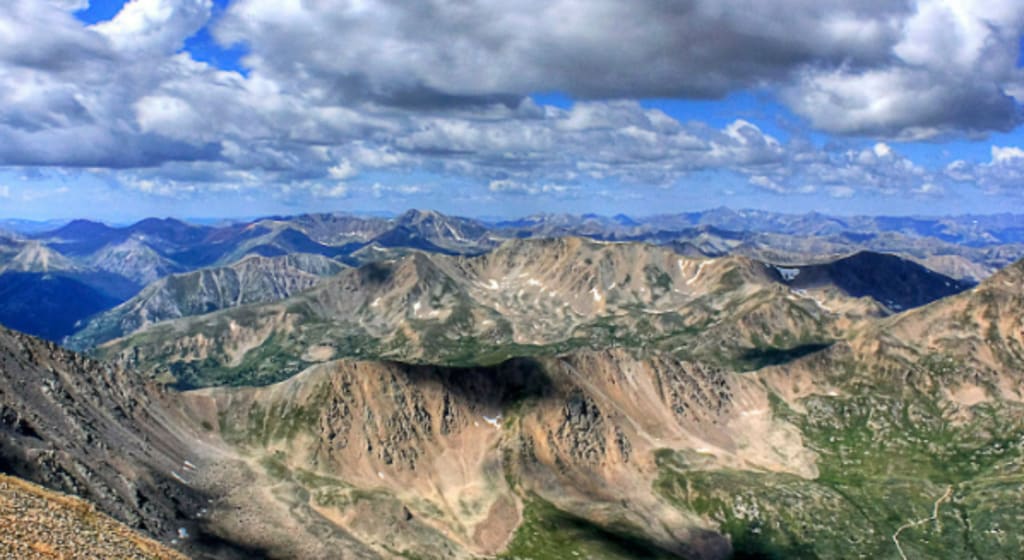
When we think of towering mountain ranges, our minds often conjure images of dramatic clashes between tectonic plates, where immense forces converge to thrust rock upwards, shaping the Earth's surface into majestic peaks. This geological spectacle typically unfolds at the meeting points of these colossal plates. However, nature, in its unpredictable glory, occasionally throws us a curveball, confounding our expectations. Enter the Rocky Mountains of North America, an iconic range positioned incongruously in the heart of the continent, far from any conventional plate boundaries.
The tale of the Rocky Mountains' unconventional formation is a topic of intense debate among geologists, a mystery that invites us to delve into the depths of Earth's history. Around 125 million years ago, during the Sevier Orogeny, a monumental mountain-building event, the Rockies began their ascent. This orogeny, a term geologists use to describe such events, spanned from modern-day Alaska to Mexico, folding and fracturing layers of sedimentary rocks to initiate the formation of mountains.
Yet, it was the Laramide Orogeny, occurring between 80 and 55 million years ago, that predominantly shaped the Rockies in the United States. Unlike the Sevier Orogeny, which involved the folding of sediment layers, the Laramide Orogeny relied on the breaking and piling up of hard rocks like granite. During this period, the seafloor of the eastern Pacific featured two oceanic plates, both subducting beneath North America while the Atlantic Ocean was opening up on the opposite side, pushing the continent westward.
Despite the Rocky Mountains being located up to 1500 kilometers away from the Pacific plate boundary, geologists concur that this subduction zone played a pivotal role in their formation. However, the intriguing question remains: how did this happen so far from the coast? Geologists have proposed four hypotheses to unravel this geological enigma.
The first theory suggests retroarc thrusting, proposing that the North American plate's vigorous westward movement caused the oceanic plate to jam, leading to continent-wide crumpling. However, the origin of this force remains a mystery, as the Atlantic seafloor spreading rates don't offer substantial evidence to support this theory.
The second idea, orogenic float, posits that faults in the Earth's crust detached a section of the lower crust, allowing it to float independently. The force from the Pacific seafloor subducting then skipped this section, transferring stress inland. Nevertheless, the lack of evidence for this detached crust section challenges this theory.
The third hypothesis involves transpressional collision, where a transpressional fault existed where the Rockies stand today. North America was effectively divided into two segments: the main continent to the east and a thin "ribbon" continent to the west. Rocks near the Canadian Rockies exhibit magnetic signatures indicating their formation thousands of kilometers to the south, supporting this theory. However, the absence of expected volcanic evidence raises doubts.
The most favored theory, flat-slab subduction, proposes that a younger, hotter oceanic plate slid beneath North America for over 700 kilometers before sinking deep enough to generate magma. This melted rock formed the core of the Rockies, significantly further inland than anticipated. Nevertheless, remnants of ancient volcanoes west of the Rockies contradict this theory, raising further questions.
In reality, the definitive answer remains elusive. Some studies propose a combination of these mechanisms, suggesting that different processes may have operated at various stages or in different sections of the mountain range. For instance, a "corridor" of flat-slab subduction could have shaped the central United States' mountains, leaving the formation of the northern and southern Rockies unexplained.
In essence, the Earth's geological tapestry often defies our expectations, challenging scientists to piece together the intricate events that shaped our planet's surface. While the origins of the Rocky Mountains may elude a definitive explanation, this enigma serves as a testament to the complexity of our planet's geological history.
So, as we marvel at the majestic peaks of the Rocky Mountains, let's also acknowledge the mystery that shrouds their creation, reminding us of the boundless wonders that continue to unfold beneath our feet. The Earth, after all, is an ever-evolving masterpiece, where every twist and turn tells a story waiting to be discovered.
About the Creator
Enjoyed the story? Support the Creator.
Subscribe for free to receive all their stories in your feed.
Comments
There are no comments for this story
Be the first to respond and start the conversation.