Nature
Climate Challenges and Sustainable Solutions in the UAE: A Leap Towards a Greener Future
In the wake of the conclusion of COP28, a milestone climate summit that engaged oil-producing nations for the first time in a united effort to safeguard the planet, it’s time to celebrate the positive strides made in addressing global climate challenges.
By Andrea Zanon3 years ago in Earth
The ethical considerations surrounding geo engineering.
In the year 2050, the world stood on the precipice of an environmental abyss. Climate change had wreaked havoc, and humanity's survival depended on drastic measures. Among the contentious solutions was geoengineering—an innovative yet controversial approach to manipulate the Earth's climate.
By Ben wordsworth3 years ago in Earth
The Thirsty Adventure: What Happens If You Forget to Drink Water?
In a world where water is not merely a life-sustaining elixir but a mystical force weaving through the very fabric of our existence, the saga of hydration unfolds. Picture this: a grand tapestry, with threads of moisture entwined in the soil, nestled within the icy embrace of polar caps, and coursing through the very cells that form the essence of our being. It's a tale of fluidity, of balance, and of the dance between life and liquid.
By Tallal Jafri3 years ago in Earth
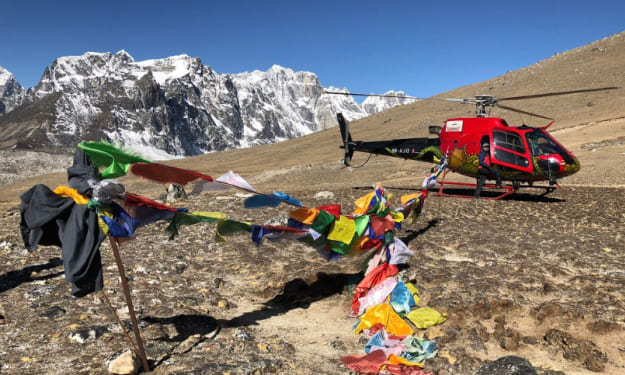
Everest Base Camp Helicopter Tour Highlights
Overview The Everest Base Camp Helicopter Tour stands out for its ease and convenience, offering a comfortable alternative to traditional treks. With a single-day itinerary(around 3-4 hours), it provides an efficient way to experience the iconic destination without the extended time commitment of a trek.
By bikash bhandari3 years ago in Earth
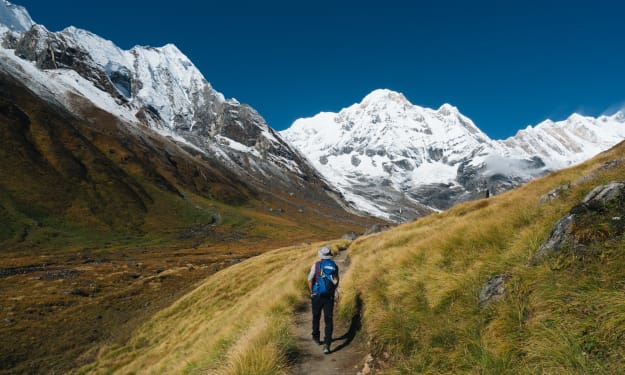
Wandering in the mountains- Ghorepani Poonhill Trek.
As the new holiday season of Christmas and New Year approaches, I miss my journey in the last Christmas. Back then, I was only celebrating My 19th birthday, and I was looking for something adventurous and yet safe. My plan was to travel to the southernmost country of Asia, Nepal, which is known as the land of non-change. As a child, I was always fascinated by the mountains and sought adventure. Meet me, pack a bag, and head to this unknown land.
By Himalayan Masters3 years ago in Earth
New York Is Sinking Under It's Own Weight. Content Warning.
A recent study has uncovered a concerning issue in New York City: it's sinking due to the immense weight of its towering skyscrapers. This process, known as subsidence, describes the gradual settling or sinking of the Earth's surface, mainly attributed to the shifting of soft sediments and the city's substantial mass. Despite the seemingly minimal sinking rate of 0.04 to 0.07 inches per year, specific areas within the city experience even faster sinking rates. This poses a significant risk for a city already positioned low and accommodating over 8 million residents. Addressing the growing flood risk and sea level rise, local authorities must devise strategies, although erecting extensive seawalls might not be the most effective solution. Geologists emphasize the adverse impact of constructing more highrises near coastlines, rivers, or lakes, exacerbating future flood risks. Scientific calculations of New York City's building mass—over a million structures—amount to an astounding 1.68 trillion pounds, excluding the weight of roads, sidewalks, and other paved areas. Despite these calculations' limitations, researchers effectively considered the intricate geology beneath the city, identifying soil types prone to subsidence, highlighting the stability of Bedrock that anchors the skyscrapers. Utilizing satellite data and models, researchers generated a sinking map of the city, attributing increased urbanization, groundwater extraction, and drainage practices to worsen the sinking scenario. Similar sinking issues afflict other cities like Jakarta and Venice, each facing unique challenges. Jakarta anticipates partial submersion by 2050, while Venice's foundation on a marshy lagoon, compounded by groundwater extraction, rising sea levels, and tectonic movements, contributes to its slow descent. Venice's sinking rate, matching New York's at 0.04 to 0.07 inches per year, forecasts a significant decline below sea level in the next two decades. Faced with these risks, Venetians are building barriers to thwart encroaching waters, albeit with delays, while the city grapples with building damage due to constant water breaches. Similarly, New Orleans struggles with sinking issues, initially constructed marginally above sea level but now gradually subsiding. Its flat topography and the lower elevation around the French Quarter exacerbate the problem. Efforts to elevate homes and restrict building heights due to unstable soil have been insufficient, compounded by an ill-suited drainage system installed in the 1900s that exacerbated soil destabilization, leading to sinking areas and increased susceptibility to flooding, notably highlighted during Hurricane Katrina. Managing water consumption emerges as a key solution for sinking cities, emphasizing the need for innovative approaches like purifying surface water or converting seawater. An example of successful water management lies in Denmark's NY town, employing rainwater collection to supply toilets and washing machines, showcasing resourcefulness in urban water management. Thus, grappling with these sinking city challenges requires comprehensive strategies, innovative water management, and a concerted effort to sustain these urban centers against the threats of subsidence and rising sea levels.
By Cudjoe Justice3 years ago in Earth
How America's hottest city is trying to cool down
I'm looking at a map of surface temperatures in the Phoenix metro area. So this is in Arizona, in the southwest US and it shows how hot the ground is in June. And this is a map of child poverty rates. Darker blue means more poverty. So this is heat. And this is poverty. Heat. Poverty. Heat, Poverty. The correlation is pretty obvious. This is where it becomes clear that climate change and wealth inequality are not really separate issues. And you can probably find examples of that wherever you go in the world, but for this story, I went to Phoenix to see how they're dealing with an increase in heat-related deaths.
By Sreelakshmi K3 years ago in Earth
Fascinating Gold Facts and Trivia"
Since the dawn of civilization, gold with its radiant sun yellow texture and metallic luster has fascinated and captivated mankind. The unique coloration of gold catches the eye, enabling the seeker to detect tiny grains in an aggregate of other materials. The smallest flakes and grains are easily visible.
By Marlene Affeld3 years ago in Earth
Arizona's Rich Mining History – A Tale Of Terror And Triumph
Written By: Marlene Affeld The majestic mountains and mysterious desert sands of the region that is today the state of Arizona were first laid claim to by Spain, then Mexico. Subsequent changes resulted in the United States' acquisition of land from Mexico.
By Marlene Affeld3 years ago in Earth
The Victoria Era
Let's delve into the fascinating world of the Victorian era! This period marked a significant turning point in the history of the United Kingdom. It all began in 1837 when Queen Victoria ascended to the throne, and it came to an end in 1901 with her passing. During this transformative time, the United Kingdom emerged as a powerful nation, expanding its empire far and wide. The Victorian era witnessed a multitude of groundbreaking inventions and revolutionary ideas that revolutionized industry, technology, culture, and society.
By Hannah Tetteh3 years ago in Earth