Nature
The Butterfly Effect
In the heart of a lush meadow, where wildflowers danced in the gentle breeze, a kaleidoscope of butterflies fluttered in harmonious elegance. Among them was Luna, a delicate Monarch butterfly, adorned with wings that bore the intricate patterns of a thousand sunsets. The meadow was her home, a sanctuary that had cradled generations of her ancestors. Little did she know, the symphony of colors that painted the sky was on the brink of a heartbreaking crescendo. As the seasons shifted and the once-predictable rhythms of nature began to falter, Luna and her fellow butterflies sensed a growing unease in the air. Whispers of change rustled through the meadow, and the warmth of the sun seemed to carry a heavy burden. Luna, perched on a dew-kissed flower, listened to the tales of elder butterflies who spoke of a world in flux. The meadow, once a vibrant haven for countless butterflies, was now threatened by the encroaching shadows of climate change and habitat loss. The wildflowers that once thrived were fading, their colors muted, and the air, once filled with the sweet perfume of nectar, now bore a hint of uncertainty. Luna, driven by an innate sense of responsibility, embarked on a journey to understand the challenges that loomed over her community. She sought guidance from Celestia, an elder butterfly known for her wisdom and resilience. Celestia, with wings weathered by time, spoke of a changing climate that altered the migration patterns and disrupted the delicate balance between butterflies and their environment. "Dear Luna," Celestia sighed, "our world is in flux. The flowers we depend on are fading, and the winds that guide our migrations are becoming unpredictable. Adaptation is our only chance, but even adaptation carries a heavy toll." Determined to navigate the storm ahead, Luna rallied her fellow butterflies. Together, they embarked on a perilous journey in search of new feeding grounds and breeding sites. The once vibrant meadow now felt like an open sea, and the butterflies were but fragile vessels at the mercy of unpredictable currents. As Luna and her kin fluttered through landscapes altered by human hands, they encountered vast fields of monoculture, devoid of the diversity that sustained them. Pesticides tainted the air, and the intoxicating aroma of blooming flowers was replaced by the acrid scent of chemicals. The butterflies, weakened by the scarcity of nectar-rich blooms, felt the emotional toll of their struggle. In the face of adversity, Luna's resilience shone like a beacon. She became a symbol of hope, leading her community through the challenges of adaptation. Yet, with each delicate wingbeat, Luna couldn't shake the heartache that clung to her like morning dew. The interconnectedness of ecosystems, once a harmonious dance, now resembled a fragmented melody. One day, as Luna rested on a solitary blossom in a concrete jungle, she felt a gentle touch on her fragile wings. It was a child, eyes wide with wonder, marveling at the ethereal beauty before them. Luna, though weakened by her journey, shared a moment of connection with the young observer. In that fleeting encounter, Luna saw the potential for change. She realized that the emotional toll on her delicate community had not been in vain. The child, inspired by the fragile resilience of a butterfly, grew up with a profound understanding of the interconnected web of life. As the child became an advocate for sustainable practices and conservation, Luna's sacrifice became a catalyst for positive change. The once-threatened meadow, now preserved and nurtured, blossomed once again. Luna's descendants, guided by the lessons of adaptation and unity, danced in the sunlight, their wings carrying the hope of a future where butterflies and humans coexisted in harmony. In the end, Luna's journey, marked by emotional tribulations and the delicate strength of a butterfly's spirit, became a testament to the interconnectedness of all living beings and the transformative power of understanding and empathy.
By Afolabi Habib Okanlawon3 years ago in Earth
Balancing Acts: Canada and the United States Boost Oil Production Alongside Clean Tech Investments
Balancing Acts: Canada and the United States Boost Oil Production Alongside Clean Tech Investments As of 2023, both countries have increased their oil and gas production, reaching record targets and profits. In December 2023, the US became the largest oil producer globally, with 13.5 million barrels of oil produced per day. In early 2024, Canada produced 4.9 million barrels per day, becoming the fourth-largest oil producer behind the US, Saudi Arabia, and Russia (Financial Post). Both countries are expected to hit new records in 2024, with 14 million bpd and 5.4 million bpd, respectively. The top-listed oil and gas producers in the US reported a combined net income of $313 billion in the first three years of President Biden’s term, three times the $112 billion generated during the same period under President Trump (Financial Times). In Canada, oil and gas corporations are also producing record revenues.
By Andrea Zanon3 years ago in Earth
Climate change and pollution
Once upon a time, in a world not so different from our own, there lived a village surrounded by lush green forests and crystal-clear rivers. The villagers thrived on the bounty of nature, living in harmony with their surroundings. However, as time passed, changes started to occur. The once pure rivers became polluted with waste from nearby factories, and the air turned thick with smoke, making it hard to breathe. The elders in the village remembered stories of a time when the skies were clear, and the water sparkled under the bright sun. As the effects of climate change became more evident, the villagers realized they needed to take action. A young girl named Maya, known for her love of nature, decided to speak up and rally her community to fight against pollution and protect their environment. Maya and her friends organized clean-up drives, planted trees, and educated others about the importance of reducing waste and using renewable resources. Slowly but surely, the village began to see positive changes. The once polluted river started to regain its clarity, and the air became fresher as factories implemented eco-friendly practices. However, the fight was far from over. The impacts of climate change continued to threaten their way of life. Unpredictable weather patterns led to poor harvests, and natural disasters became more frequent. Determined not to give up, Maya and the villagers joined forces with neighboring communities and even reached out to their government for support. Together, they implemented sustainable farming practices, built storm shelters, and took steps to reduce their carbon footprint. As the years went by, the village served as an example of resilience and determination in the face of climate change and pollution. Through their collective efforts, they were able to restore their environment, protect their future, and inspire others to do the same. And so, the village that once faced a bleak future now stood as a shining beacon of hope, proving that with unity and determination, even the greatest challenges could be overcome.In a world where climate change and pollution are pressing issues, it is essential for individuals and communities to take action to protect the environment and secure a sustainable future. The story of Maya and her village is a powerful example of how dedication, unity, and perseverance can lead to positive change in the face of daunting challenges. Maya, a young girl with a deep connection to nature, embodies the spirit of activism and environmental stewardship. Her passion for preserving the natural world motivates her to take a stand against pollution and climate change, inspiring those around her to join in the fight. By organizing clean-up drives, planting trees, and raising awareness about eco-friendly practices, Maya demonstrates the importance of grassroots efforts in creating a cleaner and healthier environment. The transformation of Maya's village from a polluted, environmentally degraded community to a thriving, sustainable oasis is a testament to the power of collective action. Through collaboration with neighboring communities and engagement with local authorities, the villagers are able to implement practical solutions to mitigate the impacts of climate change and pollution. By adopting sustainable farming practices, building storm shelters, and reducing their carbon footprint, they not only protect their own livelihoods but also set an example for others to follow. The story of Maya and her village serves as a reminder that every individual has the power to make a difference in the fight against climate change and pollution. By taking small but impactful actions, such as recycling, conserving energy, and supporting sustainable practices, we can all contribute to a more sustainable and resilient future for our planet. As we face the challenges of a rapidly changing climate and increasing pollution levels, it is more important than ever to follow the example set by Maya and her community. Through collaboration, education, and commitment to environmental preservation, we can work together to build a healthier, more sustainable world for future generations. Let us be inspired by Maya's story and take action to protect our planet for the benefit of all living beings.
By ADEBANJO ABDULGAFAR 3 years ago in Earth
Unraveling COVID-19 Origins
Title: Unveiling the Discovered Roots of the Coronavirus: A Journey of Scientific Exploration In the wake of the unprecedented COVID-19 pandemic that swept across the globe, scientists and researchers embarked on a quest to uncover the origins of the novel coronavirus. As the world grappled with the devastating impact of the virus, understanding its roots became paramount in preventing future outbreaks and mitigating the spread of similar pathogens. Through meticulous investigation and groundbreaking discoveries, scientists have begun to unravel the complex origins of the coronavirus, shedding light on its journey from the natural world to human populations.
By Christianah Taiwo3 years ago in Earth
Wanderlust Worthy: Exploring the Most Instagrammable Places on Earth
In an age where social media has become an integral part of travel, the allure of Instagram-worthy destinations has never been stronger. From iconic landmarks to hidden gems off the beaten path, our planet is brimming with breathtaking locations that captivate the imagination and inspire wanderlust. Join us on a journey as we explore some of the most Instagrammable places on Earth, each offering a unique blend of natural beauty, cultural significance, and visual appeal that is sure to leave you awe-struck and inspired.
By Christianah Taiwo3 years ago in Earth
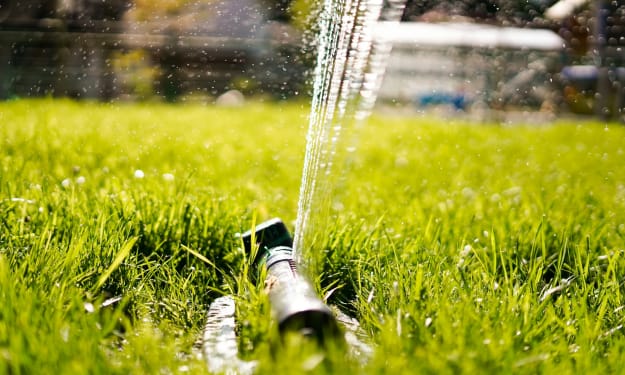
How to Prepare Your Lawn for Sod Installation
Installing sod is an excellent way to create a lush, thick lawn quickly. However, proper preparation of the site before the sod arrives is crucial for ensuring the new grass takes root and thrives. Skipping this important step can lead to poor establishment, weed invasion, soil issues, and an overall disappointing lawn. Follow these steps to get your lawn ready for sod installation success.
By Michael Evans3 years ago in Earth
Is earth actually flat ?
In 2003, analysts did the estimations furthermore, observed that Kansas is as a matter of fact in a real sense compliment than a flapjack. Obviously, the Earth isn't level, the Earth is round. If not voyagers would be tumbling off the edge constantly. Right? Wrong. On the off chance that the Earth was not a ball molded, yet was rather a level circle, similar to this plate, well with the weight, thickness and thickness, living in the center could feel pretty typical. Yet, as you push toward the edge, gravity on a plate Earth would somewhat slant, pushing at an increasingly great point back toward the middle. My companion Scratch from 'sasquatch elements' assembled this incredible reenactment. The individual and structures clearly aren't proportional yet look at how such progressively inclining gravity would work. Albeit this is a level circle, it would feel to a sprinter made a beeline for the edge, similar to they were battling to move up an increasingly steep hill. The structure establishments behind the sprinter reflect how you would need to assemble structures, increasingly close to the edge, so that individuals living in them generally felt like down was at right points to the floor - the manner in which we feel it on our enormous, round Earth. As you approach the edge, things would get scary. Keep in mind, this is a level Earth, however it would feel like a sheer drop off. What's truly cool is that in opposition to the "try not to tumble off the edge" dread, on a level world due to gravity, the startling gamble would in reality be falling away from the edge and moving as far as possible back to the middle. When you ventured past the brink, rather than tumbling off into space, you'd have the option to unwind. It would be a decent level spot. This model, obviously, dismisses the way that such a planet shape would be inconceivable. Anything as huge as the Earth, formed like a level plate, would, under its own gravity, normally breakdown back into a ball. To this end in space everything in excess of few hundred miles in distance across is round. Rumor has it. Consider the possibility that gravity isn't genuine. Imagine a scenario in which the Earth is, truth be told, level and science has been off-base from the start. It's a misinterpretation that Christopher Columbus found that the Earth is round. Basically every researcher and significant religion in the West acknowledged Earth's stoutness, since basically the hour of the Antiquated Greeks, who, for example, had seen that boats vanish base first while cruising endlessly. Furthermore, as you walk north and south, stars pop all through the view. The confusion that a couple hundred a long time back endlessly bunches of individuals accepted the Earth was level probably started in the cutting edge period, as a kind of affront. Indeed, your kin as of late suspected the Earth was level, so for what reason would it be advisable for us to trust you now? The smear was rehashed and distributed so frequently it became acknowledged as authentic truth. "Level Earther" became inseparable from "Hostile to science". It could appear to be level over brief distances, however over longer ones, well the Earth is pretty darn thrilling. The Verrazano-River Extension, interfacing Staten Island and Brooklyn, must be planned in light of Earth's roundness. Its 2 pinnacles, isolated by 1300 meters, and totally vertical, are in any case 41 milimetres further separated at the top than at the base due to Earth's ebb and flow. In the third century BC, Eratosthenes estimated the distinctions between shadows cast by posts in Syene and Alexandria to compute, over 2000 years before rockets and space travel, the perimeter of the whole globular Earth, with, for the time, amazing precision. News spread that the Earth was a round shape after that. Yet, in 1906, Wilbur Glenn Voliva became top of a somewhat odd strict group that essentially ran the city of Zion, Illinois. Voliva accepted that the Earth was as a matter of fact level and he upheld level Earth's lessons in schools in Zion. He likewise upheld that conviction on truly anybody who entered the city. Voliva accepted that the Earth was level, however that the sun was just scarcely any thousand miles from Earth. Not 93 million. He likewise accepted that the sun was 32 miles across, rather than 860 000. He sounds insane, or isn't that right? A similar peculiarity Eratosthenes estimated could be made sense of by a level Earth, in the event that the sun were just scarcely any thousand miles away also, 32 miles across - the math would resolve something similar. Today, with the force of the Web, advanced level Earthers have gotten where Voliva left off. They have very great clarifications for any proof you toss at them that the Earth is round. Circumnavigation is simply a level circle way. The round shadow Earth projects on the Moon during a lunar obscuration could likewise be made by a level disc. Time regions are brought about by spotlight sun, and recollect how gravity could be entirely unexpected on a circle formed planet? Indeed, they contend that gravity, as far as we might be concerned, basically doesn't exist. The level circle of Earth is simply advancing up at 9.8 meters each second. With respect to all of the photographs and video proof we presently have that the Earth is round, much obliged to space investigation, well that material is all totally manufactured. A deception, executed by Enormous Globe. Space offices, carriers, globe makers. They are receiving the benefits of our oblivious conviction that the Earth is round. They know, obviously, that it's level. Furthermore, they're concealing that reality from us. Is it simply an occurrence that the logo utilized by the Level Earth Society is a projection of Earth, fixated on the North Pole, and furthermore is the projection utilized by the Assembled Nations? Are these individuals without a doubt? Likely not the majority of them. Be that as it may, this is the vessels of Poe's Regulation. A saying that expresses that at their limits, satire of radicalism and true fanaticism are challenging to recognize. Albeit astute, level Earth speculations are transcendently specially appointed clarifications - pardons made up on the spot that main location one issue and don't fit all the proof. Science, obviously, rejects a hypothesis if a better one fits a greater amount of our perceptions, yet why the proud fixation on OUR observations? An infinite beam molecule could utilize exactly the same logical strategy we use and presume that the Earth was, as a matter of fact, level. At speeds close to the paces of light, time dials back and lengths contract. One way we realize this is that unsound muons, made in the upper air by the crash of grandiose beams with the environment, ought to for the most part rot prior to arriving at Earth's surface. Yet, yet, we recognize a great deal of them down here, since they're insane quick speed in a real sense really intends that, according to our viewpoint, their physical science runs as per a more slow clock; and to them, the distance they need to cover to the surface during their short lives is, according to their viewpoint, a whole lot more limited than it appears to us. In the event that you're a grandiose beam proton going at 99.9999999999991% the speed of light, Earth would seem, by all accounts, to be just 17 meters thick in the heading you travel. So Earth is level to them, yet round to us. It is ball formed to a spectators and level to other people. There doesn't give off an impression of being a solitary most right est, in all conditions, reply. Susan Haack looks at information to a crossword puzzle. New responses interlace with old ones, they all support each other. The pieces of information are the inquiries we pose, and the manner in which the responses fall into a foreordained framework, indeed, that is our certainty that we're in good shape. However, that doesn't mean one day there will be a completed riddle - a total response. Review The New York Times popular 1996 crossword puzzle that came out the day preceding the US political decision between Bill Clinton and Weave Give. The piece of information for 39 across was insane. You appeared to should have the option to advise the future to accurately respond to it. It just said, "Lead story in the upcoming paper (clear) chosen". Well that clear could be Clinton or Sway Give and who's to say which one until tomorrow? It's basically impossible to be aware. Be that as it may, as it ended up, the response was Clinton, or then again Weave Give. Regardless of which you wrote in, the wide range of various pieces of information fit. For example, a "dark Halloween creature" could either be a feline or a bat. Our insight about the rest of the world may be something very similar. A riddle with no response key, simply the consolation that the responses we assume we know fit together, so they're most likely right. However there's generally the likelihood that the response to one piece of information, or every one of them, will in a general sense not have a solitary distinct fulfilling reply. The riddle might be playable for eternity. I like what Richard Feynman says regarding this. "Certain individuals say 'How might you live without knowing?' I don't have the foggiest idea what they mean. I continuously live without knowing - that is simple. How you get to know is what I need to be aware." You know?
By chahd souf3 years ago in Earth
The power of the sun
The sun, an infinite source of energy, has powered life on Earth for billions of years. From providing warmth and light to the growth of plants and animals, the sun is truly the giver of life. But in recent years, humans have learned to harness the power of the sun for another purpose: energy. Solar power is quickly becoming a popular alternative to traditional energy sources, and for good reason.
By Honesty Brown 3 years ago in Earth
Rising Tides, Rising Tech: Solutions for a Warming Planet
In an era where the effects of global warming are increasingly undeniable, the intersection of technology and environmentalism has become a focal point for innovation. This article explores how the evolution of technology in business is driving solutions to combat climate change, offering hope in the face of rising tides.
By Carolyn James3 years ago in Earth