Nature
Beyond the Map
In this enigmatic realm, where nights stretch into endless darkness and the streets remain nameless, lies a land enveloped in mystery and solitude. Sard, a cluster of Norwegian islands nestled within the frosty embrace of the Arctic, stands as one of the closest human settlements to the North Pole. Yet, reaching this secluded haven demands meticulous planning and a resilient spirit.
By Sylvanus Clement2 years ago in Earth
DRAMATIC CHANGES THAT AWAIT OUR UNIVERSE
In a mere two years, Saturn's iconic rings will appear to vanish from our view. Similarly, Jupiter's Great Red Spot might stop its majestic spin within the next two decades, while Pluto's atmosphere is undergoing a puzzling transformation, gradually freezing back onto its surface. These cosmic phenomena, alongside the potential evaporation of the universe itself, prompt us to reflect on the grandeur and impermanence of our celestial surroundings.
By Sylvanus Clement2 years ago in Earth
Extreme Natural Events That Can End Earth's Lifetime
Living on our beautiful planet might seem safe, but that sense of security fades when you consider the dangers lurking just around the corner or in the vast darkness of the cosmos. Let's explore some potential threats that could eventually lead to the end of planet Earth. Each new possibility is more terrifying than the last, so consider yourself warned.
By Sylvanus Clement2 years ago in Earth
How About Extraterrestrial Life in Blue Holes on Earth?
Let's find out more about this amazing discovery that has just astounded the world: the second-deepest Blue Hole on Earth is a massive cave that spans 147,00 square feet and descends to a depth of approximately 900 feet. Let me first introduce you to the fascinating world of blue holes, which are gorgeous underwater caves or sinkholes that adorn coastlines. The South China Sea is home to the deepest known blue hole, known as Dragon Hole, at least 20 of which exist on Earth, however their true number may be two or three times greater.
By Catherine shija2 years ago in Earth
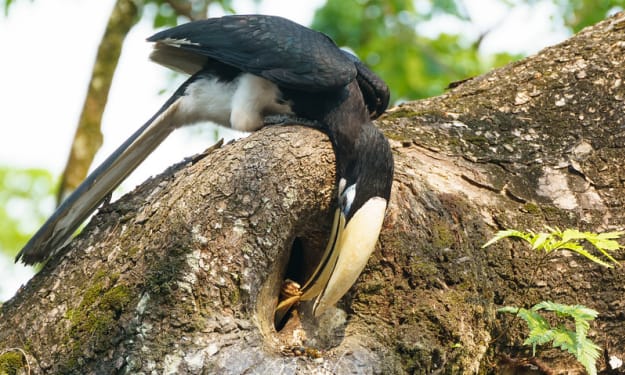
The bird which live in jail (Tuki Tuki)
The Fascinating World of Hornbills: Unveiling the Secrets of their Unique Nesting Behavior Introduction Hornbills are a unique and fascinating group of birds that play a vital role in maintaining the ecological balance of their habitats. Here are some key ecology details about hornbills:
By Mohammed thanvir2 years ago in Earth
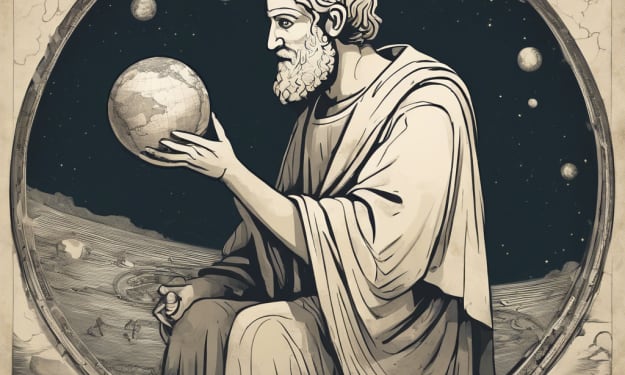
Aristotle's Disclosure: How He Demonstrated the Earth is Round. Content Warning.
In antiquated times, the conviction that the Earth was level was practically general. This thought penetrated societies across the globe, including old Greece. Be that as it may, the extraordinary rationalist Aristotle was instrumental in upsetting this confusion. In his original work, "On the Sky," Aristotle set forth unquestionable cases to show that the Earth is a circle. His philosophy and thinking tested existing convictions as well as laid the preparation for logical request and decisive reasoning.
By MD.KAMRUL HOSEN2 years ago in Earth
Animals in America Alabama and Alaska
Wildlife of Alabama The US state of Alabama has varied topography ranging from steep hills to fertile flatlands, lakes, and rivers. The state has a coastline on the Gulf of Mexico that includes 600 miles of tidal bay and bayou shoreline. Within Alabama, there are over 60 types of natural habitat, including forests, woodlands, wetlands, glades, and prairies. For most of the year, the weather is warm and humid and snowfalls are rare.
By Rasma Raisters2 years ago in Earth
Future Climate Predictions: The Role of Greenhouse Gas Emissions. AI-Generated.
Overview: Rising greenhouse gas concentrations are expected to significantly impact the climate. Anticipated changes include warmer air and oceans, higher sea levels, more acidic oceans, and altered precipitation patterns. The extent of future climate changes hinges on our current efforts to reduce emissions.
By ALCHEMY26122 years ago in Earth
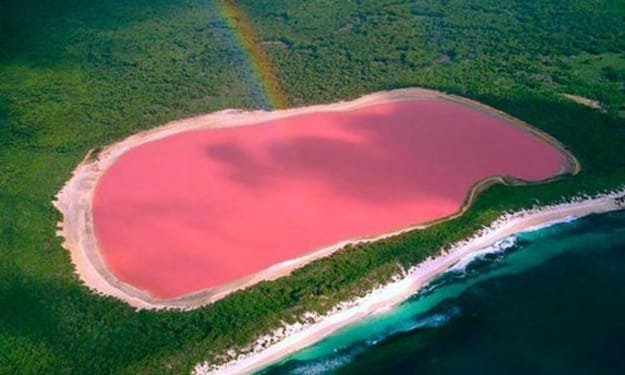
Where in the World is The Bubblegum Lake?
In this week’s installment of Where in the World, we are visiting what has become known as “The Bubblegum Lake”. Lake Hillier is referred to as Bubblegum Lake due to its bright pink color. Picture a strawberry milkshake or the stomach medicine Pepto Bismol and you can understand why this lake has been a spectacle since its discovery.
By Kassondra O'Hara2 years ago in Earth
On the Viability of Viruses
I was taught in undergrad and graduate school that viruses are not alive as they fail several of the key tests typically required for something to qualify as being alive. There are seven main characteristics biologists like myself generally agree that living organisms must possess. They are 1. The ability to respire. 2. The ability to grow 3. The ability to excrete (waste), 4. The ability to reproduce. 5. The ability to metabolize (nutrients for energy), 6. Movement. 7. Responsiveness to the environment.
By Everyday Junglist2 years ago in Earth