Nature
Climate Change and Environmental Sustainability: A Global Call to Action
Introduction Climate change and environmental sustainability have become critical concerns in the 21st century. With rising global temperatures, unpredictable weather patterns, and environmental degradation, it is imperative for individuals, corporations, and governments to take action. Sustainability efforts aim to balance economic growth, environmental protection, and social well-being, ensuring a healthier planet for future generations.
By bishal minj2 years ago in Earth
Island Peak Climbing: An Adventurous Journey to the Summit. AI-Generated.
Island Peak, also known as Imja Tse, is one of Nepal’s most popular trekking peaks, located in the Everest region of the Himalayas. Standing at 6,189 meters, it offers a challenging yet accessible climbing experience for trekkers seeking to venture into high-altitude mountaineering. Island Peak is a perfect stepping stone for those aspiring to climb higher peaks like Everest or Makalu. The climb rewards adventurers with stunning views of the Himalayas, including Mount Everest, Lhotse, Nuptse, and Ama Dablam.
By Oliver Backman2 years ago in Earth
Everest Three Passes Trek Guide: A Journey Through the Ultimate Himalayan Adventure. AI-Generated.
The Everest Three Passes Trek is the most adventurous and challenging circuit in the Everest region. This trail connects iconic destinations such as Everest Base Camp, Gokyo Lakes, and high-altitude passes while offering breathtaking views of the Himalayan giants. Completing this trek is a true test of endurance, and having an experienced Everest Three Passes Trek guide ensures a safe and enriching journey through one of the world’s most remarkable landscapes.
By Lucifer Smith2 years ago in Earth
Why Do We Love the Bad Guys? The Allure of Iconic Villains
### What Makes a Villain So Compelling? Let’s talk about villains—not the everyday bad guys, but the iconic antagonists in our favorite films. Think of Voldemort, Loki, Darth Vader, or the Joker. These characters share something intriguing: they make us question our feelings toward them. Why do we root for or empathize with these so-called “bad guys”? --- ### Empathy for Villains It turns out, people are naturally drawn to villains. According to psychologists, we empathize with them because they represent impulses or desires we suppress. Watching them act out these forbidden instincts on screen can be cathartic. It allows us to explore darker sides of ourselves without real-world consequences, a concept psychologist Carl Jung refers to as connecting with our "shadow." For example, imagine waking up in the Marvel Cinematic Universe. You grab your morning coffee when suddenly a building collapses nearby. Thor and Loki are battling in the sky. In that chaotic moment, you’d probably root for Thor, the "good guy," because your life is at stake. But if you’re watching from your couch, the dynamic shifts. Loki, with his charm and complexity, might suddenly seem more compelling. --- ### Why We Love Villains Villains like Loki intrigue us because they operate in a morally gray zone. Loki is an underdog trying to prove himself to his brother, Thor. His methods—deceit, betrayal, and manipulation—are questionable, but his vulnerability makes him relatable. Add to this Tom Hiddleston’s undeniable charisma, and you’ve got a villain audiences can't help but love. Similarly, Darth Vader, one of cinema’s most iconic villains, offers another layer of complexity. If you’ve seen the full "Star Wars" saga, you know his backstory as Anakin Skywalker. His descent into villainy stems from a fatal flaw: his fierce loyalty to those he loves. This flaw turns him from a hero to a tragic villain, and we can't help but empathize. --- ### Misbehavior and Redemption In storytelling, characters often have a "misbehavior," or a defining flaw. For heroes, the plot usually revolves around correcting this flaw. Villains, however, present a counterweight to heroes, forcing them to confront their own beliefs and values. While some villains, like Darth Vader, are redeemable, others remain steadfastly evil. Yet even the most despicable characters can become compelling when their motivations are explored. The Joker, for instance, is a chaotic and violent figure in the Batman universe, but his standalone film reframes him as a victim of societal injustice, earning the audience’s sympathy. --- ### Anti-Heroes vs. Anti-Villains It’s important to distinguish between anti-heroes and villains. Anti-heroes, like Walter White from "Breaking Bad" or Harley Quinn, are protagonists with questionable morality. We root for them because their flaws make them relatable. On the other hand, some villains fall into the category of "anti-villains." These characters are antagonists but have morally driven motives. Take Thanos from "Avengers: Infinity War." His goal—creating balance in the universe—is noble in theory, but his methods (eradicating half of all life) are horrifying. This complexity forces viewers to grapple with their own moral judgments. --- ### Villains as Protagonists Modern cinema has increasingly focused on sympathetic villains, making them the stars of their own stories. Films like "Joker," Disney’s "Maleficent," and "Cruella" explore the origins of these characters, allowing audiences to see them as victims of circumstance rather than pure evil. For example, Maleficent was once a beloved fairy whose betrayal turned her bitter. Similarly, "Cruella" reimagines the iconic "101 Dalmatians" villain as a misunderstood genius driven by ambition and personal loss. --- ### Why Stories Need Villains Villains are essential to storytelling. They challenge heroes both physically and philosophically, forcing them to confront their own limitations and beliefs. Without Captain Hook, Peter Pan’s adventures would be dull. Without Scar, Simba’s journey in "The Lion King" would lack tension. Moreover, villains often steal the show with sharp dialogue, charismatic performances, and over-the-top antics. Who can forget Scar’s sinister wit or the Joker’s chaotic unpredictability? --- ### The Duality of Villains Ultimately, villains captivate us because they represent the duality of human nature. They’re flawed, complex, and, at times, deeply relatable. Whether it’s through their backstories, motivations, or sheer charisma, they remind us that no one is entirely good—or entirely evil. And that’s what keeps us coming back for more.
By Nora Ariana2 years ago in Earth
The Internet Apocalypse: What Happens If the Web Shuts Down Forever
The beginning of zombies, the attack of beasts from an alternate reality, world calamities, or even the vanishing of honeybees—none of these scenarios seem as terrifying anymore. But what if the entire internet were to shut down across the globe? This kind of apocalypse is not only frightening but also surprisingly plausible. Imagine a world where TikTok, YouTube, Instagram, and all our favorite platforms suddenly vanish. It may sound ideal to some, but in reality, the collapse of the internet could cause far more chaos than we realize. The internet has become deeply woven into the fabric of the global economy, city infrastructure, healthcare systems, and the personal lives of billions. A global internet shutdown in 2025 would be catastrophic. The rumors of such an event have already started spreading like wildfire online, sparked by reports of powerful solar flares capable of disrupting digital communication. --- ### **The Rumor Mill** It all began with a real NASA article discussing how artificial intelligence helped scientists predict solar storms. However, someone misinterpreted the article, jokingly claiming it predicted an "internet apocalypse." This term quickly gained traction, with headlines claiming that the internet would shut down for months due to solar activity. Though exaggerated, the concerns are rooted in real science. In the summer of 2025, scientists do predict heightened solar activity, with flares reaching their peak intensity. These solar storms emit massive electromagnetic waves that can interact with Earth's magnetic field. However, predicting the exact impact remains a challenge. While AI systems are improving early warning capabilities, we are still far from fully understanding or mitigating the potential consequences of such events. --- ### **Historical Lessons: The Carrington Event** The most powerful solar storm on record occurred in 1859, known as the Carrington Event. Astronomers observed intense sunspots and blinding flashes of light. Soon after, a massive electromagnetic storm disrupted telegraph systems worldwide. Sparks flew from machines, operators reported electric shocks, and vivid auroras were visible as far as the tropics. Although communication technologies were primitive at the time, the disruption was significant. Now, imagine such a storm striking our modern, hyperconnected world. --- ### **Immediate Impact of a Global Internet Shutdown** In the first few moments, you would notice minor inconveniences—websites failing to load, music stopping mid-stream, and Netflix going offline. However, these small annoyances would soon escalate into widespread panic. Without internet connectivity: - Communication collapses. Apps like WhatsApp, email, and video calls become useless, leaving people disconnected from friends and family. - Offices shut down. Major corporations lose billions as work grinds to a halt. - Financial systems freeze. Banks can’t process transactions, ATMs stop working, and digital wallets become inaccessible. --- ### **Economic Chaos** The global economy would face unprecedented challenges. Logistics systems dependent on online tracking and communication would fail, halting supply chains. Supermarkets and stores reliant on electronic payment systems would be unable to process purchases, leading to panic buying and riots. Fuel stations, reliant on internet-based inventory systems, would also shut down, creating massive traffic jams as people scramble to find working pumps. --- ### **Infrastructure Breakdown** Essential services like electricity, water supply, and healthcare would be severely affected. Power plants, which rely on internet-based systems, could experience failures. Hospitals would struggle to access digital medical records or coordinate care. Emergency services would be overwhelmed as communication systems falter. --- ### **Life After the Shutdown** Despite the chaos, humanity would adapt. Electricians and engineers would work to restore power grids and essential systems. People would return to older technologies, such as landline telephones, fax machines, and printed maps. Corporations like Google and Microsoft would focus on rebuilding new, more resilient methods of data transmission. In the long term, society might even benefit. With no internet to distract us, people might experience improved mental health, better sleep, and sharper focus. Local communities could grow stronger as people are forced to interact face-to-face. However, these benefits would not come without significant hardship during the initial years of adjustment. --- ### **A Better Future?** Ultimately, humanity would innovate its way out of the crisis. The disappearance of the internet could inspire the development of a more secure and reliable system of communication—one that isn’t as vulnerable to solar storms or other global threats. While the "internet apocalypse" may not be imminent, it highlights how dependent we’ve become on digital connectivity. As we face an uncertain future, it’s a reminder to back up our data, strengthen our systems, and prepare for the unexpected.
By Nora Ariana2 years ago in Earth
UN Climate Summit Outcome. AI-Generated.
UN Climate Summit Outcome: A Pivotal Step Towards Global Sustainability The recently concluded United Nations Climate Summit stands as a critical chapter in humanity’s collective effort to combat the escalating challenges of climate change. Held amid a backdrop of intensifying environmental crises, ranging from severe droughts to unprecedented flooding, the summit was not merely a gathering of global leaders but a clarion call to action. Its outcomes hold profound implications for the planet and future generations.
By Mutonga Kamau2 years ago in Earth
Loki: Myth vs. Marvel – The Tale of a Trickster
Loki: the delightful trickster, a fan-favorite outsider who conquered hearts worldwide. This video contains a few spoilers, but not too many—just enough to make you fall for this extraordinary character if you haven’t already. Played by English actor Tom Hiddleston, Loki made his Marvel Cinematic Universe (MCU) debut in *Thor* (2011). Since then, Loki has appeared in four more movies, and despite having less than 80 minutes of total screen time, his charm left fans wanting more. His impact was so profound that Loki eventually got his own series, aptly named *Loki*, with its first season premiering in 2021. Season 2 followed in October 2023. Marvel drew inspiration for characters like Loki and Thor from Norse mythology. Loki, in particular, is based on the fire and mischief deity of the same name. However, how does the film version compare to the mythical figure? Let’s find out. In the MCU, Loki is depicted as a broad-shouldered man with dark hair and piercing blue eyes. In contrast, Norse mythology describes Loki with fiery red hair, a male-and-female physique, and scars stitched around his mouth. According to legend, his lips were sewn shut as punishment for breaking a wager. Loki’s shapeshifting abilities—also shown in the films—are another key trait. Initially, Loki was introduced as a villain, opposing the Avengers and his stepbrother Thor, the God of Thunder. However, the movies hinted at Loki's earlier bond with Thor, highlighting shared adventures where Loki's cunning complemented Thor's strength and naivety. Over time, Loki’s scheming soured their relationship. In mythology, Loki and Thor aren’t brothers. Some stories describe Loki as a "half-breed" with unpredictable traits. His father, Farbauti, was a Jotunn (a mystical giant), while his mother, Laufey, was a goddess. The MCU altered this dynamic, portraying Laufey as Loki’s biological father—a Frost Giant—whom Odin defeated and left for dead. Odin found the infant Loki in Jotunheim, adopted him, and raised him as a son. Despite this upbringing, Loki eventually betrayed Laufey to prove himself worthy of Asgard’s throne. Mythological accounts depict Loki's relationship with the Norse gods as complex. He was both a companion and a trickster who sought to disrupt their control. One example of Loki’s mischief involved Thor’s wife, Sif, renowned for her golden hair. Loki, out of boredom, cut off her hair. Furious, Thor confronted Loki, who eventually replaced Sif’s hair with a golden wig crafted by dwarves. This prank, though disruptive, served to stir up change and avoid stagnation in Asgard, earning Loki both love and forgiveness from the gods—temporarily. However, Loki's deeds grew darker over time. He orchestrated the death of Balder, the god of goodness and Odin’s most beloved son. Loki discovered Balder could only be harmed by mistletoe. Crafting a mistletoe dart, he tricked the blind god Hodr into fatally striking Balder. This act branded Loki as the ultimate villain. The gods punished him by binding him beneath a snake that dripped venom onto his face. His devoted wife, Sigyn, caught the venom in a bowl, but when she emptied it, the drops caused Loki immense pain, said to trigger earthquakes. Legend states Loki will eventually break free during Ragnarok, the apocalypse, to exact revenge. Interestingly, Loki had a family in mythology. He was married to Sigyn, with whom he had two sons, Narfi and Vali. Sigyn’s loyalty to Loki was evident during his punishment. Besides Sigyn, Loki had other relationships, including with the giantess Angrboda, who bore him monstrous children, and an infamous encounter as a shapeshifting mare that led to the birth of Sleipnir, an eight-legged horse later gifted to Odin. One legend highlights Loki’s trickery. A giant agreed to build a wall around Asgard in exchange for the sun, moon, and Freya. Thinking the giant would fail, the gods accepted. But the giant worked swiftly, aided by his horse, Svadilfari. Panicked, Loki transformed into a mare to distract the horse. The giant failed to complete the wall, leading to his demise at Thor's hands. Meanwhile, Loki, in mare form, gave birth to Sleipnir, a steed capable of traveling between worlds at lightning speed. Loki’s shapeshifting extended beyond this story. He transformed into animals, old women, and even political figures, sacrificing his identity to drive the narrative forward. The Disney+ *Loki* series explored this trait by introducing alternate versions of Loki, including a boastful old man and even a crocodile. Loki’s moral ambiguity is part of his allure. He is neither entirely good nor evil, bringing vitality and unpredictability to the stories he inhabits. This complexity fuels debates about his capacity for love. The first season of *Loki* addressed this with a peculiar romance between Loki and Sylvie, a female variant of himself. Sylvie, based on Lady Loki from the 2008 comics, is independent and strong-willed, contrasting with mythological Loki’s loyal yet mischievous spouse. Their dynamic adds intrigue to the series, leaving fans curious about their future. In the show, Loki becomes the chosen guardian of time, tasked with maintaining universal balance. While myths don’t explicitly connect Loki to time, his magic and defiance make him a fitting candidate for such a journey. Whether he’s forging chaos or saving the day, Loki continues to transcend time, space, and expectations—remaining an irresistible figure across all dimensions.
By Nora Ariana2 years ago in Earth
Sustainable Living Practices: A Path Toward a Greener Future
Sustainable living is reducing one's environmental impact through mindful choices, resource conservation, and adopting eco-friendly habits. As concerns over climate change and resource depletion grow, sustainability has become an integral part of modern life. From energy conservation to waste management, individuals and communities are increasingly adopting practices that benefit the environment and promote healthier, more efficient lifestyles. This article explores key sustainable living practices that everyone can incorporate into their daily routines to contribute to a greener, more sustainable future. Energy Efficiency One of the most impactful ways to live sustainably is by reducing energy consumption. Household energy use is a significant contributor to carbon emissions, making energy efficiency a crucial element of sustainable living. Switch to LED Lighting: Replacing traditional incandescent bulbs with energy-efficient LED lights can significantly reduce energy use. Embrace Renewable Energy: Solar panels, wind turbines, and other renewable energy sources can help power homes with clean energy, reducing dependence on fossil fuels. Use Energy-Efficient Appliances: Investing in energy-efficient appliances, such as refrigerators, washers, and air conditioners, can lower energy consumption and save on electricity bills. Seal Gaps and Insulate Properly: Proper insulation and sealing of windows and doors help keep homes warm in winter and cool in summer, reducing the need for excessive heating or cooling.
By Pure Crown2 years ago in Earth
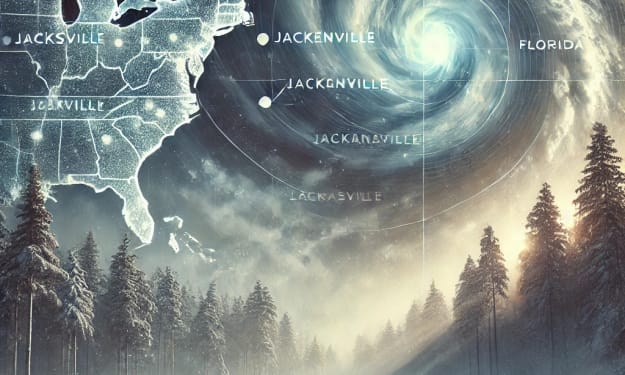
Winter Storm Enzo: Snow Forecast and Weather Updates
As winter settles in, many are turning their attention to the snow forecast and weather conditions associated with Winter Storm Enzo. This significant storm system is expected to bring widespread impacts, including snow, rain, and strong winds, to various parts of the United States. Let’s dive into the details of the snow forecast, regional weather updates, and what to expect in the coming days.
By Delta Roblox Executor Download APK 2026 latest New Update2 years ago in Earth
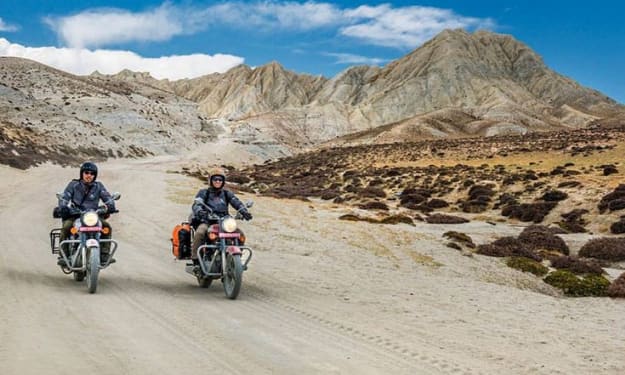
Best Seasons for Motorcycle Touring in Nepal
Imagine doing a serpentine ride through a breathtaking Himalayan pass with the sun warm on your face and crisp, clear air. Sounds idyllic, right? But the reality of how that motorcycle tour in Nepal would actually be can be quite different, depending on the time of year.
By Nepal Moto Tours2 years ago in Earth
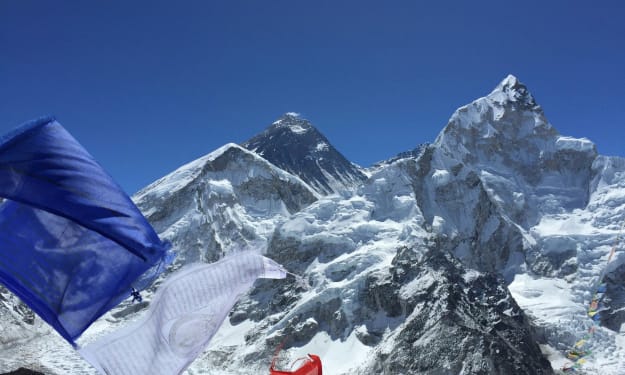
Island Peak Climbing with Everest Base Camp: An Ultimate Himalayan Adventure. AI-Generated.
Combining the trek to Everest Base Camp (EBC) with the ascent of Island Peak (Imja Tse) offers adventurers a unique blend of high-altitude trekking and mountaineering in the heart of the Himalayas. This journey not only takes you to the base of the world's highest mountain but also challenges your climbing skills on one of Nepal's most accessible 6,000-meter peaks. Here's a comprehensive guide to this extraordinary expedition.
By Carme Brun Gasca2 years ago in Earth