Nature
Death Islands of the World: The Most Dangerous and Mysterious Islands
Islands are often seen as paradise—beautiful beaches, clear blue waters, and a peaceful escape from daily life. However, not all islands are safe. Some are home to deadly wildlife, toxic environments, or even dark histories that make them some of the most dangerous places on Earth. These islands have gained a terrifying reputation, earning them the title of “Death Islands.”
By Maloy Gayen2 years ago in Earth
Porter Guide in Nepal: Essential Information for Trekkers. AI-Generated.
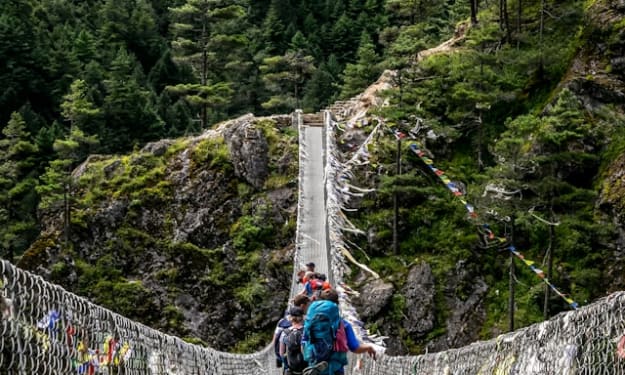
Porters are an integral part of trekking in Nepal, helping trekkers carry their gear and providing valuable assistance throughout the journey. Whether you're trekking the Annapurna Circuit, Everest Base Camp, or any other trail, hiring a porter can make your trek more comfortable, safe, and enjoyable. Here’s a comprehensive guide to hiring and working with porters in Nepal.
By Lucifer Smith2 years ago in Earth
Chulu Far East Peak: A Stunning Himalayan Climb. AI-Generated.
Chulu Far East Peak (6,059m/19,879ft) is a fantastic climbing destination in the Annapurna region of Nepal. Ideal for both experienced trekkers and beginner mountaineers, this peak offers an exhilarating mix of trekking and climbing, combined with breathtaking views of the Annapurna, Dhaulagiri, and Manaslu ranges. The climb is less technical than some of Nepal’s more challenging peaks, making it an excellent introduction to Himalayan mountaineering.
By Oliver Backman2 years ago in Earth
The Impact of TikTok on the Music Industry
TikTok, the short-form video platform that has rapidly grown in popularity, has had a profound impact on various industries, including the music industry. Launched in 2016 by the Chinese tech company ByteDance, TikTok has transformed how music is discovered, shared, and consumed.
By Nora Ariana2 years ago in Earth
How to Help Protect Endangered Species
Endangered species are a crucial part of our planet's biodiversity, and their protection is a responsibility we all share. These species, whether animals or plants, are at risk of extinction due to factors like habitat loss, poaching, climate change, and pollution. When a species becomes endangered, it is not just an isolated event; it has broader implications for the environment and the ecosystems that depend on these species for balance.
By Nora Ariana2 years ago in Earth
The Science Behind Climate Change Denial
Climate change has become one of the most pressing global issues of the 21st century. As scientific evidence overwhelmingly supports the reality of human-induced climate change, with rising temperatures, increasing sea levels, and more frequent extreme weather events, there remains a significant number of individuals who deny the existence or severity of climate change.
By Nora Ariana2 years ago in Earth
The Future of Space Exploration: What's Next
Space exploration has always captured the human imagination. From the early days of observing the stars to the monumental achievements of the space race, humanity’s curiosity about what lies beyond Earth has driven technological advances and scientific discoveries.
By Nora Ariana2 years ago in Earth
How Many Straws Does It Take to Break a Camel's Back?
The term "the straw that broke the camel's back" is a well-known idiom that refers to a small, seemingly unimportant action that, when added to a bigger set of actions, causes a catastrophic failure. But have you ever thought how many sticks it truly takes to break a camel's back? And what sort of straws are we talking about? Let's dig into this interesting problem and study the different angles surrounding it.
By Souad Cheraif2 years ago in Earth
Understanding the Science of Ocean Conservation
Ocean conservation is one of the most pressing environmental issues of our time. As the largest and most diverse ecosystem on Earth, the oceans cover about 71% of the planet’s surface and play a crucial role in regulating the climate, supporting biodiversity, and providing resources for human survival. However, over the past century, human activities have dramatically altered the health of the oceans, leading to a wide array of environmental challenges. Understanding the science behind ocean conservation is essential for developing strategies to protect this vital ecosystem and ensure its sustainability for future generations. The first step in understanding ocean conservation is recognizing the key components of ocean ecosystems. Oceans are not just vast bodies of water; they are complex systems composed of physical, chemical, and biological elements that work together to sustain life. The oceans are home to a wide variety of organisms, from microscopic plankton to the largest animals on Earth, such as whales. These organisms form intricate food webs, with each species playing a specific role in maintaining ecological balance. One of the most important functions of the oceans is their role in regulating the Earth’s climate. The oceans absorb large amounts of carbon dioxide from the atmosphere, helping to reduce the impact of greenhouse gases and slow the rate of climate change. They also act as heat sinks, absorbing excess heat from the sun and distributing it around the globe, which helps to moderate temperature extremes. This process, known as ocean circulation, is crucial for maintaining the stability of the planet’s climate. In addition to their climate-regulating role, the oceans provide numerous resources that humans depend on for survival. Oceans are a primary source of food for billions of people, particularly through fishing. They also supply valuable minerals, oil, and gas, and support industries such as shipping and tourism. Coastal ecosystems, such as coral reefs, mangroves, and wetlands, provide vital services, including shoreline protection, water filtration, and habitat for many species.
By Nora Ariana2 years ago in Earth
USDA Ordered To Remove Climate Change From Internet
The U.S. Department of Agriculture (USDA) is quietly scrubbing its websites of climate change references, raising concerns about the future of climate-focused agricultural programs. According to an internal email obtained by Politico, agency employees have been directed to delete landing pages discussing climate change and to document any remaining references for further review. While the department hasn’t made an official statement explaining the decision, the move signals a potential shift in priorities under the new administration.
By Rootbound Homestead2 years ago in Earth