Nature
Fossil fuels and carbon footprint
However, their environmental impact, particularly their contribution to climate change through carbon emissions, has become a major global concern. The term “carbon footprint” refers to the total amount of greenhouse gases, primarily carbon dioxide (CO₂), released into the atmosphere as a result of human activities. This includes everything from the burning of fossil fuels for electricity, heating, and transportation, to deforestation and other industrial processes. Let’s explore how fossil fuels contribute to the carbon footprint and the broader environmental implications of this.
By Badhan Sen2 years ago in Earth
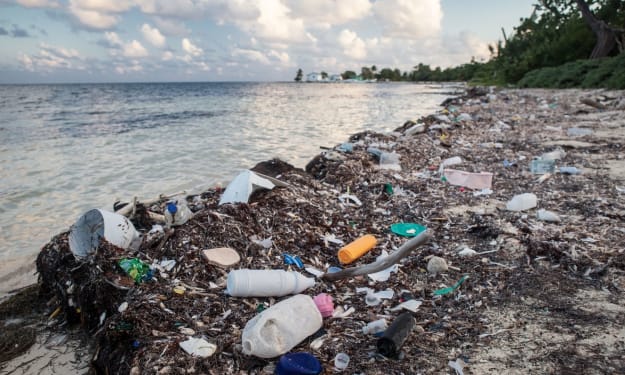
Plastic pollution in oceans
The oceans cover over 70% of the Earth's surface, and they play an essential role in sustaining life on Earth. However, plastic waste has infiltrated this vast ecosystem, causing irreversible damage to marine life, ecosystems, and human health.
By Badhan Sen2 years ago in Earth
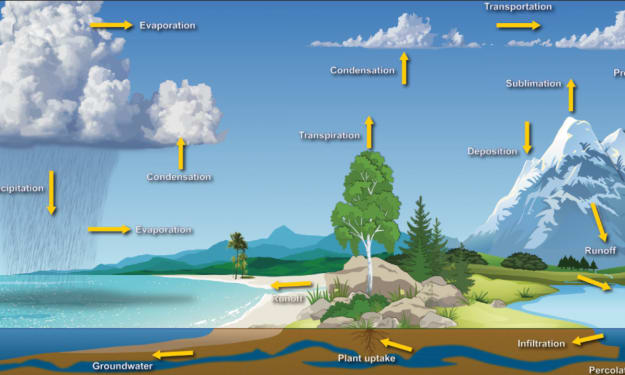
Hydrological cycle (evaporation, precipitation)
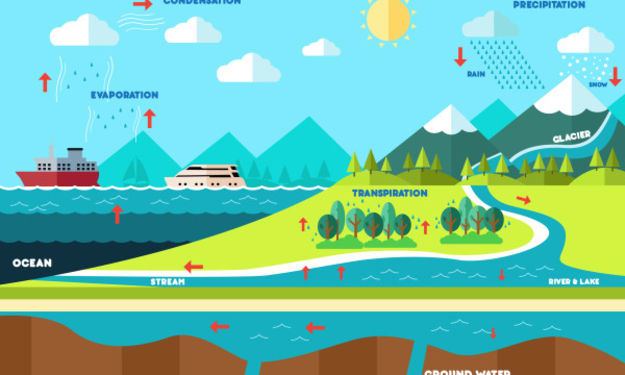
The hydrological cycle, also known as the water cycle, is a continuous process by which water circulates through the Earth's atmosphere, surface, and underground reservoirs. This cycle is essential for maintaining ecological balance and supporting life on our planet. The two most significant processes in this cycle are evaporation and precipitation, which facilitate the movement of water between different states and locations. This article explores the fundamental aspects of the hydrological cycle, emphasizing evaporation and precipitation and their roles in sustaining the global water balance.
By Badhan Sen2 years ago in Earth
Groundwater depletion
Groundwater is stored beneath the Earth's surface in aquifers—permeable rock layers that hold water. However, excessive extraction of groundwater beyond its natural replenishment rate leads to groundwater depletion, posing a serious threat to water availability, ecosystems, and human livelihoods. This article explores the causes, consequences, and possible solutions to the growing issue of groundwater depletion.
By Badhan Sen2 years ago in Earth
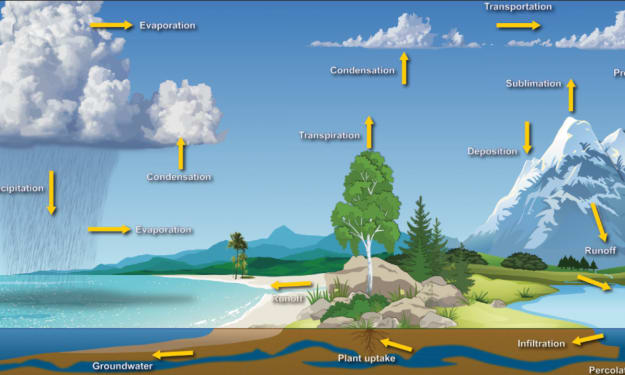
Hydrological cycle (evaporation, precipitation)
The hydrological cycle, also known as the water cycle, is a continuous process by which water circulates through the Earth's atmosphere, surface, and underground reservoirs. This cycle is essential for maintaining ecological balance and supporting life on our planet. The two most significant processes in this cycle are evaporation and precipitation, which facilitate the movement of water between different states and locations. This article explores the fundamental aspects of the hydrological cycle, emphasizing evaporation and precipitation and their roles in sustaining the global water balance.
By Badhan Sen2 years ago in Earth
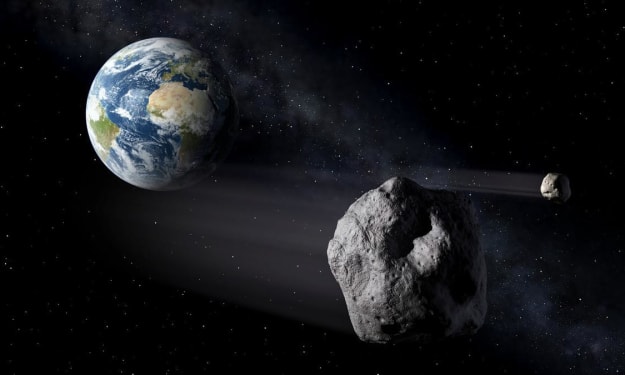
Simulate the YR4 Asteroid Impact on Earth
Have you ever wondered what would happen if an asteroid collided with Earth? Thanks to an innovative tool, you can now simulate the impact of the YR4 asteroid and explore the potential consequences in real time. This simulation is more than just a fun experiment—it’s a valuable resource for researchers, educators, and tech companies looking to understand how such an event could affect our planet.
By Miguel Díaz2 years ago in Earth
Ocean acidification
Ocean acidification is a process where the oceans become more acidic due to the increased absorption of carbon dioxide (CO₂) from the atmosphere. The burning of fossil fuels, deforestation, and other human activities release excess CO₂ into the atmosphere, a significant portion of which is absorbed by the oceans. This increased level of carbon dioxide reacts with seawater to form carbonic acid, which lowers the pH of the water, making it more acidic. Ocean acidification has emerged as a major environmental concern in recent decades, with far-reaching implications for marine ecosystems, biodiversity, and even human communities reliant on ocean resources.
By Badhan Sen2 years ago in Earth
Tsunamis and tidal waves
Tsunamis and tidal waves are both natural phenomena related to the movement of water, but they are quite distinct in terms of their causes, behavior, and effects. Despite common misconceptions, the two are different and have varying levels of intensity. Understanding their origins, characteristics, and impact can help in preparing for and mitigating their potentially devastating consequences.
By Badhan Sen2 years ago in Earth
Ocean trenches (Mariana Trench)
Located in the western Pacific Ocean, it reaches a depth of approximately 36,070 feet (10,994 meters) at its deepest point, known as the Challenger Deep. This incredible depth makes it the lowest point on the Earth's surface, deeper than Mount Everest is tall. The trench, part of a larger subduction zone, was formed by the tectonic processes that occur when one tectonic plate is forced beneath another, resulting in the extreme depths of the ocean in that area.
By Badhan Sen2 years ago in Earth
Oceans & Hydrology
Hydrology, the study of water, is closely connected to the oceans, as they are the primary source of Earth's water cycle. The study of oceans and hydrology is vital to understanding how the Earth's water systems function, how we can sustainably manage water resources, and how human activities influence both natural processes.
By Badhan Sen2 years ago in Earth