Nature
Mountaineering in Nepal: Conquering the Himalayan Giants. AI-Generated.
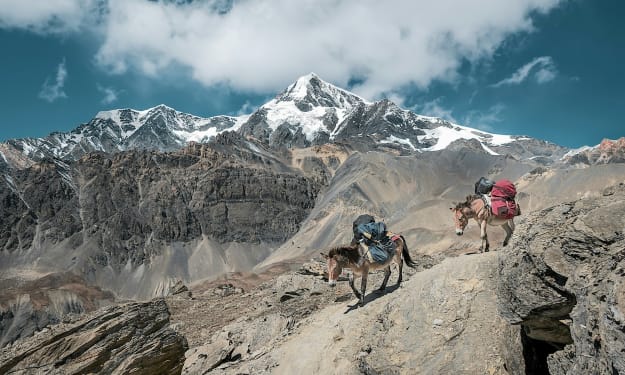
Nepal, known as the roof of the world, is widely regarded as the ultimate destination for mountaineering enthusiasts. It is home to eight of the world’s fourteen 8,000-meter peaks, including the iconic Mount Everest (8,849m), the world’s highest mountain, as well as Kanchenjunga (8,586m), Lhotse (8,516m), and Makalu (8,485m). These towering peaks draw experienced mountaineers, trekkers, and adventurers from across the globe. Nepal's diverse range of challenging peaks, technical climbs, and stunning landscapes offer an unparalleled opportunity for climbers to test their limits. From trekking peaks that provide an entry into high-altitude mountaineering to the world-renowned technical climbs on some of the tallest mountains on Earth, Nepal is a paradise for those seeking the thrill of mountaineering.
By Oliver Backman2 years ago in Earth
Biology: The Fascinating Study of Life and Living Organisms
Biology, derived from the Greek words bios (life) and logos (study), is the scientific exploration of life and living organisms. It spans an immense range of topics—from the microscopic structures within cells to the vast, interconnected ecosystems that sustain life on Earth. This discipline helps us comprehend the structure, function, growth, origin, evolution, and distribution of all living beings. By studying biology, we gain insight into the mechanisms that drive life, paving the way for medical breakthroughs, environmental conservation, and technological advancements.
By Rocky Brahma2 years ago in Earth
Nature’s Wrath and How to Survive Them
Winter storms are among the most powerful and disruptive natural phenomena, bringing heavy snow, ice, freezing rain, and bitter cold temperatures. These storms can paralyze cities, disrupt transportation, cause power outages, and even threaten lives. As climate patterns shift, winter storms are becoming more intense and unpredictable, making it essential to understand their impact, preparation strategies, and the resilience required to face them.
By Bint E Ruqqyyah2 years ago in Earth
The Secret of Plants That Survive in the Desert
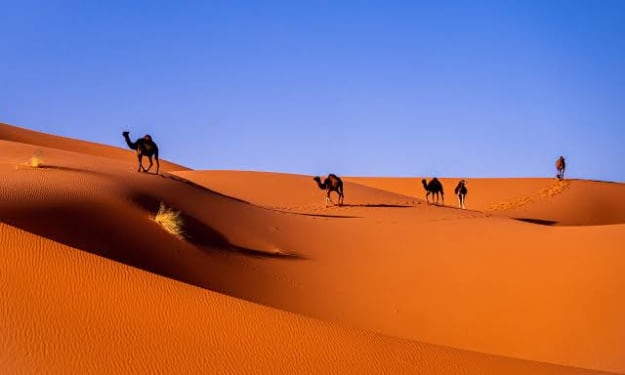
Plants that survive in the harsh conditions of the desert have developed remarkable adaptations that allow them to endure extreme temperatures, droughts, and a lack of nutrients. These survival strategies not only showcase the ingenuity of nature but also provide valuable lessons in resilience, adaptation, and resource efficiency. Many of these plants have evolved to store water, reduce water loss, and make the most out of the limited resources available in their environment. Let’s take a closer look at some of the most impressive desert survivors.
By AQUÁ PLANTAS2 years ago in Earth
Winter Hike on Provincetown Dunes and Backshore
Northern harriers swooped from trees to the marsh on the other side of the narrow highway. An unexpected sight on a cold January day — almost enough for me to stop the car if the truck behind me wasn’t still on the same trajectory. A pair or rivals is another answer I won’t have. A sign of good things before I begin the long walk over sand.
By Chaia Levi2 years ago in Earth
Budget-Friendly Tips for Buying a Home in the South?
The South has always been a popular place for homebuyers. With its warm climate, lower cost of living, and friendly communities, it’s easy to see why people move here. Property prices tend to be more affordable than in other regions, making homeownership possible for many. Southern Home Ownership offers opportunities for buyers to invest in properties that provide long-term value. If you’re looking to buy a home without spending a fortune, this guide will help you make smart financial decisions.
By Southern Home Ownership Programs2 years ago in Earth
Japanese astronaut's demonstration of playing baseball in space.
Japanese astronaut's demonstration of playing baseball in space. Japanese astronaut Koichi Wakata recently captivated the world by demonstrating baseball in space an event that combined elements of entertainment education and scientific inquiry. The demonstration took place aboard the International Space Station (ISS) where Wakata became the first astronaut to show how the sport could be played in microgravity an environment that significantly alters the way objects move. This unusual display of athleticism and science not only fascinated baseball fans but also sparked discussions about the physics of motion in space. BeIn the video that went viral Wakata floated effortlessly inside the ISS tossing a baseball into the air before swinging at it with an imaginary bat. Due to the absence of gravity the ball didn’t fall back to the ground as it would on Earth. Instead it drifted along and Wakata had to chase it and catch it mid air. The video clearly showcased how the basic principles of baseball would change in space. On Earth gravity pulls objects down, and the friction of air affects how a baseball travels. However in the microgravity environment of the ISS the ball continued to float in the direction it was hit unless acted upon by another force. This demonstration was not only a fun and creative activity for Wakata but also a way to highlight the fascinating differences between how objects move in space compared to Earth. Baseball a game deeply rooted in Japanese culture is the most popular sport in Japan and the idea of playing it in space was a fitting tribute to Japan’s love for the game. Koichi Wakata who has had an illustrious career as a Japanese astronaut is no stranger to making waves. His baseball demonstration was both a symbol of his cultural heritage and a unique contribution to the space exploration narrative. Japan's passion for baseball is well documented. The country’s professional league Nippon Professional Baseball (NPB) is one of the most competitive and successful in the world. Several Japanese players have made their mark in Major League Baseball (MLB) in the United States further enhancing the sport’s popularity. Wakata’s space baseball demonstration therefore served as both a personal and national celebration showcasing how space exploration can intertwine with human culture and passions in unexpected ways. His act of playing baseball in space generated enormous pride in Japan and brought a fresh perspective to the connection between Earth and space. While playing sports in space may sound like a novelty this is not the first time astronauts have experimented with sports in a zero gravity environment. In fact throughout history astronauts have used their time in space to conduct light hearted yet educational activities. In 1971 NASA astronaut Alan Shepard made headlines when he famously hit two golf balls on the Moon. Although the activity was more symbolic than competitive, it captured the imagination of millions around the world. Similarly Russian cosmonauts have attempted to play soccer in space, while astronauts have tried their hand at basketball and table tennis albeit in modified forms. These attempts highlight the challenges of recreating Earth-based sports in a weightless environment.
By Adnan Rasheed2 years ago in Earth
From the City to a Honeybee Abyss: Urban Beekeeping
The abstraction of urban beekeeping is a profound movement at the convergence of environmental stewardship, sustainability, and urban agriculture. No longer just a hobby, it’s a vital practice that helps with ecological balance and reconnects urbanites with nature’s currant-number one pollinators.
By Neli Ivanova2 years ago in Earth
Kanchenjunga North Base Camp Trek: A Journey into the Wild Himalayas
The Kanchenjunga North Base Camp trek is one of Nepal's most remote and rewarding trekking adventures. Nestled in the far eastern region of Nepal, this trek takes you deep into the heart of the Himalayas, offering unparalleled views of the world's third-highest mountain, Kanchenjunga (8,586m). Unlike the more commercialized treks such as Everest Base Camp or Annapurna Circuit, this journey remains relatively untouched, providing a true wilderness experience for avid trekkers.
By Anya Gurung2 years ago in Earth
Kanchenjunga Circuit Short Trek: An Untouched Himalayan Adventure. AI-Generated.
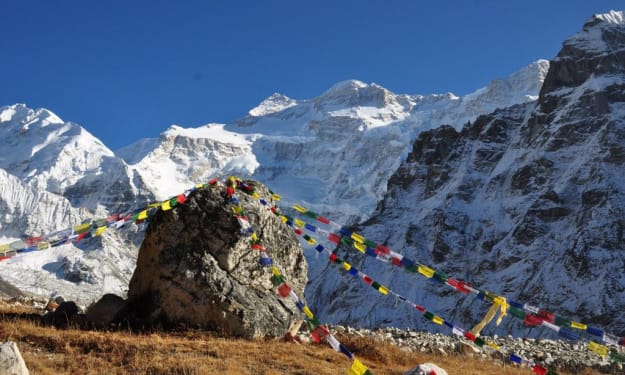
The Kanchenjunga Circuit Short Trek is an exhilarating adventure that takes trekkers into the remote eastern Himalayas, leading to the base of Mount Kanchenjunga (8,586m), the world’s third-highest peak. Unlike the full Kanchenjunga Circuit, this shorter version allows trekkers to explore the region in less time while still experiencing its breathtaking landscapes, diverse cultures, and untouched wilderness. The trek winds through deep valleys, alpine meadows, lush forests, and rugged glaciers, offering an unparalleled trekking experience far from the crowds of Nepal’s more commercial routes.
By Oliver Backman2 years ago in Earth