Nature
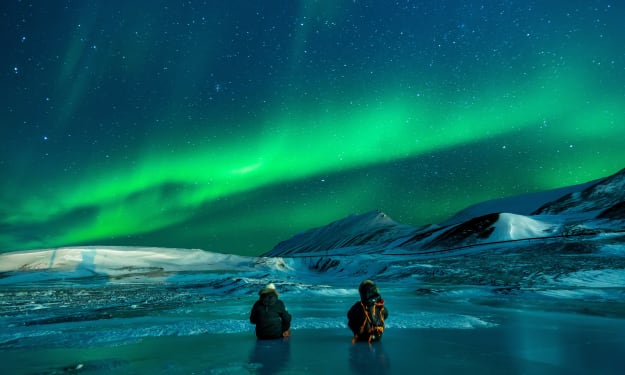
Aurora The Beauty of Nature
The Northern Aurora, scientifically referred to as the Aurora Borealis, is one of Earth’s most mesmerizing natural phenomena. Dancing across the night skies in the polar regions, these luminous displays of green, pink, red, purple, and blue have fascinated humankind for millennia. Their ethereal beauty, scientific complexity, and cultural significance make them a subject of enduring interest. In this essay, we will explore the origins, science, history, mythology, observation, and future of the Northern Aurora, uncovering the many layers of this celestial spectacle.
By Tanvir Hosainabout a year ago in Earth
Rising Storms: Are We Entering a New Era of Solar Fury?
Our life-sustaining star, the Sun, has an activity cycle of around 11 years, with periods of low solar activity (solar minimum) and high activity (solar maximum) in between. Sunspots, solar flares, and coronal mass ejections are indicators of these cycles, which are referred to as solar cycles. These patterns have long been researched by scientists in an effort to better comprehend the Sun and forecast how its activity will affect Earth. The Sun may be about to enter a period of stronger 11-year cycles, according to new study. This may have a significant impact on satellites, electrical grids, space weather, and perhaps the climate of Earth.
By Shahriar Zakiabout a year ago in Earth
A Holiday in Switzerland
The plane began its slow descent into Zurich, and Maya’s heart fluttered with a mix of excitement and disbelief. She had dreamed of Switzerland for years—its snow-capped peaks, serene lakes, and quaint little towns that looked like they belonged in storybooks. Now, after five years of saving and planning, she was finally here.
By Haris Khanabout a year ago in Earth
Astronauts Can Reach Mars, but One Critical Organ Could Fail Forever. AI-Generated.
Astronauts Can Reach Mars, but One Critical Organ Could Fail Forever As humanity edges closer to its ambitious goal of sending astronauts to Mars, scientists and space agencies continue to confront numerous biological and technological challenges. While advanced propulsion systems, life support mechanisms, and food sustainability are being addressed with promising solutions, one major concern looms large over interplanetary travel — the health of the human brain. Research suggests that while astronauts may successfully reach Mars, their brains could suffer irreversible damage during the journey, posing significant risks to long-term cognitive function and mental well-being.
By Adnan Rasheedabout a year ago in Earth
The Quiet Moments That Changed Me
It was early morning when I set foot on the rugged trails of the Manaslu Annapurna Circuit. The air was crisp, the sky clear, and the mountains—those massive, silent giants—loomed in the distance. I had read about the beauty of this trek, but nothing could prepare me for the silence that awaited. There’s a unique stillness in the mountains, a kind of peacefulness that starts to seep into your soul the moment you leave behind the busy world.
By Maik Tysonabout a year ago in Earth