Nature
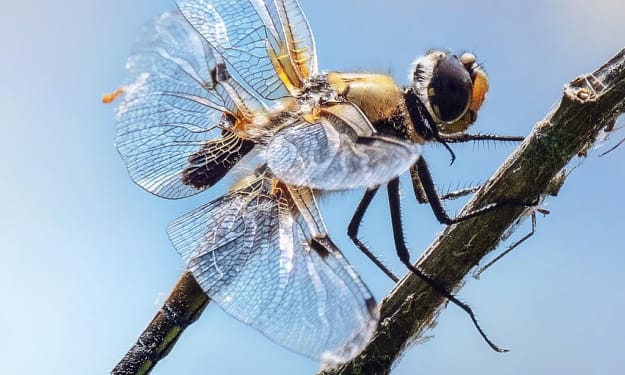
Dragonfly: The Ancient Aviator of the Skies
Introduction The dragonfly, a shimmering symbol of transformation and agility, is not just an insect — it is a marvel of evolution, a predator of precision, and a creature of deep cultural significance. Found across almost every continent, dragonflies have fascinated humanity for millennia. From their prehistoric lineage to their mesmerizing flight mechanics, the story of the dragonfly is as complex and fascinating as the creature itself. --- 1. Evolutionary History: Living Fossils of the Insect World Dragonflies are some of the oldest flying insects on Earth. Their ancestors date back over 300 million years, long before the age of dinosaurs. Fossil records show that ancient dragonflies like Meganeura had wingspans of up to 28 inches, dwarfing their modern descendants. Belonging to the order Odonata, which also includes damselflies, dragonflies are further classified under the suborder Anisoptera. Their primitive features — such as fixed-wing structures and aquatic larvae — highlight their ancient evolutionary roots. --- 2. Anatomy and Physiology: Designed for Speed and Agility Dragonflies are built for flight dominance. With two pairs of independently moving wings, they can hover, glide, fly backward, and even make sharp turns at high speeds. Their flight capabilities have inspired engineers and roboticists studying micro aerial vehicles. Key anatomical features include: Compound eyes: Each eye contains up to 30,000 ommatidia, giving them nearly 360-degree vision. They can detect polarized light and even colors in the ultraviolet range. Thorax: Strong muscles in the thorax control wing movement independently. Abdomen: Long and slender, it balances the dragonfly during flight and aids in mating. Legs: While not used for walking, the six spiny legs are perfect for catching prey mid-air. Dragonflies are ectothermic, relying on environmental heat. Some species, like Pantala flavescens, use a technique called wing-whirring to warm up their flight muscles before takeoff. --- 3. Lifecycle: From Aquatic Predator to Aerial Hunter Dragonflies undergo incomplete metamorphosis, passing through three stages: egg, nymph (larva), and adult. Eggs: Laid in or near water, dragonfly eggs hatch in a few days to several weeks, depending on species and climate. Nymph: This aquatic stage can last from months to several years. Dragonfly nymphs are voracious predators, feeding on mosquito larvae, tadpoles, and even small fish. They use a hinged, extendable lower jaw to snatch prey. Emergence: After molting multiple times, the nymph climbs out of the water and undergoes its final transformation. The adult dragonfly emerges, pumping fluid into its wings to expand them. Most adult dragonflies live only a few weeks to a few months, during which their primary focus is reproduction. --- 4. Behavior and Ecology: Masters of the Air and Water Dragonflies are apex insect predators in both their larval and adult stages. They exhibit complex behaviors such as: Territoriality: Males are highly territorial and often engage in aerial battles to defend prime mating spots near water. Mating: Their unique "wheel position" during mating is iconic. Males use claspers at the end of their abdomen to grip the female behind the head, while the female bends her abdomen forward to collect sperm. Oviposition: Females lay eggs in water or on aquatic plants. Some species dip their abdomens repeatedly into the water to release eggs. Dragonflies help maintain ecological balance by feeding on pests like mosquitoes, flies, and midges. They are sensitive to pollution and serve as bioindicators of water quality. --- 5. Diversity: Over 5,000 Species Worldwide There are more than 5,000 known species of dragonflies, with incredible diversity in size, color, and behavior. Some notable families include: Libellulidae (Skimmers): The largest family, found in a wide range of habitats. Aeshnidae (Darners): Large, strong fliers with distinctive stripes. Gomphidae (Clubtails): Named for their swollen tail segments. Corduliidae (Emeralds): Often metallic green or blue. Tropical regions like Southeast Asia, South America, and Africa are hotspots for dragonfly biodiversity. --- 6. Dragonflies in Culture and Symbolism Dragonflies carry deep symbolic meaning across cultures: Japan: Considered symbols of strength, courage, and happiness. Samurai used them in armor and art. Native American traditions: Associated with swiftness and change. Europe: Once linked with superstition and danger (e.g., "Devil’s darning needle"), modern views are more positive. China: Symbols of harmony, prosperity, and the arrival of summer. In modern symbolism, the dragonfly is often seen as a sign of transformation, adaptability, and self-realization. --- 7. Conservation Status: Threats and Protection Despite their ancient success, dragonflies are under threat due to: Habitat destruction: Wetland drainage, deforestation, and urbanization. Pollution: Pesticides and water contamination harm larval stages. Climate change: Alters migration patterns and breeding cycles. Organizations like the IUCN monitor dragonfly populations. Wetland preservation and clean water initiatives are crucial to protecting them. Some species, such as the Hine's emerald dragonfly (Somatochlora hineana), are listed as endangered. --- 8. Dragonflies and Science: Bioinspiration and Research Dragonflies have become a focal point in scientific research due to their unique features: Aviation and robotics: Their flight mechanics inspire biomimetic drones and micro air vehicles. Neuroscience: Studies of their vision and motion detection contribute to understanding sensory processing. Pest control: Research continues into using dragonflies for natural mosquito population management. Additionally, dragonflies are used in citizen science projects where communities help monitor local species. --- 9. Fun Facts About Dragonflies A dragonfly can fly up to 35 miles per hour, making it one of the fastest insects. Pantala flavescens is the most widespread dragonfly, known for transoceanic migrations over thousands of kilometers. Dragonflies can eat their own body weight in insects every 30 minutes. Their wings beat independently, allowing them to perform aerial feats no helicopter can mimic. --- Conclusion: The Living Jewel of the Natural World Dragonflies are more than just beautiful insects gliding over ponds — they are ancient survivors, ecological warriors, and icons of transformation. In a rapidly changing world, protecting dragonflies means protecting the delicate ecosystems they inhabit. Observing a dragonfly is like glimpsing nature’s artistry and engineering at its finest — a reminder that even the smallest creatures have the power to inspire awe and curiosity.
By Ikram Ullahabout a year ago in Earth
North America's 'Broken Heart': The Billion-Year-Old Scar from When the Continent Nearly Ripped Apart. AI-Generated.
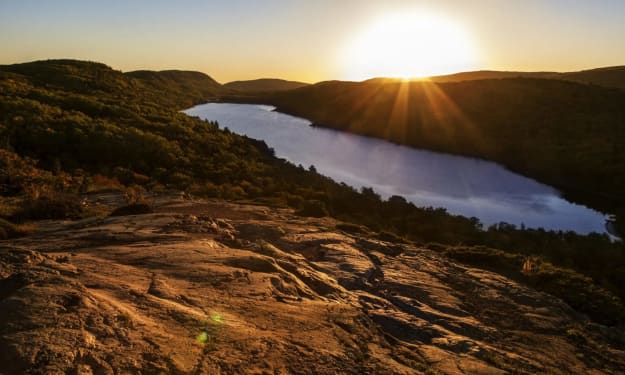
North America's 'Broken Heart': The Billion-Year-Old Scar from When the Continent Nearly Ripped Apart Deep beneath the surface of North America lies a hidden geological wound—an ancient scar etched into the very foundation of the continent. Known as the Midcontinent Rift, this billion-year-old feature is a reminder of a dramatic episode in Earth’s history when North America almost split into two separate landmasses. Often called the "broken heart" of the continent, this rift tells a story of powerful tectonic forces, volcanic upheaval, and a near miss that could have rewritten the map of the world as we know it.
By Adnan Rasheedabout a year ago in Earth
Top Offbeat Road Trips from Mussoorie Under 3 Hours
Mussoorie, the famed Queen of Hills, is a beloved destination in Uttarakhand. But while Mall Road and Kempty Falls are always bustling with tourists, the real magic lies just beyond the usual trails. If you're someone who prefers winding roads, whispering pines, and quiet hill hamlets over crowded viewpoints, this article is your roadmap to the best offbeat road trips from Mussoorie—all under three hours.
By Rapidx Car Rentalabout a year ago in Earth
Turning Everyday Sounds into Unexpected Musical Melodies
The underappreciated soundscapes that we encounter on a daily basis are becoming increasingly fascinating in a world full of painstakingly composed music. Our surroundings are a continual source of auditory information, from the pulsing clatter of construction to the rhythmic hum of a refrigerator. By transforming the banal into the melodious and exposing the hidden symphony of the mundane, the intriguing idea of "Turning Everyday Sounds into Unexpected Musical Melodies" explores the creative potential within these seemingly ordinary noises.
By Darren Almeidaabout a year ago in Earth
Alone in the Green Abyss: One Man’s Survival in the Amazon
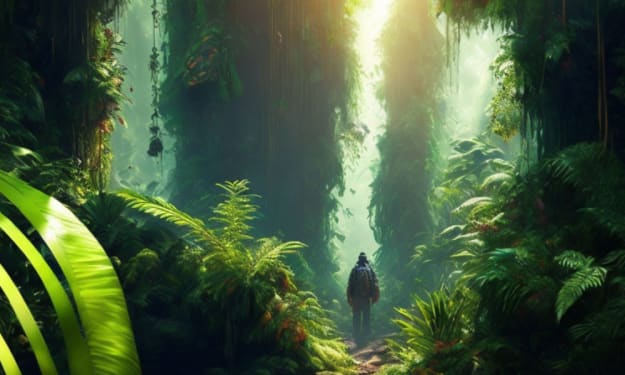
The rain was relentless, beating down like a drum on the canopy overhead. Underneath, drenched and shivering, stood a lone figure—Daniel Cruz. A 32-year-old wildlife photographer, Daniel had dreamed for years of documenting the untouched beauty of the Amazon Rainforest. He never imagined that what started as an expedition would turn into a desperate fight for survival. Daniel had joined a small team of researchers and explorers traveling deep into the heart of the Amazon, far beyond where most dared to go. The mission: to photograph rarely seen animal species and document their behaviors. But five days into the journey, a violent storm swept through the jungle. Trees cracked like thunder. Rivers swelled and paths vanished under floodwater. In the chaos, Daniel was separated from the group. At first, he believed he’d find his way back quickly. He had a GPS device, a water canister, and his camera gear. But the storm had disrupted satellite signals, and the GPS soon died. His water bottle ran dry within a day, and his food rations—meant to last only for brief breaks—were gone by the second day. The Amazon is no place for the unprepared, and Daniel quickly learned this truth. The humidity was suffocating, and the buzzing of insects was constant. At night, the jungle came alive with unsettling sounds—howls, screeches, and rustling footsteps in the dark. He knew he wasn’t alone. Hunger clawed at him. He tried eating berries, but after a painful stomach cramp from the wrong kind, he learned to observe birds and monkeys to determine which fruits were safe. He drank rainwater collected in leaves and filtered it through pieces of his shirt to remove debris. The first animal he truly feared was the jaguar. One night, he woke to the eerie sound of leaves crunching near him. He stayed perfectly still, clutching a broken tree branch. He never saw the animal, only its glowing eyes as it stared at him through the dark—then vanished. It was a reminder: here, he was prey. Yet, Daniel’s will to survive pushed him forward. He began marking trees to avoid walking in circles. He used the position of the sun and moss patterns on trunks to determine direction. He learned to catch fish with sharpened sticks and even fashioned a crude spear to ward off potential predators. On the twelfth day, his strength waned. He had lost weight, was covered in mosquito bites, and had a deep gash on his leg from a fall. Infection was setting in. Fever made the jungle dance around him, but still, he crawled forward. He refused to die in silence. Then, on the fourteenth day, he heard something—distant voices, human voices. Summoning the last ounce of strength, Daniel stood and screamed. The forest echoed with his cry. Moments later, a rescue team—native guides and Brazilian rangers—emerged from the trees. The researchers had reported him missing, and after days of searching, they had finally found him. Daniel collapsed into their arms. He spent weeks in recovery. Doctors were stunned by how well he had survived in such hostile conditions. But the real astonishment came later—when he finally reviewed the footage on his camera. Despite his suffering, Daniel had captured raw, powerful images of life in the Amazon. Monkeys grooming their young. A snake devouring a bird. Rain droplets forming on ancient leaves. Moments of pure nature, untouched by civilization. His story spread across the globe. News outlets called him “The Man Who Walked with the Jungle.” His photos were published in National Geographic and earned awards for their haunting beauty. But for Daniel, the true victory wasn’t fame—it was the understanding that he had faced death, loneliness, and fear, and emerged stronger. In his talks around the world, he often says: "The Amazon didn’t try to kill me. It tested me. And through that trial, I discovered not just the wild—but myself."
By Mati Henry about a year ago in Earth
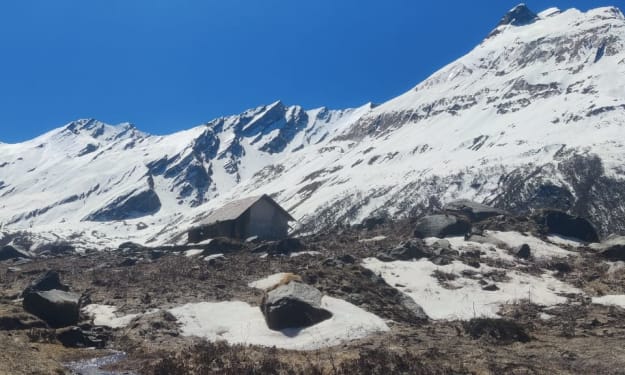
Har ki Dun trek with
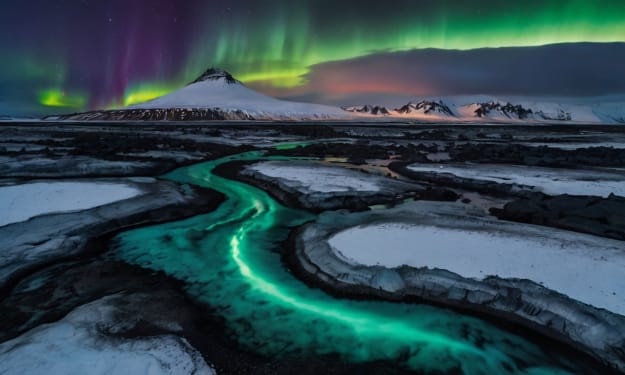
— Journey into the Mythical Valley Explore the ancient trails of the Har Ki Dun Trek, a legendary route nestled in the Govind Pashu Vihar National Park of Uttarakhand. At an altitude of 11,700 ft, this trek is known as the "Valley of the Gods", where natural beauty meets rich mythology and gives you an experience of Local village Trailin route you can visit Local Temple village and Try local food as well.
By sidhu deolabout a year ago in Earth
The Moon: A Mysterious Companion
The Moon—one of the most familiar and captivating objects in the night sky. Since childhood, we’ve heard countless stories, poems, and songs inspired by it. However, the Moon is not just a subject of imagination; it is a scientific wonder as well. Every fact we learn about the Moon opens a new door to understanding space. In this article, we’ll explore the Moon’s formation, history, scientific features, and modern research related to it.
By Fahim Rahmanabout a year ago in Earth
Are We Losing Our Minds to Machines?. AI-Generated.
We are living in a time where machines are not just calculating or computing—they're thinking, creating, and expressing. From AI-generated novels and movies to digital paintings and virtual influencers, the line between human imagination and machine output is blurring faster than anyone expected. Artificial Intelligence (AI) is changing every aspect of our lives, but the most surprising impact may be the one happening deep inside us—in our minds, our creativity, and our sense of purpose. So here’s the question that should concern us all: Are we, in our excitement over AI’s power, unknowingly trading our own creative identity for convenience? Let’s dive deeper. AI: The New Creative Genius—or Just a Tool? Not long ago, creating something beautiful—a painting, a song, a short film—required hours of skill, emotion, and patience. Today, AI can do it in seconds. Type a prompt like “A futuristic city in the style of Van Gogh”, and tools like Midjourney will give you a masterpiece. Want a business name? A book idea? A catchy social media caption? ChatGPT, Gemini, and other AI platforms have it covered. It feels like magic. But the question is: at what cost? Because as machines become better at creating, we need to ask: what’s left for us to do? A World Full of Content—but Lacking Soul We scroll through endless AI-generated posts, videos, music—and while they may look perfect, something feels off. That missing piece is human depth. AI can mimic style. It can follow patterns. It can learn from millions of examples. But what it cannot do—at least for now—is feel. It doesn’t know what it means to lose someone, to fall in love, to face rejection and still keep going. It doesn’t have memories. It doesn’t dream. Human creativity is not just about the final product. It’s about the process, the emotion, the flaws, and the stories behind the creation. A poem written at 3 AM after a heartbreak is not the same as one generated by a prompt. We must not confuse content with connection. What Happens to the Artist Now? The most affected group is perhaps the one we least expected: creators. Writers, designers, illustrators, filmmakers, musicians—they all feel the ground shifting beneath them. AI tools are doing the jobs that used to be human-only, and they’re doing them faster, cheaper, and often—better, at least on the surface. This isn’t just an economic challenge. It’s a deep emotional one. Creative people don’t just work for money. They create because it's who they are. It gives them meaning. So what happens when a machine can do it better? Some are adapting. They’re using AI as a tool to enhance their work. Others are scared. Some are giving up. And many are asking: if my ideas can be copied by a machine, am I still original? Am I still needed? The Value of Human Stories Here’s the good news: yes, you are still needed. More than ever. Because machines don’t live. They don’t struggle. They don’t grow up in villages or cities. They don’t experience culture, love, loss, migration, faith, or conflict. Humans do. And those experiences are irreplaceable. The most powerful art, stories, and ideas still come from real life. From pain. From joy. From identity. What you bring as a human—a unique perspective, an emotional truth, a lived experience—cannot be programmed. So instead of fearing AI, use it. But never forget that your voice is still the heart of the message. Education Must Catch Up To protect human creativity, we need a serious shift in how we teach and learn. Right now, many schools are banning AI tools. But that’s short-term thinking. AI is not going away. In fact, it's only going to become more present in our lives. What we need is education that: Teaches students how to think, not just what to think Helps them ask better questions, not just give correct answers Encourages original thinking, emotional intelligence, and ethical awareness Young people need to learn how to work with AI without losing their own ideas. They need to understand when to rely on it, and when to trust themselves instead. This is the only way to ensure that the next generation grows up as creators, not just consumers. Don’t Be Afraid to Be Imperfect One of the biggest dangers of AI is its perfection. It can produce flawless grammar, perfect proportions, and ideal lighting. But that’s also what makes it lifeless. Human art is powerful because it’s imperfect. Because it’s messy. Because it’s full of doubt, struggle, and raw feeling. Don’t try to compete with the machine’s perfection. Compete with its lack of emotion. Create what a machine can’t: vulnerability, humor, chaos, unpredictability. That’s where your true power lies. AI Is a Mirror—Not a Master In the end, AI is just a mirror of us. It reflects back what we’ve already said, done, and created. It does not dream of the future—it simply rearranges the past. So the real danger is not AI taking over. It’s us forgetting who we are. We must not hand over our voices, our vision, or our values in exchange for convenience. We must stay curious. Stay passionate. Stay human. Let AI be the tool. But you be the story. Final Thoughts: The Future Is Still Ours The AI age is not something to fear—it’s something to face with wisdom. We stand at a crossroads. One path leads to a world filled with machine-made content that all looks the same. The other leads to a world where technology empowers humans to go deeper, be braver, and create more honestly than ever before. The choice is ours. Because in a world of artificial everything, the most valuable thing you can be—is real.
By RafiBinYousafabout a year ago in Earth