Nature
The Shift Part 1. Content Warning.
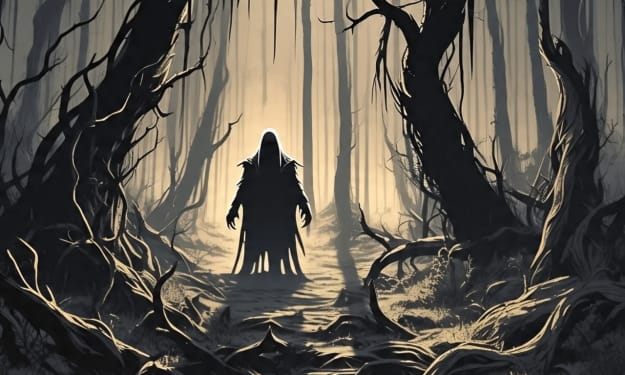
Central California, 2015 Laura Bennett, a high school senior, returns home after a long day of planning the upcoming spirit week. After a full day of school and dealing with the planning committee, she wanted nothing more than to go home and rest. Especially since it was Friday and she had told her friends that she would join them for a bonfire on the beach this weekend. But her hopes of a quiet, relaxing evening were dashed as soon as she stepped into the foyer. Martin, her father and owner of a large vineyard, was yelling and cursing upon the news of feral hogs destroying a third of his newly planted grapes. When she heard all the commotion her father was making, she went to him and was informed of what happened. Now feral hogs were not a new problem for Martin and the vineyard. In fact this was something he had been dealing with ever since he bought the vineyard 9 years ago. But this time he had 2 new problems that he had never faced before.
By Stonecreekabout a year ago in Earth
"I Quit My Job to Travel the World — Here's What No One Tells You"
For years, I watched YouTubers and Instagram influencers pack up their lives into 40-liter backpacks and chase sunsets across the globe. “Quit your 9-to-5,” they said. “Live your dream.” So one day, after a particularly soul-crushing meeting where my ideas were ignored yet again, I did exactly that. I handed in my resignation, sold most of my belongings, bought a one-way ticket to Thailand, and posted the obligatory “New Chapter” photo with my passport and latte. My DMs flooded with messages: You’re so brave! I wish I could do that! Living the dream! At first, it felt like I was. The Honeymoon Phase My first few weeks were magical. I island-hopped across Thailand, lived in a treehouse in Bali, and met people from every corner of the world. My days were filled with jungle hikes, coconut smoothies, and sunset yoga. I was finally “free.” No deadlines. No commutes. Just me, my backpack, and the world. I remember thinking, Why didn’t I do this sooner? But Then Reality Hit It started small. A delayed flight here. A stolen phone there. Then came the loneliness. Making friends was easy, but keeping them wasn’t. Everyone was on their own journey, constantly moving, constantly leaving. I’d connect with someone over street food one night, and the next morning they’d be gone—on a bus to another city or a flight to another country. Then came the money stress. I had savings, sure. But they went faster than I expected. Travel wasn’t always cheap, especially when you factored in flights, accommodation, insurance, and the occasional medical emergency (hello, Bali belly). I tried to freelance, but working from different time zones with weak Wi-Fi in humid hostels wasn’t exactly the productivity dream I imagined. You Don’t Escape Yourself One of the biggest myths about quitting your job to travel is that you’ll somehow “find yourself.” But what they don’t tell you is that your problems follow you. In fact, they echo louder when the distractions of daily life are stripped away. Alone on a beach in the Philippines, I realized I was still anxious. Still doubting myself. Still chasing external validation, only now in the form of likes on travel photos. There were nights I cried in hostel beds, missing my friends, my family, my old routine—even my old coffee mug. I felt guilty for not feeling grateful all the time. After all, wasn’t this the dream? Not All Days Are Instagram-Worthy Social media doesn’t show the overnight buses, the language barriers, the food poisoning, or the fear of getting scammed in unfamiliar places. It doesn’t show you panicking when your card gets declined in a country where no one speaks English. Or trying to sleep in a 12-person dorm with someone snoring like a chainsaw. And it certainly doesn’t show the identity crisis that comes when you’re no longer “the marketing manager” or “the reliable friend,” but just another backpacker trying to figure it all out. But It Was Worth It Despite all of this—maybe even because of all of this—I don’t regret it. Traveling stripped away the noise. It forced me to confront who I really was, outside of titles and routines. I learned resilience. How to be okay with being uncomfortable. How to ask for help. How to be alone without being lonely. I discovered that joy isn’t just in the big, dramatic moments, but in tiny ones too—watching monks feed stray dogs at sunrise, or learning how to say “thank you” in five different languages just to see someone smile. And eventually, I found balance. I settled into a slower pace, choosing fewer countries and longer stays. I found a rhythm of working online, budgeting better, and building deeper connections. I stopped chasing the next “epic experience” and started appreciating the stillness. What No One Tells You Quitting your job to travel the world won’t solve your problems. It won’t instantly make you happy or confident or whole. What it will do is challenge you, break you, and—if you let it—transform you. It’s not a fairytale. It’s not always beautiful. But it’s real. And in a world full of filters and false perfection, real is rare. So if you’re thinking about taking the leap, know this: It’s okay to feel scared. It’s okay to miss home. It’s okay if the journey doesn’t look like what you expected. Because sometimes, the best chapters in life are the ones that aren’t planned. And sometimes, freedom isn’t found in where you go—but in finally learning who you are when no one else is watching.
By Nizam khanabout a year ago in Earth
Into the Clouds: Conquering Mount Everest
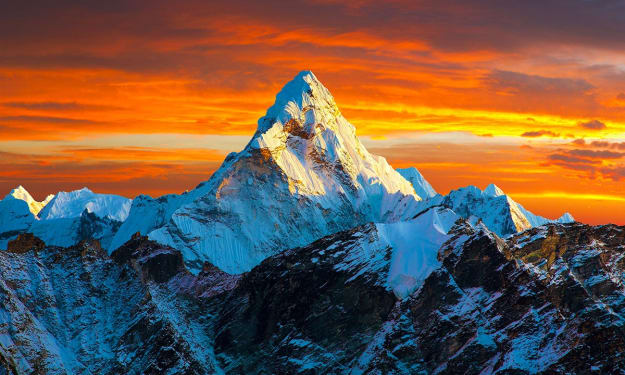
The wind howled like a wild beast, tearing through the fabric of the tents and whistling across the icy ridges. Above 26,000 feet, in the heart of the “Death Zone,” air was thin, frost clung to eyelashes, and every breath felt borrowed. Yet, amidst the unforgiving cold and near-vertical cliffs, a figure pressed forward—Aryan Malik, a 29-year-old mountaineer from Pakistan, chasing a dream carved into the sky. For Aryan, climbing Mount Everest wasn’t just about reaching the summit. It was about fulfilling a promise he made to his late father—a retired army officer who used to show him pictures of the Himalayas and say, “Son, one day, you’ll touch the sky.” Growing up in the small town of Hunza, Aryan was fascinated by mountains. His childhood was shaped by tales of Tenzing Norgay and Edmund Hillary, the first to summit Everest in 1953. Aryan read every book, studied every trail, and trained relentlessly on the snowy slopes of the Karakoram. When he finally got the opportunity to join an international expedition to Everest, he knew it was the moment he had been preparing for his entire life. The journey began at Lukla, a small airport nestled dangerously between hills, known as one of the most treacherous airstrips in the world. From there, the team of 12 climbers trekked to Base Camp, a buzzing community of colorful tents, supplies, and anticipation. Aryan met climbers from across the globe—men and women from Japan, France, Nepal, and the U.S.—each with their own reasons for risking everything to climb Earth’s highest peak. Base Camp was both sanctuary and challenge. The days were filled with training, gear checks, and acclimatization climbs to higher camps and back. Nights were cold and restless, with oxygen dropping and dreams haunted by avalanches. Still, Aryan remained focused. He had carried a photo of his father, now creased and weathered, tucked in his jacket. He whispered to it every night: “We’ll reach the top together.” After nearly four weeks, the expedition began its push through Camp I, a maze of icefalls and ladders creaking over bottomless crevasses. The Khumbu Icefall was a terrifying obstacle—massive blocks of ice that shifted unpredictably. Climbers crossed narrow ladders strapped over gaping chasms with trembling feet and unwavering faith. Aryan’s strength, both physical and mental, shone through. He helped others with their gear, offered encouragement during storms, and even made tea during rest stops. One fellow climber, Maria from Argentina, told him, “You climb with your heart, Aryan. That’s rare.” By the time they reached Camp IV, the edge of the Death Zone, only six climbers remained. Altitude sickness, frostbite, and fear had turned others back. Aryan’s oxygen tank hissed steadily beside him, but he refused to show weakness. The final climb to the summit would begin at midnight—a tradition followed to avoid afternoon avalanches and allow descent during daylight. At 12:04 AM, under a sky blanketed with stars, Aryan stepped into history. The ascent was brutal. The cold bit into his bones, and the wind screamed in protest. Every step was a war. At the infamous Hillary Step, a narrow, exposed rock face near the summit, Aryan’s glove slipped. For a moment, he dangled by his harness, staring at the abyss below. But with sheer will and a helping hand from his Sherpa guide, Dorje, he pulled himself back. At 6:27 AM, with the sun rising above a sea of clouds, Aryan took his final step. He stood atop Mount Everest—29,032 feet above sea level. The world fell silent. Tears froze on his cheeks as he pulled out his father’s photograph, held it to the wind, and whispered, “We did it, Baba. We touched the sky.” He planted both the Pakistani flag and a white flag with a mountain sketch—a tribute to climbers everywhere who had tried and failed, lived and lost. Aryan knew he wasn’t alone on that summit. He carried with him the weight of dreams, sacrifice, and stories from around the world. The descent was no less dangerous, but Aryan returned safely to Base Camp, greeted by cheers and tears. His story spread quickly—of a small-town boy who climbed the highest point on Earth with the spirit of his father and the courage of legends. Years later, Aryan would speak to schools, sharing the message that Everest isn’t just a mountain—it’s a symbol. A reminder that no dream is too high, no path too steep, and no heart too small to reach the clouds. And so, the mountain stood, tall and timeless, whispering its eternal challenge into the winds: “Come find me, brave soul. Come chase the sky.”
By Mati Henry about a year ago in Earth
The Final Hour: Countdown to Doomsday
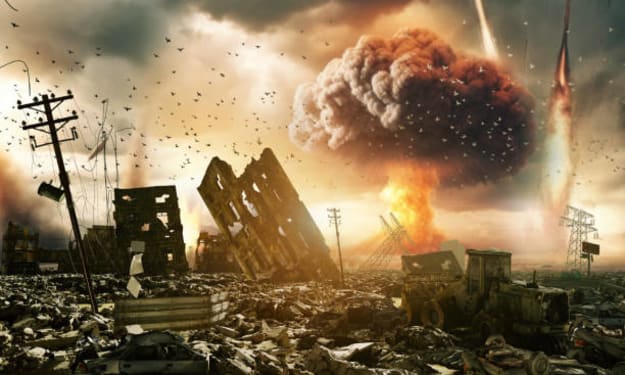
The sun rose over a quiet Earth, but it brought no warmth. A strange silence had spread across the planet. No birds sang. No waves crashed. The winds had stilled as if the world itself was holding its breath. It was the morning of December 21, 2094—the day humanity had long feared, the day scientists had come to call Doomsday. The warning signs had been there for decades. The climate had gone haywire—ice caps vanished, wildfires swept continents, and oceans swallowed entire cities. But even that chaos was dwarfed by what came next: the discovery of Object X-47, a rogue asteroid the size of a small moon, drifting into the solar system on a collision course with Earth. At first, governments tried to calm the public. They launched missions to divert the object. Nuclear warheads were tested in space. Satellites monitored it every second. But nothing worked. X-47 was too fast, too dense, and on an unchangeable path. Impact was inevitable. With only a few weeks remaining, world leaders declared a global state of emergency. Cities turned into chaos zones. Some looted and rioted. Others gathered in prayer or silence. Underground bunkers were filled with scientists, leaders, and people deemed “essential” to preserve knowledge and restart civilization—if survival was even possible. In New York City, a 17-year-old girl named Lena Rivers sat by her window, watching a crimson sky. Her parents were gone—volunteers in one of the failed asteroid missions. She lived with her younger brother, Sam, in a small apartment they had fortified with food and water. Though young, Lena had become a leader among the local community. She organized food, helped elders, and comforted children. But as the final day arrived, she, like everyone else, felt powerless. Across the ocean, in a secure facility beneath the Swiss Alps, Dr. Emil Vargas, one of the world’s leading astrophysicists, stared at a massive screen counting down the time to impact: 14 hours, 22 minutes, and 16 seconds. He had been working nonstop for months, trying to develop a last-minute solution, a miracle of science. But he had nothing left to try. The asteroid was now visible to the naked eye, a burning star growing larger each hour. In India, massive crowds gathered at the banks of the Ganges, chanting ancient hymns. In Brazil, people danced in the streets, choosing joy over fear. In Japan, monks lit thousands of lanterns, floating them into the sky. The world, fractured by borders for centuries, had suddenly become one. One species. One fate. Back in New York, Lena took Sam to the rooftop. Around them, neighbors had gathered—once strangers, now family. They held hands, shared stories, and looked at the stars. The asteroid was now a glowing streak in the sky. The Earth trembled slightly beneath them. Time was running out. Lena stood and spoke, her voice calm and clear. “If this is the end, then let it be a beginning too. Let this moment remind us that we were more than wars, more than greed. We loved. We dreamed. We mattered.” At the exact moment of impact, the world lit up—not with fire, but with memories. Around the globe, screens went black. Buildings shook. Oceans rose. And then—stillness. But the story didn’t end there. Deep beneath the surface, in a hidden vault known only to a handful, artificial intelligence systems came online. Designed by the brightest minds, they held the sum of human knowledge, culture, art, and history. In stasis chambers, a small group of survivors slept, preserved by cryogenic technology. Among them was Lena Rivers. She had been selected without her knowledge. Her leadership, empathy, and strength were noticed by watchers and scientists months before. As the countdown reached its final hour, she and a few others were transported to the vault. Years passed. Decades, perhaps centuries. One day, Lena opened her eyes. The Earth was different. Scarred, but healing. Trees had returned. The sky was blue once more. And Lena stood upon a land reborn. She was not the last human—but the first of a new beginning. Doomsday had come. But so had dawn. And from the ashes of the final hour, hope rose again.
By Mati Henry about a year ago in Earth
The Rift Beneath: Africa's Awakening Earth
In the heart of East Africa, a strange phenomenon had begun to stir the land—a growing crack tearing through fields, roads, and villages. It began quietly, almost imperceptibly, in the Great Rift Valley, but soon it would demand the world's attention. For centuries, the African continent had appeared calm on the surface. Its plains, deserts, and jungles held stories of ancient civilizations, diverse cultures, and natural beauty. Yet beneath the earth, forces were brewing—forces so powerful that they could reshape the very structure of the continent. In 2018, near the town of Mai Mahiu in Kenya, the earth split. A massive crack, stretching several kilometers and several meters deep, appeared overnight. Roads crumbled. Homes were swallowed. Panic spread among the people, who feared an earthquake or something even worse. The event sparked headlines around the world: "Is Africa Splitting in Two?" Geologists and seismologists rushed to investigate. Dr. Amina Njoroge, a Kenyan geologist from the University of Nairobi, had been studying the East African Rift for years. She believed this was only the beginning of a far greater transformation. "The continent is alive," she told reporters. "What we are witnessing is the slow, powerful process of continental drift in real time." The East African Rift System, stretching from the Afar Triangle in Ethiopia down to Mozambique, is a complex zone where tectonic plates are pulling apart. Over millions of years, it has formed deep valleys, volcanic mountains, and hot springs. But now, the pace of change seemed to be accelerating. Satellite data confirmed Dr. Amina’s theories. The Nubian Plate (larger part of the African Plate) and the Somali Plate (a smaller, eastern section) were moving apart at a rate of about 6–7 millimeters per year. Though the rate was slow by human standards, in geological time it was dramatic. In perhaps 5 to 10 million years, this rifting could create a new ocean, splitting the Horn of Africa from the mainland and forming a new island continent. But for the people living in the Rift Valley, the science was overshadowed by fear. In villages like Suswa and Narok, residents faced daily uncertainty. Earthquakes became more common. Steam hissed from cracks in the ground. Once-fertile farmlands turned into fractured terrain. Stories began to spread—legends of an angry earth spirit punishing humanity, of a god beneath the crust waking from a long slumber. Amina, determined to help, organized community meetings. She brought maps, charts, and models, showing people the tectonic forces at work and teaching them how to adapt. Her mission was to turn fear into understanding, and understanding into resilience. But her work wasn't without obstacles. Politicians, wary of panic, downplayed the risks. Developers ignored geological warnings and built infrastructure atop fault lines. And some religious leaders resisted the scientific explanation, insisting that divine intervention was the cause. Then came the eruption. In 2027, Mount Longonot—an ancient stratovolcano near Nairobi—erupted violently after centuries of dormancy. Lava flowed down its slopes, ash darkened the sky, and thousands were forced to flee. The eruption didn’t cause mass casualties, thanks to early warnings, but it confirmed what scientists had feared: the Rift was becoming more active, and time was running out to prepare. The eruption jolted the world into action. International scientists joined forces with African experts to study the Rift more deeply. Governments launched new initiatives to monitor seismic activity and build earthquake-resistant infrastructure. Documentaries, school programs, and global awareness campaigns brought the hidden story of Africa's awakening earth to the world stage. As the years passed, the people of the Rift Valley adapted. They planted stronger crops, reinforced homes, and built communities centered around safety and science. The rift continued to grow, slowly, silently carving a new future for the continent. And Dr. Amina? She became a hero not just in Kenya, but around the world—a symbol of how knowledge, courage, and unity could transform fear into strength. The story of Africa's splitting land is not just one of destruction. It is a story of birth, of change, of evolution. Beneath the soil, beneath the cities, something ancient and powerful stirs. And while the earth moves in silence, its message is loud and clear: nothing stays the same forever. Even a continent must one day be reborn.
By Mati Henry about a year ago in Earth
Devoted Moms in the Wild
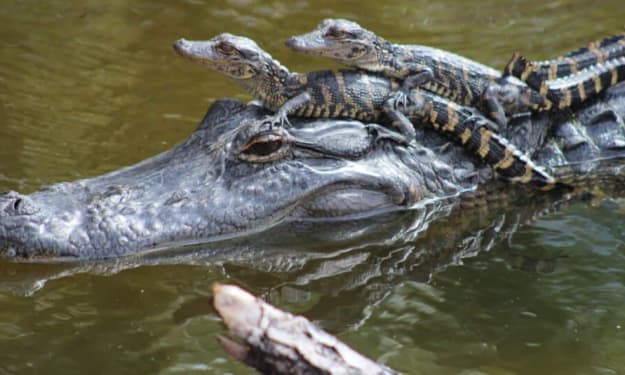
Alligator Moms These mom take gently care of her little ones in the murky swamps. After the eggs hatch the alligatior transport her young in her mouth to the water. These are very devoted mom and have protective instincts. They remain nearby garding their babies against any threats.
By Rasma Raistersabout a year ago in Earth
Scientists detect signature of life on a distant planet
In a groundbreaking discovery that would redefine humanitys knowledge of the universe, scientists have detected what seems to be the signature of existence on a far off exoplanet. Using current area telescopes and spectrometry techniques, a group of global researchers found atmospheric markers that strongly endorse the presence of organic activity.
By Prottasha Alamabout a year ago in Earth
Top 50 Must-Visit Destinations in Europe: A Journey Through History, Culture, and Natural Beauty
Seven of the top ten most visited countries are European, thanks to the continent's rich cultural heritage, historical landmarks, safety, and efficient infrastructure. Embark on a journey through the top 50 destinations that showcase Europe's diverse allure.
By Sharmin Smrityabout a year ago in Earth
How Tornadoes Reflect Nature’s Power and Our Preparedness. AI-Generated.
Tornadoes are among the most dramatic and dangerous natural events on Earth. These powerful rotating columns of air can destroy buildings, flip cars, and uproot trees in a matter of seconds. But beyond the physical destruction, tornadoes also reflect something deeper: the immense power of nature and how human beings prepare, respond, and adapt in the face of that power.
By Mr Rifat Ahmedabout a year ago in Earth