Nature
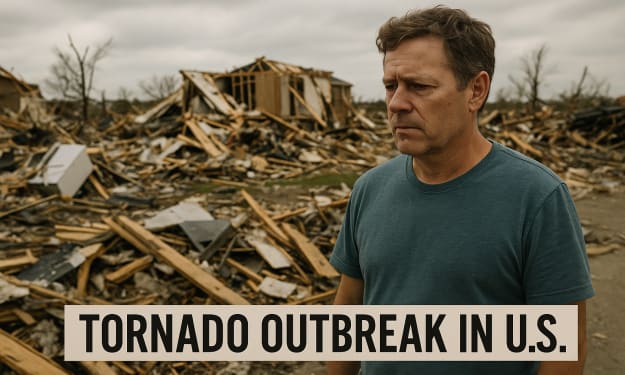
Tornado Outbreak in the U.S.: Nature’s Wrath Unleashed. AI-Generated.
On May 15 and 16, 2025, the American Midwest and Southeast witnessed one of the most violent and widespread tornado outbreaks in recent history. A staggering 55 tornadoes ripped through multiple states, leaving behind a trail of destruction, death, and despair. With 27 confirmed fatalities and damages exceeding $1.2 billion, this two-day catastrophe underscores the growing unpredictability of extreme weather events in the era of climate change.
By Ahmet Kıvanç Demirkıranabout a year ago in Earth
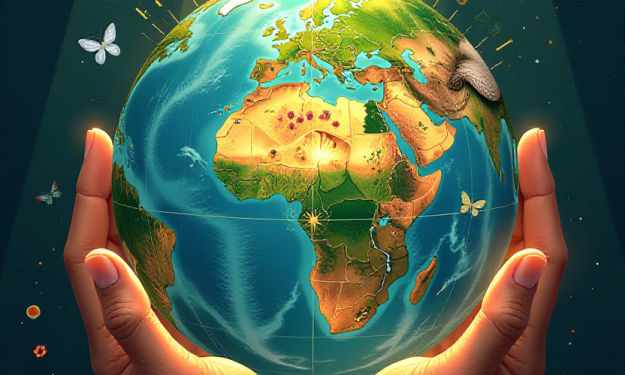
How earth was born form then air
How Earth Was Born and How Air Formed The story of Earth’s birth and the formation of its atmosphere is one of the most fascinating tales in the history of the universe. Over 4.5 billion years ago, in the vast emptiness of space, a spectacular sequence of cosmic events led to the formation of the planet we call home. Let’s explore how Earth was born and how the life-giving air we breathe came to exist. The Birth of Earth Around 4.6 billion years ago, our solar system began as a giant cloud of gas and dust, known as a solar nebula. Triggered by the shock wave from a nearby supernova, the nebula collapsed under its own gravity. As it spun faster, most of the material gathered in the center to form the Sun. The remaining gas and dust flattened into a rotating disk, where particles began to stick together, forming larger and larger bodies. Through a process called accretion, these particles collided and merged to form planetesimals—early building blocks of planets. Over millions of years, some planetesimals grew large enough to become protoplanets, including the early Earth. This early Earth was a hot, molten sphere, constantly bombarded by other space debris, including a Mars-sized body that likely caused the formation of the Moon. As Earth cooled, it began to differentiate into layers. Heavier elements like iron sank to the center to form the core, while lighter materials rose to form the mantle and crust. But Earth was still a harsh, lifeless place—with no air, no oceans, and extreme volcanic activity. The Formation of Earth’s Atmosphere The early atmosphere didn’t come from the outside—it was created from within. This first atmosphere was likely formed by a process called volcanic outgassing. As Earth’s interior remained hot, volcanoes released gases trapped in the planet’s crust. These gases included water vapor (H₂O), carbon dioxide (CO₂), ammonia (NH₃), methane (CH₄), nitrogen (N₂), and small amounts of hydrogen (H₂) and other compounds. This early atmosphere was very different from what we know today. There was no oxygen, so it couldn't support human life. It was a thick, toxic mix of gases. However, this was a crucial step in preparing Earth for the development of life. The Role of Water and Oceans As water vapor in the atmosphere cooled, it condensed and fell as rain—possibly for thousands of years. This created Earth’s first oceans. These vast bodies of water played a key role in shaping the planet’s surface and in the formation of the next vital component: oxygen. Water also helped in dissolving carbon dioxide, which reduced its concentration in the atmosphere and made conditions more stable. The oceans became home to the earliest life forms: simple, microscopic organisms like bacteria and archaea. The Great Oxygenation Event One of the most important changes in Earth's atmosphere happened about 2.5 billion years ago. Cyanobacteria, a type of photosynthetic microbe, began using sunlight to convert carbon dioxide and water into glucose and oxygen through photosynthesis. At first, this oxygen reacted with iron in the oceans, forming iron oxide that settled on the seafloor. But over time, as more oxygen was released, it began to accumulate in the atmosphere. This was known as the Great Oxygenation Event. This dramatic rise in oxygen transformed Earth. It wiped out many of the anaerobic (non-oxygen-using) organisms but made way for new forms of life that could use oxygen for energy. It also led to the formation of the ozone layer, which protected the planet from harmful ultraviolet (UV) rays, allowing life to expand onto land. The Air We Breathe Today Today’s atmosphere is composed of about 78% nitrogen, 21% oxygen, and trace amounts of argon, carbon dioxide, and other gases. This stable mixture supports complex life forms, including humans. The balance of gases is maintained through natural cycles: plants produce oxygen and absorb carbon dioxide, animals do the opposite, and oceans and forests act as carbon sinks. However, human activities such as burning fossil fuels have begun to disturb this balance, leading to climate change and air pollution—an urgent reminder of how precious our atmosphere truly is. Conclusion From fiery beginnings and violent collisions to the gentle rise of oxygen-producing microbes, Earth’s journey to becoming a blue planet with breathable air is a story of transformation, resilience, and balance. Understanding how Earth and its atmosphere formed not only connects us to our cosmic roots but also reminds us of our responsibility to protect the air and environment that sustain us today.
By Shah saab ITabout a year ago in Earth
The Deepest Places on Earth: Exploring the Mariana Trench
The Deepest Places on Earth: Exploring the Mariana Trench Beneath the vast expanse of the Pacific Ocean lies a chasm so deep and enigmatic that it challenges our understanding of Earth's final frontiers. The Mariana Trench, stretching over 2,550 kilometres (1,580 miles) in length and plunging to depths exceeding 10,900 metres (35,800 feet), is the deepest known part of the world's oceans . This crescent-shaped trench, located about 200 kilometres (124 miles) east of the Mariana Islands, represents not just a geographical marvel but a realm of scientific intrigue and discovery .
By Jeno Treshan about a year ago in Earth
Grassroots Power: Influencing Local Environmental Policy Change
Environmental policy is often viewed as something crafted by government officials and experts. Yet, at the heart of many successful local environmental changes lies the power of grassroots movements. These community-driven efforts unite residents who care deeply about their surroundings and mobilize them to push for meaningful policy reforms. This article delves into how grassroots initiatives impact environmental policies in local areas and why their influence is essential for sustainable progress.
By Denette Dunnabout a year ago in Earth
What No One Tells You About the Everest High Pass Trek
The Everest High Pass Trek is often praised as one of the most exhilarating and comprehensive treks in the Himalayas. With jaw-dropping mountain vistas, immersive cultural encounters, and the thrill of crossing three major mountain passes—Kongma La, Cho La, and Renjo La—this trek is a true adventure. However, there are crucial aspects of the Everest High Pass Trek that are rarely discussed, and being aware of them can make the difference between a transformative journey and an overwhelming ordeal.
By Bitisha Sherpaabout a year ago in Earth
Top 5 Hiking Trails in Monterey for Beginners – Easy Trails, Stunning Views
Best Hiking in Monterey for Beginners: Easy Trails, Stunning Views If you’re looking to take up hiking in Monterey, California, you’re in luck. Monterey’s natural beauty, mountain-sea setting, and easy trails make it an ideal destination for beginners.
By Nafiz Hossainabout a year ago in Earth
International Biodiversity Day 2025
Each year on May 22nd, the world comes together to celebrate World Biodiversity Day-a moment to reflect, reconnect, and recommit to the natural world that makes life on Earth not only possible but profoundly beautiful. It’s more than a date on the calendar; it’s a reminder that we are part of a vast, intricate web of life, and our survival is tightly woven into its threads.
By The Wordsmith by Sanjina Hussainabout a year ago in Earth
"Biodiversity: The Beauty of Life on Earth and Our Shared Responsibility"
Introduction Earth is home to an estimated 8.7 million species, yet human activity drives approximately 150 of them to extinction daily. This staggering loss isn’t just a statistic—it’s an unraveling of the intricate web of life that sustains us all. Biodiversity, the dazzling variety of life on our planet, is both a masterpiece of evolution and a lifeline for humanity. From the depths of coral reefs to the canopies of rainforests, every species plays a role in Earth’s grand symphony. This article explores the irreplaceable beauty of biodiversity, the existential threats it faces, and the collective action needed to safeguard our shared home.
By Shamshair Khan Hasan Zaiabout a year ago in Earth